Manual Sandblasting Equipment
References
Sandblasting, also known as abrasive blasting, is a highly effective surface treatment process used across a variety of industries to clean, prepare, or restore surfaces. By propelling abrasive materials—such as sand, corundum, or specialized abrasives—at high velocity using compressed air or pressure, sandblasting machines can efficiently remove rust, old paint, scale, and other contaminants from surfaces including steel, concrete, wood, marble, glass, and stone. The versatility of abrasive blasting makes it ideal for both heavy-duty industrial cleaning and precision surface preparation, ensuring optimal adhesion for subsequent painting or coating applications. The choice of abrasive material and machine configuration is critical, as it determines the quality of the finish and the efficiency of the process. With a wide variety of abrasives and equipment available, users can select the most suitable combination to achieve the desired surface profile, making sandblasting an indispensable tool for efficient and reliable surface cleaning and preparation.
How to Choose the Right Manual Sandblasting Equipment for Your Application
Manual sandblasting supports a broad range of industrial operations—from large-scale rehabilitation of steel structures to precision preparation of small components within controlled workshop environments. Across these applications, the requirement is consistent: a stable, predictable abrasive blast capable of achieving the specified surface profile. Given the diversity of workpiece geometries, materials, and environmental constraints, equipment selection is driven by the technical demands of the application and the conditions in which the blasting process must operate.
The machine, abrasive material, air flow, and pressure configuration must align with the workpiece characteristics and the operational context. Accessories such as remote control handles, nozzle holders, couplings, and tungsten carbide nozzles influence durability, abrasive flow stability, and long-term reliability during intensive sandblasting or cleaning cycles. Optional features can be added to enhance user comfort and functionality.
This guide is structured around the core variables that determine equipment selection. It outlines how part size and mobility, required surface finish, abrasive type, and operational environment shape whether a mobile blasting pot, an enclosed cabinet, or a dustless suction-based vacuum system provides the most suitable configuration. Many systems are designed with operator comfort in mind to reduce fatigue during extended use. With these parameters defined, technical teams can compare MINEX equipment options with clarity and select the model that aligns with workflow, productivity requirements, and long-term operational aims.
Workpiece Size & Mobility: Choosing Between Mobile Pots and Enclosed Blasting Cabinets
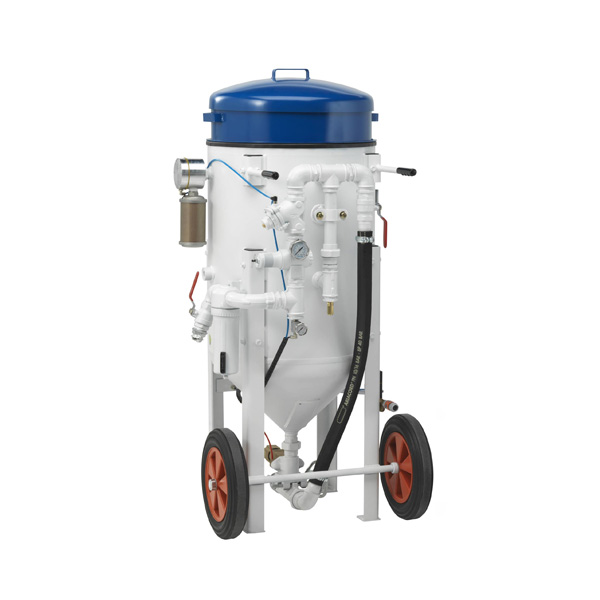
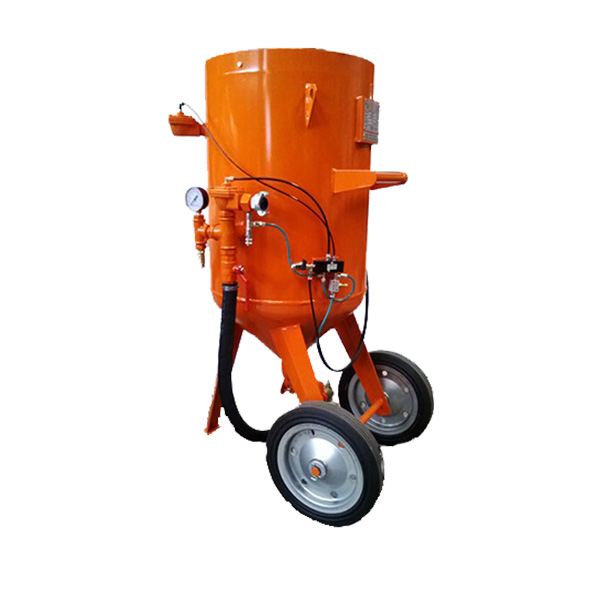
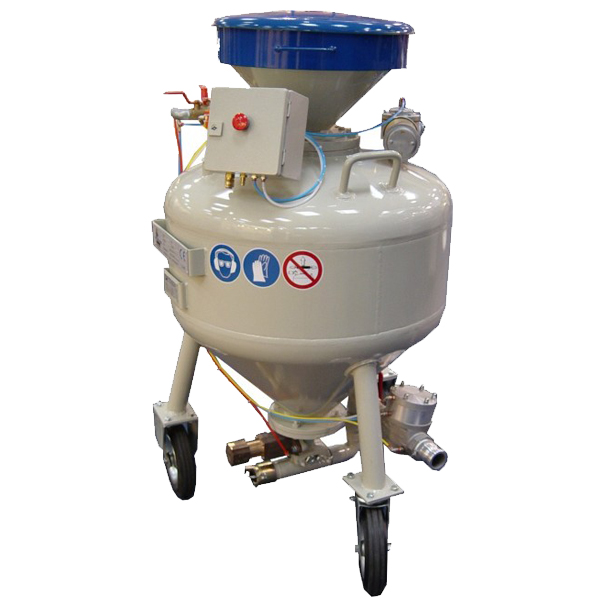
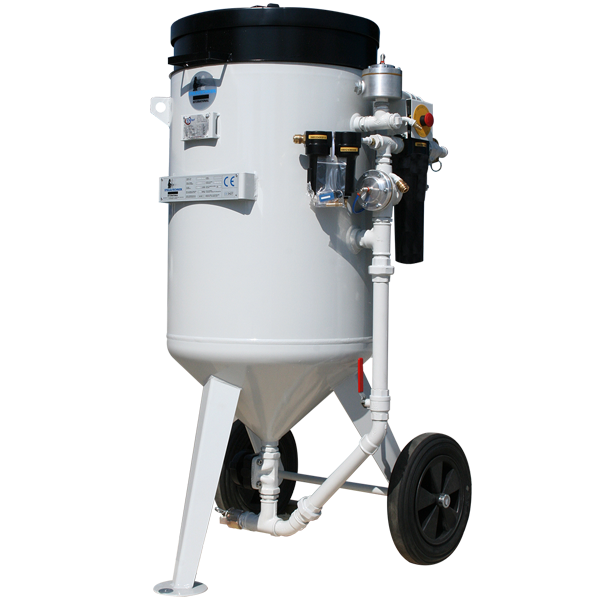
For manual sandblasting, the first technical consideration is the physical relationship between the workpiece and the blasting environment. Large or fixed structures—such as hulls, tanks, bridges, fabricated assemblies, and pipelines—cannot be positioned inside an enclosure without significant handling effort. In these cases, mobile blasting pots are the appropriate solution for high-impact industrial sandblasting. Many mobile systems include a transport cart to enhance mobility and ease of handling.
A mobile setup typically includes a pressure vessel, blast hose, nozzle holder, tungsten carbide nozzle, and remote control handle, enabling operators to work efficiently along large surfaces and weld seams. These systems deliver the pressure and abrasive flow required for corrosion removal, coating preparation, and structural cleaning on assets that remain in situ. Lifting eyes are often included to facilitate safe and easy movement of the equipment.
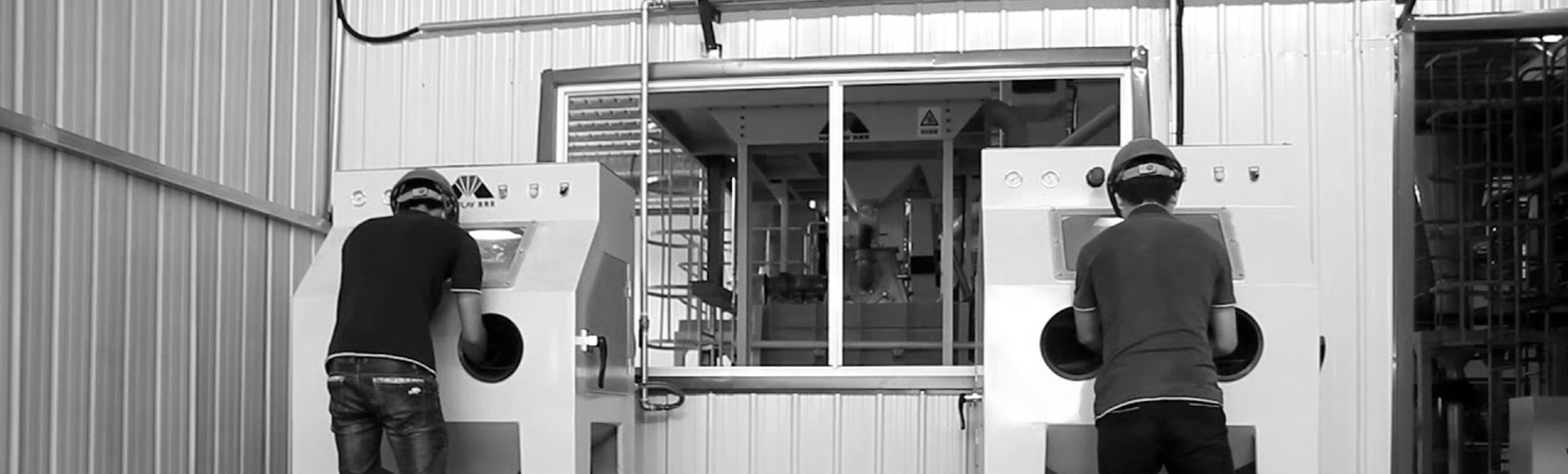
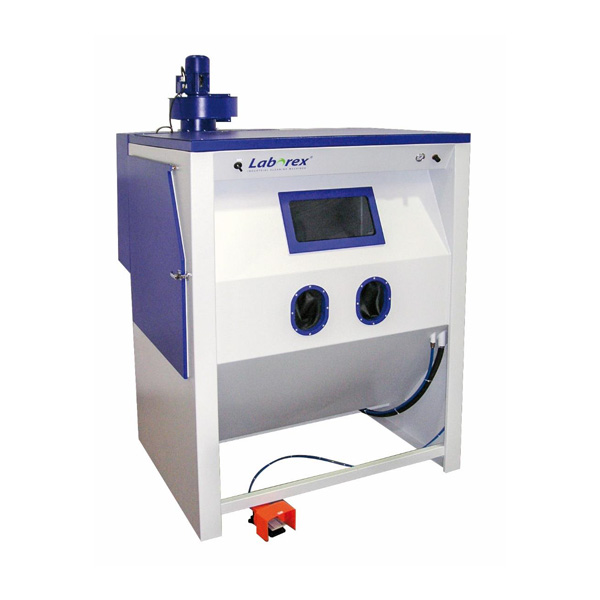
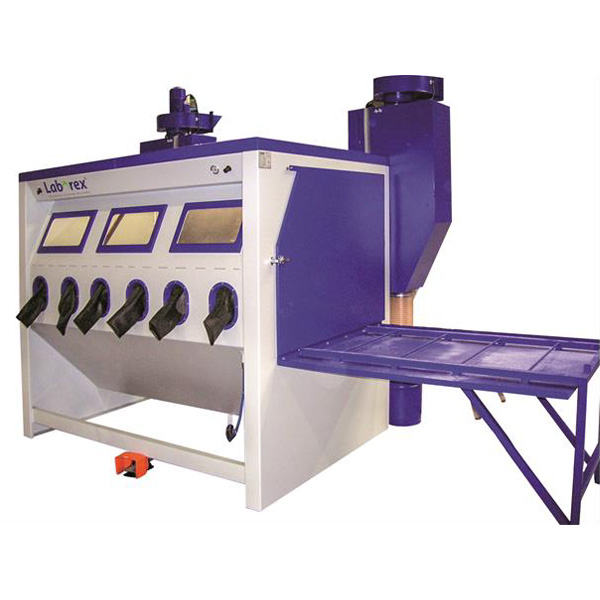
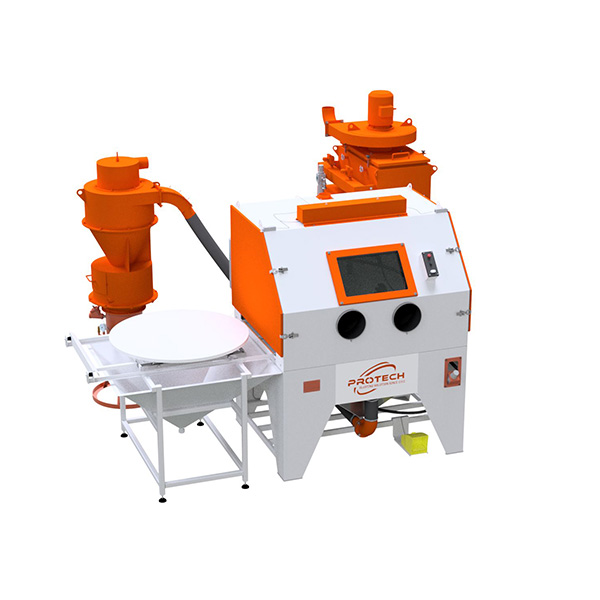
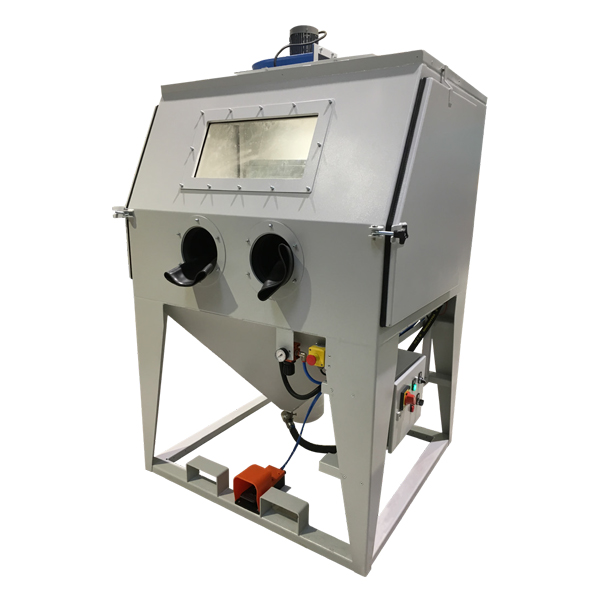
Smaller components—including machined parts, fixtures, tools, castings, glass pieces, and precision assemblies—benefit from enclosed blasting cabinets. Cabinets provide a controlled chamber with stable abrasive recovery through a sieve system, contained air flow, and integrated dust extraction. This makes them suitable for batch work, fine finishing, and any process where consistent blasting conditions are required.
By determining whether the part is fixed, mobile, or enclosure-compatible, operators can narrow the choice between mobile pots and cabinet systems with confidence. Selecting a machine with the appropriate capacity is crucial for matching the scale of the job and ensuring efficient operation.
Operational Location: Selecting Equipment for Outdoor, Workshop, or Restricted Environments
The physical environment in which blasting is performed significantly influences equipment choice. Outdoor industrial jobs—construction areas, shipyards, infrastructure works, and energy facilities—are ideal for mobile pots. These environments tolerate dust dispersion and provide the open space required for aggressive sandblasting with broad abrasive compatibility.
Indoor workshops require clean, contained processes. Enclosed blasting cabinets offer controlled visibility, air filtration, and predictable abrasive flow. Their sealed environment protects surrounding equipment and ensures compliance with workshop cleanliness and surface quality standards.
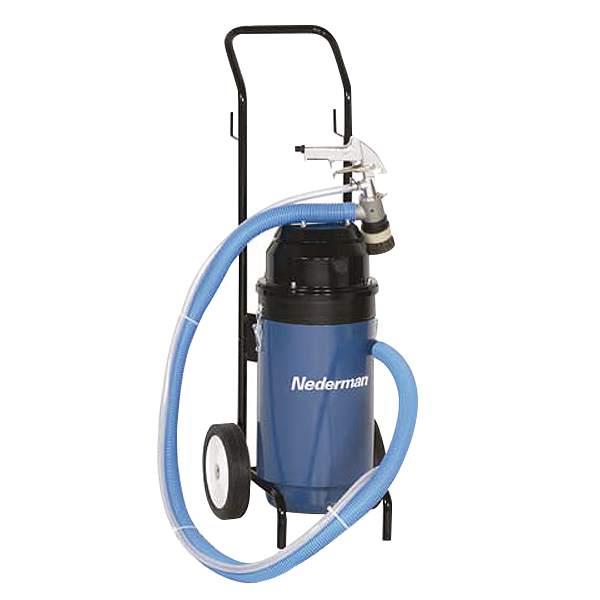
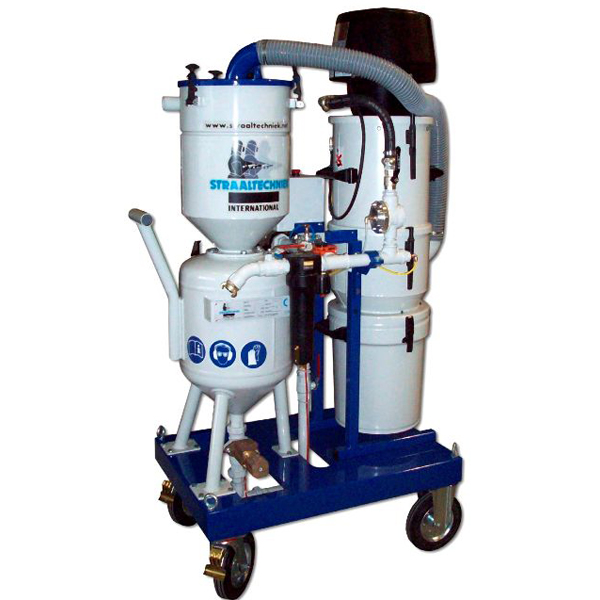
Some facilities operate within restricted environments where blasting must be conducted near sensitive equipment, paint lines, electronics, or customer-facing assets. In these scenarios, dustless or suction-based systems prevent dust from entering the workspace. Manual sandblasting equipment is specifically designed to provide access to surfaces in tight or remote locations where other methods may not be feasible. Vacuum systems capture abrasive material at the point of impact, supporting maintenance work inside plants without contaminating production assets or interrupting adjacent processes.
Dust Sensitivity: Determining When Dustless or Vacuum-Assisted Blasting Is Required
Dust sensitivity is often a decisive factor, especially in facilities where airborne contamination cannot be tolerated. Dustless systems are engineered to contain abrasive media directly at the nozzle using integrated vacuum recovery, preventing dust dispersion entirely.
Some dustless systems also incorporate water into the blasting process to further reduce dust and improve safety in sensitive environments.
These systems are well suited for:
- on-site repairs inside manufacturing cells
- operations near electronics or paint lines
- maintenance on installed components
- equipment that must remain clean during service operations
If dust restrictions are moderate, enclosed blasting cabinets provide sufficient containment. When dust is not a constraint—as in outdoor industrial yards—mobile pots can be deployed freely. Matching dust sensitivity to equipment type ensures compliance, safety, and uninterrupted workflow.
Part Material: Matching Abrasive Energy to Substrate Durability and Sensitivity
Material characteristics determine the required blasting energy and media behavior. Heavy-duty substrates—steel structures, cast iron, and industrial fabrications—demand high-impact force. Mobile pots operating with steel grit, sand, aluminum oxide, or similar abrasives deliver the cutting power and surface coverage required for structural cleaning and refurbishment.
For mixed materials such as steel components, rubber parts, plastics, composites, wood, or glass, enclosed blasting cabinets enable precise regulation of pressure, abrasive flow, and nozzle distance. Suction-based injection systems offer controlled delivery for light, fragile, or heat-sensitive items.
Finished components or installed assemblies that cannot tolerate excessive rebound benefit from dustless systems. These maintain surface integrity.
Aligning abrasive energy with substrate durability prevents deformation, reduces rework, and extends machine lifespan.
Required Surface Finish: Aligning Blasting Intensity With Cleaning, Preparation, or Decorative Outcomes
Surface finish requirements directly influence the required blasting intensity and abrasive type. Heavy cleaning—removal of rust, scale, or coatings—requires high-impact delivery. Mobile pots and pressure cabinets offer the energy needed for such blasting applications, generating reliable anchor profiles for subsequent paint or coating processes.
Preparation before coating requires uniform, controlled blasting. Pressure cabinets deliver adjustable pressure and media flow, enabling consistent surface profiles for downstream bonding.
Cosmetic cleaning, satin finishing, and light etching rely on lower abrasive energies. Suction cabinets operate efficiently with glass beads, ceramic pearls, or similar media, producing decorative or precision finishes without over-processing the part.
For decorative sandblasting on glass or ceramics, injection cabinets with vacuum extraction support accurate patterns and maintain a clean workspace.
Abrasive Type Compatibility: Selecting Pressure, Injection, or Mobile Systems Based on Media Behavior
Abrasive characteristics—density, hardness, fragmentation, and flow behavior—dictate system compatibility. Metallic abrasives (steel grit, steel shot) require pressure-based machines due to the pressure, airflow, and mechanical resilience needed to accelerate them safely. These systems are designed to withstand internal wear associated with aggressive abrasive use.
Lighter abrasives—including glass beads, corundum, and ceramic pearls—perform optimally in suction or injection cabinets where lower pressure and consistent media flow support fine finishing, polishing, and decorative work.
Mobile pots support the widest abrasive range, offering versatility in field operations that demand flexibility across substrates and finish types.
Aligning abrasive behavior with system design ensures predictable results and reduces unnecessary wear.
System Performance: Deciding Between High-Output Pressure Blasting and Standard Suction Delivery
Performance requirements determine the suitability of a pressure system or suction cabinet. Pressure cabinets deliver the highest throughput, consistent impact energy, and precise control of air and abrasive settings—ideal for heavy industrial cleaning and preparation tasks.
Suction cabinets provide controlled performance at lower pressure, making them ideal for delicate materials, detailed finishing, or decorative sandblasting. Certain portable systems, such as mobile pots or compact suction cabinets, are perfect for quick touch-up jobs and fast surface preparation tasks, offering convenience and efficiency.
Mobile pots deliver high pressure and high abrasive flow for outdoor work, allowing operators to manage variability in workpiece size, geometry, and media type.
Selecting performance level based on project demands supports predictable cycle times and process reliability.
Operational Efficiency: Evaluating Energy Use, Abrasive Consumption, and Long-Term Running Costs
Operational efficiency influences the total cost of sandblasting over time. Mobile pots such as the Gritco BM-200-EXC are designed to reduce abrasive and air consumption during long-duration field jobs. Their metering design improves efficiency across large-surface applications. Many manufacturers offer in-stock configurations for immediate delivery, ensuring you can quickly deploy the right item to meet urgent operational needs.
Suction cabinets consume less abrasive material per cycle due to their use of lightweight media, making them a cost-efficient choice for repetitive cleaning or finishing work. Compact and portable sandblasting machines are easy to store when not in use, making them ideal for facilities with limited space.
Dustless systems reduce cleanup, containment, and downtime requirements by preventing dust spread, providing economic benefits in cleanliness-critical facilities and production areas. In automated or semi-automated systems, operators can load parts and let the equipment do the rest of the finishing process automatically.
Selecting equipment based on efficiency criteria ensures predictable operating costs and supports sustainable blasting operations.
Making Your Final Decision
Quick-Reference Selection Guide: Matching Manual Sandblasting Systems to Your Requirements
| Requirement Category | Specific Requirement | Recommended Equipment Type (Generic) | Example Products You Can Use |
| WORKPIECE CHARACTERISTICS | |||
| Large or fixed structures (bridges, tanks, heavy steel assemblies, large machinery) | When the part cannot be moved and requires high-performance outdoor blasting | Mobile Blasting Pots (pneumatically operated) | Gritco BM-200-EXC • Protech SCX200 • Straaltechniek C200 M/CE • Straaltechniek Blast Wizard 98-240/2/CE |
| Small and medium parts (components, tools, dies, molds, castings) | When parts can be handled individually and require clean, enclosed blasting | Enclosed Cabinets (pressure or injection) | SKIF 1250 MNX • Laborex 1250P • Laborex 2200P • Protech PROBLAST 1500 PRESS |
| Intricate, installed or hard-to-reach parts (local repairs, weld seams, small corners) | When blasting must happen in tight areas or near finished equipment | Dustless / Vacuum Systems | Nederman SB 750 • Straaltechniek SSM 62 N050 |
| DESIRED SURFACE FINISH | |||
| Aggressive rust removal or heavy-duty operations | High abrasive impact, large surfaces, deep cleaning | Mobile Pots / Pressure Cabinets | PROBLAST 1500 PRESS • Gritco BM-200-EXC • Straaltechniek Blast Wizard 98-240/2/CE |
| Precision finishing (polishing, satin finishing, reconditioning) | Lower impact, controlled finish on smaller parts | Injection / Pressure Cabinets | SKIF 1250 MNX • Laborex Pressure Cabinets • Nederman SB 750 |
| Decorative blasting (glass, ceramics, wood, stone) | Light etching, matting, artistic or aesthetic effects | Injection Cabinets / Mobile Pots / Dustless Systems | SKIF 1250 MNX • Protech SCX200 • Straaltechniek C200 M/CE • Nederman SB 750 |
| OPERATIONAL WORKFLOW | |||
| Outdoor or on-site work requiring maximum mobility | Work executed at bridges, plants, yards, vessels, pipelines | Mobile Blasting Pots | Protech SCX200 • Straaltechniek C200 M/CE • Blast Wizard 98-240/2/CE |
| Clean workshop environments (controlled blasting, consistent batch work) | Indoor production areas where dust control matters | Enclosed Cabinets (Pressure/Injection) | Laborex 1250P / 2200P • SKIF 1250 MNX |
| Highly sensitive surroundings (minimal dust dispersion needed) | Blasting near operating equipment, installed machinery, or restricted zones | Dustless / Vacuum Recovery Systems | Nederman SB 750 • Straaltechniek SSM 62 N050 |
| COMPARING ENCLOSED CABINETS | |||
| Injection / Vacuum Systems | Gentle blasting using light abrasives; ideal for polishing, matting, deburring | Injection Cabinets | SKIF 1250 MNX |
| High-performance internal blasting with metallic abrasives | Faster cleaning, higher output, adjustable pressure | Pressure Cabinets | Protech PROBLAST 1500 PRESS • Laborex 1250P / 2200P |
| Closed, low-dust blasting for sensitive environments | Clean, localized blasting; minimal mess and containment required | Dustless Suction Blasters | Nederman SB 750 |
Each item in the table above represents a specific feature or product option to help you select the best solution for your operational needs.
Safety and Operational Considerations
Ensuring safety and operational efficiency is paramount when working with sandblasting equipment. Operators should always use appropriate personal protective equipment (PPE), such as helmets, blast overalls, and breathing air filter systems, to shield themselves from abrasive material and airborne dust. Modern sandblasting machines are equipped with advanced features like remote control handles, robust nozzle holders, and durable tungsten carbide nozzles, all designed to enhance both safety and performance during blasting operations. Proper setup includes securing all fittings, maintaining the blast hose, and ensuring the machine is equipped for the specific abrasive and air requirements of the job. Adequate ventilation in the blasting area is essential to minimize dust exposure and protect both operators and nearby equipment. By adhering to operational best practices and regularly inspecting equipment for wear or damage, users can maintain a safe, efficient, and productive sandblasting environment.
Maintenance and Best Practices
Regular maintenance is key to maximizing the lifespan and performance of any sandblasting machine. Operators should routinely inspect and replace worn components such as nozzles and blast hoses, and ensure the sieve is clean to maintain a consistent flow of abrasive material. Checking the pressure pot, air lines, and fittings for leaks or signs of wear helps prevent unexpected downtime and ensures reliable operation. It’s important to use the correct type and quantity of abrasive material for each job, and to monitor air pressure and flow to achieve the desired surface finish. By following these best practices, operators can keep their machines running efficiently, reduce maintenance costs, and deliver consistent, high-quality cleaning and surface preparation results. With a wide variety of machines and accessories available, it’s easy to find and choose the perfect product to meet the specific requirements of any sandblasting job, making the process both effective and economical.
Choosing the Best Configuration for Your Application
Selecting the right manual sandblasting equipment involves aligning the scale and material of the workpiece, the required surface outcome, and the environment in which the blasting will occur. Mobile pots provide flexibility for structural and outdoor operations; enclosed cabinets ensure controlled, repeatable conditions for smaller components; and dustless systems support precise blasting in sensitive areas.
Be sure to check specific equipment options to ensure they meet your application requirements. If you need help to compare configurations or specify the correct model before placing an order, our specialists can support you with technical guidance tailored to your operational requirements.
To learn more about manual sandblasting equipment, access our additional resources or contact our experts for further information.
Frequently Asked Questions
If your main workload is large or fixed structures—such as tanks, hulls, bridges, and heavy machinery—choose a mobile pressure pot, as it brings high‑energy blasting directly to the asset without complex handling. When you mainly process small and medium parts that can be batched, an enclosed cabinet is more efficient because it recycles abrasive, keeps the workspace clean, and gives the operator stable, repeatable conditions. For installed components, weld repairs, or areas close to finished equipment, a compact dustless or vacuum system lets you work exactly where needed while minimising cleanup and disruption to surrounding processes.
Start by estimating how many parts or square metres you need to process per shift and how many operators will be blasting. For occasional or low‑volume work, a single manual cabinet or small pot is usually sufficient; for continuous production or multiple shifts, look at higher‑throughput pressure cabinets, larger pots, or solutions that can be loaded while blasting to avoid bottlenecks. Whenever possible, size the system to cover your current demand plus a 20–30% reserve so you can absorb new contracts without immediately reinvesting in equipment.
Choose a suction (injection) cabinet when you work with lighter contamination, need fine cosmetic finishes, or handle delicate parts; these systems operate at lower pressures, use less abrasive, and are easier to learn for new operators. Choose a pressure system when you must remove heavy rust, mill scale, thick coatings, or when blast time is critical, because pressure delivery gives higher media velocity and dramatically faster cleaning rates. In mixed environments, many buyers combine a pressure pot for heavy work with one or more suction cabinets dedicated to finishing and rework, balancing speed and control across the workshop.
First define your substrate and finish: aggressive profile on structural steel calls for harder, angular media; satin or decorative finishes on aluminium, glass, or stone need finer, less aggressive media. Once the abrasive is chosen, select a nozzle size that delivers the required cleaning rate and confirm that your compressor can supply enough air (CFM at the working pressure); an under‑sized compressor is one of the most common reasons new blasting setups underperform. For buyers planning future upgrades, it is often smarter to oversize the compressor slightly and choose equipment that can be run with different media, so you can expand your service range without changing the whole installation.
Beyond the purchase price, the key cost drivers are abrasive consumption, compressed‑air usage, wear‑part replacement (nozzles, hoses, filters), and labour time per part or per square metre. Pressure systems and large pots remove material faster but typically consume more air and media, so they pay off best on big surfaces and high‑throughput work, while suction cabinets and vacuum units are more economical for repeated small parts and precision finishing. When comparing quotations, ask suppliers for indicative media and air consumption at your target production rate—this often reveals that a slightly more expensive, efficient system has a lower total cost of ownership over a few years.
Measure your available floor space, access routes, and ceiling height before committing to a cabinet size, dust collector, or pressure pot capacity, and check that you can position the equipment for safe loading and media handling. Confirm that your existing compressed‑air and electrical supply can support the chosen system; upgrading utilities after installation is usually more expensive than selecting a machine that fits your current infrastructure. Finally, prioritise operator comfort—good lighting, clear visibility, ergonomic glove height, easy loading, and intuitive controls—because these factors reduce fatigue, speed up cycles, and make it easier to maintain consistent blast quality across shifts.