Industrial Blasting Applications & Solutions
Precision, automation and performance in surface treatment


References
Surface treatment has evolved from a simple finishing step into a strategic process that directly influences product performance, efficiency, and compliance. Correct blasting extends component life, improves coating adhesion, and supports quality standards in demanding industries.
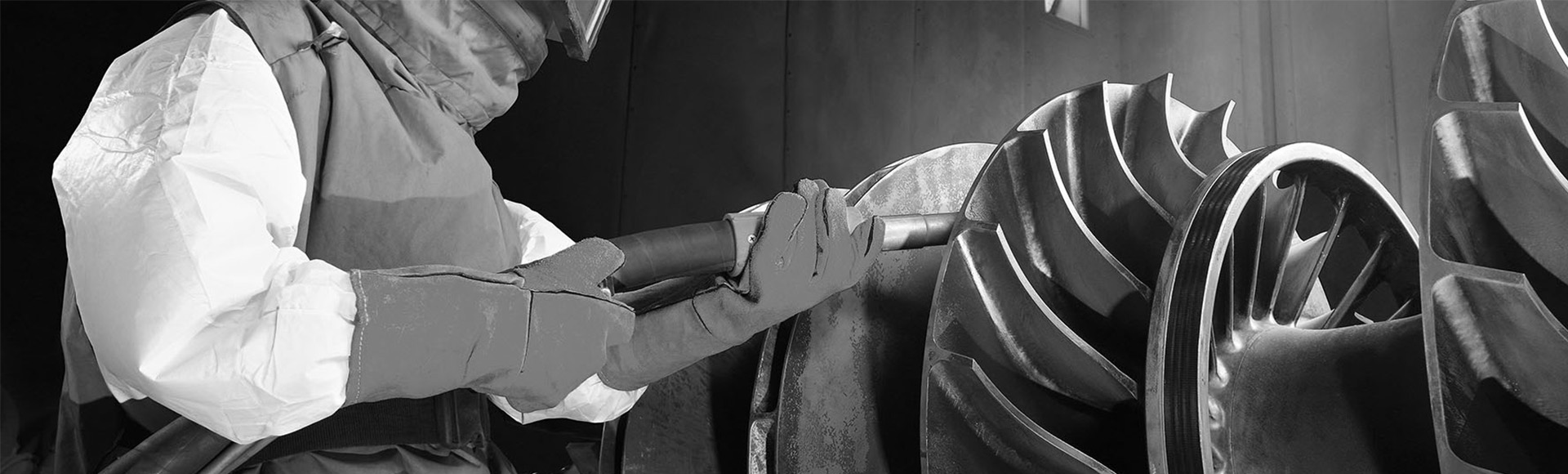
At its core, industrial blasting is a controlled process that uses compressed air or blast wheels to propel abrasive media onto a surface. This removes rust, mill scale, old coatings, and contaminants; creates a defined surface profile for protective coatings; or strengthens components through shot peening. Typical applications span automotive, aerospace, marine, oil & gas, energy, rail, manufacturing, foundries, and more.
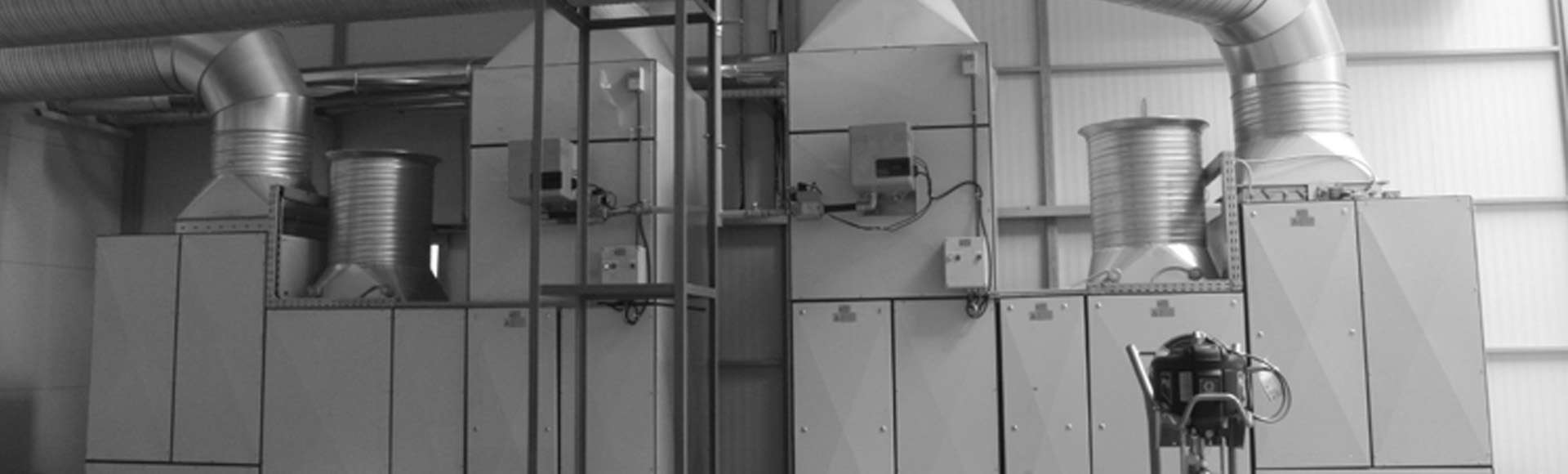
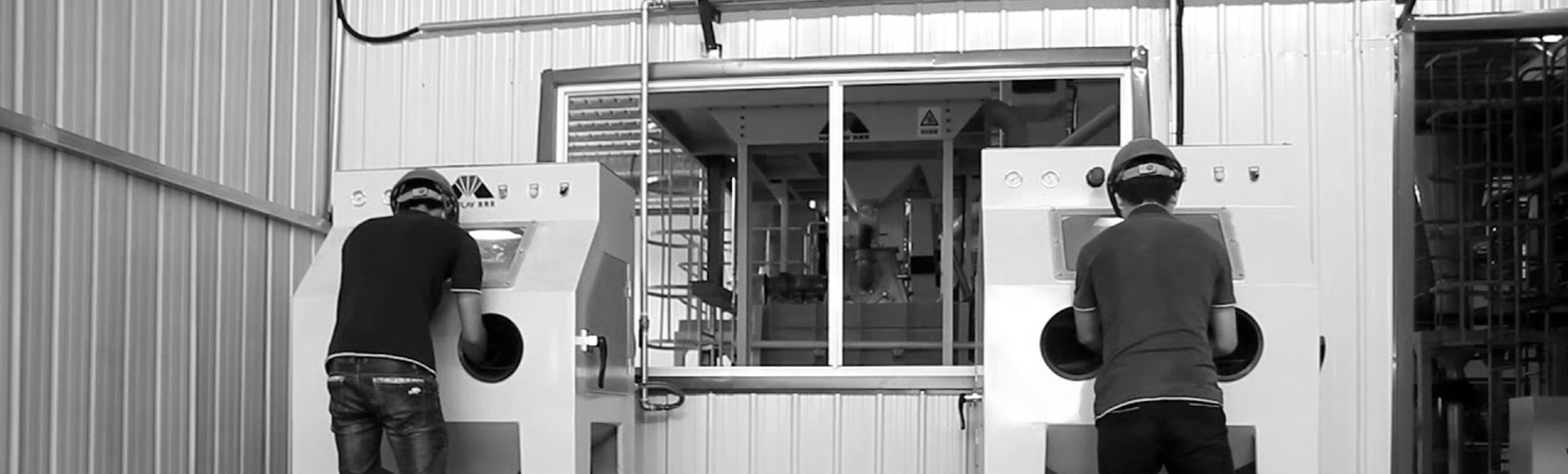
Modern blasting solutions go far beyond manual sandblasting. Today’s systems include blast cabinets, large blasting halls, dust-free vacuum blasting units, continuous shot blasting lines, robots, and fully automated cells with media recycling and dust extraction. Specialized technologies cover everything from large steel plates and hull sections to delicate implants and electronic components.
Minex Group integrates solutions from world-class manufacturers into complete, application-driven systems. Our portfolio covers man
ual cabinets, mobile and vacuum blasting units, automated blasting chambers, robotic cells, and heavy-duty shot blasting machines, together with a wide range of abrasive media. This guide supports procurement, operations, and engineering teams in selecting the right blasting technology for their application and investment plans.
Industrial Blasting in Action: Solutions for Every Sector
Every industry has its own materials, geometries, standards, and EH&S constraints. The sections below outline typical challenges, suitable blasting concepts, and key benefits, helping you map your own requirements to the right solution family.
Aerospace: Surface Treatment for High-Strength Components & Critical Geometries
In aerospace, surface preparation is mission-critical. Turbine blades, landing gear, structural parts, and complex assemblies must withstand extreme loads and meet strict cleanliness and quality requirements.
Challenges in Aerospace Blasting and Surface Preparation
Aerospace production and MRO must strengthen stress-critical parts through controlled shot peening, achieve technical cleanliness and FOD control, process mixed alloys and delicate geometries without dimensional change, and ensure full-coverage treatment of large airframe sections while containing dust during localized rework.
Blasting and Shot Peening Solutions for Aerospace Components
Typical concepts include fully automatic shot peening installations with AMS-certified media for fatigue-critical parts, robotic blasting cells for large, complex structures, enclosed pressure or injection cabinets for precision components, dust-free vacuum blasting systems for on-airframe MRO, and continuous conveyor solutions for high-volume aluminum parts.
Benefits of Blasting in Aerospace Manufacturing and Maintenance
- Extended component life through controlled compressive stresses and optimized surfaces
- Superior coating adhesion and inspection reliability thanks to repeatable cleanliness
- Higher throughput, consistency, and safety via automation and dust-controlled processes
Automotive: Advanced Surface Preparation for Performance & Durability
In automotive manufacturing, surface preparation affects both functional performance and visual quality. From springs and axles to engine blocks and chassis, blasting supports fatigue strength, structural integrity, and consistent coating results.
Challenges in Automotive Blasting and Surface Preparation
Manufacturers must treat a wide mix of materials and part sizes, from high-strength steels to lightweight alloys, meet demanding cleanliness and paint adhesion requirements, and align solutions with both high-throughput lines and smaller, flexible production cells, all under strict EH&S and dust-control constraints.
Blasting Solutions for Automotive Manufacturing
Scalable systems range from automated shot peening installations for springs, axles, and gears to custom high-throughput blast plants for castings and welded structures. Modular blast rooms with integrated dust collection, and precision cabinets for smaller parts, support both serial production and prototyping with consistent surface quality.
Benefits of Blasting in Automotive Manufacturing and Maintenance
- Longer part life and improved fatigue resistance on safety-critical components
- Stable, high-quality finishes that reduce rework and improve coating performance
- Flexible, scalable concepts that match changing production volumes and models
Construction: Surface Preparation for Infrastructure & Prefabricated Components
Infrastructure assets such as bridges, pipelines, tanks, tunnels, and prefabricated elements rely on robust surface preparation for long-term durability and safety. Blasting enables fast, uniform treatment of both steel and concrete.
Challenges in Blasting for Construction and Infrastructure Projects
Engineering teams must remove heavy rust, scale, and aged coatings from large structures, profile concrete for adhesion, work efficiently on-site or in plants, and control dust and debris in line with strict EH&S and environmental regulations.
Blasting Solutions for Concrete and Steel Surface Preparation
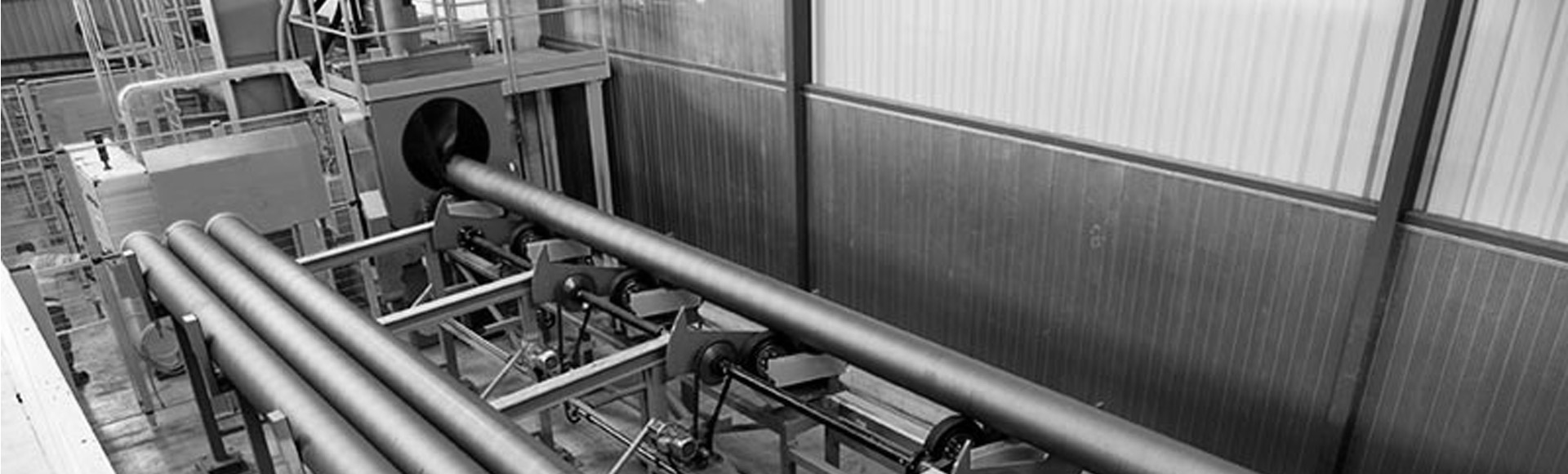
High-volume tunnel, conveyor, and roller lines process prefabricated beams, plates, and rebars in controlled halls, while portable and vacuum blasting systems deliver localized on-site cleaning with effective dust containment. Robotic systems support work inside tanks or confined structures, improving safety and result consistency.
Benefits of Blasting in Construction and Infrastructure Maintenance
- Extended service life of steel and concrete through optimal coating adhesion
- Shorter project timelines via automated high-throughput systems
- Improved worker safety and lower environmental impact through dust control and media recycling
Marine & Shipbuilding: Advanced Surface Preparation for Hulls & Offshore Structures
In the marine environment, steel is exposed to salt water, mechanical wear, and biofouling. Proper blasting underpins corrosion protection and fuel efficiency for vessels and offshore structures.
Challenges in Marine Hull Cleaning and Corrosion Control
Shipyards must remove marine growth, rust, and aged coatings from hulls; descale large steel sections before welding and painting; treat complex geometries on hulls and modules; and manage dust, confined-space hazards, and strict environmental rules during newbuild and MRO projects.
Blasting Solutions for Shipbuilding and Vessel Maintenance
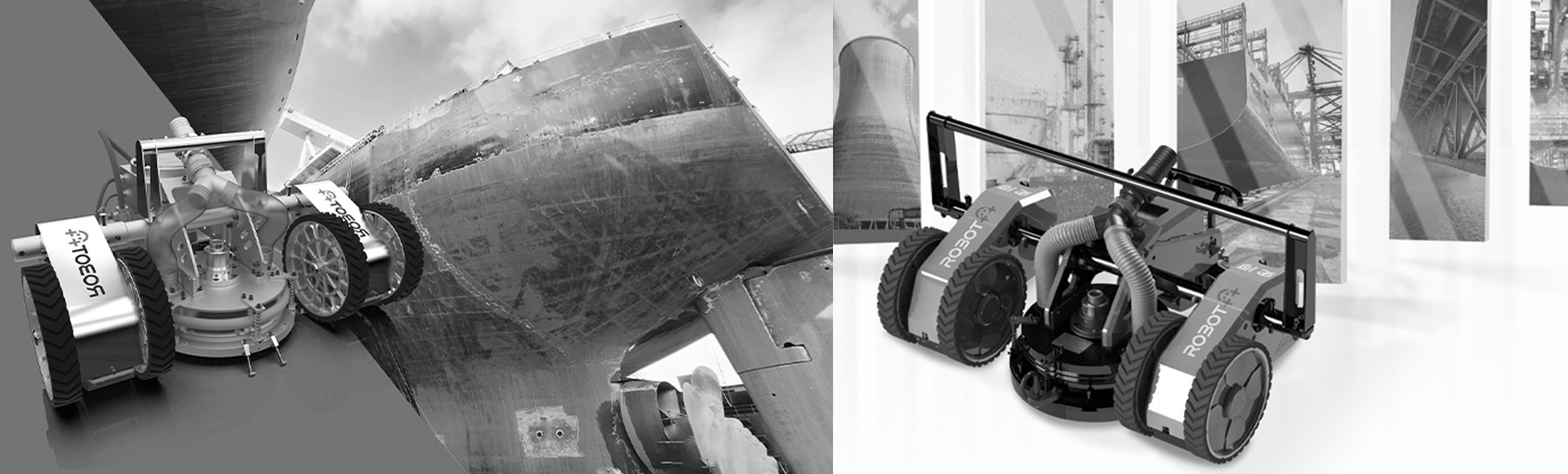
Solutions include high-capacity automatic lines for plates and profiles, robotic and climbing systems for hulls and internal spaces, and dust-free or vacuum blasting units for localized weld-seam work. Large blast halls and cabins allow weather-independent processing with integrated media recovery.
Benefits of Blasting in Shipbuilding and Marine Applications
- Strong, durable marine coatings that reduce corrosion and extend docking intervals
- Lower hydrodynamic drag and fuel consumption after proper hull preparation
- Safer, compliant operations thanks to dust control and reduced manual work in confined areas
Oil & Gas: Pipeline Cleaning for Safe Operations & Asset Longevity
Pipelines, refinery structures, storage tanks, and offshore platforms operate in highly aggressive conditions. Blasting is a key step in preparing these assets for high-performance protective coatings.
Challenges in Blasting for Oil, Gas, and Pipeline Maintenance
Operators must remove heavy rust, scale, and coatings on large steel surfaces, clean internal pipe walls and confined structures, work safely in potentially explosive atmospheres, and keep dust and sparks under tight control while achieving surface profiles that match coating standards.
Blasting Solutions for the Oil & Gas Industry
High-capacity tunnel and roller systems process new pipe sections and structural steel, while robotic and remote-controlled systems handle internal pipelines, tank interiors, and offshore structures. Portable dust-free or vacuum blasting units support localized maintenance in sensitive or ATEX areas with controlled emissions.
Benefits of Blasting in the Oil & Gas Industry
- Improved asset integrity and extended service life for pipelines, tanks, and structures
- Higher safety margins through reliable coating performance and defect visibility
- Safer work in hazardous zones using dust-controlled and remotely operated solutions
Foundries & Metalworking: Casting Cleaning for Quality Finishing
In foundries and metalworking plants, blasting transforms raw castings and forgings into clean, inspectable, and ready-to-machine components.
Challenges in Blasting for Foundries & Metalworking
Foundries must remove sand, scale, and slag from large volumes of castings with complex shapes, achieve uniform cleaning at high throughput, reveal defects early, and manage large quantities of dust and spent media in a demanding environment.
Blasting Solutions for Foundries & Metalworking
Automatic tumblast, hanger, and continuous conveyor machines handle mass cleaning of batches with consistent results. Custom chambers with optimized wheel placement and media management address complex geometries, while precision manual equipment supports delicate finishing on smaller series or prototypes.
Benefits of Blasting in Foundries & Metalworking
- Clean, defect-revealing surfaces that support reliable inspection and machining
- Higher productivity and lower labor costs through automated, continuous systems
- Safer, cleaner plants thanks to integrated dust extraction and abrasive recycling
Manufacturing: Surface Preparation for Coating and Painting
In general manufacturing, blasting is the first step toward durable, high-quality finishes on a wide variety of components and fabricated structures.
Challenges in Manufacturing Surface Preparation
Producers must handle many part sizes and materials, create a consistent anchor profile for powder coating, painting, or plating, meet high throughput targets, avoid harsh chemical treatments, and ensure dust and EH&S compliance across the plant.
Blasting Solutions for Manufacturing Operations
High-throughput continuous, roller, and tunnel systems process large batches of similar parts, while versatile halls and cabins handle larger or mixed geometries. Robotic cells support complex shapes, and manual cabinets enable detailed work on small or delicate items, all integrated with dust extraction and media recycling.
Benefits of Blasting in Manufacturing Operations
- Reliable coating adhesion and reduced rework across product families
- Higher productivity and predictable cycle times via automated concepts
- Safer, more sustainable operations without dependence on aggressive chemicals
Railways & Transportation: Wheel and Track Refurbishment
Railway wheels, axles, bogies, and car bodies are safety-critical components that see extreme loads and harsh environmental conditions. Blasting is central to refurbishment and life-extension programs.
Challenges in Blasting for Railway Wheels, Tracks, and Carriages
Workshops must remove rust, scale, and fatigue-affected surface layers from wheels and axles, clean bogies and couplings, process large carriage bodies, reveal cracks and defects, and manage dust and EH&S requirements in both fixed facilities and on-track work.
Blasting Solutions for Railway and Transportation Applications
Specialized automatic machines treat wheels and axles with uniform, repeatable results. Large blast halls handle complete carriages and wagons, while custom plants process bogies and structural parts. Manual cabinets support precision work on smaller components where careful control is needed.
Benefits of Blasting in Railway and Transportation Applications
- Extended wheelset and component life through improved surface condition
- Better visibility of defects, supporting safe maintenance decisions
- Faster refurbishment cycles and cleaner, safer workshops
Medical Devices & Electronics: Precision Deburring for Delicate Parts
Medical implants and electronic components require micro-accurate surfaces for functionality, biocompatibility, and regulatory compliance. Precision blasting enables controlled deburring, smoothing, and texturing at very fine scales.
Challenges in Blasting for Medical Implants and Electronic Components
Manufacturers must achieve microscopic precision and repeatability, maintain absolute cleanliness and biocompatibility, optimize functional surfaces for heat transfer or conductivity, and prevent any dimensional changes or contamination, often in cleanroom-compatible environments.
Blasting Solutions for Medical Device & Electronics Manufacturing
Robotic precision deburring systems and enclosed cabinets provide fine control over pressure and media flow for delicate components. Automated plants combine robotics with ultra-fine abrasives for high-volume production, supported by advanced dust extraction and air-cleaning tailored to contamination-sensitive environments.
Benefits of Blasting in Medical Device & Electronics Manufacturing
- Burr-free, contamination-free surfaces for safe, reliable implants and components
- Optimized textures for improved thermal, electrical, or mechanical performance
- High repeatability that supports validation and regulatory documentation
Heavy Machinery & Equipment: Blasting for Extreme Conditions
Mining, construction, and agricultural machines operate in highly abrasive and corrosive environments. Their durability depends heavily on the quality of surface preparation before coating.
Challenges in Blasting for Heavy Machinery Production
OEMs must treat large frames, buckets, chassis, and plates; remove weld spatter, rust, and scale; maintain high throughput on heavy parts; and manage substantial dust loads while protecting operators and meeting EH&S requirements.
Blasting Solutions for Heavy Machinery Manufacturing
Automatic roller, tunnel, and batch systems process steel plates and welded assemblies at scale. Custom blast halls accommodate complete machines or large subassemblies, while robotic systems ensure complete coverage of complex geometries. Manual equipment supports targeted work on smaller components and prototypes.
Benefits of Blasting in Heavy Machinery Manufacturing
- Longer coating life and corrosion resistance in extreme field conditions
- Better weld and fabrication quality through thorough cleaning and defect visibility
- Efficient large-scale processing combined with safer, cleaner production areas
Glass & Ceramics: Etching for Decorative & Functional Finishes
Blasting on glass and ceramics enables precise decorative effects and functional textures without chemical etching. It combines high visual quality with safer, more sustainable processing.
Challenges in Blasting for Glass and Ceramic Finishes
Manufacturers and artisans must achieve fine, repeatable textures without cracking or weakening brittle substrates, contain fine dust, support flexible designs from small items to large panels, and rely on consistent micro-abrasives for uniform finishes.
Blasting Solutions for Glass & Ceramics Applications
Precision blast cabinets and systems provide fine control for decorative etching on glassware and tiles. Larger enclosures handle architectural glass and industrial ceramics, while automated and robotic solutions support high-volume production with repeatable patterns and integrated dust extraction.
Benefits of Blasting in Glass & Ceramics Applications
- Permanent decorative and functional finishes without chemical processes
- Preserved structural integrity through low-pressure, controlled blasting
- Clean, safe workplaces due to effective dust containment
Art & Restoration: Gentle Cleaning of Sensitive Surfaces
In art and heritage restoration, blasting offers a controlled, non-destructive alternative to harsh chemicals and aggressive mechanical methods, preserving the original substrate while removing unwanted layers.
Challenges in Blasting for Art and Historical Restoration
Restorers must remove paint, corrosion, or pollution layers without damaging fragile stone, brick, wood, or metal, work in sensitive indoor or public areas, contain dust completely, and use soft, certified abrasives tailored to delicate surfaces.
Blasting Solutions for Art and Restoration Projects
Fine-control manual systems and portable units with adjustable pressure enable gentle cleaning of artifacts and facades. Dust-free and vacuum blasting solutions are ideal for indoor or urban sites, while enclosed cabins support meticulous restoration of smaller objects under controlled conditions.
Benefits of Blasting in Art and Restoration Projects
- Non-destructive cleaning that preserves historical materials and details
- Safer, more environmentally friendly processes compared to chemical stripping
- Flexible adaptation to diverse substrates and site conditions
Energy (Wind & Solar): Component Preparation for Coating Adhesion
Wind and solar assets operate outdoors for decades. Proper blasting of towers, frames, nacelles, and related structures is essential for long-lasting coatings and reliable operation.
Challenges in Surface Preparation for Renewable Energy Components
Engineers must prepare very large steel and composite components exposed to UV, salt, humidity, and high winds; deliver uniform profiles over large surfaces; clean weld seams; protect operators from high dust loads; and ensure stable, year-round production.
Blasting Solutions for Wind & Solar Applications
Continuous roller and tunnel lines handle large steel sections and mounting hardware, while oversized blast halls accommodate towers, blades, and nacelles. Robotic systems treat complex geometries and sensitive composite surfaces with controlled intensity. Manual and portable equipment supports touch-up and small-part preparation.
Benefits of Blasting in Wind & Solar Applications
- Extended lifetime of towers and structures through robust coating systems
- Stable coating performance on large, complex surfaces with consistent profiles
Safer, more sustainable operations with advanced dust and abrasive management
Minex – Your Partner for Industrial Excellence
Across aerospace, automotive, construction, marine, energy, and many other sectors, industrial blasting is a cornerstone of reliability, safety, and lifecycle cost control. The right combination of equipment, media, and process design turns surface preparation into a strategic advantage rather than a bottleneck.
Ready to find your ideal solution? Explore our complete blasting portfolio or go directly to the category that matches your needs.
Still not sure what works best for your application? Our team of experts is ready to provide a personalized consultation based on your components, standards, and production targets.
Frequently Asked Questions
Industrial blasting is a controlled process that uses high-speed streams of abrasive media to clean, shape, or prepare surfaces. It removes rust, scale, coatings, and contaminants, creates a defined profile for coatings, and can introduce beneficial stresses via shot peening across many industries.
Choice depends on part size, geometry, volume, and required finish. High-volume steel processing uses automatic shot blasting lines; large or complex shapes benefit from robotic cells and blast halls; precision work uses enclosed cabinets; while mobile or manual systems support on-site and spot repairs.
Halls and cabins provide stable, repeatable conditions with efficient dust extraction and media recycling. They improve safety, cleanliness, and process control compared with open-site blasting, which is more flexible but harder to contain and standardize.
Media selection depends on substrate, required profile and cleanliness, hardness, and applicable standards. Steel shot and grit are common for aggressive cleaning and peening, while glass beads or other specialty abrasives are used for delicate or precision work.
Yes. Multi-axis robotic cells, automatic shot blasting machines, and integrated handling systems can fully automate blasting, increasing repeatability, capacity, and safety while reducing operator exposure and labor costs.
Effective dust extraction and vacuum blasting reduce airborne contaminants, improve operator visibility and safety, protect the surrounding environment, and enable compliant indoor or on-site operations with lower clean-up effort.
By removing corrosion and contaminants and creating a controlled surface profile, blasting ensures coatings bond properly and shot peening introduces beneficial stresses. This reduces premature failures and extends maintenance intervals.
Operators should use appropriate PPE, follow equipment procedures, ensure proper ventilation and dust collection, and receive regular training. Where possible, automated or remote systems should be used to reduce direct exposure.
Frequency depends on operating conditions, inspection results, and applicable regulations. Assets are typically blasted before initial coating, during major overhauls, and when coating performance or corrosion levels indicate that refurbishment is necessary.
Technical specialists, equipment manufacturers, and reference projects are key resources. For complex requirements, a tailored consultation is recommended to match your components, volumes, and standards with the most suitable blasting concept.