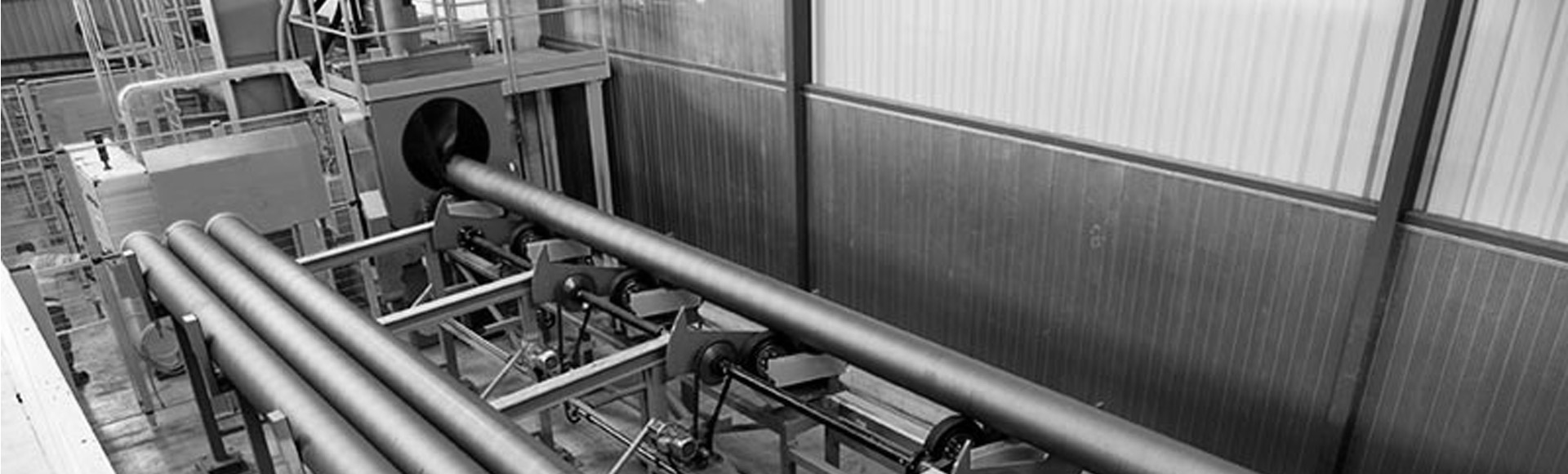
Automatic Shot Blasting Equipment
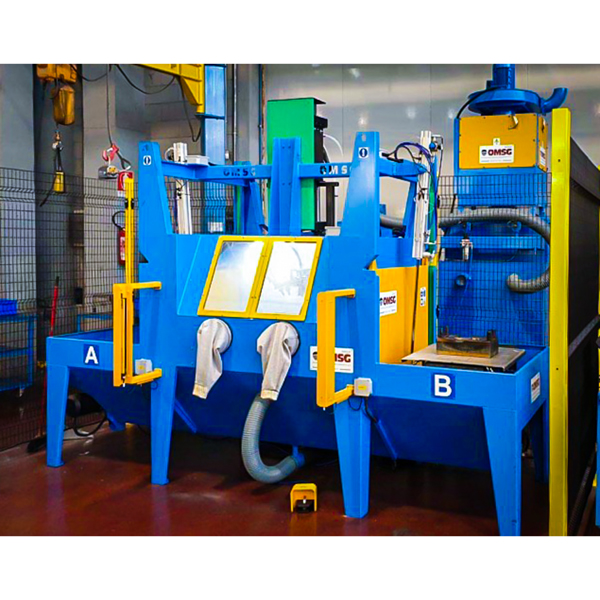
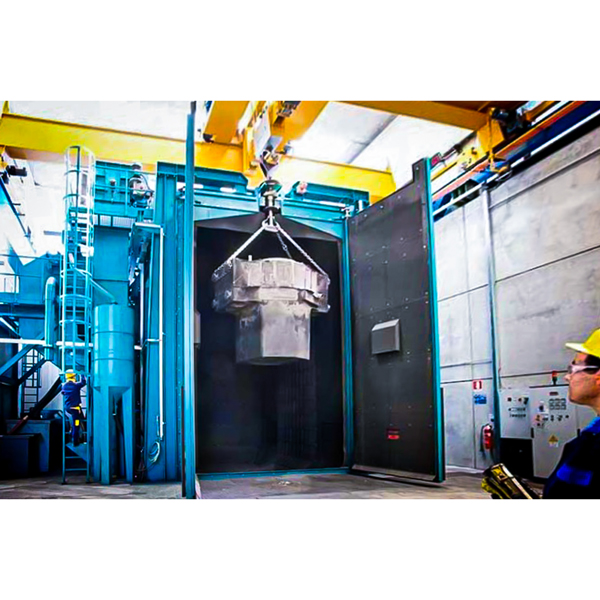
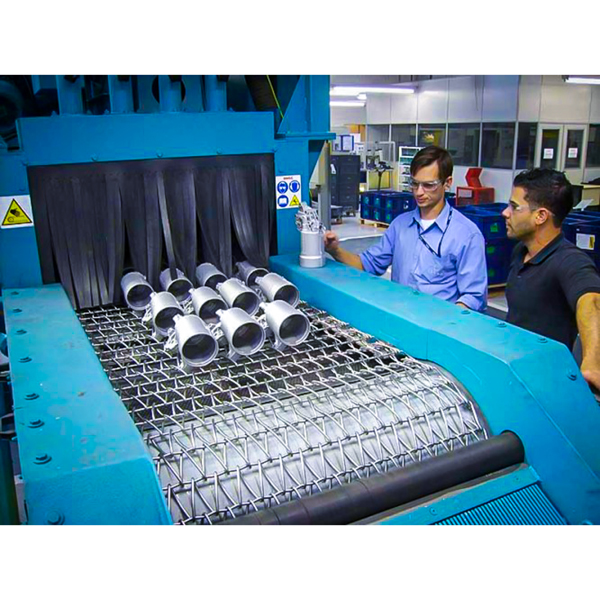
References
How to Select the Right Automatic Shot Blasting Machine: A Practical Framework for Industrial Applications
Selecting the right automatic shot blasting machine is a technical decision that shapes production quality, workflow efficiency, and long-term operational reliability. In sectors such as aerospace, automotive, construction steel, and medical manufacturing, the blasting stage plays a central role in surface cleaning, coating adhesion, corrosion resistance, and the overall performance of metal components.
The choice of equipment depends on four core variables: the characteristics of the workpiece, the finish the process must achieve, the required production throughput, and the level of control needed for consistent operation. Together, these factors determine how each component should be handled inside the blast chamber and how abrasive energy must be applied to achieve stable, repeatable results.
This guide serves as a practical framework to support informed decision-making. By understanding these variables, you can navigate the MINEX range of automatic shot blasting equipment with confidence and identify the machine configuration that aligns with your parts, your surface preparation goals, and your broader production environment.
Understanding the Workpiece: The Starting Point for Machine Selection
Among the four variables shaping machine choice, the characteristics of the workpiece are often the most decisive. The component’s geometry, mass, structural layout, and sensitivity determine not only how it can be positioned within the machine, but also which blasting dynamics will produce a consistent, high-quality finish. Different machine architectures are engineered around these physical realities, making an accurate understanding of the workpiece the starting point for any reliable selection.
Component Geometry: Choosing the Appropriate Handling Method
A component’s geometry dictates how it moves through the blast cleaning environment. Parts with protruding features, recesses, or complex assemblies often need controlled rotation or suspension to ensure full exposure to the abrasive stream. Because geometry governs how a workpiece interacts with abrasive flow and blasting energy, it naturally guides the choice of handling approach.
For Irregular or Multi-Sided Components: Hook-Based Systems
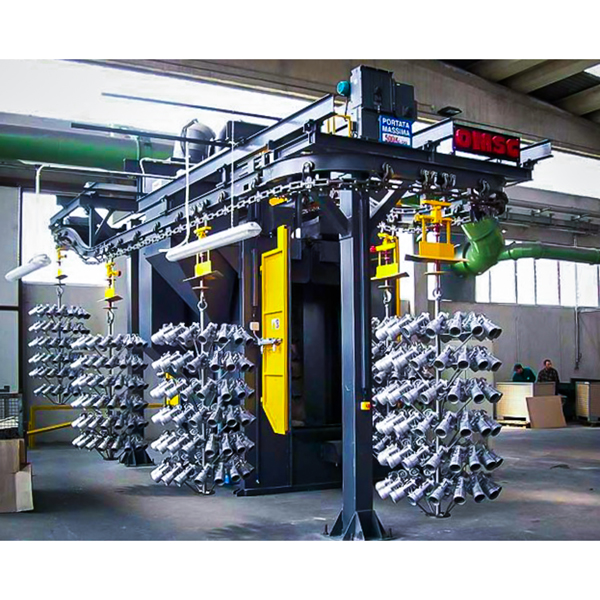
When dealing with asymmetrical shapes or objects that cannot rest stably on a belt or table, hook systems such as CAPRI or SANDERMATIC provide the most effective handling solution. These machines suspend the components individually or in small batches and rotate them through the blast zone. This movement ensures complete coverage of even the most complex surfaces, making them ideal for aerospace components, automotive castings, heavy forgings, and structural steel elements.
For Long or Horizontally Transported Parts: Tunnel-Type Machines
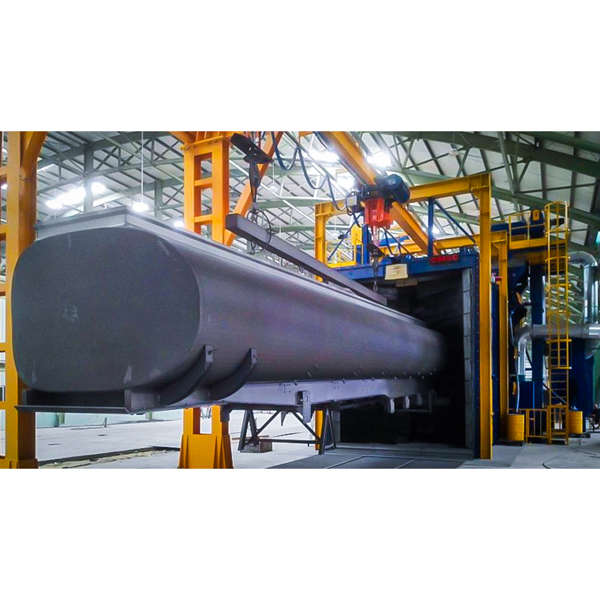
Workpieces such as beams, jigs, or fabricated steel profiles benefit from a continuous linear path. TUNNELBLAST machines support this movement, enabling predictable coverage and high, stable throughput—especially in construction, marine, and heavy equipment manufacturing.
For Symmetrical Components: Rotary Table Machines
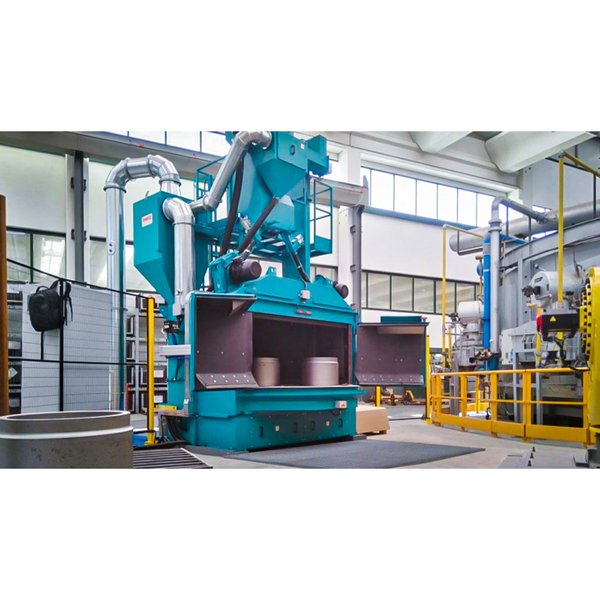
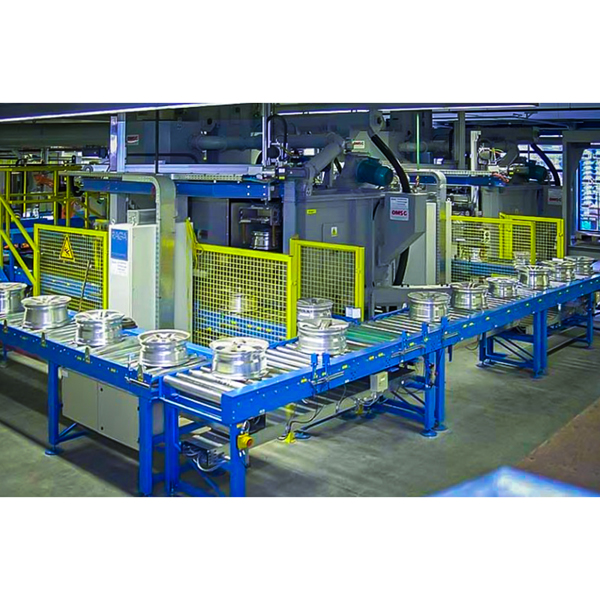
Parts defined by rotational symmetry—wheels, gears, disks—achieve optimal results when rotated around a fixed axis. RT Rotary Table Shot Blasting Machines use this symmetry to deliver consistent surface preparation with minimal adjustment.
Ultimately, geometry determines the handling strategy required for effective, uniform shot blasting. Aligning the handling method with the shape of the component ensures stable quality, efficient operation, and reliable blasting performance.
Workpiece Size & Weight: Matching Parts to Machine Load Capacity
The size and weight of a workpiece influence every mechanical element of an automatic shot blasting machine. Chamber width, blast turbines, abrasive flow, and the strength of the conveyor or hoist must all support the component’s mass. Large steel structures, heavy castings, and oversized metal surfaces place higher demands on the equipment, and choosing a system with insufficient load capacity can reduce blasting efficiency or accelerate wear.
For Heavy or Oversized Components: High-Capacity Hook and Conveyor Systems
Applications involving structural steel, railway elements, marine components, or substantial castings benefit from robust, high-load blasting equipment. CAPRI Hook Shot Blasting Machines—available from 2,000 to 5,000 kg and up to 16,000 kg for custom configurations—offer the stability and controlled rotation required for reliable blast cleaning of heavy parts.
For Long Structural Profiles and Plates: Roller Conveyor Solutions
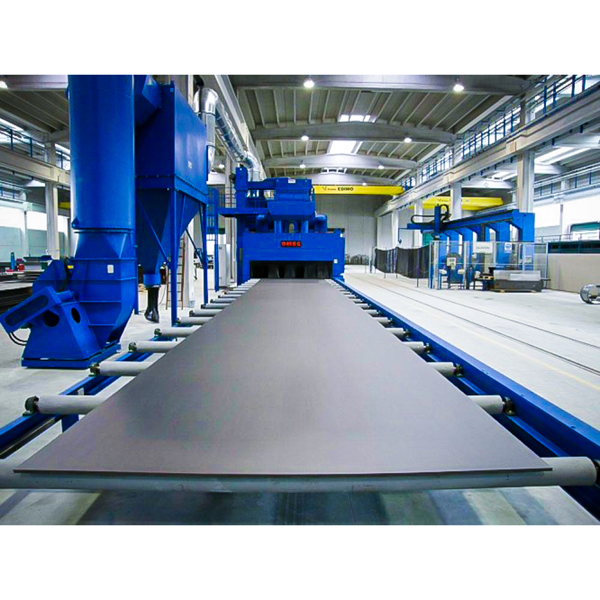
Large steel plates, beams, and prefabricated construction elements require stable, floor-level transport. The LAUCO Roller Conveyor Shot Blasting Machine provides a continuous, aligned feed path that ensures uniform surface cleaning across long metal profiles without the handling limitations of overhead systems.
For Bulk Loads of Smaller Components: Tumblast Belt Systems
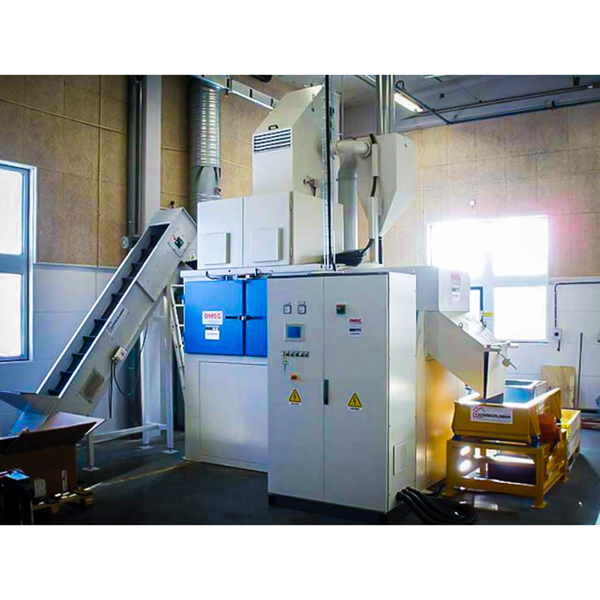
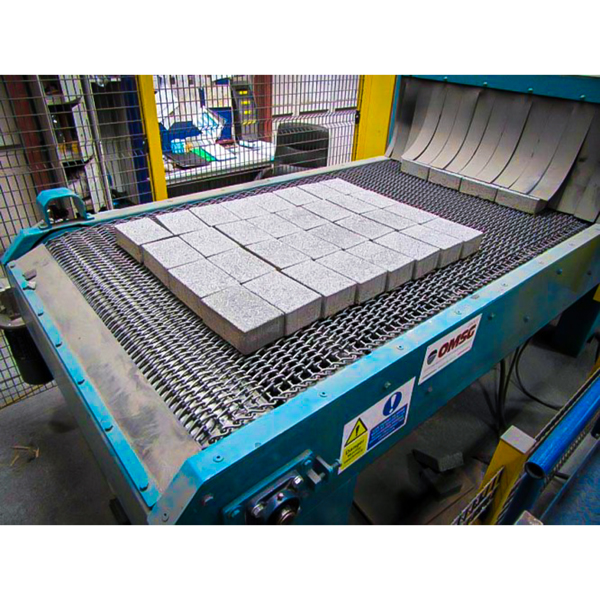
When smaller components are processed in batches, Tappeto Rampante® Steel Belt tumblast machines offer efficient movement and consistent abrasive exposure. With typical capacities between 600 and 3,000 kg, they maintain high productivity while delivering uniform blast cleaning of castings, pressed parts, and various small metal components.
Selecting a machine with the right load capacity ensures stable part movement, consistent abrasive impact, and long-term reliability. When the equipment matches the workpiece scale, the shot blasting process operates within optimal performance parameters.
Workpiece Type: Selecting Systems for Symmetrical, Irregular, or Bulk Loads
Different categories of components behave differently during shot blasting, and understanding these distinctions is essential for selecting the right equipment. Whether a part is symmetrical, highly irregular, or processed in bulk shapes how it should move inside the blast chamber and how abrasive energy must be applied for consistent surface cleaning. When the machine architecture reflects the nature of the workpiece, the blasting process becomes more predictable and efficient.
For Symmetrical Components: Rotary Table Precision
Components such as gears, wheels, disks, and rings benefit from controlled, steady rotation. RT Rotary Table Shot Blasting Machines leverage this symmetry to deliver even abrasive exposure across all faces. Their predictable movement makes them the preferred solution when uniform blast cleaning is required across identical metal components.
For Bulk Small Parts: Rubber or Steel Belt Tumblast Systems
Manufacturers processing screws, bolts, brackets, small castings, and pressed metal parts rely on the efficiency of batch tumbling. Tappeto Rampante® Rubber Belt systems provide gentle handling for lighter items, while Steel Belt tumblast machines manage heavier components. Their continuous tumbling action ensures every piece receives consistent abrasive impact without manual intervention.
For Mixed or Irregular Assemblies: Hook-Based Flexibility
When production involves components that vary widely in shape or size, hook systems such as CAPRI and SANDERMATIC offer the required versatility. By suspending parts and rotating them through the abrasive stream, these machines accommodate irregular geometries, complex contours, and mixed material batches without the need for specialized fixtures.
The nature of the component—symmetrical, irregular, or bulk—dictates the motion needed for reliable blast cleaning. Matching the handling system to the workpiece type ensures consistent results, optimized abrasive flow, and stable throughput in any industrial environment.
Internal vs. External Structures: Blasting Pipes, Cylinders & Hollow Parts
Some components require treatment only on the exterior, while others demand internal surface cleaning as part of corrosion prevention, coating preparation, or removal of contaminants. Cylindrical forms—such as pipes, bars, pressure cylinders, and gas bottles—present specific challenges. Their length, curvature, and enclosed spaces influence how abrasive energy can reach every surface. Choosing the right automatic shot blasting machine for these geometries ensures uniform cleaning, stable abrasive flow, and reliable performance across both internal and external metal surfaces.
For External Surfaces of Cylindrical Components: Pipe and Roller Systems
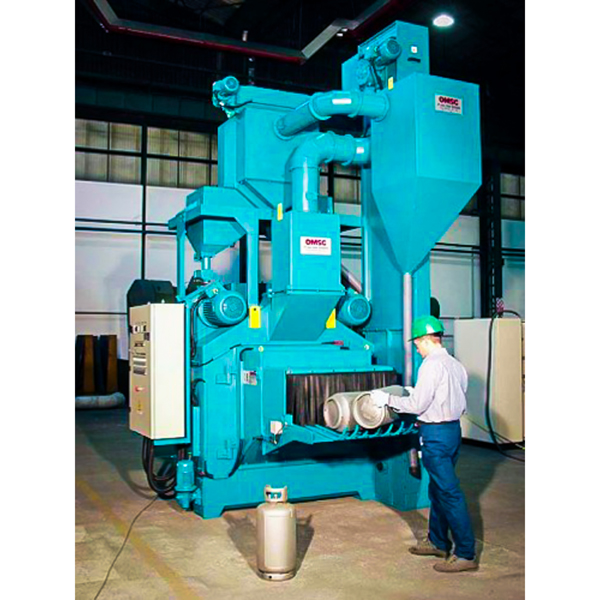
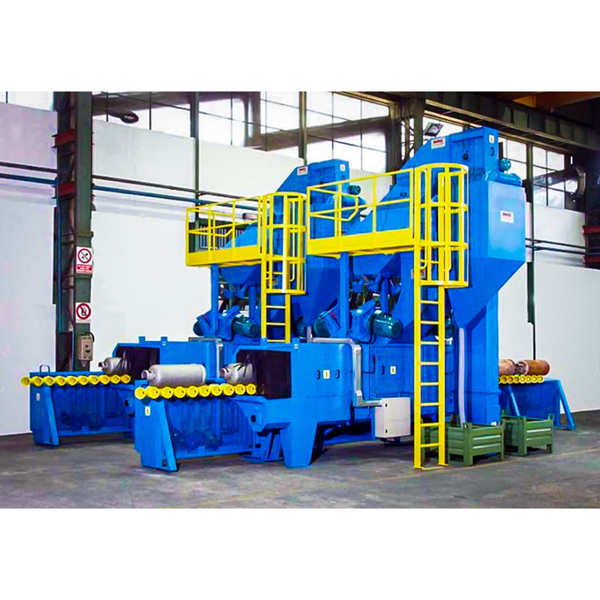
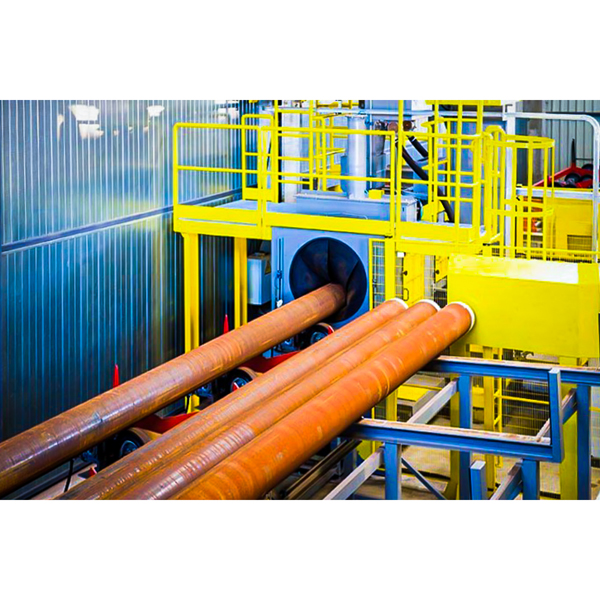
Pipelines, bars, and other cylindrical fabrications benefit from continuous, helical movement that exposes all outer surfaces evenly to abrasive impact. SANDERPIPES is designed specifically for external pipe blasting, delivering consistent surface cleaning and integrating seamlessly with downstream coating or painting lines. For gas bottles, bars, and similar shapes, RBC Shot Blasting Machines with Diabolo Rollers maintain stable rotation and steady feed alignment, ensuring fully uniform coverage.
For Internal Surfaces: Dedicated Internal-Blasting Solutions
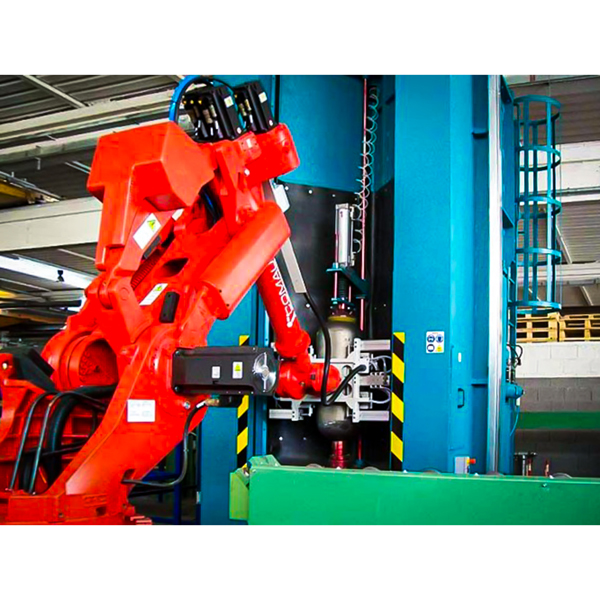
When the interior of a vessel or cylinder requires blast cleaning—common in gas storage, pressure equipment, and industrial containers—standard blasting equipment is not sufficient. INNERBLAST machines address this need through targeted, lance-based abrasive delivery that reaches deep inside enclosed spaces. This approach provides complete internal surface preparation without compromising the structural integrity of the component.
Understanding whether the workpiece requires internal or external treatment is essential. Machines designed around the structural orientation of pipes, cylinders, and hollow parts ensure that both internal and external surfaces receive the correct abrasive exposure. Selecting equipment aligned with these requirements guarantees effective, safe, and reliable blasting results for pressure-bearing or safety-critical components.
Component Fragility: Ensuring Safe Processing for Delicate Parts
Not all components can withstand the high-impact motion of aggressive shot blasting. In sectors such as medical devices, electronics, precision engineering, and art restoration, many parts feature fine details, coated surfaces, or lightweight materials that are vulnerable to excessive abrasive impact. For these sensitive components, the selected shot blasting equipment must deliver controlled energy and gentle handling to avoid surface damage or deformation.
For Sensitive or Lightweight Components: Soft-Motion Rubber Belt Systems
The ROTOFLOW Continuous Flow Machine is designed specifically for fragile or lightweight parts. Its soft-motion rubber belt mill cushions the components as they pass through the blast chamber, preventing clustering and minimizing collision. This controlled movement maintains the integrity of delicate surfaces while delivering consistent surface cleaning.
For Intricate or Ultra-Sensitive Parts: Programmable Airblast Systems
When mechanical tumbling is too aggressive, precision airblast equipment becomes essential. AIRBLAST Automatic Sandblasting Machines use programmable nozzle paths across the XYZ axes, allowing abrasive energy to be directed only where needed. This ensures safe cleaning of intricate geometries, fine recesses, and sensitive metal components without exposing them to unnecessary mechanical stress.
Selecting equipment that respects the mechanical limits of fragile workpieces ensures consistent quality and reduces scrap risk. By matching the blasting method to the component’s tolerance, manufacturers achieve reliable surface preparation without compromising the part’s function, finish, or structural integrity.
Defining the Required Surface Outcome
Once the workpiece characteristics are clear, the next step is defining the surface outcome the shot blasting process must achieve. Different objectives demand different blasting behaviours—from forceful scale removal to delicate cosmetic cleaning or precisely controlled shot peening. The finish defines the machine’s required power, level of control, and overall configuration, ensuring that the blasting operation supports both performance standards and downstream processes.
Cleaning, Descaling, Cosmetic Finishing, Texturing & Peening Needs
Each blasting objective places distinct demands on the system. Heavy scale removal requires high-impact wheel blasting. Coating preparation depends on achieving an even surface profile. Precision deburring and peening require tightly controlled energy delivery. Decorative texturing relies on repeatable patterns. Because these needs vary widely, each corresponds naturally to specific machine families.
For Heavy Cleaning and Descaling: High-Energy Wheel Blast Systems
Manufacturing plants and foundries often work with castings or steel parts coated in rust, heat scale, or contaminants. Hook systems, roller conveyors, and tumblast machines provide the impact force and abrasive flow needed to restore these surfaces efficiently before coating or machining.
For Surface Texturing and Specialty Finishes: Stone and Construction Applications
In stone and concrete treatment, the goal is often aesthetic rather than structural. TRL Shot Blasting Machines support this by allowing operators to regulate texture precisely, creating finishes ranging from subtle aging effects to aggressive bush-hammer patterns.
For Cosmetic Cleaning or Gentle Finishes: Soft-Action Blasting Systems
Industries that require pristine surfaces—such as electronics, medical devices, or decorative items—depend on systems that avoid unnecessary impact. Continuous-flow machines like ROTOFLOW and precise AIRBLAST units deliver clean, even finishes without damaging delicate surfaces.
For Shot Peening and Fatigue Strength Improvement: Precision Table Systems
Where surface integrity directly affects component performance, as in aerospace and high-demand automotive applications, TR Rotary Table Machines with Satellites offer the controlled movement necessary for effective shot peening. Adjustable satellite rotation ensures the process meets strict mechanical requirements.
Clarifying whether the goal is cleaning, texturing, cosmetic refinement, or shot peening quickly narrows the equipment selection to the systems designed to deliver the required finish consistently.
Precision Blasting for Critical Geometries: When Advanced Control Is Essential
Some components—especially in aerospace, medical, and high-performance automotive applications—require a level of directional accuracy that standard wheel blasting cannot provide. These parts often feature narrow recesses, complex contours, or functional surfaces that demand extremely uniform coverage. For such geometries, the shot blasting process must deliver controlled abrasive energy with repeatable precision to protect the component’s performance and structural integrity.
For Intricate or High-Value Components: Rotary Tables With Satellites
TR Rotary Table Shot Blasting Machines equipped with satellites are designed to reach recessed or complex shapes. The coordinated motion of the table and satellites ensures that every surface receives consistent abrasive exposure, making them suitable for precision deburring and controlled shot peening.
For Ultra-Targeted Treatment: Programmable Airblast Systems
When parts are too delicate or detailed for wheel blasting, AIRBLAST Automatic Sandblasting Machines provide nozzle-based accuracy. Their programmable paths along the XYZ axes allow operators to target specific areas while avoiding sensitive geometries, ensuring clean, precise results without excessive abrasive impact.
When components require consistent directional accuracy, uniform abrasive flow, and repeatable coverage, the most effective solutions are rotary tables with satellites or programmable airblast systems. These machines offer the level of control necessary to treat critical geometries without compromising quality.
Abrasive Media Compatibility: How Abrasive Choice Shapes Machine Design
Abrasive media varies widely in density, hardness, and fragmentation behaviour. These differences affect machine wear, separator efficiency, and the stability of the blasting process. Ensuring that the chosen equipment is compatible with the intended abrasive helps maintain both surface quality and equipment longevity.
For High-Intensity Steel Shot or Grit: Robust Wheel Blast Systems
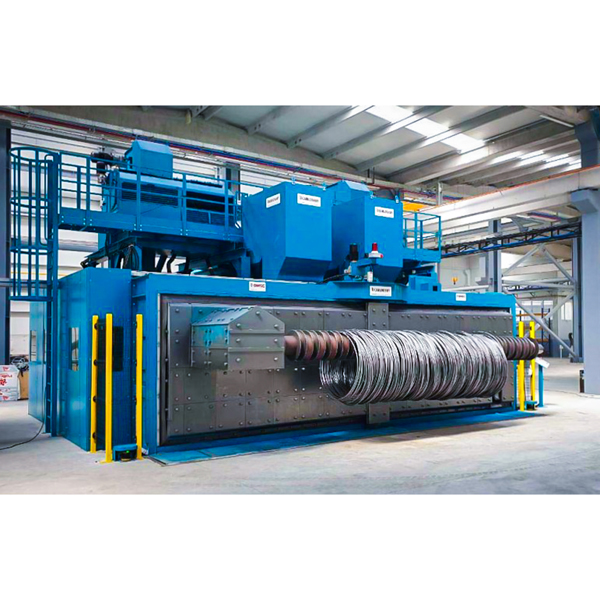
Industrial descaling, wire preparation, and heavy cleaning typically use steel shot or steel grit. Machines such as the DS DESCALER (SWS) or high-capacity hook and conveyor systems are engineered to withstand higher abrasive impact and maintain steady recycling and separation over long production cycles.
For Lighter or Specialty Media: Flexible Airblast Machines
When the process requires glass beads, garnet, or other specialty abrasives, AIRBLAST systems offer better compatibility. Their air-driven delivery preserves the properties of lighter media and reduces wear on machine components, making them suitable for cosmetic or precision surface cleaning.
Matching the abrasive to the right machine ensures stable performance, efficient media use, and consistent results. When the abrasive and equipment work together, the shot blasting process becomes more predictable and cost-effective.
Aligning Equipment With Your Production Flow
After defining the workpiece and the required surface outcome, the next step is understanding how the blasting stage fits into your broader production flow. Throughput, continuity, and automation determine whether a machine can support the operational rhythm of the plant—whether you run flexible batch cycles or require continuous, in-line blasting. When the machine architecture matches the production pace, the process delivers predictable output with minimal bottlenecks.
Production Throughput & Automation: Choosing Batch vs. Continuous Systems
Every facility works at its own rhythm. Some produce in small, varied batches; others rely on steady, uninterrupted flow. The blasting system must support that tempo without restricting downstream processes.
For Low to Medium Output: Batch-Based Tumblast and Hook Systems
Batch processing works well for varied product mixes or modest volumes. Tumblast machines and hook systems allow operators to load, blast, and unload discrete batches, providing flexibility for foundries, small manufacturers, and maintenance operations.
For Medium to High Output: Continuous Roller or Carousel Systems
When production requires uninterrupted flow, continuous conveyor equipment offers stable throughput. The SANDERMATIC carousel hook system and LAUCO roller conveyor machines maintain consistent part movement through the blasting chamber, supporting smooth integration with upstream and downstream operations.
For Very High Output or Fully In-Line Production: Integrated Conveyor Lines
Large-scale manufacturing—particularly in automotive, construction steel, and casting operations—often incorporates blasting directly into automated coating or finishing lines. Machines built for true in-line operation maintain consistent speed, orientation, and abrasive delivery across extended production runs.
Integration Requirements: Connecting Blasting to Coating & Downstream Processes
In many plants, shot blasting is only one part of a larger surface preparation chain. Smooth integration with preheating, coating, painting, or drying stages is essential to maintain efficiency across the entire line.
For Construction Steel, Pipelines, or Rolling Stock: In-Line Compatible Systems
LAUCO roller conveyor systems can link directly to coating or painting lines, ensuring uninterrupted flow from blast cleaning to finishing. SANDERPIPES supports continuous pipe processing and aligns easily with tarring, coating, or painting units, maintaining consistent feed orientation and speed.
Automation & Labor Efficiency: Enhancing Consistency and Reducing Manual Intervention
As product tolerances become tighter and throughput increases, manual intervention becomes less viable. Automated control systems not only improve repeatability but also reduce operator workload and the likelihood of process deviations.
For High-Precision or High-Tech Production: PLC-Driven Systems
Industries such as aerospace, medical devices, and advanced manufacturing rely on precise recipe control and automated motion. Systems equipped with modern controls—such as Siemens S7-1200 PLCs and TP700 COMFORT HMIs—allow operators to store process parameters, monitor performance, and make adjustments with confidence.
In airblast applications, AIRBLAST automatic systems provide programmable nozzle paths across the XYZ axes, enabling highly consistent, automated treatment of complex geometries.
Handling Large or Long Components: When Specialized Transport Systems Are Needed
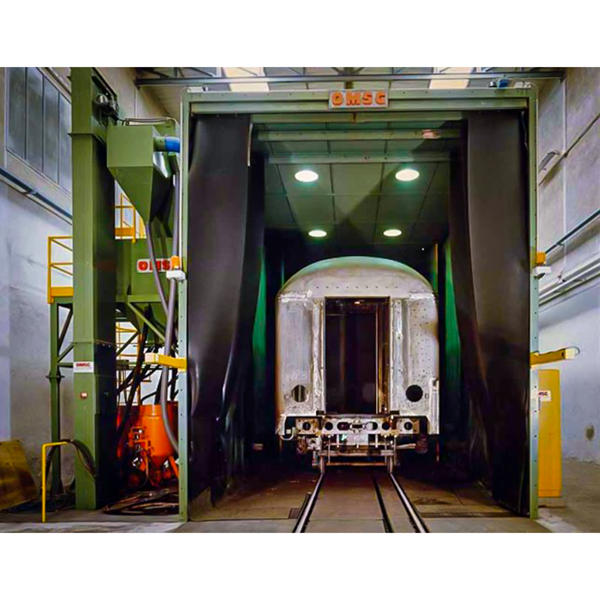
Some components—such as railway wagons, oversized frames, or long fabricated assemblies—exceed the capacity of standard handling systems and require machines engineered to support extended length, increased mass, or unusual geometry.
For Large and Linear Components: Tunnel-Type Machines With Driven Trolleys
Equipment such as the WR 4030-PXC uses a driven trolley system to guide full-size wagons or long structures through the blast chamber. This ensures stable movement and uniform abrasive coverage across the entire component.
Ensuring Long-Term Reliability & Operational Control
Beyond selecting the right machine for the workpiece and production flow, long-term performance depends on how precisely the system can be controlled and how efficiently it can be maintained. Stable abrasive flow, reliable component movement, and responsive support all contribute to predictable operating costs and consistent surface cleaning over time. This final variable ensures that the selected machine not only performs well on day one but continues to do so under real industrial conditions.
Precision of Blasting Parameters: Why Fine-Tuned Control Matters
Aerospace, automotive, and precision metalworking applications depend on accurate impact energy and uniform abrasive coverage. Even small variations in turbine speed or abrasive delivery can change surface roughness or affect mechanical properties. Machines equipped with adjustable turbine speed (via inverter control) and variable shot valves allow operators to tune the blasting process to the material, geometry, and finish required.
Residual Material Management: Maintaining Abrasive Purity & System Efficiency
In foundries and casting environments, sand, scale, and debris can contaminate the abrasive mix, reducing blasting efficiency and accelerating wear. Systems equipped with magnetic separators, vibrating screens, and abrasive cleaning units remove unwanted material continuously. Clean abrasive media ensures stable performance, longer machine life, and more consistent results on metal surfaces.
Remote Support & Diagnostics: Protecting Uptime With Fast Issue Resolution
Downtime affects every industry, especially facilities that operate multiple production lines. Machines equipped with teleassistance and remote diagnostic tools make it possible to identify issues quickly without waiting for on-site intervention. Real-time monitoring shortens troubleshooting time and helps keep production stable.
Space Constraints & Footprint Optimization: Selecting Compact Machine Designs
Not all facilities have the space for large blasting installations. Compact rotary table systems—such as RT Table Shot Blasters—deliver full performance within a small footprint. Likewise, compact gas-bottle machines like the RB model support precise cleaning where larger systems cannot fit. Choosing the appropriate form factor ensures the blasting stage integrates smoothly into existing layouts without disrupting production flow.
Making Your Final Decision
Quick-Reference Selection Guide: Matching Machine Types to Your Requirements
| Your Requirement | Recommended Machine Families / Systems |
|---|---|
| WORKPIECE CHARACTERISTICS | |
| Small parts processed in bulk | Tumblast systems (Tappeto Rampante® Rubber / Steel Belt) |
| Large or heavy components | Hook systems (CAPRI, SANDERMATIC) • Roller conveyors (LAUCO) |
| Symmetrical parts | Rotary Tables (RT Series) |
| Cylindrical – external | SANDERPIPES • RBC Diabolo Roller Machines |
| Cylindrical – internal | INNERBLAST internal blasting systems |
| Delicate or fragile components | ROTOFLOW continuous rubber-belt • AIRBLAST programmable systems |
| REQUIRED SURFACE FINISH | |
| High-precision shot peening | TR Rotary Tables with Satellites |
| Light cosmetic cleaning | ROTOFLOW continuous rubber-belt systems |
| Decorative or functional texturing | TRL Stone & Surface Finishing Machines |
| Heavy rust or scale removal | Hook systems • Roller conveyor systems |
| Controlled deburring of intricate parts | AIRBLAST programmable nozzle systems |
| PRODUCTION FLOW | |
| Batch-based workflow | Hook systems • Tumblast systems |
| Continuous, high-volume operation | Carousel hooks (SANDERMATIC) • Roller conveyors (LAUCO) |
| Fully in-line with coating/painting | SANDERPIPES • LAUCO in-line systems |
| Mixed part types / flexible operations | CAPRI Hook Systems |
| OPERATIONAL REQUIREMENTS | |
| High automation / recipe control | PLC/HMI-controlled systems (Siemens S7-1200, TP700 COMFORT) |
| Low maintenance & long service life | Steel belt tumblast systems • Machines with modular wear parts |
| Remote support / multi-site operation | Machines with Teleassistance & remote diagnostics |
| Limited floor space | Compact RT Rotary Tables • Compact RB Gas-Bottle Machines |
| High process precision | Machines with variable abrasive flow & inverter-controlled turbines |
Choosing the Best Machine Configuration for Your Application
Selecting the right automatic shot blasting machine ultimately comes down to aligning a few core parameters: the load capacity your parts require, the chamber dimensions they need, the handling method that fits their geometry, and the turbine power and automation level appropriate for your production flow. When reviewing the MINEX equipment range, focus on these fundamentals first — they will quickly narrow the selection to the systems that match your component mix, surface requirements, and workflow structure.
The next consideration is integration. If your operation must connect blasting directly with coating, painting, drying, machining, or inspection lines, look for machines designed for continuous, in-line transport. Systems such as LAUCO roller conveyors or SANDERPIPES pipe blasters maintain consistent orientation and speed, making them ideal for automated production sequences. For facilities with space limitations or retrofit constraints, compact rotary tables or small-footprint gas-bottle blasters deliver full performance without imposing heavy layout changes.
If your production involves several part types, requires specialized handling, or depends on precise recipe control, a technical assessment is recommended. Our engineering team can help you validate blasting requirements, evaluate abrasive compatibility, and determine whether batch, continuous, or fully in-line systems will deliver the most efficient results. We can also assist with test runs and design custom configurations to ensure a perfect fit for your plant.
If you’d like expert guidance, reach out to our specialists — we’ll help you compare options, confirm technical feasibility, and choose the most efficient and reliable configuration for your application
Frequently Asked Questions
Automatic shot blasting machines use high‑speed blast wheels or nozzles to accelerate abrasive media onto the component surface while a handling system moves the parts through the blast zone. Media is continuously collected, cleaned, and recirculated so that impact energy and exposure time remain stable from cycle to cycle.
Machine choice starts from the part: bulk small components typically run in tumblast systems, irregular or assembled parts on hooks or trolleys, plates and profiles on roller conveyors, and rotationally symmetrical pieces on rotary tables. The selected architecture must allow full access to all critical surfaces while safely supporting the part’s dimensions and weight.
If the goal is heavy cleaning or descaling, high‑energy wheel blast systems with aggressive media and longer dwell times are appropriate. For cosmetic finishing, light texturing, or controlled shot peening, machines with finer media, tighter motion control, and more precise parameter adjustment are preferred.
Wheel‑blast systems use motor‑driven turbines to deliver high media throughput and low cost per square meter on robust metal parts. Airblast systems rely on compressed air and nozzles, offering lower productivity but much more directional control, making them suitable for intricate geometries and sensitive components.
Media density, hardness, and grain size determine impact energy, surface profile, and internal wear inside the machine. Equipment designed for steel shot or grit uses robust turbines, liners, and separators, while systems intended for lighter abrasives use different metering, reclaim, and dust‑collection configurations to keep the process stable.
Batch tumblast and hook machines fit flexible or lower‑volume production, whereas continuous roller conveyors and tunnel systems support constant, high‑throughput operation. Automation options such as recipe control, synchronized conveyors, and automated loading help the blasting stage keep pace with upstream and downstream processes.
Key tasks include inspecting and replacing wear parts on blast wheels or nozzles, checking chamber liners and seals, cleaning and adjusting the media separator, and monitoring conveyor elements and dust filters. A structured preventive schedule keeps blast quality consistent and reduces unplanned stoppages.
Screens, air‑wash separators, and, where needed, magnetic separators remove broken media, dust, and contaminants from the abrasive stream. Clean, well‑graded media produces more uniform finishes, reduces consumption, and slows wear on internal components, directly lowering the cost per blasted part.
PLC‑based control with an HMI allows operators to store process recipes, synchronize wheel speeds, media dosing, and conveyor motion, and supervise alarms. Additional sensors for media level, vibration, temperature, and filter pressure provide early warnings that support condition‑based maintenance.
Ceiling height, floor area, and access routes determine whether you can install long roller conveyors, tall hook machines, or only compact table or cabinet systems. Evaluating layout constraints early helps focus the selection on configurations that fit physically while still delivering the required capacity and integration with existing lines.