Surface Preparation Robots
References
When Are Robotic Blasting Systems the Best Choice?
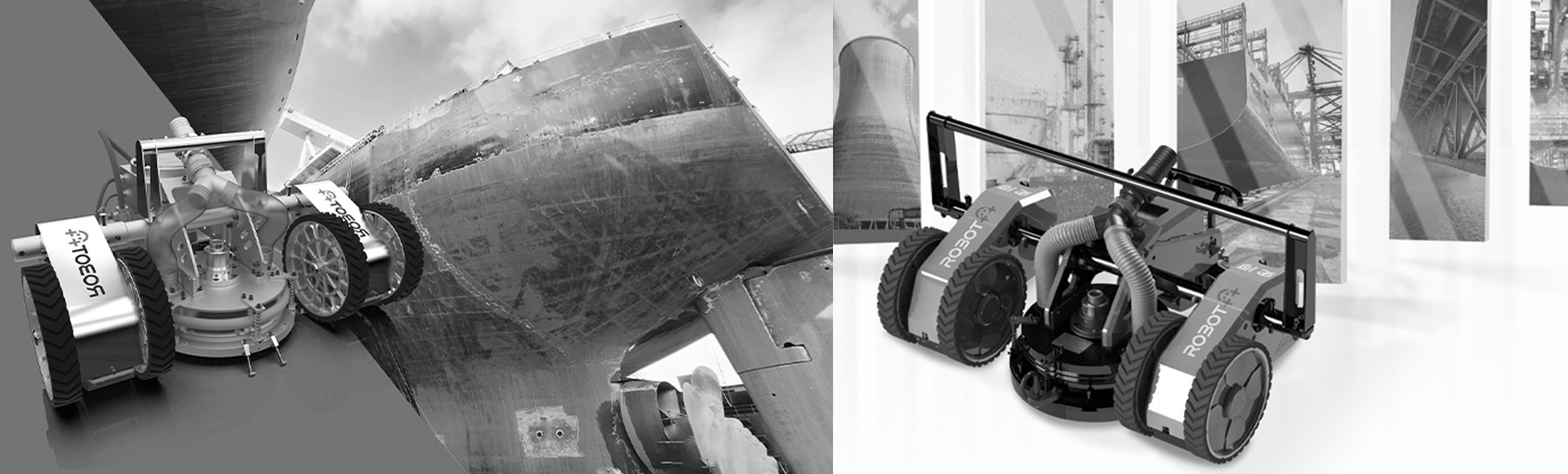
Robotic surface preparation systems expand the capabilities of traditional abrasive blasting by adding precision, safety, production speed, and consistent quality to environments that are difficult or hazardous for manual work or standard machines. While skilled operators remain essential for small or irregular areas, and automatic machines excel in chamber-based processing, robotic systems deliver controlled performance directly on large, immovable steel surfaces where other solutions reach their limits.
Designed to adhere reliably to vertical, curved, or overhead structures—whether through magnetic crawlers, negative-pressure platforms, or advanced wheel systems—these robots can perform blasting, grinding, sanding, UHP water jetting, weld preparation, coating, and other surface prep tasks with stable accuracy. Their ability to navigate demanding geometries improves efficiency and reduces human error on assets that must be treated in situ.
Robots do not replace manual or automatic machines. Instead, they form a third technical category, offering clear advantages when:
- The structure cannot be relocated to a blasting cabinet or automatic line
- Manual work becomes unsafe due to height, exposure, or confined spaces
- The geometry is too large, curved, or vertical for chamber-based machines
- Surface preparation is required on-site—on ship hulls, bridges, towers, or storage tanks
- Precision tracking of weld seams, edges, or coating overlap is necessary
- Environmental containment must exceed what open blasting allows
In these scenarios, robotic solutions fill a specific gap in the surface preparation process and help maintain the required surface conditions before further processing or coating.
Worksite Conditions: When the Structure Cannot Come to the Machine
Many industrial assets must be treated exactly where they are installed—inside a vessel, on an offshore platform, in a facility, or as part of civil infrastructure. In such cases, abrasive blasting must adapt to the environment, not the other way around.
Challenges arise when access requires scaffolding or cherry pickers, rope access, or repeated repositioning across long surfaces. These constraints slow down operations, increase risk, and make it difficult for operators to maintain consistency.
Robotic systems address this by working directly on the structure, maintaining controlled movement without temporary access structures. Whether the robot operates along a ship hull, a large tank wall, or structural steel at elevation, it ensures continuous, efficient, and safer surface treatment across the entire area.
Whenever an asset cannot be moved—and access limits manual blasting speed, operator safety, or quality—robotic preparation becomes the most efficient and reliable approach.
Geometry Challenges: When Surfaces Are Large, Curved, or Hard to Reach
Field structures rarely match the predictable geometry of in-chamber processing. Large industrial and maritime assets often feature complex curves, steep angles, or tight intersections that make manual blasting exhausting and difficult to maintain at a controlled standoff distance.
These challenges appear in:
- Curved hull sections
- Bulbous bows and dock block interfaces
- Tall towers or storage tanks with changing radius
- Elevated pipelines
- Weld brackets and reinforcements that disrupt continuity
Robotic systems overcome these issues through stable adherence and natural surface following. Equipped with magnetic traction, articulated frames, or flexible wheelsets, they maintain uniform blasting distance and coverage even on difficult contours.
The result: controlled performance, reduced operator fatigue, and consistently high surface quality across every geometry.
Safety & Labor Benefits: When Operator Exposure Must Be Reduced
Field blasting often forces humans into elevated, enclosed, or unstable environments where safety risks increase. Prolonged blasting exposes operators to rebound, vibration, and physical strain, while frequent repositioning of access equipment slows productivity.
Robots reduce these risks by keeping operators at a safe distance—often up to 100 meters away—while maintaining stable adhesion on vertical or overhead surfaces. Automated functions such as seam tracking and guided path programming help reduce mistakes linked to fatigue or limited visibility.
By minimizing the need for scaffolding and reducing manual exposure, robotic systems support safer, more controlled operations that align with strict industrial risk-management standards.
Precision Requirements: When High-Accuracy, Repeatable Results Are Essential
Many sectors—including shipyards, offshore energy, and heavy infrastructure—must meet strict requirements for coating performance, roughness profiles, and surface uniformity. Manual blasting provides flexibility, but maintaining consistent parameters across large areas is difficult. Automatic machines offer precision but only when the part fits inside a chamber.
Robotic units bridge this gap by delivering machine-level repeatability directly on the structure. They maintain a programmed standoff distance, follow defined paths, and create uniform results even on long welds, curved plates, or complex transitions.
This precision supports:
- Consistent coating overlap
- Stable roughness for improved coating adhesion
- Accurate seam or edge tracing
- Reduced rework and inspection delays
Where surface quality directly influences structural performance or coating longevity, robots provide a measurable advantage.
Environmental Control: When Dust and Overspray Must Be Contained
Field installations often face strict rules about dust, contaminants, overspray, and environmental exposure. Manual open blasting disperses particles widely, and full containment structures are expensive or impractical. Automatic machines solve this only when parts fit inside a chamber.
Robotic systems offer a balanced solution by integrating dust recovery, overspray control, and enclosed blasting modules directly into the unit. This reduces airborne contaminants and helps maintain cleaner operations in ports, shipyards, refineries, and other regulated environments.
For areas where abrasives are restricted—or where water-based cleaning such as UHP hydroblasting is preferred—robots offer an efficient, cleaner alternative to manual field blasting.
Process Versatility: When Multiple Preparation Methods Are Needed
Large structures often require more than one surface treatment step: grinding welds, abrasive blasting, UHP water jetting, coating, or final sanding. Manual workflows require tool changes, repeated access setup, and multiple teams. Most automatic machines are dedicated to a single method.
Robotic platforms support multi-purpose workflows. Operators can switch tools directly on the structure, allowing the robot to carry out several tasks in sequence without repositioning. This increases productivity and shortens total project time while maintaining consistent quality across all stages of the surface preparation process.
How to Choose Between Manual, Automatic, and Robotic Systems
Surface preparation spans three complementary technologies:
- Manual blasting: For small parts, detailed areas, and locations requiring maximum mobility
- Automatic blasting machines: For high-volume, repeatable processing of predictable geometries
- Robotic systems: For large, fixed, complex structures where geometry, access, environmental limits, or multi-stage workflows make on-site automation the most efficient option
Together, they form a complete toolkit for industrial surface treatment.
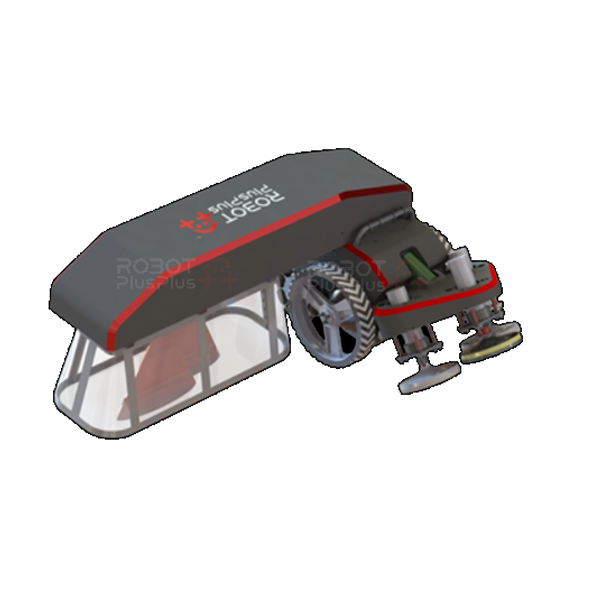
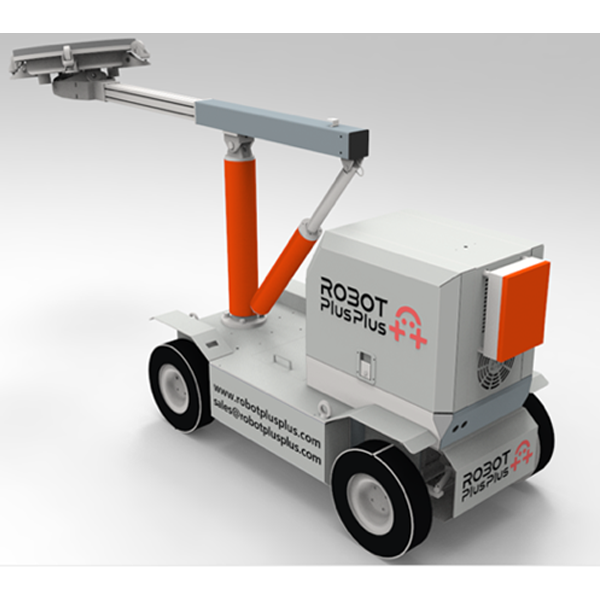
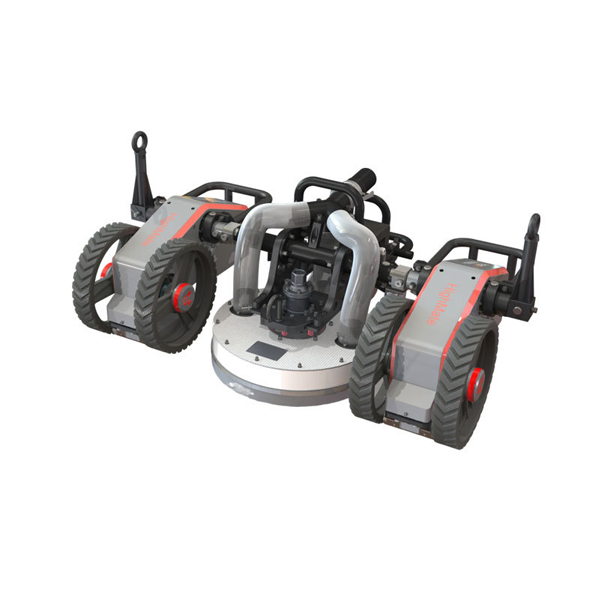
Surface Preparation Robot Model Comparison Guide
| Robot Model | Primary Methods | Best Suited For | Key Advantages | Ideal Selection Criteria |
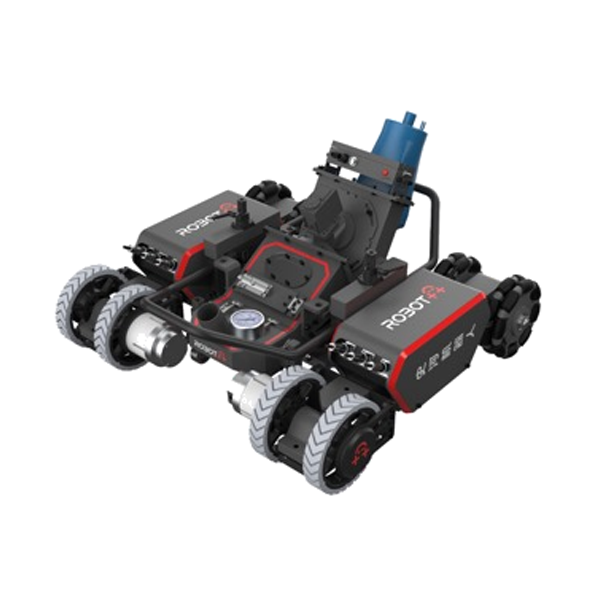
| HighMate B60 | Grinding, polishing, weld treatment, abrasive blasting | Bridges, ship hulls, tanks, industrial steel surfaces with flat or curved geometry | Multi-tool versatility, quick-change modules, weld seam auto-tracing, stable adhesion | • Mixed/complex geometries• Multi-method workflows• Work at height without scaffolding |
| HighMate B40U / B40D | Abrasive shot blasting (upward or downward configuration) | External and internal pipelines, vertical towers, cylindrical structures (≥3.6 m diameter) | Adaptable wheelsets, full dust recovery, stable cylindrical blasting | • Cylindrical surfaces• Environmentally sensitive sites• Continuous pipeline/tower operations |
| V-Series | UHP hydroblasting (up to 3000 bar) | Heavy corrosion removal, offshore structures, dock blocks, narrow spaces | No abrasive waste, excellent curvature stability, high-pressure cleaning | • Areas where abrasives are restricted• Hazardous environments• Heavy-duty corrosion removal |
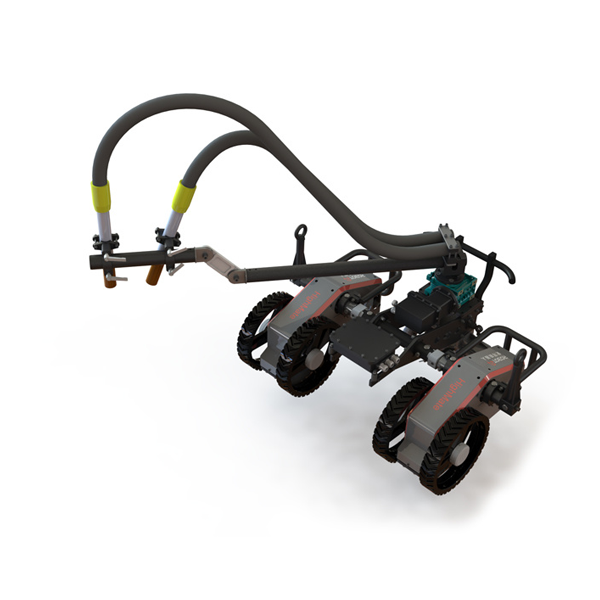
| A-Series / AP | Abrasive blasting, hydroblasting, optional coating (AP variant) | Projects requiring blasting-to-coating in one workflow | Oscillating arm, fast module changes, precision coating (AP) | • Fast changeovers• Multi-method project cycles• High versatility on installed structures |
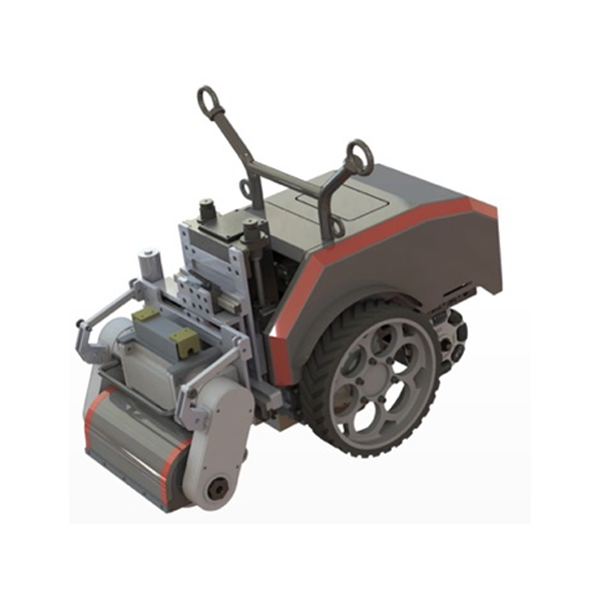
| HighMate X10 | High-efficiency hydroblasting | Flat-bottom hulls, large horizontal steel floors, tank bottoms | Minimal uncleaned margins, electric lifting, remote control up to 100 m | • Large flat surfaces• Work at height/hazard zones• Eliminating scaffolding for bottom hull work |
| HighMate S10 | Coating & sanding | Ship superstructures, large steel surfaces requiring high-output coating | Overspray containment, automatic lane planning, up to 800 m²/h | • Precise coating thickness• Strict environmental limits• Maximum productivity requirements |
Not Sure Which Robot Fits Your Project? We’re Here to Help
Robotic solutions are ideal when structures are large, fixed in place, or require consistent quality, environmental control, and safe operation. They also streamline multi-stage workflows by performing several tasks efficiently on the same asset.
If you’re evaluating which robot suits your steel surface, workflow, or environmental conditions, our technical team can help you compare systems and select the model that fits your project with confidence.
Talk to our experts anytime—you’ll get practical recommendations tailored to your application.
Frequently Asked Questions
Robotic systems are most attractive on large, fixed steel structures—such as ship hulls, storage tanks, bridges, towers, pipelines, and offshore assets—where scaffolding, rope access, or repeated repositioning make manual work slow and expensive. They are particularly effective when the asset must be treated in situ, access is difficult or hazardous, and surface quality needs to remain consistent over very large areas.
Modern robots maintain constant stand‑off distance, travel speed, and overlap, which delivers far more uniform results than manual work on large or complex geometries. Many platforms can switch between abrasive blasting, ultra‑high‑pressure water jetting, grinding, polishing, weld treatment, coating, and post‑coating sanding on the same structure, allowing multiple surface‑prep stages to be completed in a single, continuous workflow.
Robotic platforms allow operators to supervise from a safe distance—often tens of metres away—rather than working directly in high‑dust, high‑noise, or elevated zones. This reduces exposure to rebound, vibration, and physical strain, while also cutting the need for scaffolding and other temporary access structures; skilled personnel can focus on programming, monitoring, and finishing work instead of carrying out the most repetitive and hazardous tasks.
Tracked or magnetically adhering robots excel on large, flat and curved steel surfaces such as hull sides, tank walls, and flat‑bottom ship floors, where they can follow long, uninterrupted paths with consistent coverage. Other designs use articulated frames or flexible wheelsets to follow internal and external cylindrical surfaces, curved plates, and bulbous sections, maintaining contact and coverage where manual blasting would struggle to keep a stable stand‑off distance.
Current surface‑prep robots often include laser or ultrasonic sensors for edge detection, weld seam tracking, and automatic compensation for changes in surface geometry. Many systems support semi‑autonomous or fully autonomous modes, such as cruise control along long runs, automatic lane planning with overlap control, automatic lane changes, and adaptive pressure or tool‑force adjustment to keep cleaning or grinding intensity constant as conditions vary.
Abrasive‑blasting robots can incorporate integrated dust‑recovery units that capture spent media and debris at the point of impact, reducing emissions and simplifying cleanup on sensitive sites such as ports, yards, and industrial plants. Coating and painting robots frequently use containment hoods or shrouds to control overspray, while hydroblasting units limit or eliminate solid abrasive waste altogether, making it easier to meet strict environmental and housekeeping requirements on large surface‑preparation projects.