
Sandblasting Accessories
References
Sandblasting performance relies on more than the blast machine alone. The sandblasting accessories that guide air and abrasive through the system—abrasive blast nozzles, blast hoses, and the components that regulate flow—shape the stability, power, and consistency of the blast. Their configuration determines how efficiently the abrasive is accelerated, how well pressure is maintained, and how reliably a uniform surface profile can be achieved across different materials and geometries.
High-quality nozzles and blasting hoses directly influence abrasive velocity, blast pattern, and overall productivity. When these elements are correctly matched to the compressor output, abrasive type, and working environment, the abrasive blasting process becomes predictable and efficient. Poorly sized or worn accessories, by contrast, can reduce cutting performance, increase air consumption, and lead to inconsistent results—even when the blast machine itself is functioning as intended.
Alongside these process-critical components, protective equipment ensures that operators can work safely and maintain consistent performance throughout extended blasting cycles. A complete blasting setup must therefore combine the right technical accessories with certified PPE, enabling both operational safety and stable, repeatable blasting quality.
This guide explains how to select the appropriate blast nozzle, blasting hose, and essential protective equipment for your application.
How to Choose the Right Sandblasting Accessories for Your Application
Choosing the right accessories begins with understanding how each abrasive blasting setup must respond to the specific surfaces, geometries, and environments involved in the job. Different industrial applications place different demands on reach, accuracy, media behaviour, and handling, so nozzle and hose configuration should always be selected with these practical conditions in mind.
Large steel structures, enclosed spaces, curved components, or delicate surfaces each require a different balance of control, coverage, and mobility. As these conditions shift, the characteristics of the blast nozzle and hose—its size, geometry, material, and flexibility—determine how easily the operator can maintain the required blasting quality.
Core Blast Nozzle Selection Factors for Abrasive Blasting
Operating Pressure and Blast Nozzle Diameter
Once the operational context is clear, the next step is to size the blast nozzle correctly for the available air supply. The diameter of the orifice must be in proportion to the compressor output, ensuring that the required working pressure is maintained at the nozzle. When this relationship is balanced, operators achieve the expected abrasive velocity and removal performance without straining the air system.
Larger diameters are typically reserved for demanding work on substantial steel sections or heavily coated structures where higher energy levels are needed. Smaller diameters suit applications that call for greater finesse, such as finishing work or blasting on substrates that cannot tolerate excessive impact. Detailed airflow and diameter combinations can be reviewed on the Minex nozzle product listings.
Nozzle Geometry: Straight-Bore vs. Venturi Nozzles
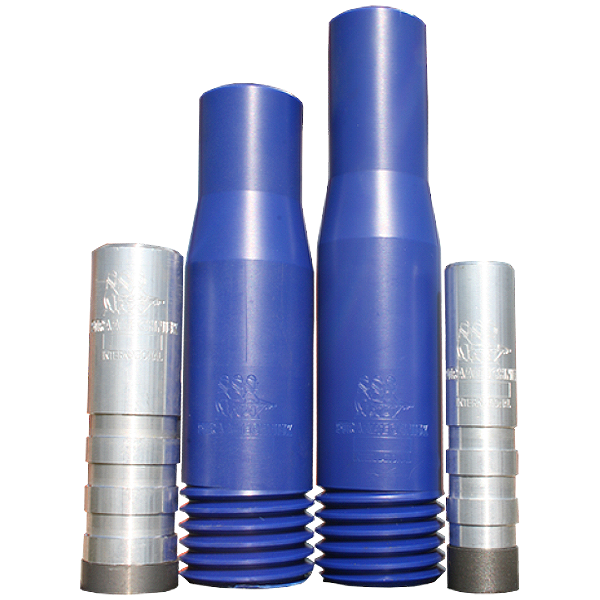
Geometry determines how the abrasive accelerates through the bore and how the blast pattern develops at the surface. Straight-bore (standard) nozzles channel the media through a uniform bore, producing a concentrated, narrow pattern. This focused stream is suited to welds, edges, corners, confined areas, and any work that requires controlled, localized blasting rather than wide coverage.
Venturi nozzles, including Standard Venturi and Long Venturi designs, introduce a tapered contraction followed by a gradual expansion. This bore shape increases particle velocity and widens the blast pattern, improving both coverage and efficiency on large surfaces such as structural steel, hulls, tanks, and industrial frames. Within this family, Minex offers designs that allow operators to select a blast profile that fits the scale, accessibility, and performance requirements of the application.
Nozzle Material: Tungsten Carbide, Boron Carbide, and Ceramic Nozzles
A nozzle’s internal lining material defines its wear resistance and total service life:
- Tungsten carbide provides solid durability for general abrasive use and remains a cost-efficient choice for most operations.
- Boron carbide offers exceptional hardness, making it suitable for aggressive media or long operational cycles where durability is critical.
- Ceramic nozzles, including advanced silicon-nitride linings, extend life even further in high-throughput or high-pressure applications.
Choosing the correct material reduces nozzle replacement frequency and lowers the cost per square meter of treated surface.
Core Blast Hose Selection Factors for Efficient Abrasive Blasting
Blast Hose Inner Diameter Relative to Nozzle Size
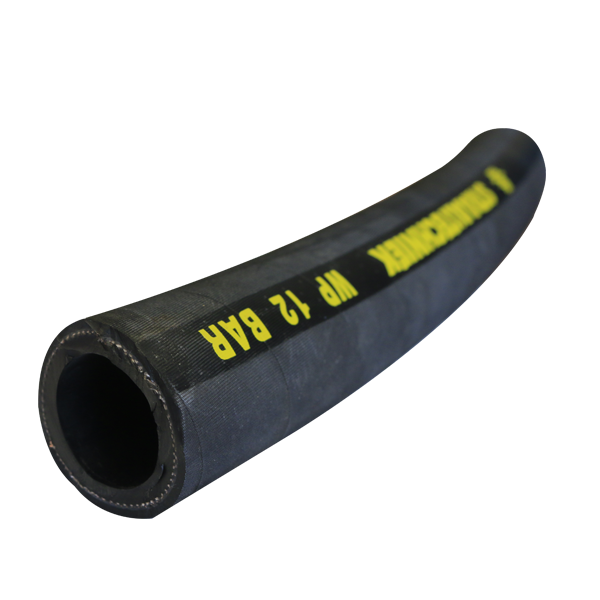
With the nozzle defined, the next consideration is ensuring that the blast hose feeding it is sized to preserve pressure and media flow over the full length of the blasting setup. The internal diameter of the hose must remain comfortably larger than the nozzle orifice so that air and abrasive can travel without constriction. When the hose is too narrow, pressure drops rapidly, abrasive velocity declines, and the system becomes less efficient, often requiring more air to achieve the same result.
Minex blasting hoses are available in multiple diameters, allowing operators to pair hose and nozzle combinations that maintain stable long-run pressure and reliable abrasive delivery, whether the work takes place on compact components or extended industrial structures.
Blast Hose Abrasion Resistance and Antistatic Properties
The inner surface of a blast hose endures continuous, high-energy impact from abrasive media. As a result, hose construction directly influences durability and overall performance. Reinforced, abrasion-resistant materials help maintain a consistent internal profile over time, supporting smooth media flow and reducing the risk of premature wear.
In certain environments—especially oil and gas facilities, long hose runs, and enclosed blasting areas—antistatic properties also become essential. These hoses safely dissipate static charges generated by fast-moving media, contributing to both process stability and operator safety.
Blast Hose Flexibility, Bending Radius, and Handling
Blasting often requires working around obstacles, accessing irregular geometries, or moving along curved or elevated structures. Flexible hoses with an appropriate minimum bend radius allow operators to maneuver efficiently without stressing the hose or compromising flow. A hose that bends easily without kinking reduces fatigue and supports steady blasting over extended shifts.
For larger installations, tight corners, or complex assemblies, selecting the right balance of hose flexibility, wall strength, and diameter helps maintain precision while improving overall workflow efficiency.
Surface and Component Factors That Influence Abrasive Blasting Accessories
Substrate Material and Sensitivity in Surface Preparation
Different materials respond differently to abrasive impact, so the substrate always plays a central role in accessory selection. Heavy steel fabrications, structural beams, ships’ hulls, and industrial machinery typically withstand higher pressures and coarser media, making larger nozzles and robust hose configurations suitable for efficient removal of coatings and corrosion.
At the other end of the spectrum, softer alloys, composite materials, glass, and historically sensitive surfaces require gentler settings. In these cases, smaller nozzles, lower pressures, and finer abrasives help maintain control and avoid unwanted deformation or over-profiling. Adjusting stand-off distance and nozzle movement further ensures that the blasting process respects the characteristics of the underlying material.
Workpiece Geometry, Access, and Surface Coverage
The shape and accessibility of the workpiece also influence how nozzles and hoses should be configured. Welds, corners, flanges, internal cavities, and intricate profiles benefit from compact nozzle designs and flexible hoses that allow the operator to reach tight areas without interrupting media flow. These configurations support precision and help maintain consistency in hard-to-access zones.
For broader surfaces—such as tanks, hulls, panels, or large steel structures—venturi nozzles paired with hoses sized for minimal pressure loss deliver wider coverage and higher productivity. This combination maintains energy across distance and reduces the number of passes required to achieve the desired profile.
These practical differences in material behaviour and geometry form the basis for the industry-specific recommendations summarised later in the quick-reference selection guide.
Mandatory PPE for Safe Abrasive Blasting Operations
Abrasive blasting exposes operators to high-speed rebound, airborne dust, and fine particulate matter, making personal protective equipment an essential part of every blasting setup. Beyond ensuring regulatory compliance, proper PPE allows operators to work confidently and maintain consistent technique throughout demanding tasks.
A complete protective system for blasting applications must provide:
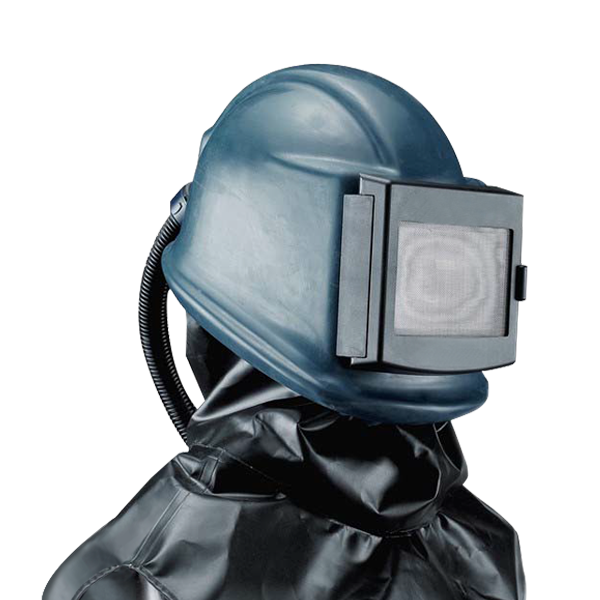
• A supplied-air respirator (EN 14594) to deliver clean, breathable air
• Full head, neck, and chest coverage to shield against impact and rebound
• A low-flow indicator that warns the operator if air supply drops below safe limits
• Abrasion-resistant visor protection, supported by replaceable tear-off shields
• Protective capes selected according to the working environment, such as leather, cotton, or waterproof materials
For applications requiring certified respiratory and impact protection, MINEX supplies the North by Honeywell Commander II Sandblasting Helmet, a robust solution designed for continuous use in industrial blasting environments.
Making Your Final Nozzle and Blast Hose Selection
Choosing the most suitable nozzles and hoses ultimately comes down to how well the accessories support the operational conditions in which blasting takes place. Once the required pressure levels, abrasive behaviour, and workpiece characteristics are understood, it becomes easier to select a configuration that maintains steady performance and fits the scale and geometry of the job.
The summary below brings these considerations together, outlining how different industries typically match nozzle and hose specifications to their surface preparation needs.
Quick-Reference Guide: Blast Nozzles and Blast Hoses Across Industrial Applications
| Industry | Application Focus | Recommended Nozzle Characteristics | Recommended Hose Characteristics |
| Aerospace | Precision blasting on sensitive alloys | Small TC/BC nozzles, standard or short geometry | Short, low-loss hoses sized closely to nozzle |
| Automotive | High-throughput bodywork and components | Long venturi for fast coverage | Medium-ID hoses for stable pressure |
| Construction | Beams, concrete forms, structural steel | Large-orifice long venturi | Abrasion-resistant, antistatic hoses |
| Marine & Shipbuilding | Hulls, decks, and offshore structures | Large-diameter long venturi | Large-ID, heavy-duty hoses |
| Oil & Gas | Pipelines, vessels, internal/external cleaning | BC or ceramic nozzles | Antistatic hoses for long-distance runs |
| Foundries & Metalworking | Scale and casting residue removal | Extremely durable BC nozzles | Heavy-duty reinforced hoses |
| General Manufacturing | Coating prep and batch finishing | Balanced nozzle sizes | Standard hoses matched to nozzle ID |
| Rail & Transport | Wheels, rails, repetitive heavy steel surfaces | Long venturi, larger orifices | Abrasion-resistant hoses |
| Medical & Electronics | Low-energy, precision finishing | Small nozzles at controlled pressure | Short, flexible hoses |
| Heavy Machinery | Thick coatings and heavy corrosion | Maximum-size long venturi | Extra abrasion-resistant hoses |
| Glass & Ceramics | Decorative or functional etching | Small, precise nozzles | Highly flexible hoses |
| Art & Restoration | Delicate, historic surfaces | Very small nozzles, fine media | Lightweight, easy-handling hoses |
| Wind & Solar | Towers, frames, large flat areas | High-output venturi | Large-ID hoses for pressure stability |
Talk to Our Blasting Equipment Experts
If you would like guidance selecting the most suitable nozzles, hoses, or protective equipment for your operational setting, our specialists are available to help. We can support you in defining a configuration that aligns with your surface preparation requirements, maintains operator safety, and delivers reliable performance over time.
Frequently Asked Questions
Start from your available compressor output, then select a nozzle orifice that lets you maintain the required working pressure at the nozzle while keeping air consumption within system limits. Larger nozzles are ideal for high‑output work on heavily coated steel structures, while smaller diameters suit lower‑energy cleaning, more delicate substrates, or setups where compressor capacity is limited.
Standard Venturi nozzles provide a balanced pattern and energy level for general‑purpose blasting on medium‑sized surfaces where you need both control and good coverage. Long Venturi designs further accelerate the abrasive and produce a wider pattern, making them the preferred choice for maximum productivity on large areas such as tanks, hulls, frames, and structural steel.
Tungsten carbide nozzles offer robust service life at an attractive price point and are well suited for most day‑to‑day mineral abrasive applications. Boron carbide and silicon nitride nozzles deliver significantly higher wear resistance, which makes them commercially advantageous for high‑throughput operations, aggressive media, or long blasting shifts where nozzle changes and downtime are costly.
To minimise pressure loss, select a blast hose with an internal diameter comfortably larger than the nozzle orifice and keep the hose as short as your layout allows. Common internal diameters such as 19 mm (¾”), 25 mm (1”), 32 mm (1 ¼”), and 38 mm (1 ½”) make it easy to match hose size to nozzle capacity and reach requirements without over‑restricting the air‑abrasive mixture.
Blast hoses with an abrasion‑resistant inner rubber layer and reinforced construction maintain a consistent internal profile under continuous high‑velocity media flow and therefore last longer. Adequate flexibility and a suitable bend radius allow operators to work around structures and complex geometries with less effort, improving handling, reducing fatigue, and supporting a stable blast pattern over longer shifts.
For long hose runs, confined areas, and installations in sectors such as oil and gas or chemical processing, antistatic hoses with built‑in conductive elements are recommended because they help safely dissipate static charge generated by fast‑moving abrasive. In these environments, pairing antistatic hoses with correctly matched couplings improves process stability, reduces the risk of damage at connections, and lowers unplanned downtime—benefits that usually outweigh the slightly higher initial investment.
For continuous abrasive blasting, a dedicated blasting helmet that provides full head, neck, and upper‑torso coverage, along with a clean breathable air supply and noise reduction, is strongly recommended. Combining this type of helmet with appropriately sized nozzles and blast hoses creates a complete accessory package that supports stable blast quality, reduces operator fatigue, and helps maintain productivity during long or intensive surface preparation tasks.