
Floor Blasting Machines
Selecting the Right Floor Blasting Machines for Industrial Applications
Choosing a floor blasting machine is rarely a purely technical decision. In industrial environments, equipment selection sits at the intersection of operational constraints, surface performance, power availability, hygiene or safety requirements, and future workload planning.
Most costly mistakes do not come from choosing a “bad” machine, but from choosing a misaligned one—a unit that is either too large for the space, underpowered for the surface, incompatible with site infrastructure, or impossible to scale as project requirements evolve.
This guide is written for professionals who want a clear, experience-based perspective that sheds light on the decision-making process—helping clarify how to match the machine to real-world conditions. Examples from the Minex portfolio are used throughout as practical reference points to make the decision logic tangible.
Start with the reality of the job site, not the machine brochure
The first and most important question is not “How powerful is the machine?”, but “Where will it actually be used?”
Industrial blasting environments vary dramatically. One week you may be preparing a concrete production hall; the next, working between processing lines, inside tanks, or under steel structures where clearance is limited and lighting is poor. In such conditions, maneuverability and footprint matter as much as blasting power. Features like a self propelled drive system, equipped with an ac inverted drive motor and an integrated brake, significantly enhance maneuverability and safety—especially on ramps and slopes—by allowing smooth, controlled movement and easy operation for a single operator.
Compact machines are often underestimated. In confined spaces, a smaller footprint allows operators to work continuously without repositioning obstacles or dismantling surrounding equipment. A low-profile design also improves energy transfer to the surface, which is especially relevant when working on steel or dense substrates.
At the opposite end of the spectrum, large open surfaces—warehouses, logistics hubs, bridge decks—reward working width and throughput. Here, the question is no longer whether the machine fits, but whether it can maintain productivity hour after hour without becoming a bottleneck.
The key insight is simple:
Space constraints define machine class before surface hardness even enters the discussion.
Types of Blasting Machines
Blasting machines for industrial floor preparation come in several distinct types, each engineered to address specific project requirements and site conditions. The most common categories are walk-behind shot blasters, ride-on shot blasters, and truck-mounted shot blasters.
Walk-behind shot blasters are the go-to solution for smaller surface preparation projects where precision and maneuverability are essential. These machines excel on residential garage floors, warehouse floors, and general industrial floors, allowing operators to prepare surfaces efficiently even in areas with limited access. Their compact design makes them suitable for detailed work and for navigating around obstacles, while still delivering the high-speed shot blasting process needed to clean and texture concrete or steel surfaces.
Ride-on shot blasters are designed for larger-scale surface preparation projects where productivity and coverage are critical. These machines are ideal for expansive environments such as parking garages, parking decks, and airport runways. With increased blasting width and higher travel speed, ride-on shot blasters can process large areas quickly, making them suitable for industrial settings where downtime must be minimized and consistent surface profiles are required.
Truck-mounted shot blasters represent the heavy-duty end of the spectrum, built for the most demanding industrial applications. These machines are commonly deployed on ship decks, offshore platforms, and major infrastructure projects like highway and bridge construction. Their robust construction and high-capacity shot blasting process enable them to prepare vast steel or concrete surfaces at high speed, ensuring efficient removal of coatings, rust, and contaminants in a single pass.
Each type of blasting machine is engineered to deliver optimal results for its intended environment, using steel shot propelled at high velocity to achieve the desired surface profile. Selecting the right machine type ensures that surface preparation projects are completed efficiently, safely, and to the required industrial standards.
Surface hardness determines how energy must be delivered
Once the spatial reality is clear, surface material becomes the dominant factor.
Steel behaves very differently from concrete, and concrete itself varies widely. Standard industrial floors with coatings or adhesives require consistency more than brute force. What matters is an even blast pattern, predictable removal depth, and surface uniformity that supports subsequent coatings or treatments. A controlled pattern ensures that the blast media is directed precisely, removing only the minimum amount of material necessary for optimal surface preparation, which maximizes efficiency and preserves the integrity of the substrate.
Very hard concrete, industrial overlays, asphalt, or rubber-contaminated surfaces (such as airport runways) change the equation entirely. Here, insufficient power does not simply slow the job—it increases wear, raises operating costs, and compromises surface quality.
Machines designed for these environments concentrate power across wider working widths and are engineered for sustained high-load operation. This is where higher motor capacities and robust internal components become essential rather than optional.
A useful rule of thumb in professional environments is this:
If you need to increase speed to compensate for insufficient impact energy, the machine is undersized for the surface.
Power supply is not a detail—it is a hard constraint
Many procurement decisions fail at implementation because electrical reality is addressed too late.
Industrial sites often impose strict limits on available amperage, particularly in retrofit projects, temporary works, or older facilities. A machine that performs perfectly on paper but requires power upgrades on site introduces delays, additional costs, and operational friction.
Machines designed to operate efficiently at lower amperage levels play a critical role in these scenarios. They allow work to proceed without infrastructure modifications while maintaining acceptable productivity.
Conversely, when high industrial power is available, limiting yourself to a lower-capacity machine often means accepting unnecessary time losses on large projects. In high-throughput environments, power availability should be leveraged—not ignored.
Experienced operators always align machine power, site infrastructure, and dust collection capacity as a single system, not as independent components.
Productivity is not only about speed—it is about scalability
In industrial operations and contracting environments, today’s project is rarely the last one of its kind.
This is where modularity becomes strategically important. Machines that allow working width expansion through extension units offer a clear advantage: they protect the initial investment while enabling higher output when project scale increases.
For procurement teams, this means avoiding the false economy of buying a smaller unit that will need full replacement within a few years. For operational managers, it means adapting productivity to job size without multiplying machines, operators, or maintenance complexity.
Scalability also improves logistics. Detachable extensions make transport easier while preserving the ability to ramp up production when needed.
In practical terms:
A modular system turns a machine from a tool into a platform.
Industry context changes what “good performance” really means
Not all industrial environments judge success by the same metrics.
In food and beverage processing, for example, dust containment is not merely about cleanliness—it is about compliance. Modern floor shot blasters are designed to be environmentally friendly, supporting dust-free and pollution-free operation in sensitive environments. Damaged seals, poor skirt protection, or unstable transport modes can compromise hygiene standards and force costly rework or shutdowns.
In manufacturing and metal fabrication, access and visibility often matter more than raw output. Preparing steel tanks or structures inside facilities demands compact machines, precise control, and reliable performance on metal surfaces. In these contexts, a floor shot blaster offers specialized surface preparation, cleaning, and profiling capabilities for both concrete and metal substrates.
In construction and renovation, deadlines dominate. Machines must handle very hard concrete, remove coatings efficiently, and scale quickly on large surfaces without becoming a logistical burden.
Understanding these contextual priorities is essential. The “best” machine is always the one that minimizes operational risk in its specific environment.
Dust Collection Systems: A Critical Consideration
Effective dust collection is a cornerstone of any successful shot blasting operation. Shot blasting machines generate significant amounts of dust and debris as they clean and profile surfaces, making a robust dust collection system essential for maintaining a safe, efficient, and compliant work environment.
A well-designed dust collector captures airborne particles and debris produced during the shot blasting process, preventing them from spreading throughout the facility and reducing the risk of respiratory hazards for operators. The typical dust collection system consists of a dust collector unit, high-efficiency filters, and a powerful vacuum system. As the blasting machine moves across the surface, the dust collector draws in dust and debris, while the filters ensure that only clean air is released back into the workspace. The vacuum system continuously removes collected material, keeping the work area dust free and supporting minimal dust generation even at high travel speeds and wide blasting widths.
When selecting a shot blasting machine, it is crucial to ensure that the dust collection system is properly matched to the machine’s capacity and the specific demands of the surface preparation project. An undersized or inefficient dust collection system can lead to excessive airborne particles, reduced visibility, and potential contamination of adjacent processes—especially in sensitive industrial settings.
Regular maintenance of the dust collection system is equally important. Routine inspection and replacement of filters, as well as cleaning of the dust collector and vacuum lines, help maintain optimal performance and extend the life of both the dust collection system and the blasting machine itself.
In summary, investing in a high-quality dust collection system not only enhances the efficiency and safety of the shot blasting process but also ensures compliance with workplace health standards and supports the long-term reliability of your surface preparation equipment.
Bringing the decision together
When all these factors are considered together—space, surface, power, productivity, and industry context—the selection process becomes far more straightforward.
The table below summarizes how these realities translate into typical machine profiles, illustrated with examples from the Minex range to make the logic concrete.
Additionally, the availability of spare parts is a key consideration for ensuring long-term reliability and minimizing downtime.
Floor Blasting Machine Selection – Practical Overview
| Operational Reality | Typical Requirement | Example Machine Profile |
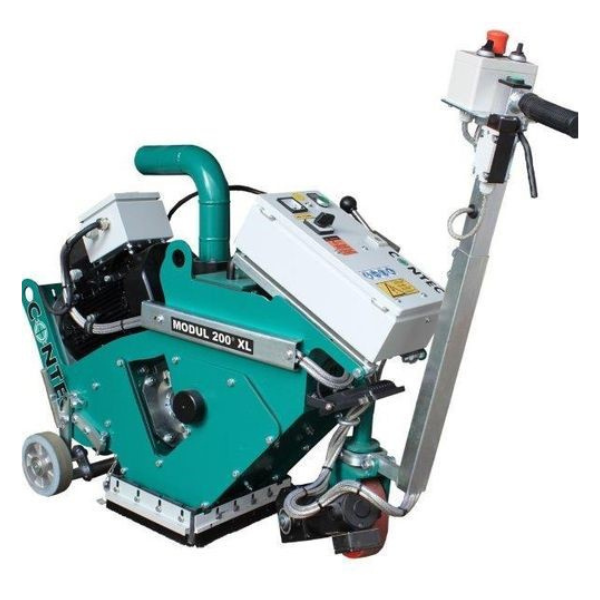
| Confined spaces, tanks | Compact footprint, focused energy | MODUL 200 XL |
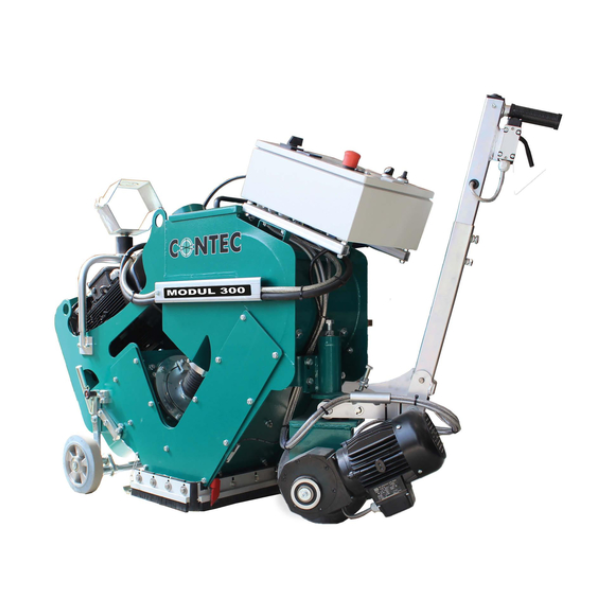
| General industrial floors | Power-to-size balance, maneuverability | MODUL 300 |
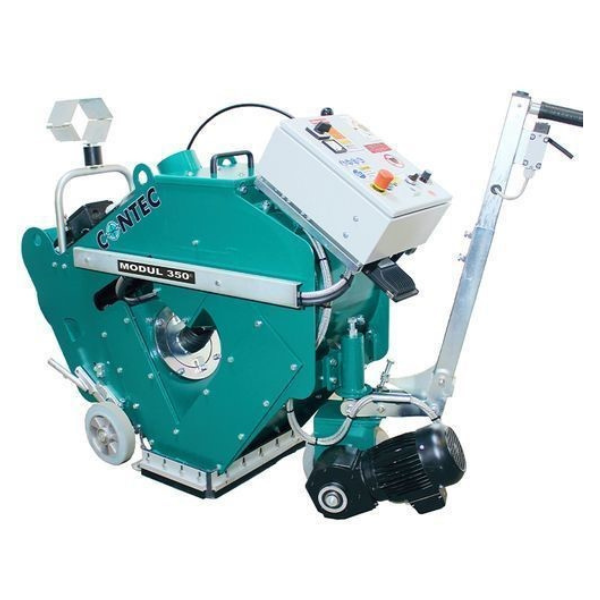
| Large open surfaces | Maximum throughput, wide working width | MODUL 350 |
| Steel preparation | High impact energy, low-profile design | MODUL 200 XL |
| Standard concrete | Even blast pattern, consistency | MODUL 300 |
| Very hard concrete / asphalt | High power, aggressive removal | MODUL 350 |
| Limited power availability | Energy-efficient operation | MODUL 200 XL |
| High industrial power | High-output configurations | MODUL 300 / 350 |
| Growing workload | Modular scalability | MODUL 200 XL / 350 |
These examples are reference points, not constraints. The decision logic applies universally across manufacturers and machine types.
Final recommendation
A floor blasting machine is not a short-term purchase. It is an operational asset that influences productivity, safety, compliance, and cost efficiency over many years.
The most reliable way to select the right machine is to start from your operational reality, not from technical specifications alone. When space, surface, power, and future workload are aligned, performance follows naturally.
If you need support translating your specific application into the right equipment configuration, consulting with specialists who understand both the machines and the environments they operate in is the fastest way to avoid costly mistakes.
Contact the Minex technical team to discuss your application and receive guidance tailored to your industry, surface conditions, and production goals.
Frequently Asked Questions
The starting point is always the reality of the job site, not the machine specification. Available space, access constraints, and the type of surface—whether standard concrete, very hard concrete, steel, or asphalt—define the class of machine that will work efficiently.
Once those constraints are clear, the selection becomes a matter of alignment: compact machines for tanks and confined areas, mid-range units for general industrial floors, and wide machines for large warehouses, bridge decks, or logistics hubs. The final step is often the most overlooked—verifying that the available power supply and dust collection capacity allow the machine to operate at its intended productivity without overloading site infrastructure.
In practice, a single machine rarely covers every scenario. Confined spaces, open halls, and steel structures impose fundamentally different requirements in terms of footprint, power, and working width.
That said, modular systems significantly expand the usable range of one machine platform. Starting with a compact base unit and adding extension modules when project size or throughput requirements increase allows many operators to cover both restricted environments and large surfaces without investing in entirely separate machines.
Each plays a different role, and none can be evaluated in isolation. Motor power determines which surfaces you can realistically prepare; very hard concrete, industrial overlays, asphalt, and contaminated floors demand higher impact energy and robust internal components.
Working width defines production rate on large, open surfaces but offers no advantage if the machine cannot physically fit between production lines, inside tanks, or under structural elements. In real plants, machine footprint and maneuverability often dictate actual productivity—if equipment needs to be dismantled or obstacles moved constantly, theoretical output figures on a datasheet become irrelevant.
Dust control is not optional. It directly affects surface quality, operator health, visibility, and regulatory compliance, particularly in food, pharmaceutical, and indoor manufacturing environments.
An undersized or poorly matched dust collector increases airborne dust, contaminates adjacent processes, and may force work stoppages. Proper selection is typically based on required airflow relative to room volume, openings, and the type of dust generated—not simply on matching brand or connector size.
Floor blasting machines are available in both lower-voltage, lower-amperage configurations for smaller or retrofit projects and higher-power three-phase versions for heavy industrial work.
Before purchase, it is essential to confirm site voltage, available amperage, and distribution limits. Choosing a machine that exceeds what the site can safely deliver often leads to delays, unexpected electrical upgrades, or equipment that never operates at full capacity.
Published production rates usually assume ideal conditions: standard concrete, experienced operators, and uninterrupted travel paths. In real-world environments, output is often lower due to obstacles, layout constraints, setup time, and surface variability.
As a general rule, narrow machines are most efficient in small or congested areas, while wide machines deliver their full value only on large, uninterrupted surfaces where long, consistent passes are possible.
For contractors and industrial operators with growing or unpredictable workloads, modular systems are typically more cost-effective than replacing an entire machine after a few years.
Scalability also simplifies logistics. Detachable extensions make transport and storage easier while allowing the same machine platform to be deployed effectively in both confined environments and large-area projects.
Shot blasting uses abrasive media or blast media to efficiently remove dirt, old coatings, old paint, and contaminants from concrete floors and steel plates, often in a one step surface preparation process. This creates a textured surface for better coating adhesion and improves slip resistance and skid resistance. Shot blasting produces a controlled, uniform surface profile with minimal loose dust when paired with proper extraction, making it particularly suitable for coating and overlay adhesion.
Grinding is better suited for fine smoothing and leveling but becomes inefficient for heavy removal, while scarifying is more aggressive and can leave deeper grooves that often require additional finishing passes. Chemical stripping is another alternative for removing old coatings, but shot blasting is often more efficient and cost-effective for most industrial applications.
Many industrial floor blasters are capable of processing both concrete and steel, but performance depends heavily on machine design, blast wheel configuration, and abrasive selection. These machines are suitable for concrete surface preparation, including cleaning and preparing both concrete floors and steel plates for coatings or overlays.
Low-profile, high-energy machines tend to perform better on steel decks and tanks, while balanced power-to-size units are generally preferred for general concrete floor preparation.
The primary cost drivers are abrasive media consumption, wear parts such as blast wheels, liners, and seals, power usage, and labor. All of these costs increase significantly when the machine is underpowered or poorly matched to the surface.
Selecting equipment aligned with surface hardness and project scale reduces abrasive waste, extends component life, and minimizes unplanned downtime over the machine’s service life.
Key safety considerations include effective dust collection, accessible emergency stops, electrical protection, and clear procedures for starting, stopping, and cleaning the machine.
Equally important is operator training—correct travel speed, proper hose and cable management, and regular inspection of seals and guards are essential to prevent accidents and maintain consistent surface quality.
Whenever there are constraints related to power supply, hygiene regulations, explosive atmospheres, or very hard or mixed substrates, a technical review significantly reduces the risk of selecting an oversized or underspecified machine.
A specialist can translate your specific operating conditions—space limitations, surface types, dust characteristics, and production targets—into an equipment configuration or modular platform that remains viable as workloads evolve.