
Grinding Machines
How to Select the Right Industrial Floor Grinding Machines
Selecting an industrial floor grinding machine is a technical decision, and the best outcomes come from matching the machine to the realities of the job: site conditions, substrate behavior, and the finish requirement.
Most problems in floor grinding are not caused by the operator or the method, but by a mismatch between equipment and application. A machine that cannot access the area efficiently, lacks sufficient torque for the substrate, or is poorly suited to the desired finish will increase project time, accelerate tool wear, and compromise surface consistency.
This guide provides a practical selection framework used by experienced specialists in surface preparation. It starts with the non-negotiables—power supply, access, geometry—then narrows the choice based on the application (grinding, coating removal, polishing, or texturing) and the required surface result. The objective is a predictable, repeatable selection process that leads to efficient work on site and consistent technical outcomes.
What Is an Industrial Floor Grinder and What Is It Used For?
Floor grinders are indispensable machines in the construction and renovation industry, designed specifically for surface preparation, concrete grinding, and polishing. Whether you’re working on new builds or refurbishing existing spaces, floor grinders—especially concrete floor grinders—enable contractors to efficiently transform rough concrete floors into smooth, durable, and visually appealing surfaces. These machines are engineered for a variety of applications, from removing old coatings and adhesives to creating polished concrete finishes that stand up to heavy industrial use.
A key factor in the grinding and polishing process is the use of diamond tools, including both metal bond and resin tools. These specialized tools allow operators to tackle a full range of surface conditions, ensuring that each concrete floor is prepared or finished to the required standard. By selecting the right combination of floor grinder and diamond tooling, contractors can streamline their workflow, reduce labor costs, and deliver consistent, high-quality results across all types of projects. Understanding the different types of floor grinders and their intended uses is the first step toward achieving efficient, professional surface preparation and polished concrete floors.
Types of Grinding Machines
The market offers a full range of floor grinders, each designed to match specific project requirements and surface conditions. The main types include single-head, dual-head, and planetary grinders.
Single-head grinders are ideal for small jobs, edge work, and tight spaces where precision is key. Their compact size makes them suitable for detailed grinding and polishing tasks, especially in areas with limited access.
Dual-head grinders provide a balance between coverage and maneuverability, making them suitable for medium-sized areas and more aggressive grinding jobs. They offer increased productivity compared to single-head machines while still being manageable for most operators.
For large-scale industrial and commercial projects, planetary grinders are the preferred choice. These machines are designed for high-efficiency grinding and polishing, featuring multiple rotating heads that deliver uniform results across expansive surfaces. Planetary grinders excel in creating smooth, polished concrete floors in warehouses, factories, and other demanding environments.
This variety ensures that contractors can select the ideal machine for each job, based on the size of the area, the type of surface, and the desired finish. Choosing the right type of grinder is essential for maximizing efficiency, achieving the required surface quality, and staying within budget.
Start with the Site, Not the Machine
Every grinding project begins with the environment in which the machine must operate. Before power, speed, or tooling are even discussed, the site itself defines the first and most rigid limitations.
Access is often the most underestimated factor, and knowing the site constraints in advance can prevent difficult situations during equipment transport and setup. Door widths, corridors, elevators, staircases, and balconies can immediately rule out certain machine geometries. In renovation projects or mixed-use buildings, machines may need to be transported between floors or maneuvered through narrow passages. In these situations, compact grinders with low weight and small width are not a compromise—they are the only viable option.
Equally important is the available power supply. Many technically capable grinders simply cannot be used where only single-phase power is available. Conversely, on industrial sites with stable three-phase power, selecting a machine designed for lighter electrical loads will unnecessarily slow the job.
The first practical check is always the plug. For example:
- If the site only offers standard 230 V single-phase power, the choice is immediately restricted to compact, single-phase machines.
- If 400 V three-phase power is available, higher-performance industrial grinders become an option.
Selecting a machine based on the actual power available on site, rather than what would be ideal, avoids the most expensive mistake in surface preparation: bringing a machine that cannot be used efficiently—or at all. Failing to account for these factors can make the project unnecessarily difficult and time-consuming.
Match the Grinder to the Surface Size and Workflow
Once access and power are confirmed, productivity becomes the next decision driver.
Smaller or segmented areas benefit from machines that are easy to reposition, rotate, and control. These machines reduce setup time, allow precise work around obstacles, and are well suited to rooms, corridors, and balcony areas.
Larger, uninterrupted industrial floors tell a different story. Here, working width, machine mass, and sustained torque directly influence output. Wider machines cover more surface per pass and maintain consistent grinding pressure, significantly reducing total processing time on large slabs and enabling faster completion of large-scale grinding jobs.
There is always a trade-off between maneuverability and throughput. The correct choice is not the machine with the highest theoretical output, but the one that fits the physical reality of the working environment.
Precision and Edge Accessibility Matter More Than Many Expect
Not all grinding work is about speed. In refurbishments, commercial interiors, or visible concrete floors, precision becomes just as important as productivity.
Grinding close to walls, corners, and fixed structures determines how much manual edge work is required afterward. Machines designed with true edge accessibility can grind within millimeters of vertical surfaces, dramatically reducing the need for handheld angle grinders and improving consistency across the entire floor.
Where access is limited or visual standards are high, prioritizing control and edge performance over sheer power usually results in better outcomes and lower labor costs. Additionally, machines designed for edge accessibility often feature ergonomic controls, enhancing operator comfort during extended use.
Define the Application: Grinding, Polishing, or Aggressive Removal
Different applications place very different mechanical demands on a grinder, and no single machine is optimal for all tasks.
Standard grinding and surface preparation focus on flatness and adhesion. Proper cutting action is essential for effective surface preparation, and with correct tooling, most professional grinders can perform these tasks reliably.
Polishing applications—such as terrazzo, stone, or design screeds—introduce an additional requirement: speed control. Polishing is about gradual surface refinement, not aggressive material removal. Fixed-speed machines can be used effectively for basic restoration, cleaning, and honing, but high-end polishing requires variable speed to prevent overheating, surface burning, and uneven gloss.
Aggressive removal tasks—such as thick epoxy layers, asphalt residues, or anti-slip texturing—require high torque, machine stability, and compatibility with impact tools. These tasks cannot be performed efficiently on lighter, compact machines. A dual-headed concrete grinding machine is often preferred for rough grinding and surface cutting, though it may have limitations for polishing applications.
The Substrate and the Tool Do the Real Work
Regardless of the machine used, surface quality and productivity are ultimately determined by the tool–substrate interaction. Even a high-quality grinder will perform poorly if the tooling does not match the floor conditions. In professional grinding, the machine provides stability, power, and control—but the tool defines how that power is transferred into the surface.
Tool selection must always take into account substrate hardness, coating type, and the intended result. This is why modern grinders are designed around modular, quick-change tooling systems, allowing operators to adapt quickly to different applications without time-consuming setup changes or machine modifications.
Within the Minex range, both the Omega 230V and the Omega 450 use the same modular tooling interface (for example, the EasyChange system). This means that once the correct machine is selected based on site constraints and application, performance is fine-tuned by choosing the appropriate tool—rather than changing the machine itself.
In practical terms, typical tooling choices include:
- Hard concrete and screed: EasyChange VS1 / VS2, providing controlled grinding and leveling on dense substrates
- Soft or abrasive concrete: EasyChange CA2, designed to reduce premature tool wear on softer floors
- Hard coatings and paint residues: EasyChange F1, for efficient removal of thin, rigid layers
- Flexible or sticky glues and coatings: EasyChange PKD PR, optimized for peeling elastic or adhesive materials
- Honing and polishing: Diamond or resin pads in progressively finer grits, used on both machines according to the required finish level
Using the correct tooling is usually the first and most effective adjustment when floor conditions change—provided the selected machine (compact or high-performance) is appropriate for the site and the scope of work.
This machine–tool compatibility allows both the Omega 230V and Omega 450 to cover a wide range of substrates and applications within their respective performance envelopes, while keeping setup time low and results predictable.
Floor Grinder Operation
Operating a floor grinder effectively requires both technical know-how and attention to detail. Before starting, it’s important to ensure the equipment is set up correctly, with the appropriate diamond tools installed for the specific concrete surface and desired finish. The grinding process involves systematically removing the top layer of the concrete, using the grinder’s rotating head to achieve a smooth, even surface.
Operators must carefully control the speed and direction of the grinder, adjusting pressure and angle as needed to maintain consistent results. Efficient operation not only speeds up the process but also extends the life of both the machine and the diamond tools. Regular maintenance—such as cleaning the grinder, checking for wear, and lubricating moving parts—helps prevent breakdowns and ensures reliable performance.
Dust management is another critical aspect of floor grinder operation. Using industrial vacuums and dust collectors minimizes airborne particles, protecting both the operator and the work environment. By following best practices in equipment setup, operation, and maintenance, contractors can achieve high-quality results efficiently and safely.
Safety, Ergonomics, and Environmental Compliance
Professional floor grinding is not only about achieving the required surface quality—it is equally about protecting people, the work environment, and regulatory compliance.
Grinding concrete, screeds, and coatings generates fine respirable dust that can pose serious health risks if not controlled. Effective dust extraction at the source is therefore essential. Industrial vacuums and dust collectors are a core part of any professional grinding setup, helping to maintain clean air, protect operators, and prevent dust from spreading into surrounding areas. Proper dust management also improves visibility and surface quality, reducing rework and cleanup time.
From an ergonomic perspective, machine design has a direct impact on real-world productivity. Adjustable handlebars, balanced weight distribution, and vibration control allow operators to work longer with less fatigue and greater consistency. Low noise and vibration levels are particularly important in occupied buildings, renovation projects, or sensitive industrial environments where disturbance must be minimized.
Environmental responsibility is closely linked to safety and compliance. Well-managed dust extraction reduces airborne pollution, while efficient tooling and correctly matched machines minimize unnecessary material removal and waste. Where combustion-powered equipment is used in other contexts, emissions must be carefully monitored; however, in electrically driven grinding applications, the focus remains on dust containment, energy efficiency, and responsible site operation.
By combining effective dust control, ergonomic machine design, and compliance-focused work practices, contractors can protect both their teams and the environment—while delivering reliable, high-quality surface preparation results.
Maintenance and Repair
Consistent maintenance is essential for keeping floor grinders and their diamond tools operating at peak efficiency. Daily cleaning and lubrication help prevent the buildup of dust and debris, which can cause premature wear on bearings, cables, and other critical components. Regular inspections allow operators to identify and address issues such as worn diamond tools, damaged grinding drums, or frayed cables before they lead to costly downtime.
Contractors should be trained to perform routine maintenance tasks, including changing grinding and polishing pads, checking for loose bolts, and ensuring all safety features are functioning properly. Many manufacturers offer comprehensive maintenance and repair services, supplying spare parts and technical support to keep machines in optimal working order. By adhering to a proactive maintenance schedule, contractors can extend the lifespan of their equipment, reduce repair costs, and ensure their floor grinders deliver consistent, high-quality results on every job.
How This Framework Translates to Real Equipment Decisions
Once the selection logic is clear, applying it to specific machines becomes straightforward.
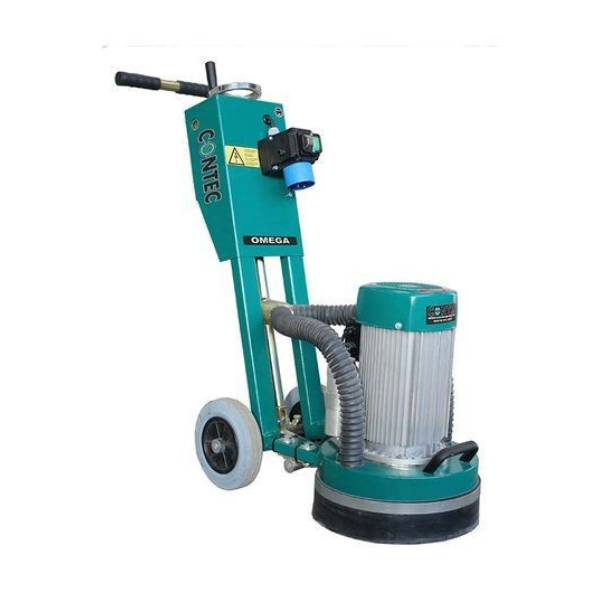
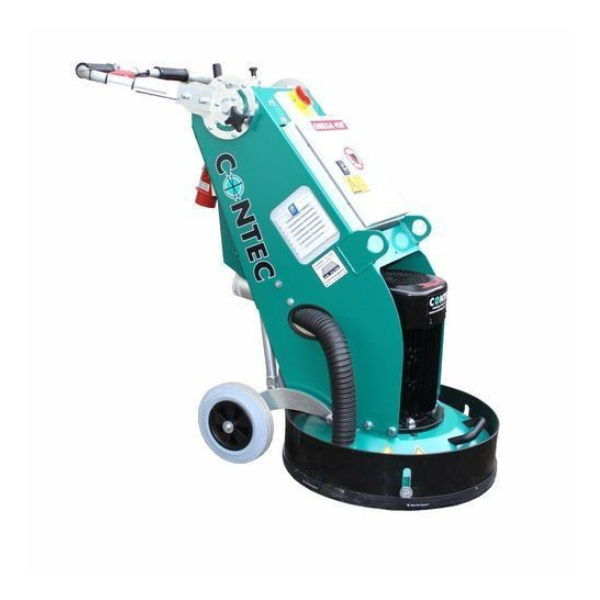
Within the Minex portfolio, two representative machines from the manufacturer Contec illustrate how this framework translates into practice.
A compact, single-phase grinder such as the Contec Omega 230V is selected when:
- The site only provides 230 V power
- Access is restricted (corridors, balconies, upper floors)
- High edge precision and low noise are required
This category is suitable for grinding, coating removal, and restoration and honing at fixed speed.
A high-performance, three-phase grinder such as the Contec Omega 450 becomes the correct choice when:
- 400 V industrial power is available
- Large surface areas must be processed efficiently
- High-end polishing (stone / terrazzo) is required
- Thick epoxy removal or anti-slip texturing is part of the scope
This category is also the only one compatible with Bush Hammer tools, allowing removal of layers up to approximately 10 mm and creation of aggressive surface profiles. The planetary system in these grinders features a central drum that rotates, with attached cutter heads working together to ensure balanced and effective grinding.
These industrial floor grinding machines consistently deliver great results in both surface preparation and polishing applications.
Machine Selection at a Glance
| Selection Criterion | Contec Omega 230V | Contec Omega 450 |
| Typical application context | Renovation, balconies, small rooms | Industrial halls, large slabs |
| Access & maneuverability | Excellent | Moderate |
| Typical surface size | Small to medium | Medium to large |
| Power supply | 230 V, single-phase (13 A) | 400 V, three-phase (16 A) |
| Edge precision | Very high | Moderate |
| Polishing capability | Restoration & Honing (fixed speed) | High-end polishing (variable speed 0–1440 rpm) |
| Heavy material removal | Limited | Excellent – Bush Hammer compatible |
| Noise & vibration sensitivity | Low | Moderate |
| Tool interface | Modular quick-change system (EasyChange VS/CA/F1/PKD) | Modular quick-change system (EasyChange VS/CA/F1/PKD) |
Both machines are engineered to exceed industry standards for performance and reliability. Industrial floor grinding can generate a lot of dust, so effective dust extraction systems are essential for maintaining a safe and clean work environment.
Final Thought: Choose the Process, Then the Machine
The most successful grinding projects start with the right questions, not the right brand or catalog page. When site constraints, substrate characteristics, and finish requirements are clearly defined, the correct machine choice becomes obvious.
As a distributor and technical partner, Minex helps translate these requirements into the right equipment and tooling configuration, working with trusted manufacturers and modular systems to deliver reliable, compliant solutions.
Contact Minex today to discuss your industrial floor grinding machine needs.
Talk to Our Experts
If you need support selecting the right grinding setup for your application, the Minex technical team is ready to help—ensuring your next project is predictable, efficient, and technically correct from day one.
We proudly partner with reputable manufacturers, to provide you with the highest quality industrial floor grinding machines and expert solutions.
Frequently Asked Questions
The most reliable starting point is always the reality on site. Consider the surface you are working on—whether concrete, screed, terrazzo, or stone—together with the total area and the result you need to achieve, such as coating removal, surface leveling, or a polished finish.
Once these basics are clear, the grinder should be matched to the job, not the other way around. Compact single- or dual-disc machines are typically better suited to smaller or segmented areas, while larger planetary or multi-disc grinders make sense on medium to large industrial floors where productivity and throughput are critical. Seeking professional advice can help ensure you select the optimal industrial floor grinding machine and tooling for your specific project requirements.
In practice, this is rarely the case. Even if a grinder is technically capable of performing different tasks, it will not do so efficiently across every combination of surface, coating, and finish.
Most professionals work within a defined machine class—compact or high-performance—and adapt to specific applications by changing tooling. PCD tools are used for coatings and adhesives, metal-bond diamonds for leveling and grinding, and resin pads for honing and polishing.
For high-end finishing and large-scale polishing projects, specialized polishers—such as multi-headed planetary grinder/polishers and power trowel polishers—are often required to achieve superior surface reflection, clarity, and efficient project completion.
Yes—particularly when access, transport limitations, or power availability define the project. Compact walk-behind grinders are often the only machines that can reach corridors, balconies, plant rooms, or upper floors.
They also offer excellent control and edge accessibility, making them ideal for renovation work, segmented industrial spaces, and projects restricted to single-phase power.
All three factors play a role, but their importance depends on the application. Working width and head configuration drive productivity on large open floors—provided the machine can move freely.
Motor power and torque become decisive when grinding very hard concrete, dense overlays, or thick coatings. Underpowered machines increase tool wear and slow the job, even if they are physically wide.
Variable speed is essential for polishing stages and sensitive substrates because it allows controlled refinement rather than aggressive removal.
It helps avoid overheating, swirl marks, and premature tool wear, and it makes it easier to move between grinding, coating removal, and polishing. Fixed-speed machines remain suitable for basic restoration, but variable speed enables higher-quality finishing.
Dust extraction is fundamental. Grinding concrete and coatings produces fine respirable dust that must be captured at the source to protect operators, meet exposure limits, and maintain visibility. Effective dust extraction is essential for keeping the work environment clean, ensuring a hygienic and dust-free workspace in industrial and warehouse settings.[MV1]
A properly matched industrial vacuum improves surface quality, reduces cleanup, and protects both tools and machine components. Proper dust management also helps prevent stains and discoloration on newly ground surfaces, resulting in a cleaner and more visually appealing floor.
Many compact grinders operate on single-phase power (typically 230 V), while high-performance and larger machines usually require a three-phase industrial supply.
Voltage and available amperage should always be confirmed on site. Using a grinder on an unsuitable power supply can reduce productivity or damage equipment.
Tooling should be selected based on substrate hardness and the task. Softer diamond bonds are typically used on hard concrete, harder bonds on softer concrete. PCD tools are used for thick coatings and adhesives, while resin pads are used for honing and polishing.
On modular systems, changing tooling is usually the first and most effective way to adapt to changing floor conditions.
If the machine can access the area, has sufficient power for the substrate, and the change relates mainly to coating type or finish level, switching tooling is usually the most economical solution.
Upgrading the machine becomes necessary when productivity, power, or working width limits are reached repeatedly across multiple projects.
Look for effective dust shrouds, compatibility with industrial vacuums, clear controls, and reliable emergency stops.
Adjustable handles, balanced weight distribution, and vibration control help operators work longer with less fatigue, directly improving real-world productivity and surface consistency.