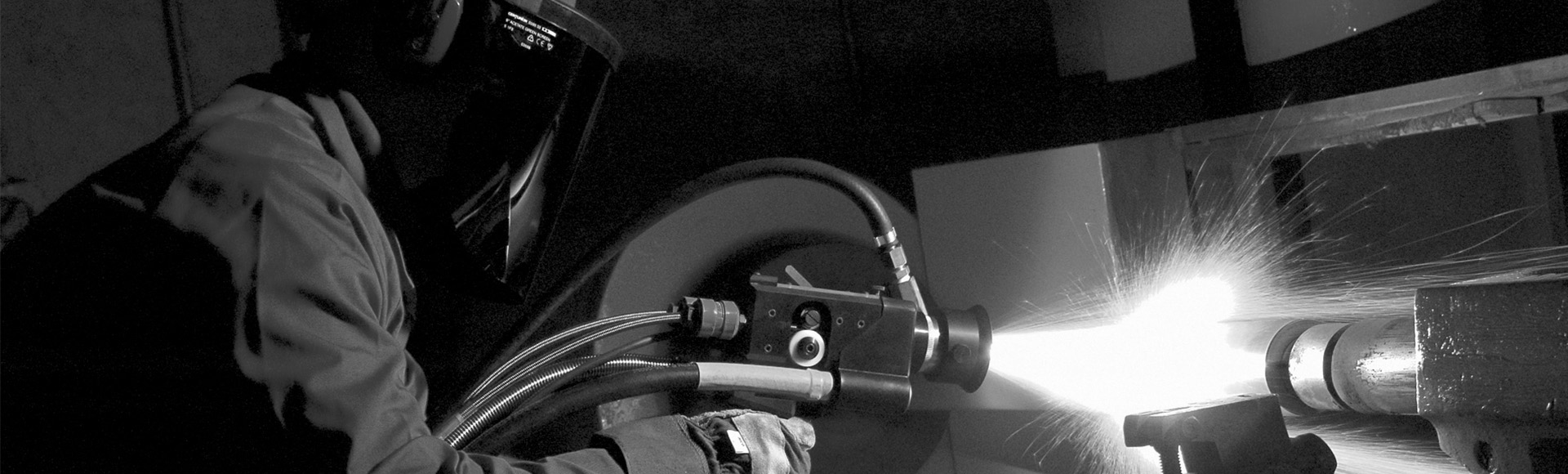
Electric Arc Metallization Systems
References
Choosing the Right Electric Arc Metallization System
Electric arc metallization systems are among the most established and economically efficient technologies within the wider family of thermal spray processes. Often referred to in practice as twin wire arc spray or simply arc spray, this technology has been deployed for decades across infrastructure, heavy industry, fabrication, and maintenance environments where corrosion protection, wear resistance, and engineered surface performance must be delivered reliably and at scale.
The arc spray process itself is straightforward in principle. An electric arc melts two electrically charged wires of opposing polarity, after which the molten metal is atomized by compressed air and projected onto a prepared substrate as a controlled spray stream. The resulting coating can serve multiple purposes: long-term anti-corrosion protection, dimensional restoration of worn components, or functional engineering coatings. One of the reasons electric arc metallization remains so widely used is that it achieves these outcomes with relatively low thermal input to the base material and at a cost level that remains attractive for large surface areas and long-term asset protection programs.
Where things become more complex is not the process itself, but the choice of equipment. In real-world applications, selecting the right electric arc metallization system is rarely a matter of comparing headline specifications. Systems that appear similar on paper can perform very differently once deployed on site or integrated into a production environment. Differences in arc power stability, wire feed mechanism design, control architecture, or even cable handling and ergonomics can have a measurable impact on spray rate, coating consistency, operator fatigue, maintenance effort, and ultimately total cost of ownership over the life of the system.
This guide reflects how experienced engineers, procurement specialists, and operations managers typically approach arc spray equipment selection: not as isolated machines, but as production tools that must function reliably within specific workflows, environments, and long-term maintenance strategies.
Arc Spray Technology in an Industrial Context
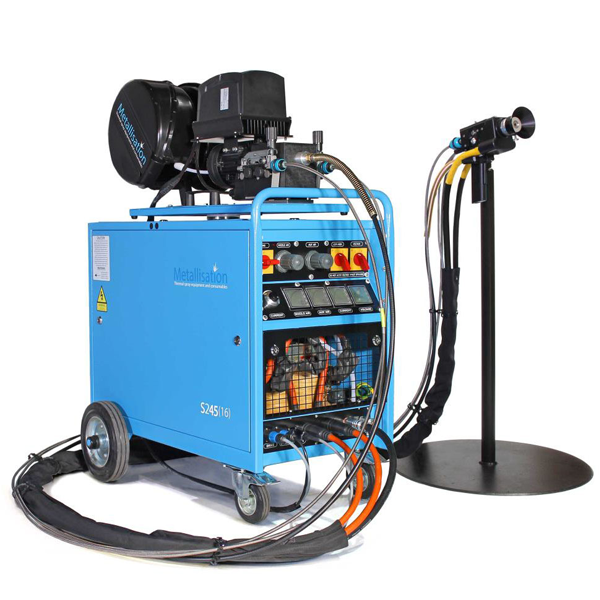
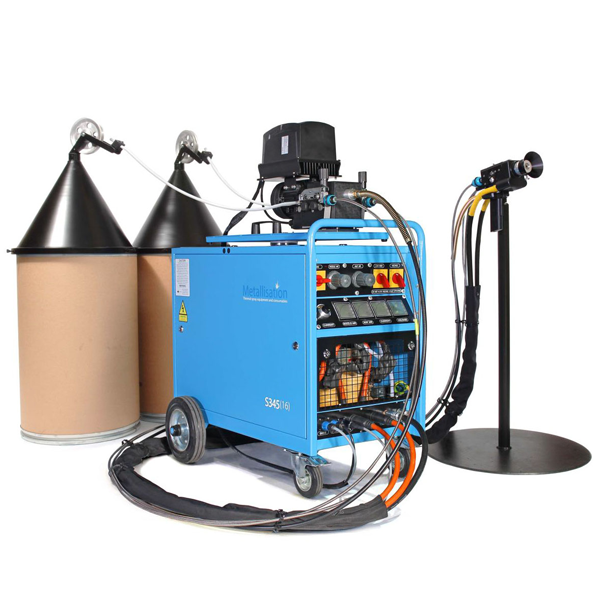
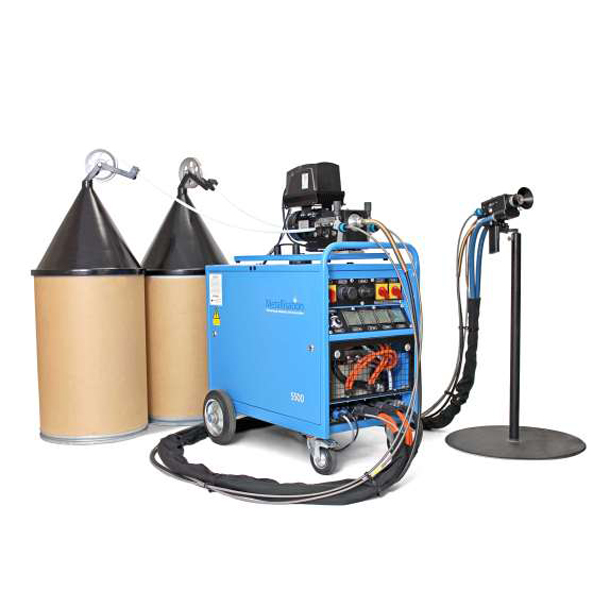
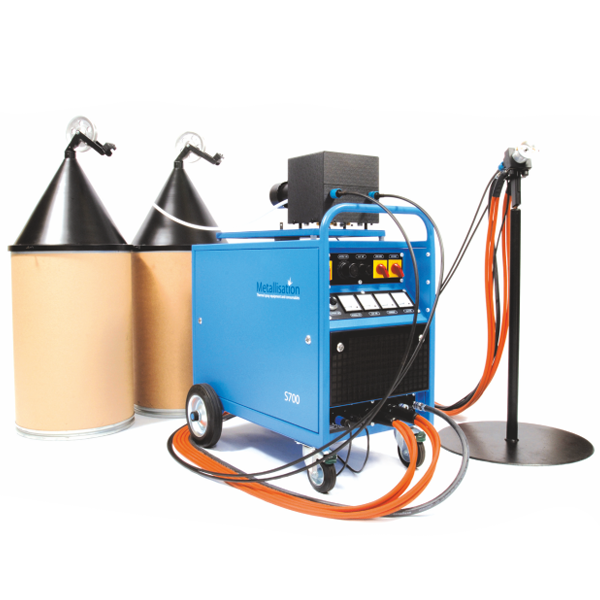
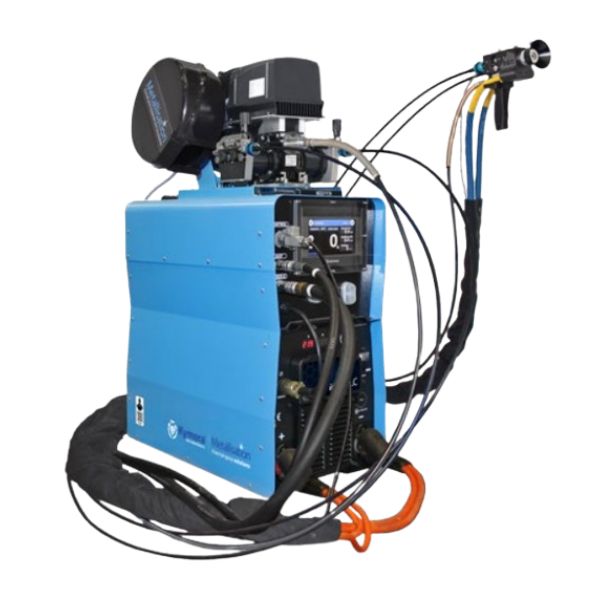
At a system level, a twin wire arc spray setup is built around three core components working together: the power supply, the wire feeder, and the arc gun with its gun head. Two consumable wires, supplied in wire form, are driven by the wire feed mechanism into the arc zone. As the wires converge, the electric arc melts the wire tips almost instantaneously. Compressed air passes through the gun head, atomizing the molten material into fine droplets that are propelled onto the substrate, forming the arc spray coating.
Consistent results depend on stability at every step of this sequence. Reliable wire feed, controlled atomizing air flow, and predictable arc start and arc shut behavior are all essential. Modern arc spray systems address this through integrated control consoles with digital LED displays, faceplate controls, and clear amperage value feedback, allowing operators to adjust operating parameters precisely and repeatably. Closed-loop current control, in particular, reduces the need for constant operator intervention and contributes directly to improved bond strength and coating consistency.
From a safety and reliability perspective, contemporary systems also incorporate voltage panel control, power reset functions, and logic designed to optimize arc start and shut-down sequences. These are not minor conveniences; they protect both operators and equipment during demanding arc spray work and play a significant role in managing long-term maintenance costs.
Materials and Application Scope
Electric arc metallization systems are inherently versatile when it comes to materials, provided they are electrically conductive and supplied as consumable wire. In practice, zinc wire and aluminium are the most common choices for corrosion protection, while steels and specialty alloys are frequently used for wear resistance and dimensional restoration.
By adjusting wire feedstocks, atomizing air flow, and other operating parameters, operators can control coating texture and thickness with a high degree of flexibility. This makes it possible to apply anything from relatively thin bond coats to thick protective layers for structural components. For many industrial users, this adaptability is a key advantage, as it allows a single arc spray platform to support multiple applications without changing the underlying equipment.
How Experienced Teams Approach System Selection
In mature organizations, system selection does not start with model names. It starts with defining how the arc spray system will actually be used: the size and geometry of the components, the working environment, access constraints, expected duty cycle, and the balance between precision and throughput.
The underlying objective is always the same: minimize downtime, reduce replacement and rework costs, and avoid inefficiencies over the full lifecycle of the equipment. When properly specified, arc spray coatings significantly extend component life and reduce the frequency of part replacement, with a direct and measurable impact on operational expenditure.
Productivity Is Defined by Spray Rate and Uptime
Amperage is rightly one of the first parameters considered, as it directly influences spray rate. Higher amperage allows the system to melt wire faster, increasing material throughput. On large anti-corrosion projects—bridges, offshore structures, wind towers—this translates directly into shorter coating times and lower labor cost per square meter.
At the same time, it is important to be clear about what amperage does and does not do. Higher amperage does not, by itself, improve coating quality. Coating performance is governed by arc stability, consistent wire feed, and controlled atomizing air. Amperage simply defines how quickly molten metal can be applied.
In practice, the key operational question is therefore not “What is the highest amperage available?”, but rather:
- How much surface area must be coated, how quickly must it be done, and how much flexibility is required for different coating requirements?
Wire Diameter, Reach, and Continuous Operation
Wire diameter defines the practical balance between precision and output. Smaller wires are typically used where fine bond coats or wear-resistant layers are required, while thicker wires are chosen to maximize deposition rates for corrosion protection. In day-to-day operation, however, stable wire feed and compatibility across a useful range of wire diameters often matter more than maximum wire size alone.
Supply package length and duty cycle are equally important drivers of productivity. Several arc spray systems support extended supply packages of up to 50 m, allowing operators to work across large or confined structures without repositioning the power supply. That said, maximum reach varies by system. While ARC145 and ARC150 configurations can support longer cable lengths, higher-output systems such as the ARC701 are typically configured with shorter maximum distances between energizer and pistol. Regardless of configuration, a true 100% duty cycle at working amperage remains essential for uninterrupted spray operation, particularly in industrial shutdown or time-critical environments.
Control Architecture, Ergonomics, and Operator Performance
Modern electric arc systems increasingly reflect the realities of industrial operation. Closed-loop control reduces process variability, sealed power supplies improve reliability in harsh conditions, and inverter-based systems reduce overall system weight for mobile or site-based work.
Operator fatigue is not a secondary consideration. Cable weight, gun balance, and ease of adjustment have a direct effect on coating consistency and productivity over long shifts. Systems designed with ergonomics in mind allow operators to maintain stable spray parameters for longer periods, which ultimately improves both quality and throughput.
Minex as a Technical Distribution Partner
Minex operates as a specialized distributor and technical partner for electric arc metallization systems. Rather than manufacturing equipment, Minex focuses on helping industrial users align system configuration with real application requirements.
This includes advising on power supply selection, wire feed configuration, operational reach, cooling options, and material compatibility. The aim is to deliver predictable arc spray performance, controlled maintenance costs, and long-term reliability across a wide range of industrial use cases.
Electric Arc Metallization Systems Available Through Minex
The table below provides a structured overview of the electric arc spray systems available through Minex. It is intended as a practical comparison tool for technical decision-makers, focusing on typical application profiles rather than repeating full datasheets.
| System Available via Minex | Typical Applications | Why This System Is Selected |
| Metallisation ARC145 / S245-CL or S345-CL | Small to medium anti-corrosion projects; engineering bond coats; maintenance and repair work | Selected for stable arc spray operation and flexibility. When specifying the ARC145 platform, engineers should confirm the required energizer version: the S245-CL or the newer S345-CL, which offers updated digital metering, a sealed energizer design, and PLC integration options. |
| Metallisation ARC150 / S500 | High-volume anti-corrosion work; pipelines, boilers, oil & gas assets; bridges and large steel structures | Used where continuous industrial productivity is critical. A true 100% duty cycle at higher amperage, combined with extended supply packages, supports long spray runs on large structures and tall infrastructure. |
| Metallisation ARC701 / S700 | Very large-scale infrastructure projects; shipyards, offshore structures; wind towers | Selected for maximum throughput. High amperage and thick wire compatibility enable very high spray rates. Engineers should account for the typically shorter maximum reach when planning system placement on tall structures. |
| Metallisation i450 / 150 | Mobile and site-based applications; structural steel fabrication; projects requiring frequent relocation | Chosen when portability and digital control are priorities. Despite its compact inverter-based design, the i450 delivers spray throughput comparable to heavier 500A transformer-based systems, with the trade-off focused on portability versus heavy-duty continuous operation. |
Bringing It All Together
Selecting an electric arc metallization system ultimately comes down to aligning equipment capability with operational reality:
- Large surface areas and tight schedules favor high-amperage, continuous-duty systems
- Mixed application portfolios benefit from wide wire and material compatibility
- Site work places a premium on reach, portability, and ergonomics
- Long-term value is driven by adaptability, not simply by initial purchase price
When these factors are evaluated together, the optimal system choice becomes clear and defensible from both a technical and economic standpoint.
When Expert Support Adds Value
Even experienced teams benefit from external input when application requirements evolve or project constraints become complex. Decisions around wire diameter range, consumable feedstock, supply length, or control architecture can materially influence productivity and cost over time.
Minex supports customers by helping them:
- Align electric arc metallization systems with real operating conditions
- Optimize wire feed and coating material selection
- Balance spray rate, operator safety, and coating performance
- Reduce long-term maintenance and replacement costs
For application-specific evaluation or system optimization, the Minex technical team can provide expert guidance tailored to your operational environment.
Frequently Asked Questions
Electric arc metallization, often referred to as twin wire arc spray, is a thermal spray process in which two electrically charged wires of opposing polarity are melted using an electric arc. The molten metal is then atomized by compressed air and projected onto a prepared surface to form a protective or functional coating. The process is widely used for corrosion protection, wear resistance, and dimensional restoration on large industrial components and structures.
In an arc spray system, consumable wires are fed by a wire feed mechanism into the gun head, where an electric arc forms at the wire tips. This arc melts the wires, and compressed air atomizes the molten metal into fine droplets. These droplets are propelled as a spray stream onto the substrate, forming the resulting coating. Process stability depends on consistent wire feed, controlled air flow, and stable arc power.
Electric arc metallization systems can process a wide range of conductive materials supplied in wire form. Commonly used materials include zinc wire and aluminium for corrosion protection, as well as steels, copper, and various alloys for engineering coatings, wear resistance, and dimensional restoration. Material selection is typically driven by the required coating performance and service environment.
Arc spray systems are typically utilized for large-area corrosion protection on bridges, offshore structures, pipelines, wind towers, and industrial steelwork. They are also used for engineering applications such as bond coats, wear-resistant surfaces, and dimensional restoration of worn components. The process is particularly well suited for infrastructure and heavy industry where high deposition rates and low heat input are required.
Key advantages of electric arc spray include high spray rates, relatively low operating costs, and minimal thermal impact on the substrate. The process allows efficient application of thick coatings over large surfaces and supports continuous operation with high-duty-cycle systems. Compared to other thermal spray processes, arc spray is especially cost effective for corrosion protection applications.
Like all thermal spray processes, arc spray has limitations. Coatings are typically rougher and more porous than some alternative methods and may require sealing depending on the application. The process is limited to conductive materials and relies heavily on proper surface preparation. Operator skill, fume management, and noise control are also important considerations in industrial environments.
System selection should be based on application scope, surface area, required spray rate, wire diameter range, duty cycle, and site conditions. In addition, configuration details such as energizer version, maximum supply package length, and control architecture should be confirmed, as these can materially affect productivity and suitability for specific projects. As discussed in the article, experienced teams evaluate systems in terms of operational reality rather than isolated specifications.
The most critical specifications include amperage (which influences spray rate), wire diameter compatibility (precision versus output), duty cycle (continuous operation capability), control architecture (closed-loop stability), and system ergonomics. Practical factors such as maximum reach from the power source and throughput at equivalent amperage levels should also be considered, as these vary between system designs and configurations.
Electric arc spray operations require appropriate personal protective equipment, including eye and face protection, respiratory protection, and hearing protection. Adequate ventilation is necessary to manage fumes generated during spraying. Proper grounding, interlocks, and controlled arc start and shut functions are also essential to ensure safe operation in industrial environments.
Routine maintenance includes inspection and cleaning of the gun head, wire feeders, and consumable components such as contact tips and wire guides. Regular checks help maintain stable wire feed and arc performance. Preventive maintenance at defined operating intervals reduces unplanned downtime and supports consistent coating quality over the long term.