Electric Painting Pumps
References
Technical Guide: How to Select a Professional Electric Painting Pump
Selecting a professional electric painting pump begins with understanding how technical parameters translate into real performance across demanding industrial and commercial environments. Whether the task involves coating large exterior structures, achieving controlled interior finishes, or operating within specialized industrial production lines, the equipment must deliver stable pressure, reliable material flow, and a consistent professional finish. Modern airless sprayers, including advanced Graco sprayers, are engineered to handle high-viscosity materials, maintain uniform atomization over extended hose lengths, and operate continuously through long production cycles—capabilities that go far beyond what basic specification tables alone can convey.
A precise selection process focuses on the variables that have the greatest impact on results: the characteristics of the coating, the level of production output required, the physical constraints and access conditions of the jobsite, the expected maintenance regime, and any specialized application demands. These factors are relevant across a wide spectrum of work—interior walls, cabinetry, exterior decks, metal structures, industrial equipment, and large commercial surfaces. Evaluated in the right order, they form a practical technical framework for identifying the pump configuration that best supports an efficient workflow and a predictable, high-quality finish.
This guide is designed for engineers, technical managers, contractors, and other experienced professionals responsible for specifying electric spray equipment for automotive finishing, industrial manufacturing, architectural painting, heavy-equipment coating, and complex commercial projects. Each section highlights the operational criteria that ensure your paint sprayers deliver precise, controlled performance across both interior and exterior applications—whether the job calls for broad uniform coverage or detailed, high-precision finishing.
How Material Viscosity and Coating Properties Shape Your Pump Requirements
When choosing a professional electric painting pump, the first question to answer is simple: What type of coating will you be spraying? The behavior of the material—how thick it is, how fast it moves, and how much solids it contains—sets the minimum performance requirements. If a pump cannot move and atomize the coating reliably, no adjustment to workflow, hose length, or technique will fix the problem. Getting the material match right is the foundation for every other decision.
Material Viscosity and Solids Content
Coatings fall into two broad groups, and knowing where your material sits helps identify the right pump immediately:
- Thin coatings such as latex paints, oils, stains, and architectural sealers flow easily. Most airless paint sprayers can handle them without difficulty, whether you’re finishing interior walls, cabinets, trim, or light commercial surfaces.
- Heavy coatings—industrial primers, corrosion-resistant systems, Level 5 compounds, plaster, cement-based products, and high-build protective layers—behave very differently. These materials move slowly, resist flow, and put real stress on the pump.
When viscosity increases, you need a pump that can push harder and feed consistently. This is where stronger suction, larger fluid passages, and higher pressure capacity become essential. If your material is thick enough that brushing or rolling would be difficult, assume you need a pump built specifically for dense coatings.
Maximum Tip Size
Tip size is one of the quickest ways to judge whether a pump is suited to your coating.
Here is a practical rule:
- Smaller tips → good for light architectural products and detail work
- Larger tips → required for heavy coatings and big jobs
Pumps built for industrial work support larger tip sizes because they must move thicker material without clogging. When the pump and tip are correctly matched, you benefit from:
- predictable film build
- reduced overspray
- a smooth, consistent finish on walls, decks, ceilings, machinery, or metal structures
- fewer interruptions during long spraying sessions
If your coating data sheet calls for a large tip—or you are covering a wide exterior elevation or high-build system—choose a pump that comfortably supports that tip size.
Suction and Immersion Capability
Suction strength matters most when materials are heavy enough to settle, slump, or resist flow. Standard suction tubes can struggle with dense coatings such as plaster, cementitious layers, fireproofing products, or high-solids epoxies.
In these situations, pumps that feature:
- direct immersion systems
- reinforced or submerged foot valves
- wider, high-capacity fluid passages
are the better choice. These systems pull material efficiently from the container and keep the spray consistent—critical when coating long walls, industrial equipment, or architectural features where you cannot afford interruptions or material starvation.
Maximum Operating Pressure
Pressure determines how well the coating atomizes.
A simple guideline:
- Light coatings → atomize at lower pressures
- Heavy coatings → require high, stable pressure to form a clean fan pattern
For demanding materials or long hose setups, pumps capable of up to 230 bar maintain steady atomization and prevent pattern collapse. This is especially important when spraying exterior façades, industrial structures, elevated areas, or multi-level interiors.
Consistent pressure ensures a smooth finish and helps keep overspray under control—even when the jobsite layout forces you to work at extended distances.
Evaluating Job Scale and Throughput Requirements
Once you confirm that a professional electric painting pump is compatible with your coating, the next step is choosing a pump that can keep up with the scale of your projects. Throughput—how quickly and efficiently your airless sprayers can apply material—depends primarily on three variables: flow rate, multi-gun capability, and maximum hose length. These factors influence how fast teams can complete interior or exterior work, how easily operators can access hard-to-reach areas, and how well the equipment fits into routine operations.
Required Flow Rate (L/min)
Flow rate determines how quickly the pump can deliver paint, stains, oils, or latex coatings to the surface. It is one of the most useful indicators of real-world jobsite efficiency.
- High-output pumps are ideal for big jobs such as exterior façades, industrial tanks, steel structures, large commercial interiors, or long production lines. More flow means fewer passes, faster coverage, and less time lost to brushing or rolling. On demanding schedules, these pumps help crews work faster and maintain a more consistent finish.
- Medium-flow pumps provide increased control, which is essential for fine-detail work. They are well suited for interior paint sprayer tasks such as cabinets, trim, furniture, walls, or any area where managing overspray and achieving a smooth, professional finish are priorities.
If your workflow depends on covering substantial surface area each day, prioritizing a higher-flow pump is the most effective way to maintain speed and keep costs manageable throughout the year.
Multi-Operator or Multi-Gun Capability
When multiple operators need to spray simultaneously, a pump with dual-gun capability becomes extremely valuable. This feature:
- increases production output without doubling your equipment
- helps teams stay productive on large or complex projects
- reduces coordination difficulties when several work zones must be completed at once
For commercial and industrial work—especially large exterior structures and high-volume interiors—a multi-gun pump often provides the best balance of speed, reliability, and cost savings.
Maximum Hose Length
Hose length determines how freely operators can move around the job and how often the pump must be repositioned. Longer hoses allow you to:
- coat multi-level interior spaces without relocating the pump
- reach long exterior walls or elevated façades
- cover industrial halls, machinery yards, and wide production areas
- maintain a steady workflow across large sites
The key is pressure stability. Pumps designed to hold consistent pressure over long distances ensure a controlled spray pattern, uniform finish, and safe operation—regardless of building layout or jobsite complexity.
Evaluating Site Environment and Operational Logistics
The jobsite environment strongly affects how well a professional electric painting pump performs. Power availability, site layout, mobility, and hose management all influence how easily the equipment can be deployed throughout the work day. Matching the pump to real-world conditions prevents delays and supports a predictable, efficient workflow.
Power Source Constraints
Power reliability often dictates which pump type is the best choice:
- Electric pumps excel in interior environments with stable power—manufacturing halls, warehouses, commercial interiors, and controlled finishing areas. These jobs benefit from consistent pressure, a clean professional finish, and reduced environmental restrictions.
- Gas/electric convertible pumps are ideal for exterior or remote locations such as construction sites, industrial yards, or heavy-equipment zones where electrical access may be limited. Convertibility ensures uninterrupted operation and eliminates the need to move equipment between power sources.
If your teams frequently transition between indoor and outdoor work, a convertible system provides the greatest flexibility and operational reliability.
Site Access, Layout, and Mobility
Even the best-performing paint sprayers lose value if they are difficult to maneuver around the jobsite. Pumps designed with mobility in mind make daily work easier.
Helpful mobility features include:
- large, durable wheels for uneven exterior ground
- well-balanced frames for tight interior corridors
- integrated hose reels that simplify setup
- ergonomic handles to reduce operator fatigue
Good mobility helps crews move faster, reposition equipment less often, and maintain consistent spraying from start to finish.
Hose Management Requirements
Effective hose management improves performance, safety, and long-term equipment reliability. Pumps that include:
- built-in hose reels,
- stable platforms, and
- quick-deployment systems
make it easier to move between surfaces while maintaining controlled spray pressure. This matters in both interior spaces—where careful routing prevents tripping hazards—and on exterior projects that require long reach and frequent movement.
Assessing Maintenance Requirements and Total Cost of Ownership
Long-term reliability is a critical consideration for operations that run daily or handle large volumes of coating work. A pump that is easy to maintain, built with durable components, and engineered for long service intervals will save significant time and money over the year. Using the correct supplies, recommended accessories, and proper cleaning procedures further supports consistent performance and extends equipment life.
Pump Design and Component Durability
The durability of the pump’s internal components has a direct impact on performance and downtime. Features such as reinforced rods, hardened stainless-steel cylinders, and advanced packing systems allow the pump to handle demanding coatings—including latex, oils, stains, sealers, industrial primers, and high-build materials—without premature wear.
A well-constructed pump maintains reliability across long projects, reduces the likelihood of unexpected failures, and delivers better long-term value for teams managing continuous interior and exterior work.
Serviceability and Cleaning Systems
Efficient maintenance systems make a measurable difference on active jobsites.
Technologies such as:
- tool-free pump lower removal,
- fast-flush cleaning systems, and
- easy-access fluid passages and filters,
simplify routine cleaning and shorten downtime between tasks. These features help teams transition quickly between materials, complete color changes with minimal disruption, and maintain consistent performance whether spraying interior walls, exterior façades, or detailed trim. Faster cleaning also reduces labor requirements and keeps projects moving smoothly.
Motor Type and Power Efficiency
The motor determines how reliably the pump maintains pressure under varying loads.
Brushless DC motors provide strong torque, smooth power delivery, and excellent efficiency during long spraying sessions. Their stable operation supports a more predictable energy profile and helps ensure a consistent, professional finish across interior and exterior coatings.
For operations running multiple projects throughout the year, motor efficiency contributes directly to lower operating costs and improved long-term performance.
Considering Specialized Application Requirements
Certain coating tasks demand pump features tailored to the material and the finish you want to achieve. Matching the pump to these specialized needs helps ensure consistent results and avoids unnecessary strain on the equipment.
HVLP Applications for Controlled, Smooth Finishes
When a project requires a smooth finish with precise control—such as coating cabinets, trim, furniture, or detailed interior and exterior surfaces—HVLP sprayers are often the better choice. Their low-pressure delivery reduces overspray and allows operators to place material exactly where it is needed. HVLP technology is especially valuable for work involving complex surfaces or fine-detail applications where an even, high-quality coating is essential.
Texture and Plaster Applications
Texture materials, Level 5 compounds, plaster, and cement-based coatings place heavy demands on spray equipment. These materials require pumps with:
- large fluid passages to prevent restriction,
- strong suction and immersion capability,
- reinforced components to handle higher loads.
Pumps designed for these applications maintain a consistent pattern on ceilings, walls, and architectural surfaces, making them ideal for decorative textures or high-viscosity finishing systems.
High-Build Protective Coatings
For coatings used on heavy equipment, construction machinery, or industrial steel structures, pump capability becomes even more critical. High-build protective systems often require:
- large tip sizes,
- high operating pressure,
- robust wear-resistant components.
Choosing a pump engineered for these materials ensures proper film build, reliable atomization, and long-term protection in demanding environments.
Integrated Air or Hybrid Systems
Some coating applications—especially in architectural or decorative work—benefit from integrated air assistance or hybrid spray systems. These technologies improve pattern refinement and help achieve both smooth finishes and textured effects with a single setup. They are well-suited for projects where variety is required, or where transitioning between textures and standard coatings needs to happen quickly.
Safety Precautions and Best Practices
After identifying the right pump for your coating materials and application needs, it is just as important to ensure the equipment is used safely and efficiently. High-pressure airless sprayers and professional electric painting pumps deliver exceptional performance, but they also require disciplined handling. The following best practices help maintain safety while supporting consistent results across both interior and exterior projects.
Wear Appropriate Protective Gear
High-pressure spray equipment atomizes materials such as latex, oils, stains, and sealers into fine particles. Proper PPE—gloves, eye protection, and respiratory equipment—is essential. These measures safeguard operators during all types of work, from controlled interior spraying to large-scale exterior jobs.
Understand the Equipment Before Use
Before operating any airless paint sprayers or Graco sprayers, take the time to review the manufacturer’s instructions. Knowing how to prime the system, adjust pressure, clear clogs, and shut down correctly ensures safer operation and helps maintain a smooth, professional finish.
Use the Correct Tip and Pressure Settings
Matching the right tip size and pressure settings to your coating improves coverage and reduces unnecessary overspray. Whether working on cabinets, walls, trim, machinery, or exterior façades, proper configuration ensures predictable spray patterns and a controlled, even application.
Prepare the Work Area
A well-prepared workspace is essential for clean, efficient results. Clear the area, protect surrounding surfaces, and ensure proper ventilation when working indoors. Good preparation limits rework, improves finish quality, and allows operators to focus on consistent spraying rather than cleanup.
Test Before Full Application
Testing the spray pattern on a sample surface helps fine-tune fan width, flow rate, and pressure before production begins. This simple step supports a smoother finish across large surfaces and reduces the risk of errors on visible areas.
Maintain and Clean the Pump Regularly
Routine maintenance keeps your equipment performing at its best. Clean the system thoroughly after each use, flush fluid passages, check filters, and follow all recommended procedures for tip care. Regular cleaning prevents clogs, protects pump components, and extends equipment life.
Follow Electrical and Power Safety Protocols
When operating electric spray equipment, ensure the environment is dry, cables are protected, and all components are kept clear of moisture. For gas–electric hybrid units, follow proper fuel-handling and storage guidelines. Adhering to these safety measures reduces risk and keeps operations running smoothly.
Professional Electric Painting Pump Selection Overview
The following overview consolidates key performance parameters—flow capacity, maximum tip size, operating pressure—and aligns them with the operational scenarios where each pump delivers the highest value. This allows you to directly compare configurations and identify the model best suited to your coating materials, production demands, and site conditions.
| Pump Model | Max Flow | Max Tip | Max Pressure | Application & Target Industrial Cases | Operational Fit & Strategic Advantages |
|---|---|---|---|---|---|
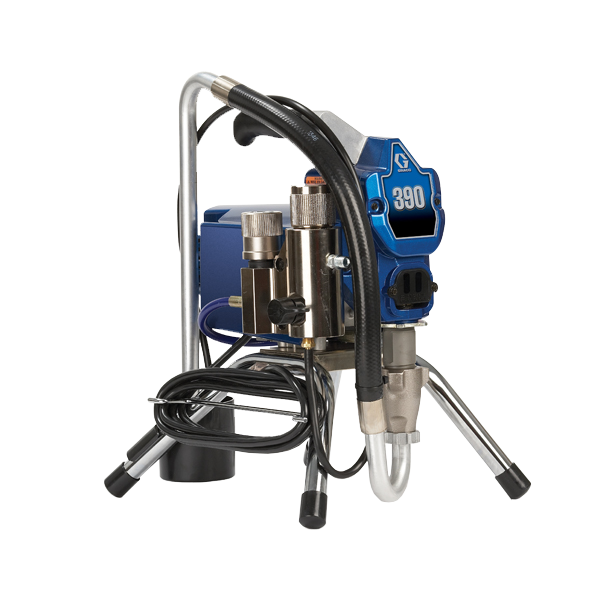
| Graco 390 Electric Airless Sprayer | 1.8 l/min | 0.021" | 227 bar | Target Cases: Interior/exterior residential, new construction, repaint/remodel, light commercial, property maintenance. Ideal for professionals starting out. | Operational Fit: Compact and lightweight (13.6 kg). Strong performance at great value. Features Endurance Pump, QuikAccess intake valve, Easy Out Pump filter to reduce clogs. |
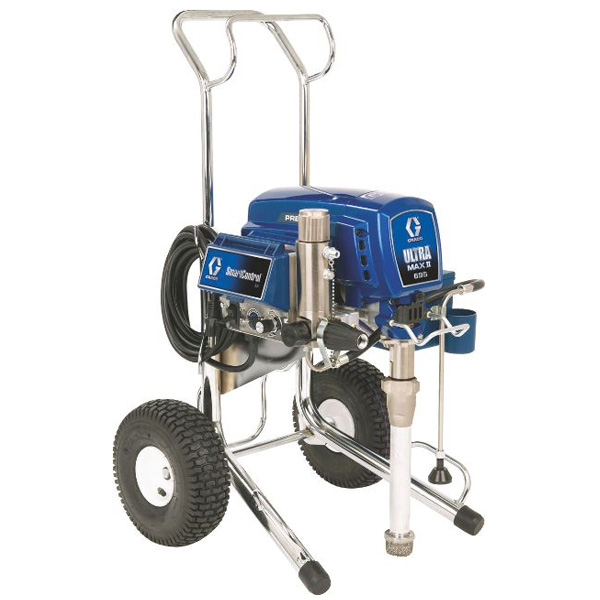
| Graco Ultra Max II 695 | 3.0 l/min | 0.029" | 230 bar | Target Cases: Moderate commercial work, new construction, repaints, light industrial tasks. Suitable for standard coatings. | Operational Fit: Reliable pressure control. Supports occasional two-gun operation. Includes SmartControl Pressure Control and Chrome Plated Welded Steel Hi-Boy cart. |
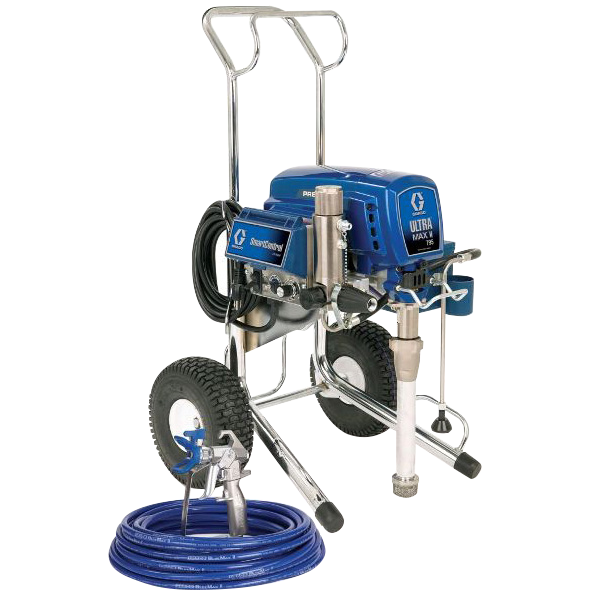
| Graco Ultra Max II 795 | 3.6 l/min | 0.031" | 230 bar | Target Cases: New construction and moderate commercial projects. Works well with slightly heavier coatings. | Operational Fit: Powerful and versatile with consistent performance on large tips, long hoses, and heavy coatings. Dual-gun capable. Features MaxPower Brushless DC Motor and Endurance Pump. |
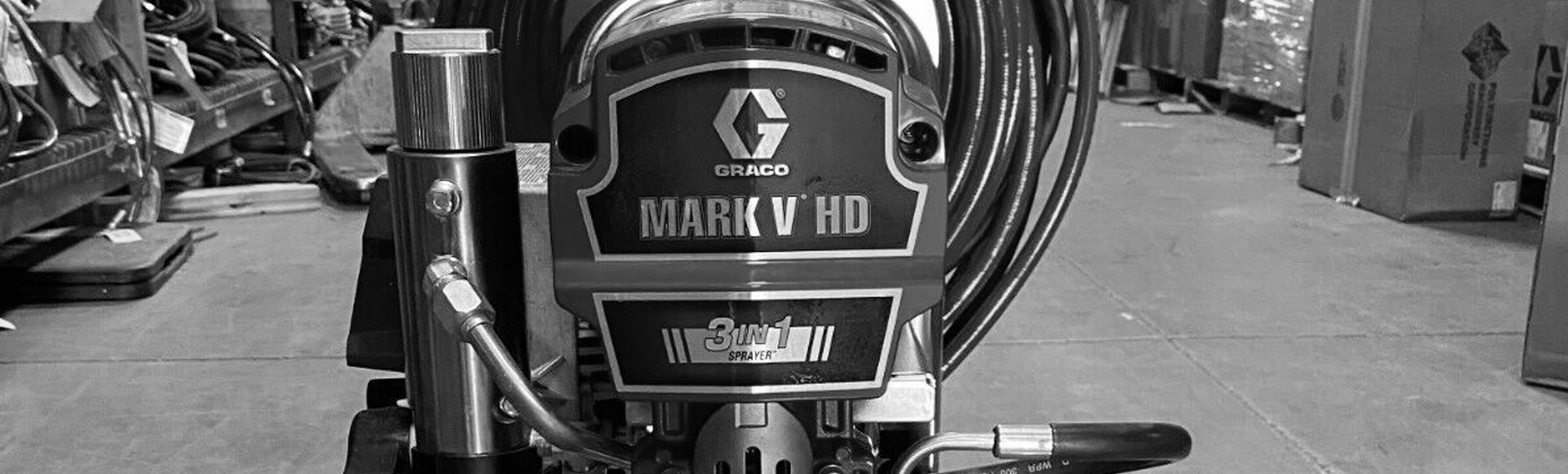
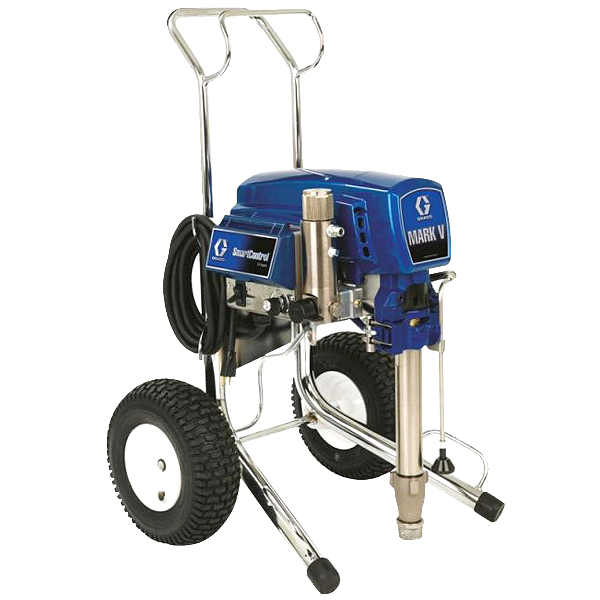
| Graco Mark V | 5.5 l/min | 0.037" | 230 bar | Target Cases: Commercial construction, Level 5 finishing, drywall mud (orange peel, splatter, knockdown), heavy primers and paints. | Operational Fit: Excellent for heavier materials due to enhanced suction and large fluid passages. Supports two-gun spraying. Includes QuikReel hose reel and FastFlush cleaning system (4× faster cleaning). |
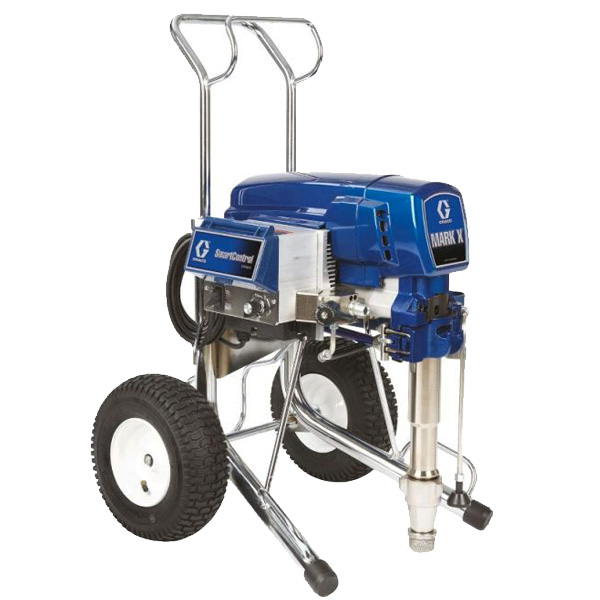
| Graco Mark X | 9.1 l/min | 0.051" | 230 bar | Target Cases: Large-scale industrial/commercial texture or high-build coating applications. Ideal for 240V job sites. | Operational Fit: Most powerful electric airless/texture sprayer in the lineup. Nearly double the Mark V output. Handles high-viscosity materials and continuous large-surface coverage. |
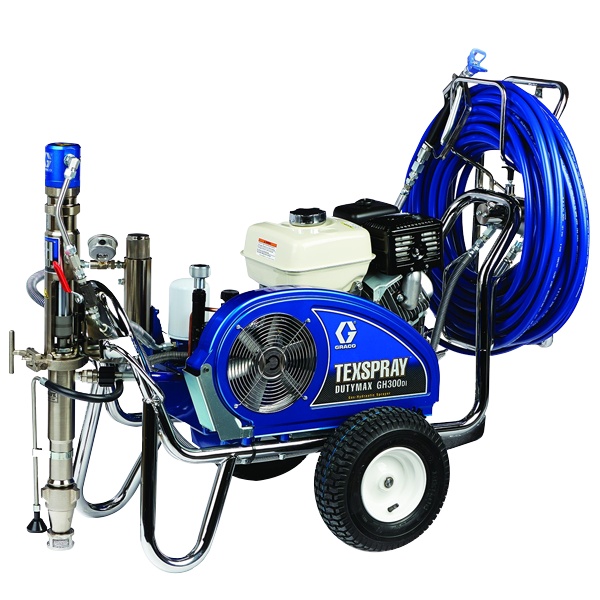
| Graco DutyMax (EH Models) | Up to 11.3 l/min | Up to 0.063" (with plaster) | 230 bar | Target Cases: Heavy commercial, industrial, and new construction; high-solids and dense coatings including plaster. | Operational Fit: Built for high-production work. Supports long hose runs (up to 90 m). Convertible between electric and gas without tools for continuous operation. |
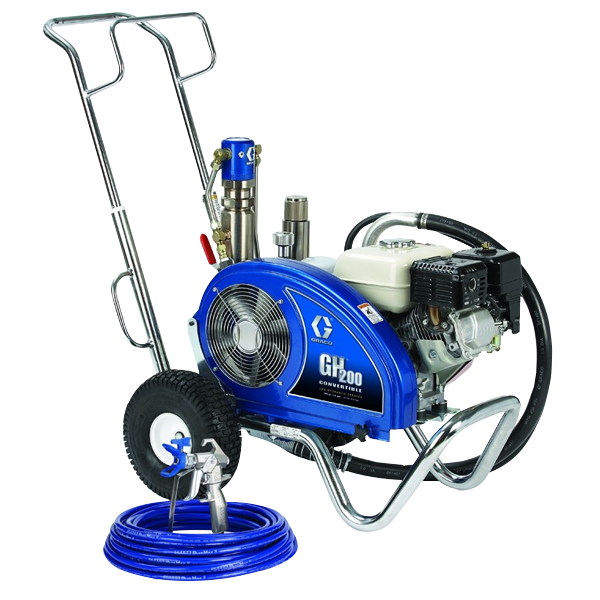
| Graco GH 200 (Electric Mode) | 8.1 l/min | 0.047" (electric engine) | 230 bar | Target Cases: Heavy commercial and industrial jobs with varying power availability; ideal for medium–large projects. | Operational Fit: Hydraulic sprayer with tool-free switch between gas and electric. Includes MaxLife Endurance Pump and ProConnect system. Suitable for interior applications in electric mode. |
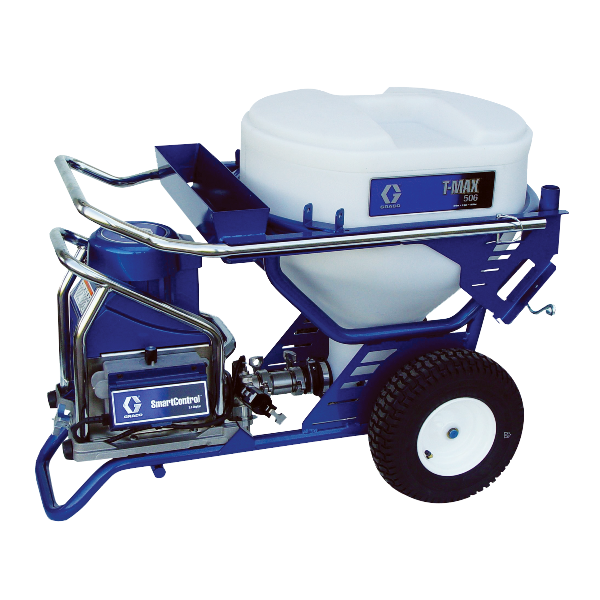
| Graco T MAX Painting Pump | 7.2 l/min | 0.061" (with 8 m hose) | 65 bar | Target Cases: Architectural finishing with plaster, cement-based materials, decorative coatings. Works without a compressor. | Operational Fit: Large 90 L hopper. Saves up to 30% material vs manual application. Includes automatic cleaning system. |
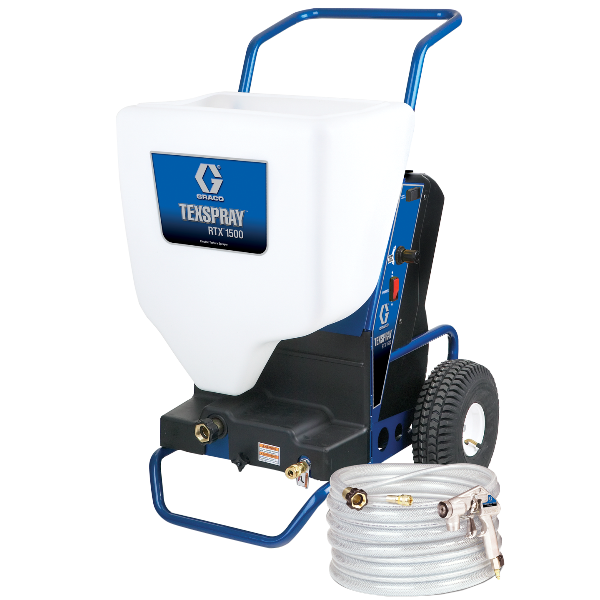
| Graco RTX 1500 Professional Texture Sprayer | 7.6 l/min | 57 L hopper | 7 bar fluid (3 bar air) | Target Cases: Commercial/architectural texture applications; handles a wide range of textured coatings. | Operational Fit: Dual electric motor powers pump + integrated compressor (185 l/min at 3 bar). 57 L hopper enables continuous work with minimal refills. |
Talk to Our Experts
Our technical specialists, with extensive experience in helping customers select the right equipment, are available to help you evaluate professional electric painting pump configurations tailored to your coatings, equipment needs, interior and exterior workflow conditions, and long-term performance objectives. Whether you are selecting advanced airless sprayers, specifying Graco sprayers, or planning equipment fleets for high-volume industrial projects, we can support you in making a confident, informed decision that delivers durability, efficiency, and a consistently smooth finish.
The solutions we recommend are perfect for achieving optimal results in a wide range of professional painting applications.
Frequently Asked Questions
Check the coating's technical data sheet for the recommended tip size, operating pressure, and filtration requirements, then match those against the pump's rated maximums. Thin architectural coatings are handled by most professional electric airless pumps. High-viscosity materials—industrial primers, plaster, or high-solids systems—require a pump with strong suction, large fluid passages, and immersion capability. If the coating is thick enough that brushing or rolling would be difficult, assume you need a pump built specifically for dense coatings.
Flow rate, maximum tip size, and maximum hose length are the three parameters that govern real-world throughput. Flow rate determines coverage speed; higher output means fewer passes on large surfaces. Maximum tip size determines which coatings can be atomized without overloading the system. Maximum hose length determines how freely operators can move without repositioning the pump—critical on multi-level structures or wide industrial sites. Evaluate these three values against your daily surface area targets before any other specification.
Electric pumps are the right choice for interior environments with stable power—manufacturing halls, warehouses, and controlled finishing areas. Gas or convertible units suit exterior construction sites and remote locations where electrical supply is unreliable. If your teams regularly move between indoor and outdoor work, a convertible system provides the greatest operational flexibility and eliminates the need to manage separate equipment for each environment.
These pumps operate at pressures high enough to cause injection injuries on direct skin contact. Applicable standards include EN 60204-1 for electrical safety of machinery, and CE or ATEX certification where flammable coatings or classified environments are involved. Grounded hoses, dry operating environments, and protected cabling are mandatory. Required PPE comprises chemical-resistant gloves, eye protection, and respiratory equipment as specified in the coating's safety data sheet. Pressure-relief and lock-out procedures must be completed before any maintenance or tip change.
Use the coating's technical data sheet and the manufacturer's tip selection chart, then confirm the chosen tip stays within the pump's rated maximum tip size. Exceeding that limit forces the pump beyond its design pressure and accelerates wear. Fan width should be narrow for trim, cabinetry, and detail work, and wider for open walls, façades, and large industrial surfaces. Always test on a sample surface before full application to confirm pattern uniformity and film build.
Flush the system thoroughly after every use and inspect filters on a schedule matched to your coating type—abrasive or high-solids materials load filters faster. Check high-pressure hoses and packings regularly for wear and replace them before the next use if damaged. Complete pressure-relief and lock-out before any component access. Follow the manufacturer's lubrication schedule for packings and store the pump with the recommended preservative fluid in the fluid section to prevent corrosion during idle periods.