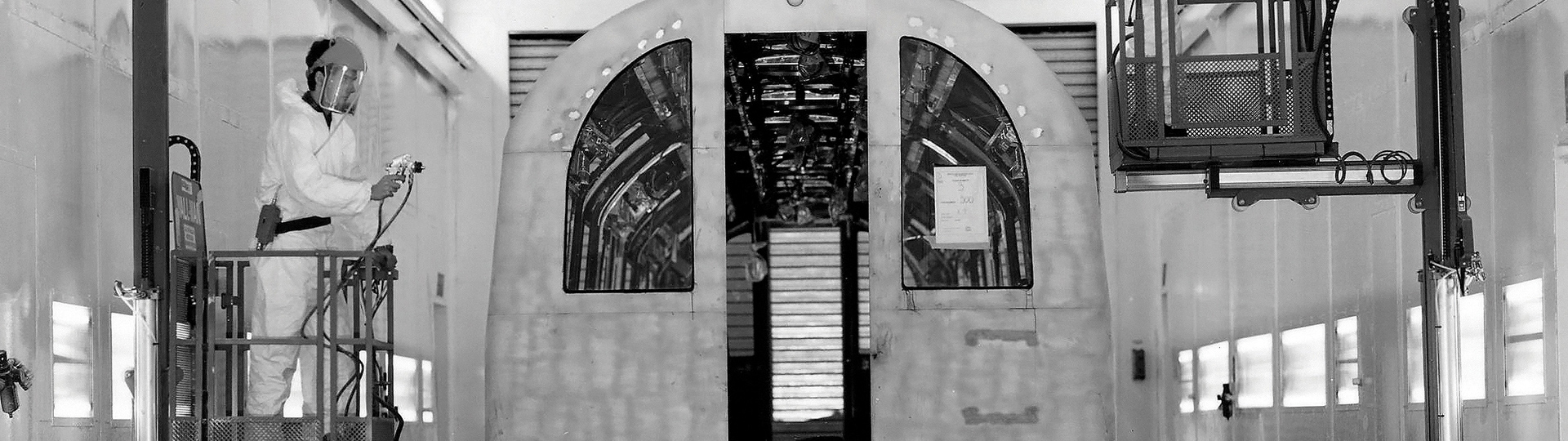
Painting and Drying Halls and Cabins
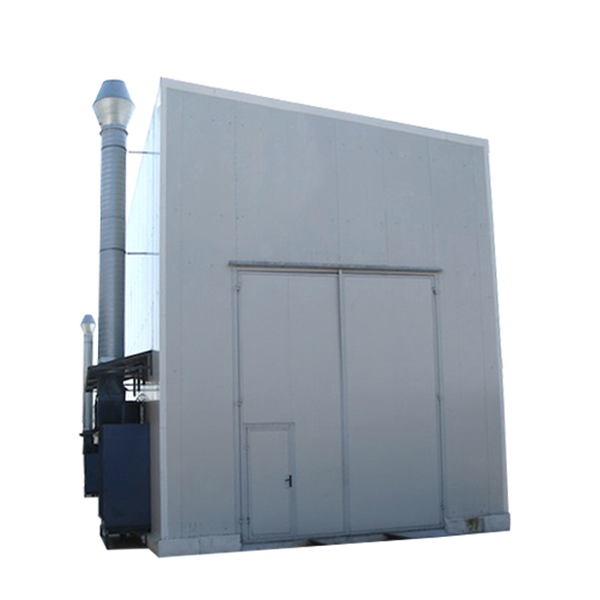
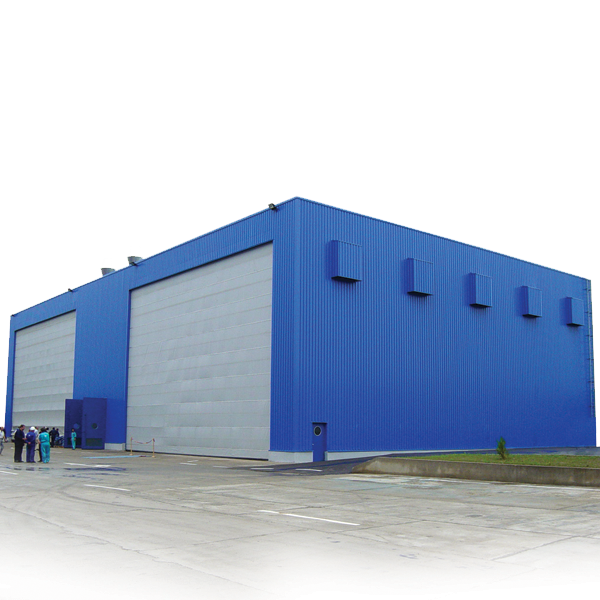
References
A Practical Guide to Choose the Right Controlled Coating Environment
Industrial painting and drying represent some of the most critical stages in surface engineering. These steps protect metal parts from corrosion, stabilise long-term performance, and ensure consistent color and aesthetic uniformity—whether the finish is light, dark, bright, or highly specialised. From heavy machinery and automotive components to fabricated steel structures, the controlled space in which the coating is applied directly determines the quality of the finish, the stability of the process, and the safety of the operators involved.
Minex Group supports industrial manufacturers across Europe with custom-built painting halls, compact painting cabins, and climate-controlled systems designed to meet a wide range of part sizes, layouts, and productivity needs. These engineered environments allow you to create coating lines where every shade behaves predictably and every layer of coating dries under optimal conditions.
Selecting the correct solution requires a structured evaluation of your parts, processes, and long-term operational plans. There is no single easy way to reach that decision, but studying the technical details will help you choose the configuration that best supports your goals.
Before we continue, it is important to clarify that this guide addresses industrial coating systems—not small art studios, hobby painters, or woodworking setups where a brush and fan ventilation might suffice. Industrial work requires airtight enclosures, engineered airflow, ATEX-certified lighting, and thermal management systems capable of supporting high-volume finishing operations.
With the foundation in place, let’s discover the key decision factors.
Why Workpiece Size and Geometry Determine Your Painting and Drying Solution
In industrial coating, the workpiece always defines the first decision line. Size, geometry, handling requirements, and even weight determine the physical environment needed for a stable and controlled application process.
Large or unusually shaped structures require significantly more capacity than small metal components, which is why workpiece dimensions guide the initial choice between a hall and a cabin. The environment must meet the physical realities of your parts before it can support the technical demands of your coatings.
Painting and Drying Halls — Built for Oversized, Heavy, or Complex Structures
Painting halls are engineered for components that exceed the limits of compact enclosures. These include:
- Large machinery frames
- Rolling-stock elements
- Shipbuilding structures
- Petrochemical equipment
- Long welded assemblies measured in tons
Such pieces require engineered height, controlled light, and ample working space. Operators must be able to stand safely around the part, move along the correct line of application, and manage coating thickness without obstruction.
A hall becomes an industrial home for oversized components—an engineered environment where airflow, temperature control, and visibility support uniform coating results on surfaces of any scale.
Painting and Drying Cabins — Optimized for Small and Medium Metal Parts
When components fit naturally into a confined enclosure, a cabin becomes the more efficient option. Cabins provide a sealed microclimate ideal for:
- Consistent, repeatable coating cycles
- Accurate color reproduction, whether blue, yellow, green, or white
- Integration into existing facilities without restructuring the production space
Because cabins isolate the environment so effectively, finishes blend evenly and surface textures remain stable across batches. This makes cabins especially helpful for manufacturers delivering standardized parts at high volumes.
For many automotive suppliers, machine builders, and fabrication workshops, a cabin is the preferred choice because it offers predictable coating behaviour with minimal variation.
Creating the Right Application Environment: Control, Stability, and Protection
Once the workpiece has been defined, the next critical consideration is the environment that supports the application itself. Industrial painting and drying require a controlled atmosphere that stays clean, stable, and consistent. Any shift in temperature, airflow, pressure, or particulate load can cause defects, unwanted shades, or irregular drying.
The environment must therefore match both the precision the coating process demands and the physical characteristics of the part—whether it is small and lightweight or a multi-ton structure.
Painting and Drying Halls — Environmental Control at Industrial Scale
Painting halls stabilize conditions across large structures using engineered airflow, filtration, and thermal control. High-capacity ventilation distributes air evenly, while extraction systems remove particulates to maintain a clean space for operators.
ATEX-certified lighting provides the clarity needed to read every contour and line of a part. Temperature systems ensure that coatings—from light primers to dark topcoats—behave predictably across wide surfaces.
For oversized structures, a hall provides the environmental scale needed to support safe, compliant, and uniform finishing.
Painting and Drying Cabins — Precision Control for Repeatable, High-Quality Results
Cabins excel at controlling variables that influence finish quality. Their sealed architecture stabilises temperature and humidity quickly, maintains pressure balance, and minimises airborne particles that could affect color or texture.
This precision supports batch production, where each component must reflect the same coating behaviour, regardless of material or geometry. Cabins become compact coating studios designed for predictability, environmental accuracy, and tight process control.
Optimizing Productivity: Operators, Throughput, and Workflow Planning
Productivity defines how the coating environment is built and operated. Throughput expectations, operator count, and movement of materials shape whether a hall or cabin will support your workflow most effectively.
The goal is to create a coating line where equipment, operators, and parts move smoothly from step to step, without bottlenecks or interruptions.
Painting and Drying Halls — Built for High-Volume, Multi-Operator Demands
Halls support complex operations where several operators must work around large structures simultaneously. Their scale accommodates cranes, rails, and automated handling systems required for heavy or irregular parts.
Each hall is designed around the expected production rhythm, ensuring that airflow, access points, and spatial layout keep the process moving without delay. This makes halls the go-to option for industries managing high-volume finishing of oversized components.
Painting and Drying Cabins — Streamlined Efficiency for Standardized Cycles
Cabins support fast, repeatable coating cycles for small and medium components. Their compact structure stabilises quickly, allowing teams to maintain a steady application tempo.
Because cabins fit easily into existing layouts, they support efficient workflows without major facility changes. Manufacturers who prioritise consistency and predictable throughput often select cabins to maintain production quality day after day.
Aligning Productivity with the Right System
Halls and cabins have distinct strengths. Halls support heavy handling, multi-operator workflows, and long components. Cabins support standardized cycles, controlled application, and repeatable finish quality. Matching your system to your operational rhythm ensures stable results across the entire coating line.
Finish Quality, Safety, and Regulatory Compliance
Quality and safety go hand in hand in industrial coating. European regulations governing emissions, airflow, and ATEX certification shape how halls and cabins are engineered. A compliant system ensures stable finishing behaviour and protects operators throughout the process.
Painting and Drying Halls — Engineered for Large-Scale Safety and Consistency
Halls support controlled finishing on large structures by combining engineered airflow, robust filtration, safe electrical systems, and consistent thermal distribution. ATEX-certified components keep operators safe while coatings—from light layers to dark protective films—are applied across wide surfaces.
These systems stabilise environmental variables over large volumes, supporting consistent results regardless of coating color or material.
Painting and Drying Cabins — Precision Control for Superior Containment
Cabins provide natural containment advantages thanks to their sealed configuration. Airflow, filtration, and temperature remain tightly regulated, supporting controlled finish quality while simplifying regulatory compliance.
Their smaller space allows environmental elements—temperature, humidity, and light levels—to be managed with exceptional accuracy, contributing to smooth, uniform results.
A Shared Commitment to Quality and Compliance
While they differ in scale and environmental precision, both solutions can deliver outstanding results when properly engineered. The right choice depends on part size, throughput requirements, safety obligations, and the regulatory expectations of your industry.
Core Equipment: The Infrastructure Behind Environmental Stability
Reliable industrial coating environments rely on coordinated equipment designed to stabilise airflow, temperature, lighting, and application precision.
Spray systems, airflow networks, thermal controls, optional dehumidifiers, and ATEX-certified lighting all work together to support coating performance. Smart control panels allow operators to select exact parameters, monitor environmental variables, and keep the coating line compliant and stable.
Halls deploy these systems at a large scale; cabins compress the same technology into a more controlled space, allowing rapid stabilisation and repeatable batch performance.
Minex can provide either solution as a turnkey installation or assist your team through a hybrid execution model that aligns with your facility’s long-term plans.
Which System Is Right for You?
Painting & Drying Hall vs. Painting Cabin — Comparison Guide
| Criteria | Painting & Drying Hall | Painting & Drying Cabin |
| Part Size | Very large and oversized components | Small and medium metal parts |
| Dimensions | Fully custom-built | Determined by part size and batch requirements |
| Environmental Control | High-level control for large areas | Strict, precise environmental control |
| Productivity | High throughput, multi-operator | Efficient cycles for standardized parts |
| Operator Requirements | Multiple operators inside the hall | Operators outside or minimal internal presence |
| Regulatory Compliance | Complex due to size | Easier thanks to sealed enclosure |
| Safety | ATEX lighting and engineered airflow | ATEX-certified, optimized containment |
| Customization | Tailored to specific projects | Configured per application requirements |
| Installation | Freestanding construction | Installed inside an existing industrial hall |
| Best Fit | Heavy industry, shipbuilding, large structures | Automotive, metal fabrication, machine building |
Your Final Decision: Painting Hall vs. Painting Cabin
Choosing between a painting hall and a painting cabin is ultimately about aligning the environment with the realities of your production process. Some facilities require the capacity and flexibility of a hall; others depend on the precision and controlled workflow offered by a cabin. But in many cases, the decision is not strictly binary—most manufacturers operate in environments with unique constraints, growth plans, and technical requirements that do not fit neatly into predefined categories.
If your situation is straightforward, the most suitable direction will already be clear.
However, if you are navigating space limitations, complex logistics, evolving product lines, or strict regulatory obligations, expert guidance becomes essential.
This is where our engineering team can support you. Minex designers and process specialists work directly with manufacturers to define, engineer, and implement coating environments tailored to their operational goals. Whether you need a hall adapted to heavy components, a cabin integrated into an existing production flow, or a hybrid configuration that balances both capacity and precision, we can help you shape a solution that fits your facility—not the other way around.
If you are exploring options or want to validate your technical assumptions, now is the ideal moment to speak with us.
Get in touch with our experts to design the coating environment that will support your production for years to come.
Frequently Asked Questions
The workpiece defines the first decision. Start with maximum part dimensions, weight, and how components are handled—crane, conveyor, or manual. Large, heavy, or structurally complex parts justify a hall. Small and medium metal components with repeatable coating cycles fit more efficiently into a cabin or compact enclosed booth.
The enclosure must provide safe operator access around all sides of the part, with enough clearance for correct spraying distances and for airflow to carry overspray away from the surface. Complex geometries or rotating fixtures often require additional height and depth so parts can be manipulated without disturbing airflow patterns or risking contact with walls and equipment.
Controlled airflow removes overspray and solvent fumes from the operator's breathing zone and prevents airborne contaminants from settling onto freshly coated surfaces. A correctly engineered supply and exhaust system also creates a uniform flow field that supports even film build, consistent colour, and predictable drying behaviour across the entire workpiece.
Fully enclosed cabins and halls protect against dust, humidity variation, and uncontrolled airflow—factors that directly determine surface smoothness and batch consistency. Open or partially curtained areas expose the process to contamination and temperature fluctuation, increasing rework rates and rarely achieving the finish quality of a closed environment.
Key variables include enclosure warm-up time, stabilisation time between batches, part handling method, and how many operators can work simultaneously without interfering with airflow or each other. A correctly sized enclosure with an efficient layout and appropriate automation shortens the full cycle from loading to dry-to-handle, supporting higher daily output with fewer interruptions.
Dedicated drying zones or integrated bake cycles bring coated parts to the correct temperature profile, allowing solvents to escape and cross-linking to occur as specified by the coating manufacturer. Stable drying conditions reduce solvent entrapment, gloss variation, and premature corrosion—leading to more durable results and lower field-failure risk over time.
Every reliable system requires engineered air supply and extraction, multi-stage filtration, heating capacity for both application and drying phases, and ATEX-certified lighting that allows operators to read film build clearly across all surfaces. Control panels that allow you to set and monitor airflow, temperature, and cycle times are what keep results consistent across different operators, colours, and product families.