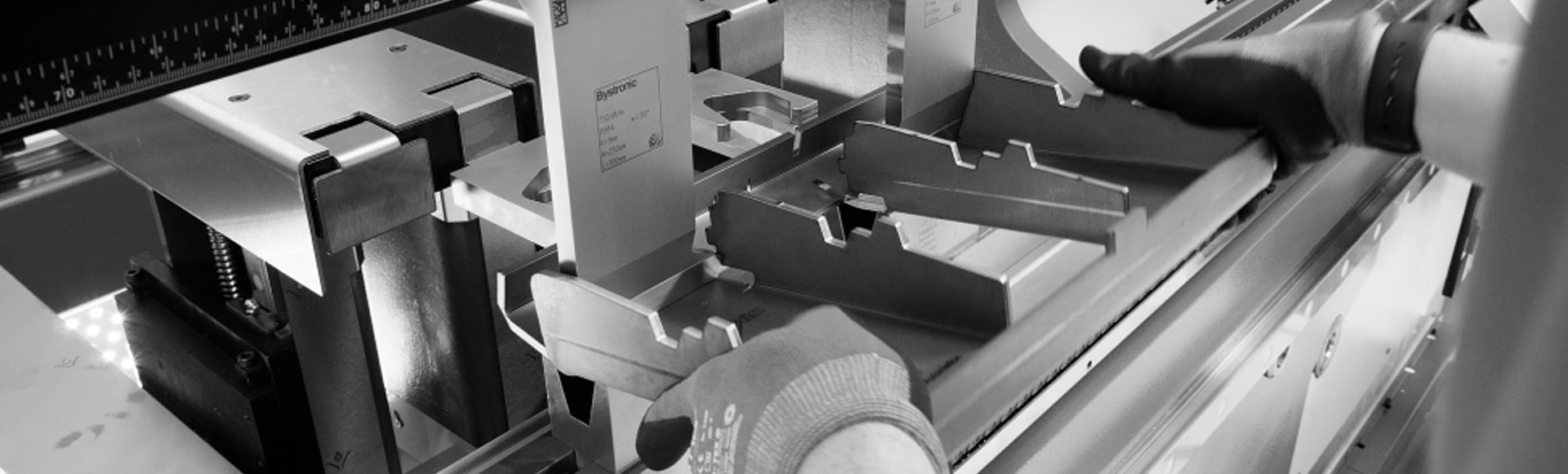
Bending
References
Industrial Press Brake & Bending System Selection Guide
Selecting an industrial press brake or bending machine is a strategic decision in modern sheet metal, plate, profile and tube processing. Whether the application involves thick plate forming for steel construction, precision bending of engineered enclosures, or tube bending for structural assemblies, the bending process directly determines product quality, achievable geometry, throughput, tooling wear and long-term production stability.
For industries such as steel construction, shipbuilding, automotive, aerospace and general fabrication, bending machinery is not simply workshop equipment. It is a core production system that enables manufacturers to form complex shapes accurately, maintain tight tolerances, and repeatedly achieve consistent angles across many parts and materials.
This guide provides a comprehensive, feasibility-oriented overview of the critical factors that define the right bending machine selection, followed by a data-driven comparison of press brake solutions available through Minex Group, acting strictly as an equipment distributor and technical solution partner.
How to Choose Bending Equipment for Industrial Applications
Press Force (Tonnage): Matching Forming Capacity to Material Thickness
Press force defines the maximum material thickness and tensile strength that a press brake can bend without uncontrolled deformation. It determines whether a bending machine can process thick plate, engineered profiles or high-strength sheet metal accurately and repeatedly.
In heavy industries such as shipbuilding, steel structures, tanks and large machinery fabrication, high tonnage is mandatory. Long workpieces combined with thick material require forces in the range of 1000–3000 kN (100–300 t) to avoid angle deviation and tool overload.
In automotive and aerospace production, material thickness is often lower, but material strength is higher. Advanced alloys and high-tensile steels require sufficient force to achieve precise angles and prevent springback when forming complex parts with tight tolerances.
Only machines capable of reaching 3000 kN (300 t) can be considered truly suitable for heavy structural plate applications.
Bending Length and Bed Size: Geometry Defines What You Can Produce
Bending length determines the maximum span of a workpiece that can be processed in a single bending cycle. While standard sheet metal fabrication typically operates around 3000–3200 mm, industries such as shipbuilding, trailers, steel construction and large HVAC systems routinely exceed these dimensions.
Long bending lengths introduce mechanical challenges. Maintaining consistent angles across several meters requires rigid frames, precise crowning systems and stable force distribution. Tandem or double-machine linkage solutions allow bending lengths of 6200 mm and beyond, while preserving the ability to operate each press brake independently for shorter parts.
However, bending length alone is insufficient as a selection criterion. Column spacing, throat depth and open height ultimately determine whether a part physically fits into the machine.
Precision and Angle Measurement: Achieving Maximum Precision in the Bending Process
Precision is a decisive economic factor in industrial bending. Modern press brake applications demand first-bend accuracy, as trial bends and scrap become increasingly costly with high-value materials.
Laser-based angle measurement systems combined with dynamic crowning, allow the bending process to self-correct during forming. This ensures repeatable accuracy even with material variation, reducing rework and stabilizing production output.
In sectors producing complex shapes, deep enclosures or many parts in batch production, precision systems shift bending from an operator-dependent task to a controlled industrial process.
Machine Geometry: Open Height, Stroke and Throat Depth as Feasibility Constraints
Machine geometry defines whether a part can physically be produced at all.
- Open Height determines the maximum height of box-shaped or deep components.
- Stroke defines how far the ram can travel, directly affecting tooling combinations and part depth.
- Throat Depth limits how far a flange can extend inward before colliding with the machine frame.
For example, deep electrical cabinets, automotive battery housings or rail transit enclosures require significantly higher open height than standard sheet metal parts. A press brake with insufficient open height may be precise and powerful—but still unusable for the application.
This is why geometry must be evaluated alongside tonnage and length, not afterward.
Tooling and Machine Architecture: Punch, Lower Die, Clamping and Frame Design
Press brake performance depends heavily on tooling integration. The punch, lower die, die opening, and clamping system must align with material thickness, bend radius and desired shape accuracy.
Closed O-frame architectures provide maximum rigidity and uniform force distribution, supporting high precision across the entire bending length. This is particularly critical for complex parts and tight tolerances.
C-frame machines offer robust flexibility and cost efficiency, especially for general fabrication, HVAC panels and enclosures where extreme precision is not always required.
Tooling compatibility and clamping efficiency directly influence setup time, repeatability and achievable accuracy.
Speed and Throughput: Quantifying Productivity Differences
Speed is not a marketing label; it is a measurable contributor to productivity. Approach speed, combined with setup efficiency and automation, determines real output.
For example, a machine with an approach speed of 250 mm/s can be dramatically more productive in high-volume small-part manufacturing than machines operating at 150 mm/s, even if bending accuracy is similar.
Speed differences matter most in automotive, rail and serial production environments where cycle time directly affects cost per part.
Tube Bending and Profile Processing: When Diameter and Shape Complexity Matter
Many industrial projects extend beyond flat sheet metal. Tube bending machines and profile bending solutions are essential when forming tubes, pipes and structural profiles into complex shapes.
Tube bending introduces additional constraints such as tube diameter, wall thickness, deformation control and internal support requirements. These factors are especially critical in automotive structures, shipbuilding assemblies and engineered frameworks.
Selecting the right bending machine for tube bending requires careful alignment between geometry, tooling, bending technology and material behavior.
Automation and Software: Enabling Controlled, Repeatable Production
Automation reduces dependency on operator skill and stabilizes output quality. Offline programming, automated tool selection and collision control allow bending programs to be prepared without interrupting production.
In complex engineered applications, software control ensures predictable results, protects tooling and reduces costly errors.
Automation transforms bending machinery into a repeatable production system rather than a manual craft.
Energy Efficiency: Reducing Costs While Increasing Performance
Energy efficiency directly impacts operating costs. Modern servo-hydraulic systems and energy-saving technologies can reduce consumption by 30–60%, while also improving speed, control and thermal stability.
For high-utilization environments, these savings compound quickly and contribute to lower cost per part and longer machine lifespan.
Minex Portfolio – Press Brake and Bending Machine Solutions by Use Case
The following table summarizes bending equipment available through Minex Group. Minex is an experienced distributor and technical partner supporting customers in selecting the right bending machine, tooling configuration and automation level.
| Machine Model | Best Use Case | Tonnage (kN) | Max Length (mm) | Open Height (mm) / Geometry | Speed / Technology | Key Benefits & Features |
| ByBend Star 40/80 | Mobile, high-volume small parts; aerospace and automotive components | 400–800 | 1530 | Open Height: 515 mm | 250 mm/s (fastest approach speed) | Fully operational in minutes; forklift-movable; compact footprint; ideal for rapid bending of many small parts |
| ByBend Star 120 | Mid-range production; high-tensile sheet metal; fast-paced manufacturing lines | 1200 | 2050 | Open Height: 610 mm | FastBend Plus + LAMS | First-bend accuracy through laser angle measurement; cycle-time reduction technology; strong balance of speed and precision |
| ByBend Smart | Heavy industrial fabrication; steel construction; thick plate applications | 1000–3000 | 4100 | Open Height: 580 mm | 120–200 mm/s | Only single-machine option reaching 300t (3000 kN); Energy Saver System reducing consumption up to 60%; highly versatile tonnage range |
| Xpert Pro (Standard / Extended) | Deep box bending; automotive, aerospace, rail transit enclosures | 1000–1500 | 3100 | 640 mm (Std) / 840 mm (Extended) Stroke: 250 / 450 mm | LAMS + Dynamic Crowning | Maximum precision for complex parts; Extended version enables deep components; automation-ready high-end production press brake |
| Xpress | Job shops and SMEs; entry-level precision sheet metal bending | 500–1600 | 3100 | Open Height: 500–550 mm | 150 mm/s | Closed O-frame rigidity for stable angles; modular clamping and backgauge options; cost-effective access to premium bending technology |
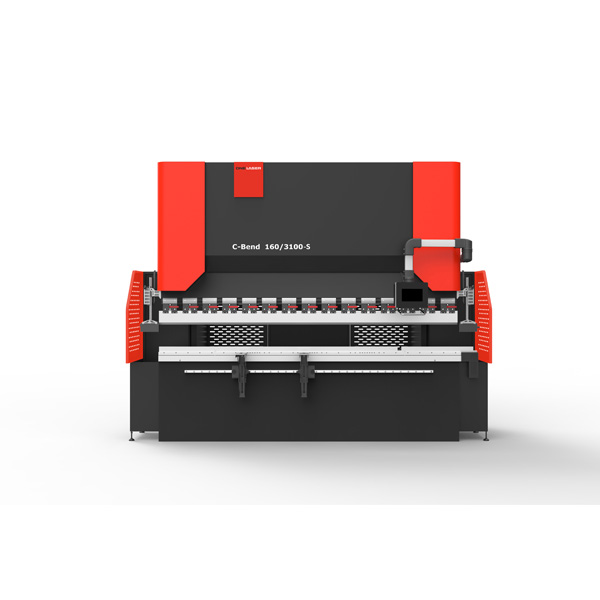
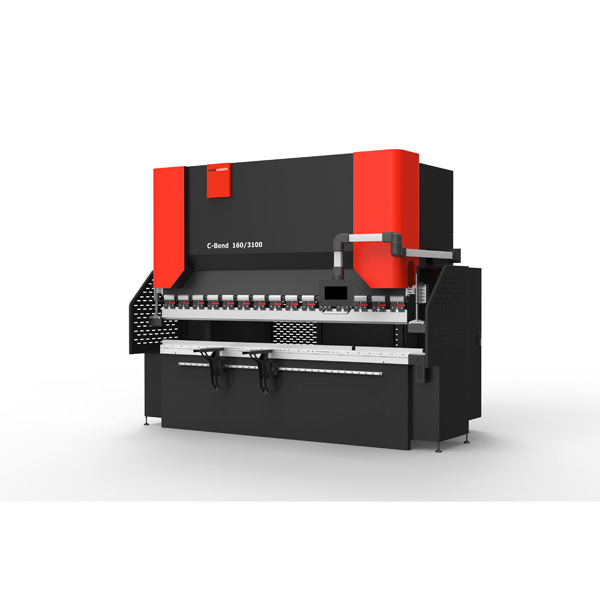
| DNE C-Bend / C-Bend S (Servo) | HVAC, enclosures, general fabrication; cost-efficient production | 500–1600 | 3100 | Open Height: 500–600 mm Throat Depth: 410 mm | 150 mm/s (Servo on S) | Robust C-frame structure; strong performance-to-price ratio; Servo variant improves speed, control and positioning accuracy |
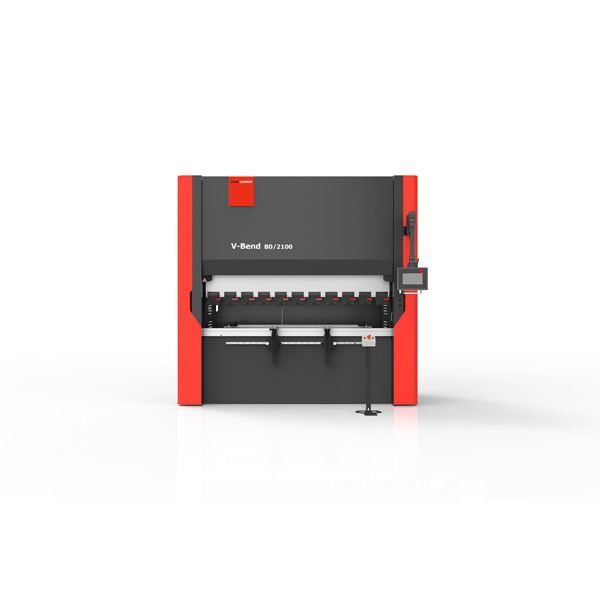
| DNE V-Bend Series | Batch production; electrical cabinets; throughput-focused environments | 500–1600 | 3100 | Open Height: 500–550 mm | X-axis speed up to 400 mm/s | Patented closed O-frame stability; intelligent crowning compensation; optimized for efficient serial bending with consistent precision |
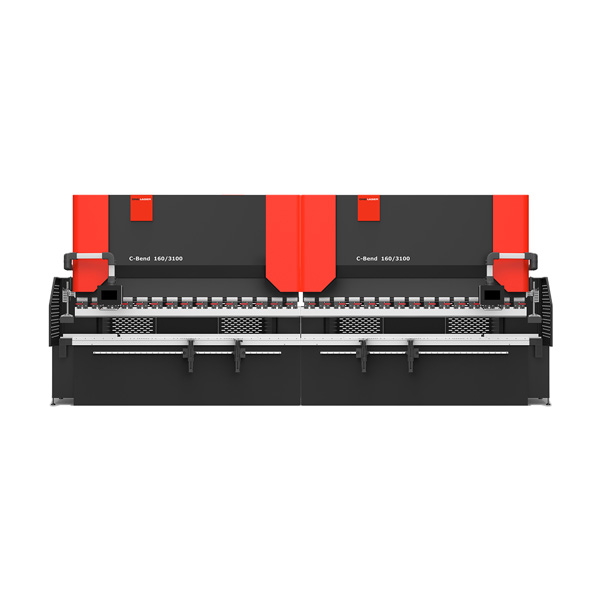
| DNE Double-Machine Linkage | Extra-long workpieces; trailers, shipbuilding structures, steel beams | 2 × 1600 | 6200 | Open Height: 600 mm Throat Depth: 410 mm | Tandem synchronization | Enables bending of very long parts; machines can run independently; length capability does not equal extreme thickness capacity |
Critical Industrial Selection Notes
- Heavy-duty shipbuilding and construction: Only ByBend Smart reaches 3000 kN (300t) in a single-machine configuration.
- Deep enclosures and box-like automotive parts: Only Xpert Pro Extended provides 840 mm open height and 450 mm stroke, making it the clear feasibility winner.
- High-volume small-part productivity: The Star 40/80, at 250 mm/s, is ~66% faster in approach speed than standard 150 mm/s machines, making it superior for throughput-driven bending.
- Long parts vs thick parts: The DNE Linkage solution enables 6.2 m length, but tonnage remains 2 × 160 t, and throat depth limits flange depth for very wide structural components.
Talk to Minex Experts
Selecting the right industrial press brake or bending machine requires aligning tonnage, geometry limits, tooling strategy, automation readiness and bending technology with your specific production reality.
Minex supports customers as an equipment distributor and technical partner, helping ensure the selected machine is not only powerful and precise, but physically feasible for your parts and industrial workflow.
If you need project-specific validation or expert selection support, contact Minex for tailored technical guidance.
Frequently Asked Questions
Because press force alone does not guarantee feasibility.
A common mistake in press brake selection is focusing on tonnage while ignoring machine geometry. Even a powerful bending machine becomes unusable if the part cannot physically fit within its working envelope. Open height, stroke and throat depth must always be evaluated alongside force.
Open height defines the maximum height of box-shaped or deep components such as electrical cabinets or automotive housings. If a part measures 600 mm in height but the press brake offers only 515 mm of open height, production is impossible regardless of available tonnage. Throat depth, on the other hand, limits how far a flange can extend inward before colliding with the machine frame. Standard throat depths of around 410 mm, common in many C-frame machines, can become restrictive for large panels and deep flanges.
For applications involving deep industrial enclosures or automotive structures, only machines with extended geometry—such as the Bystronic Xpert Pro in its Extended configuration with up to 840 mm open height—provide the necessary physical clearance.
This is not a question of superiority, but of application suitability.
Closed O-frame press brakes are engineered for rigidity. By eliminating side-frame deflection under load, they maintain uniform force distribution across the entire bending length. This stability is critical when producing high-tolerance parts, long bends, or components where angle consistency must be maintained from edge to edge. Machines such as the Bystronic Xpress and DNE V-Bend use this architecture to deliver repeatable precision.
C-frame machines, in contrast, trade some rigidity for flexibility and cost efficiency. Their open-sided design allows easier handling of complex shapes and is well suited for general fabrication, HVAC panels and enclosure work. While modern C-frame designs remain robust, they are best applied where ultra-tight tolerances are not the primary requirement.
Yes—and the impact is often underestimated.
Bending speed itself is typically limited by safety standards and material behavior. What truly defines throughput in high-volume production is approach speed: how quickly the ram moves between bends.
A machine such as the ByBend Star 40/80 , with an approach speed of 250 mm/s, completes non-bending movements significantly faster than standard machines operating at around 150 mm/s. In environments producing thousands of small parts per shift, this difference translates directly into higher output. In practical terms, the Star 40/80 is approximately 66% faster during non-forming phases, making it the superior choice for high-volume, small-part production.
By using active angle measurement, not manual correction.
Traditional hydraulic press brakes rely on test bends and operator adjustments to reach the correct angle. This approach is time-consuming and wasteful when working with costly materials.
Advanced bending technology uses Laser Angle Measuring Systems combined with dynamic crowning. These systems measure the angle during the bending process and automatically correct ram positioning in real time. Machines such as the ByBend Star 120 and Xpert Pro apply this technology to deliver accurate angles from the first part onward, eliminating scrap, rework and dependency on operator experience.
Not typically—and this distinction is critical.
There is a fundamental difference between length capacity and tonnage density. The DNE Double-Machine Linkage system synchronizes two 160-ton press brakes, enabling bending lengths of up to 6200 mm. However, the available force—320 tons in total—is distributed across that length.
Heavy shipbuilding and thick-plate applications usually require 1000–3000 kN concentrated over a shorter span to control deformation and achieve stable angles. In these cases, a high-tonnage single machine such as the ByBend Smart 300 is more suitable than a tandem system designed primarily for long, thinner components.
The advantage lies in precision, control and energy efficiency, not just power.
Conventional hydraulic systems run pumps continuously, consuming energy even when the machine is idle. Electro-hydraulic servo systems, used in machines such as the DNE C-Bend S and ByBend Star series , regulate hydraulic flow on demand.
This results in energy savings of 30–60% and significantly improved ram positioning accuracy—down to 0.01 mm in servo-controlled systems. For manufacturers balancing cost efficiency with precision, servo technology bridges the gap between economy machines and high-end production press brakes.
By separating planning from production.
On traditional machines, operators must stop bending to program the next job at the machine console. This creates idle time and disrupts workflow.
Press brakes equipped with offline programming software, such as BySoft Cell Control Bend, allow engineers to prepare bending sequences, tooling layouts and collision checks on a separate workstation while the machine continues running. When the current job finishes, the next program is ready immediately—keeping the press brake productive instead of idle.
Because it is engineered specifically to fill that gap.
The Star 40/80 is optimized for mobility and small parts, but its 80-ton capacity and 1.5-meter length limit its application range. At the other end, machines like the ByBend Smart or Xpert Pro offer higher capacity but require more floor space and energy for simpler jobs.
The ByBend Star 120 delivers 120 tons and a 2050 mm bending length in a compact footprint. With FastBend Plus technology and Laser Angle Measuring Systems precision, it is designed for high-tensile materials and fast cycle times—making it the most efficient choice when small machines are insufficient and large machines are excessive