Laser Cutting Systems
References
How Engineers Choose the Right Fiber Laser Cutting Machine for Modern Metal Fabrication
Laser cutting equipment decisions have implications that extend well beyond the cutting process itself. The choice of laser cutter determines how efficiently a facility runs over the next decade: throughput capacity, automation potential, operating costs per part, and the ability to absorb changes in production demand without requiring a capital reinvestment.
This guide works from that frame. Not which machine carries the highest specification, but which configuration matches actual production requirements — and what that means for cost, output, and operational flexibility over a realistic service life.
Minex Group distributes industrial laser cutting solutions from DNE and Voortman, and works with manufacturers as a solution partner across the full selection and implementation process. What follows reflects how experienced technical buyers in metal fabrication and structural steel approach this decision in practice.
What Drives Edge Quality in Industrial Laser Cutting — and Why It Differs From Plasma
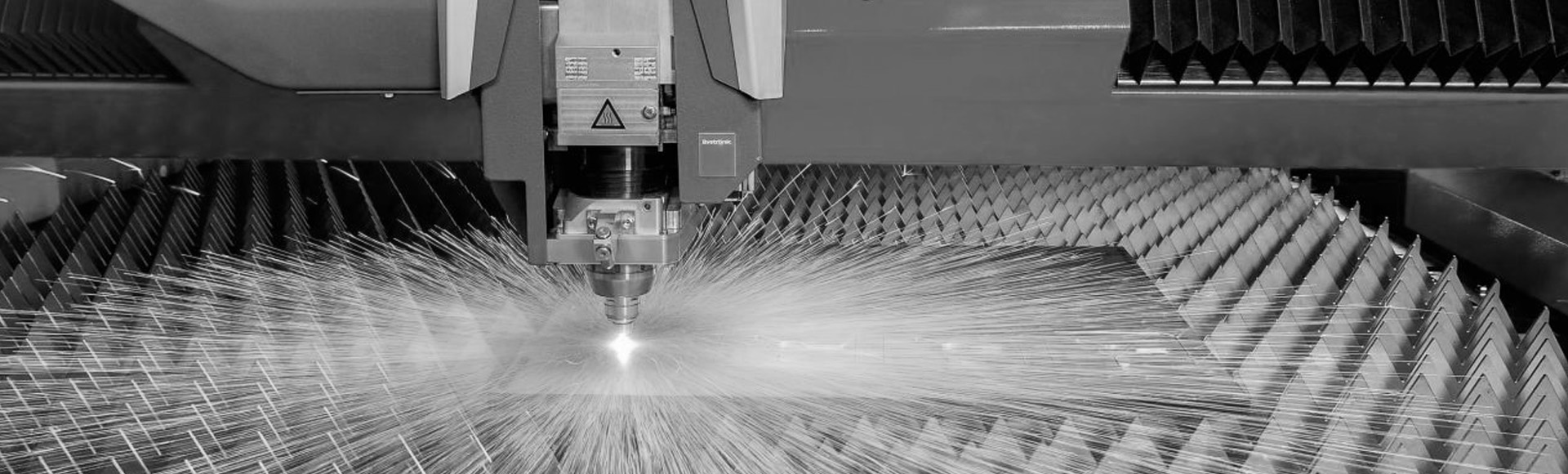
A focused laser beam melts or vaporizes material along a programmed path, while assist gases — nitrogen or oxygen depending on application — expel molten metal from the kerf. The choice of assist gas directly affects cut edge oxidation and surface quality, which is why process gas selection is part of the cutting parameter set.
CNC fiber laser cutting consistently produces better results than plasma on most materials because of energy concentration. The laser beam delivers heat to a smaller area through a concentrated beam at the cutting head, producing a narrow kerf, a smaller heat-affected zone, and less thermal distortion in the surrounding material. Edges require less post-processing, dimensional tolerances are tighter, and first-pass acceptance rates are higher. The result is precise cuts with unmatched precision across carbon steel, stainless steel, aluminum, copper, and other reflective materials — from thin sheet metal through heavy structural plate. That difference accumulates over production volume in ways that affect both cut quality and operating costs.
Fiber Laser vs. Plasma Cutting: Where the Crossover Point Now Sits on Heavy Plate
The historical division between laser and plasma was defined by power limitations: laser handled thinner materials with precision requirements, plasma handled thick plates where laser power could not compete. That boundary has shifted substantially. Current high power fiber laser systems can cut mild steel and carbon steel in the 50–80 mm range — plate thicknesses that were previously the exclusive domain of plasma arc cutting. This positions fiber laser cutting machines and plasma cutters in direct technical competition across a thickness range that procurement teams need to evaluate carefully rather than assume.
Plasma cutting still has a place in certain workflows, and its acquisition cost remains lower at equivalent thickness capability. The economic case for retaining plasma weakens, however, when the full cost picture is modeled. Fiber laser cutting produces lower dross, smaller heat-affected zones, and better surface quality on both mild steel and stainless steel — translating directly into less grinding, less rework, and higher throughput from the same labor input. For engineers building total cost of ownership models, the ability to reduce operating costs through lower post-processing labor is frequently the variable that tips the comparison in laser's favor, independent of how the two systems compare on acquisition cost alone.
Laser Cutting Machine Power Selection: How to Specify for Cost-Per-Part, Not Maximum Thickness
Laser power governs cutting speed, workable thickness range, cut quality, and energy consumption. Most power selection decisions, however, are framed around the wrong question. Asking what material thickness a machine is capable of cutting leads to over-specification. The more useful question is what laser power delivers the lowest cost-per-part across the actual distribution of material the facility processes — and whether that power level meets the speed requirements of the production schedule.
The distinction matters because the relationship between laser power and production economics is not linear. A high-power laser source running predominantly thin sheet metal consumes energy and capital the production mix does not justify. A facility cutting thicker materials in the 20–40 mm range on a lower-power system pays a cutting speed penalty on every cycle — and that penalty compounds at scale. As laser power increases through the range, so does the productive output on heavier plate — but so does capital cost and energy consumption.
A practical reference across the full thickness range:
- 3–6 kW systems suit thin materials and precision cutting work;
- 10–15 kW covers the vast majority of industrial sheet metal applications efficiently;
- 20–30 kW is where thick plate fiber laser cutting becomes genuinely productive in terms of high speed cutting and edge quality;
- 60–80 kW addresses the heavy industry segment where plasma has historically been the default.
Each step up in laser power brings a corresponding increase in capital cost and operating costs. The correct specification is the one that matches where production actually runs — not where it occasionally reaches.
Cutting Machine Format: The Selection Variable Engineers Address Before Laser Power
Format is the more foundational decision in fiber laser cutting machine selection, even though power specification tends to dominate early evaluation discussions. A machine with the right laser power and the wrong working envelope will constrain production in ways that programming and parameter adjustments cannot resolve.
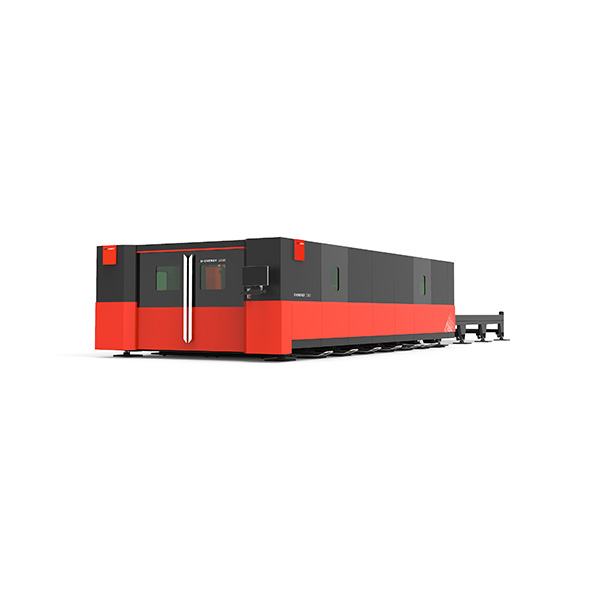
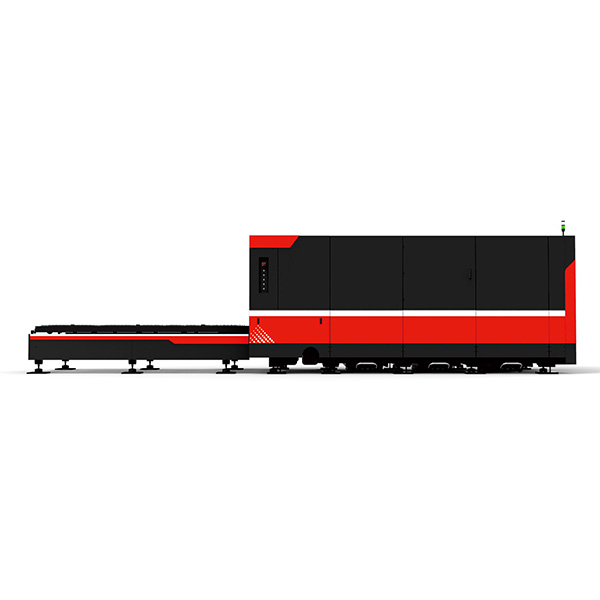
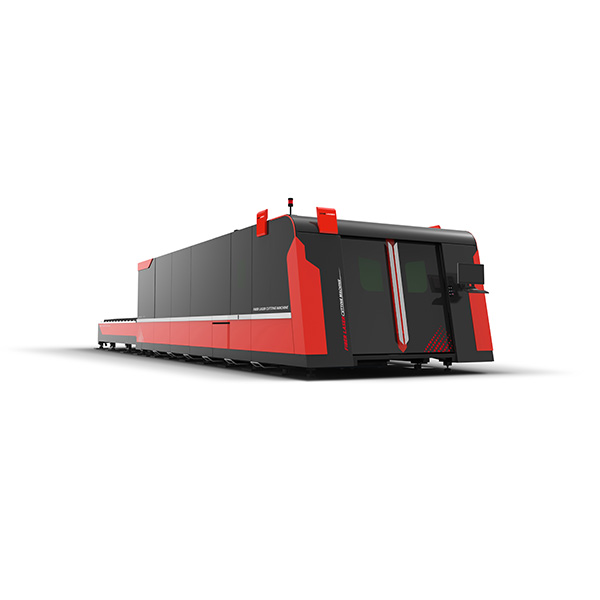
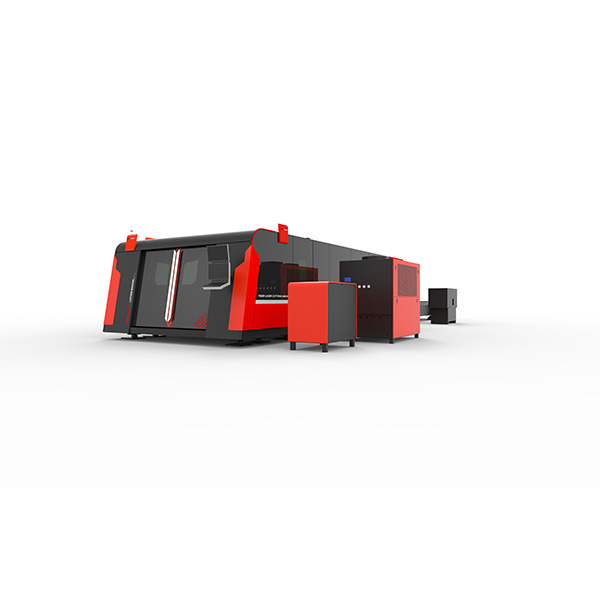
Industrial laser cutting machines are built around specific material formats. Sheet and plate cutting machines process flat stock. Tube laser cutting machines handle round, square, and rectangular profiles. Heavy beam and profile laser cutters are configured for structural steel sections — H beams, I beams, and other structural profiles. Each category involves different loading mechanisms, different fixturing, and different nesting logic.
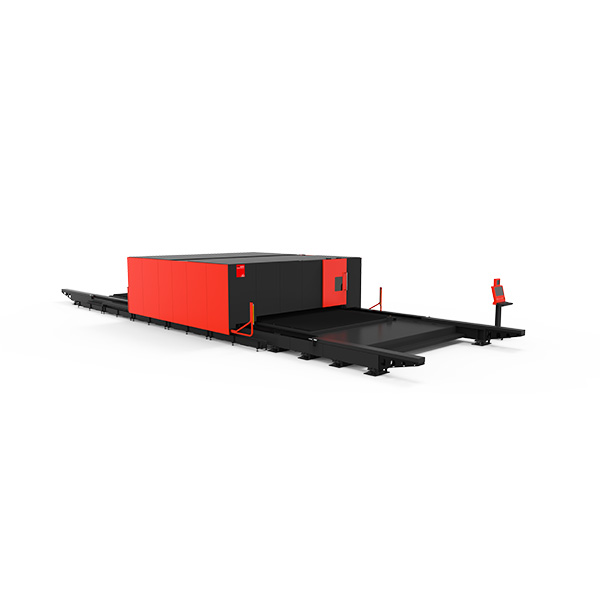
Within each format category, working envelope size has a direct effect on production efficiency. A larger format allows processing from raw stock dimensions, reduces intermediate handling time, and lowers damage risk on heavy plate. Entry-level flatbed fiber laser cutting machines are well suited to small-to-medium fabrication shops and job shops where capital efficiency matters more than format scale. At the other end of the range, ground-rail configurations extending to 40 meters address shipbuilding and bridge fabrication volumes that standard flatbed formats cannot accommodate.
Evaluating machine options within the correct format category before comparing laser power levels produces better-matched equipment decisions. The practical implication: establish the format the production requires, confirm the working envelope, then specify laser power within that frame. Reversing that sequence is a common source of mismatched equipment decisions.
Fiber Laser Architecture: Why the Technology Outperforms CO₂ Across Industrial Cutting Applications
The operational advantages of fiber laser cutting technology over CO₂ originate in how the laser light is generated and delivered. In a CNC fiber laser cutting machine, the beam travels through a fiber optic cable to a cutting head rather than through a mirror-based optical path. This produces lower beam divergence and a concentrated beam with higher energy at the cutting point — both of which contribute directly to accurate cutting, material versatility, and high speed cutting across diverse material thicknesses.
The key features of this architecture also simplify machine maintenance. Fewer optical components means fewer alignment-sensitive elements in the beam path, a lower maintenance burden, and reduced sensitivity to production environment conditions — minimizing downtime from servicing and realignment. CO₂ systems require regular mirror alignment and replacement as part of their maintenance cycle. Fiber laser systems do not carry that overhead to the same degree, which supports peak efficiency and more productive operation across shifts.
The material versatility advantage is equally significant. Earlier laser technology struggled with reflective materials — copper and aluminum — because back-reflection posed a risk to the laser source. CNC fiber laser systems handle these conductive materials routinely, alongside carbon steel, mild steel, stainless steel, and other materials that CO₂ and diode lasers processed poorly or not at all. The ability to cut reflective materials and cut mild steel through to heavy plate within the same platform makes fiber laser cutting a high productivity solution that covers the material range most industrial metal cutting operations require — at higher cutting speeds and lower operating costs than the technology it has replaced.
Material Handling Automation: The Variable That Determines Real-World Laser Cutting Output
A fiber laser cutting machine's rated cutting speed represents a ceiling, not a guaranteed output rate. In most production environments, the gap between rated and actual throughput is explained by material handling — the time consumed by loading, unloading, repositioning, and sorting between cutting cycles. A fiber laser cutting machine operating at full power but waiting on manual handling between cycles is not producing at its rated capacity.
Automation systems close that gap and drive increased throughput across the full production day. Pallet changers eliminate idle time between sheet loads. Tower storage systems feed material automatically and manage remnants without operator intervention. Bundle loaders for tube laser cutting machines enable continuous processing of profile stock. Automatic nozzle changers maintain cutting parameters across material transitions without manual setup. Together, these components convert a laser cutting machine into a production cell capable of extended unattended operation across multiple shifts.
The production efficiency gains from automation are often larger than the gains available from upgrading the laser source. For facilities with high throughput targets or multi-shift operation, automation is where the investment case for a higher-specification system is substantiated. Lower operating costs per part, reduced fixed cost per cycle, and higher utilization rates all follow from solving the material handling equation — and that holds regardless of the laser source specification.
Bevel Cutting and Hybrid Machining: Reducing Process Steps at the Cutting Stage
The most significant cost reduction opportunities in the laser cutting process frequently lie downstream of the cut itself. Two capabilities in current-generation systems address this directly.
Bevel cutting produces angled edges for weld joint preparation — V, X, Y, and K groove profiles — within the same operation as the primary cut. Without this capability, weld preparation requires a separate manual grinding or machining step, adding labor, handling time, and process complexity to every welded assembly. In high-volume structural fabrication and shipbuilding environments, where weld preparation is a constant downstream requirement, the time saving from bevel-capable fiber laser cutting machines compounds quickly. The equipment price premium over a standard cutting machine is typically recovered through labor eliminated from the weld preparation stage. Which systems in the portfolio carry bevel capability — and at what angles and power levels — is detailed in the product tables below.
Hybrid machining extends the consolidation further by integrating drilling, tapping, and milling into the same cutting cell. For structural steel fabrication workflows, operations that would previously have required a separate machine queue and additional material handling between stations can be completed in a single production step. The reduction in throughput time compounds at production volume, with cost-per-part improvements visible in both labor and lead time.
For procurement teams, the evaluation is straightforward: does consolidating these operations into the cutting cell reduce total process cost sufficiently to justify the additional capital? In high-volume structural fabrication and heavy plate work, the answer is consistently yes.
Minex Group Industrial Laser Cutting Portfolio
Minex Group distributes industrial laser cutting solutions from DNE and Voortman. The tables below provide a practical reference for matching laser cutting machines to application requirements.
Sheet & Plate Laser Cutting Machines
| System | Type | Best Use Cases | Key Characteristics |
| DNE D-Energy / D-Energy F | Entry-Level Fiber Laser | Sheet Metal Fabrication, Automotive Customization, Electrical Equipment | Low acquisition and operating costs; 3–30 kW power range; compact footprint |
| DNE D-Power (up to 30 kW) | High-Speed Heavy Plate Laser | Heavy Transport, Aerospace, Industrial Machinery | Processes 0.8–80 mm; 1.5G acceleration; visual edge finding and residual material reproduction; bevel available on 2560, 2580, 25120 formats |
| DNE D-Soar (up to 30 kW) | High-Speed Precision Laser | Automotive, Construction Machinery, Transport Systems | Die-cast aluminum gantry; independent dust extraction; automatic servo focus |
| DNE D-Soar Plus-G (up to 60 kW) | Premium Ultra-High Power Laser | Automotive, Aerospace, Shipbuilding | 2.8G maximum acceleration; MES/ERP/IoT integration; auto-calibration; automatic nozzle replacement |
| DNE D-Soar Plus-GP (up to 40 kW) | High-Power Bevel Laser | Structural Fabrication, Thick-Plate Welding, Shipbuilding | ±45° bevel head (V, X, Y, K grooves); ±0.02 mm accuracy; three-way cooling; smart lens monitoring |
| DNE D-Giant / D-Giant F (up to 80 kW) | Ground-Rail Heavy Plate Laser | Shipbuilding, Bridge Fabrication, Aerospace | Ground-rail format up to 40 m; dual-layer safety; zero-clearance drive system; optional bevel cutting |
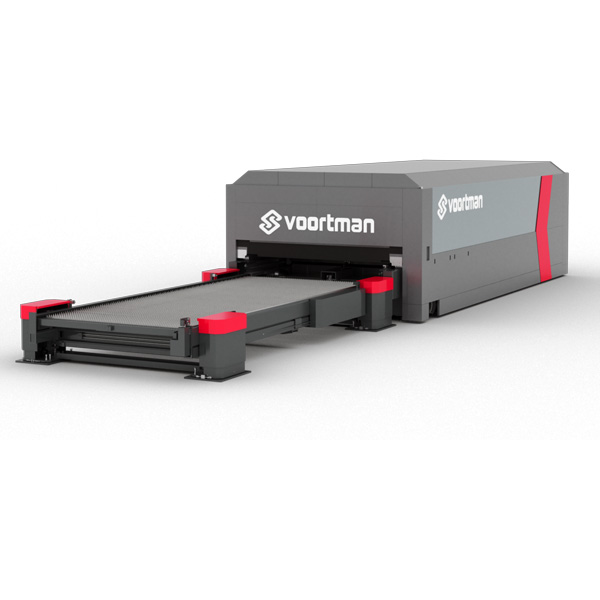
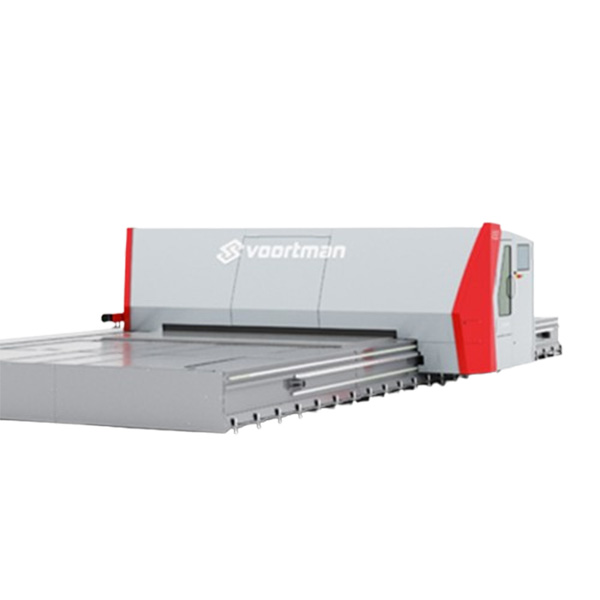
| Voortman V342 (12–20 kW) | Heavy Plate System | Structural Fabrication, General Engineering | Automated gas selection; built-in cutting charts; mixed-gas cutting up to 6× faster on steel; straight cutting only |
| Voortman V353 (up to 40 kW) | Automated Heavy Plate System with Bevel | Maritime, Offshore & Energy, Heavy Equipment Fabrication | Beds up to 36 m; 24-position automatic nozzle handler; up to 45° bevel cutting; V210 hybrid extension compatible |
| Voortman V353 + V210 | Hybrid Cutting + Drilling System | Structural Steel Fabrication | Integrated cutting, drilling, tapping, and milling in a single production cell |
Tube & Profile Laser Cutting Systems
| System | Type | Best Use Cases | Key Characteristics |
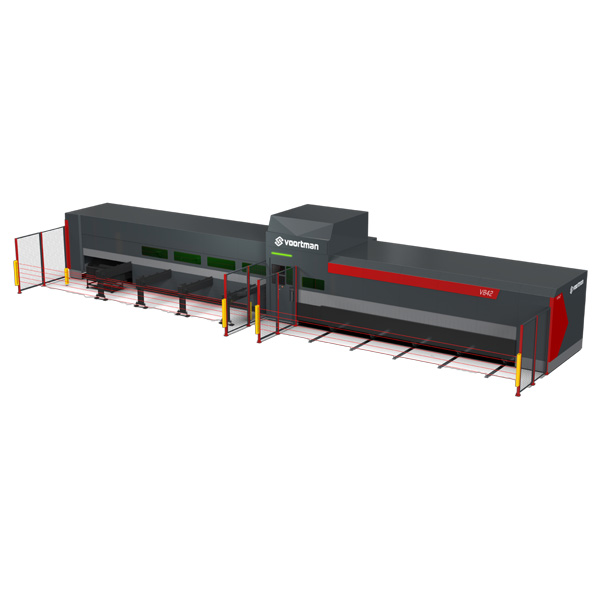
| Voortman V842 | Precision Tube & Pipe Laser | Aerospace, Automotive Exhaust/Chassis, Medical Equipment | 3-chuck system; 5 mm material waste only; ±0.1 mm accuracy; 100 m/min positioning speed; infinite chuck rotation |
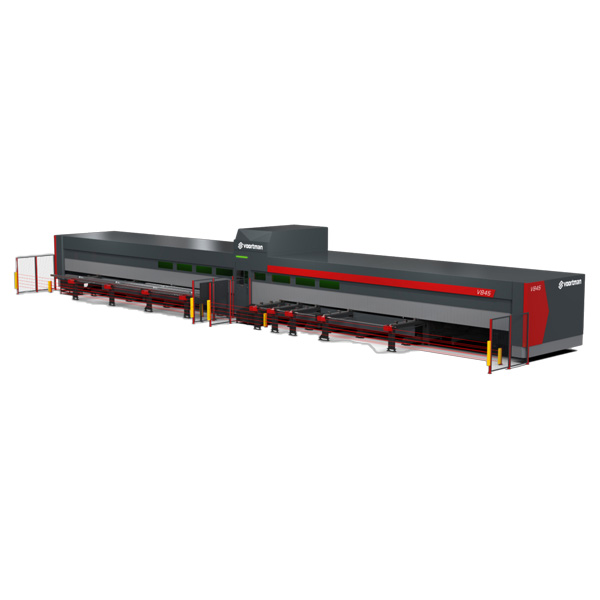
| Voortman V845 | Heavy-Duty Beam & Profile Laser | Structural Steel, H/I Beams, Infrastructure Components | Up to 4-chuck configuration; 3-ton profile capacity; 3D bevel cutting up to 45°; live camera monitoring |
Equipment Selection: Summary of Evaluation Criteria
Industrial laser cutting system selection requires a structured evaluation across several interdependent variables:
- the thickness distribution of your actual production mix;
- cutting speed, speed requirements, and edge quality by material type;
- the technical and economic case for replacing plasma cutters;
- automation requirements based on shift patterns and labor cost;
- lower operating costs modeled over a five-to-ten year horizon;
- and the potential to reduce downstream process steps through bevel cutting or hybrid machining integration.
The fiber laser cutting machines available today handle a substantially wider range of applications than was possible a decade ago — including material thicknesses and metal cutting tasks that previously required plasma arc or separate machining operations. Selecting the right configuration, however, depends on matching the laser cutter to documented production requirements rather than to maximum technical specifications.
Minex Group provides system selection support, ROI analysis, and application-specific guidance across the full DNE and Voortman portfolio. Contact a Minex specialist for a recommendation based on your production profile.
Frequently Asked Questions
The evaluation starts with material type and thickness distribution, required edge quality, and expected production volume. From there, automation and material handling requirements, and total cost of ownership over the system's service life complete the picture. What this sequence avoids is the common mistake of specifying against headline technical figures - maximum thickness capability, peak cutting speed - rather than against what the machine will actually process day to day. A system matched to real production requirements consistently outperforms one selected on specification ceiling alone.
Fiber laser systems produce a narrower heat-affected zone, higher cut quality, lower dross levels, and significantly less post-process grinding than plasma - particularly on carbon steel and stainless steel. The more consequential shift is what has happened at higher power levels. Modern fiber lasers can now compete directly with plasma on plate thicknesses that were historically outside the laser's practical range, which changes the economic calculation between the two processes. The cost-per-part advantage increasingly favors fiber laser once downstream labor - grinding, rework, weld preparation - is included in the model.
Power selection should follow the thickness distribution and material mix that the machine will actually process, not the upper boundary of what it is capable of cutting. A 3–6 kW system is the right tool for thin sheet applications. The 10–15 kW range covers the vast majority of industrial sheet metal work without the capital and energy overhead of higher-power sources. High power - 20 kW and above - is justified when thick plate dominates the production mix and throughput requirements are demanding. Specifying above that threshold without the production volume to justify it adds cost without adding value.
Format determines which raw material types - sheet, tube, structural profiles, beams - can be processed directly, and what working envelope is available for nesting and part layout. A system with the right laser power but a mismatched format will create handling bottlenecks, constrain nesting efficiency, and limit which parts can be completed in a single setup. These are production constraints that cannot be engineered around after the fact. Format selection should precede power selection in any rigorous evaluation process.
In practice, automation has more impact on real throughput than incremental increases in cutting speed. Pallet changers, tower storage systems, tube bundle loaders, and automatic part sorting all reduce idle time between cutting cycles - which is where output is lost in most production environments. These systems support multi-shift and lights-out operation, lower labor dependency per part, and produce more consistent cycle times across the full production day. For facilities with high utilization targets, automation is not an optional add-on. It is the mechanism through which the laser cutting investment generates its projected return.
Bevel-capable laser cutting machines produce weld-ready edges in a single operation, removing manual grinding or secondary bevel machining from the fabrication sequence entirely. The time saving compounds quickly in structural fabrication and shipbuilding environments where weld preparation is a constant downstream requirement. Hybrid configurations that integrate drilling, tapping, and milling into the same cutting cell take this further - consolidating multiple operations, reducing material handling between stations, shortening lead times, and driving down cost per part. The equipment price premium over a standard cutting machine is typically recovered through reduced labor in post-processing.
A complete TCO model covers capital cost, consumables, energy consumption, assist gas usage, maintenance requirements, labor per part including all post-processing steps, expected uptime, and the value generated by process consolidation and automation. Running this analysis over a five-to-ten year horizon allows engineering and procurement teams to compare systems on a cost-per-part and cost-per-ton-processed basis rather than on purchase price alone. Systems that carry a higher acquisition cost but deliver lower operating costs, higher uptime, and reduced downstream labor frequently produce a stronger TCO result than lower-cost alternatives when the full picture is modeled correctly.