Adhesion Testing
References
Industrial Adhesion Testing Equipment
Adhesion testing in heavy industry serves one purpose: to verify that protective coatings will perform as specified under operational conditions.
When coatings fail prematurely on steel structures, storage tanks, pipelines, or industrial floors, the result is unplanned downtime, accelerated corrosion, and costly repairs. The root cause is often straightforward - incorrect test method selection or inadequate equipment for the substrate and coating system.
This guide walks through the technical considerations for selecting adhesion testing equipment. We'll cover test method standards (ISO 4624, ASTM D4541, ASTM D7234), substrate compatibility, and equipment specifications to help you match the right tool to your application.
While we focus on Elcometer instruments distributed by Minex Group, the selection criteria apply broadly to any adhesion testing program.
Selecting the Correct Adhesion Test Method
Adhesion test methods apply different mechanical principles. Using an inappropriate method - even with properly calibrated equipment - produces misleading results.
Two principal methods are used in industrial applications:
- Pull-off adhesion test (tensile method)
- Cross-hatch/cross-cut test (shear method)
Each method serves distinct technical purposes and is suited to specific coating systems.
Pull-Off Adhesion Test (Tensile Method)
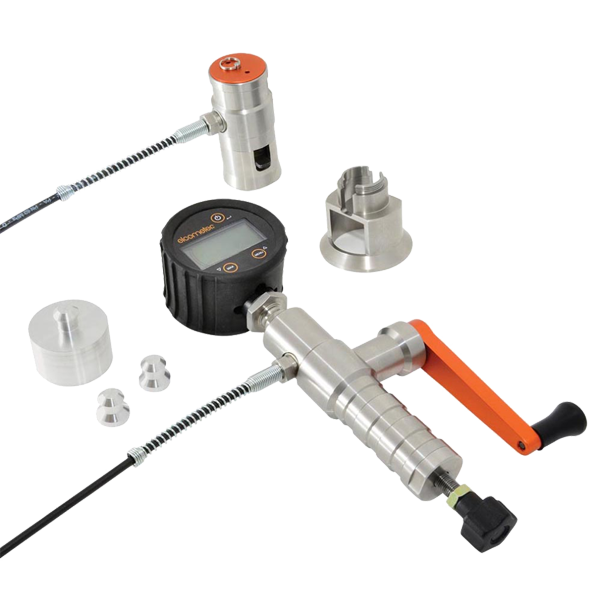
This method measures the force required to detach a loading fixture (dolly) bonded to the coated surface. Controlled tensile stress is applied perpendicular to the substrate until separation occurs.
What it measures:
- Quantitative adhesion strength (MPa or psi)
- Weakest plane in the coating system (substrate, primer, topcoat layers)
- Failure mode: adhesive (interface separation) vs. cohesive (failure within coating film)
- Fracture surface characteristics to determine whether separation was clean or internal cohesive strength was exceeded
Standards: ASTM D4541, ISO 4624
Best suited for:
- Thick coatings and multilayer systems
- Epoxy-based corrosion protection schemes
- Applications requiring contractual compliance and traceable numerical data
Pull-off testing provides the most defensible quantitative assessment for heavy-duty industrial coating systems.
Cross-Hatch and Cross-Cut Test Methods (Shear-Based Classification)
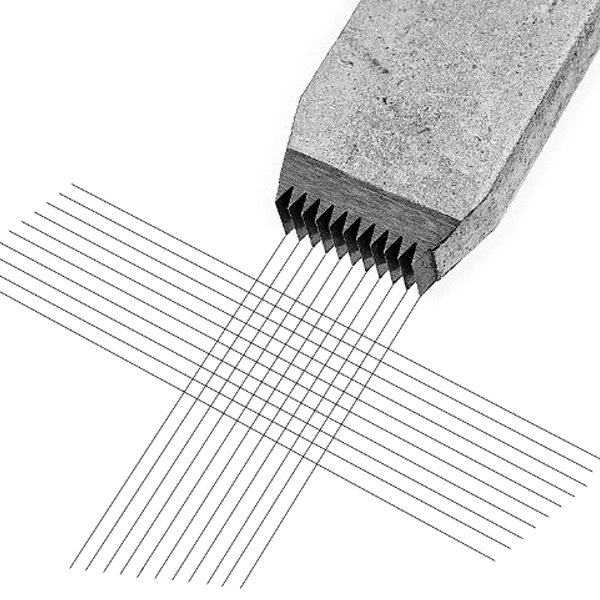
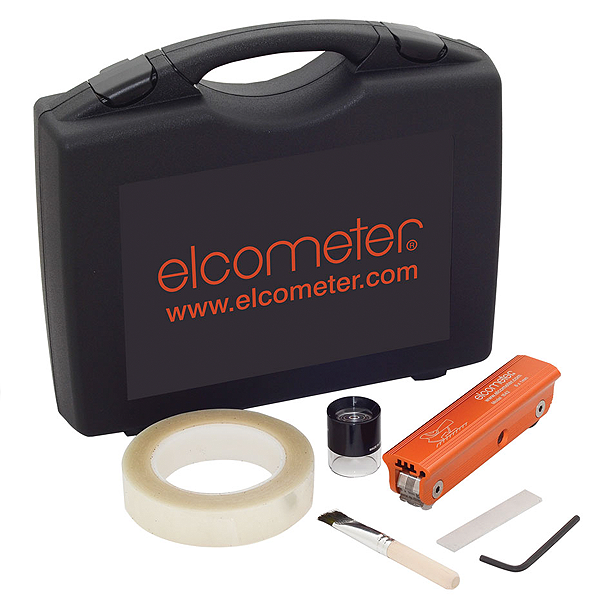
This method evaluates adhesion by cutting through the coating film with a precision blade to create a cross-hatch pattern. Pressure-sensitive tape (compliant with ASTM or ISO standards) is applied and removed. Coating detachment is visually classified.
What it measures:
- Qualitative classification of adhesion (not numerical strength)
- Pass/fail determination based on extent of coating removal
Best suited for:
- Thin organic coatings
- Production line quality control
- Flat panel surfaces
- Rapid batch-to-batch comparison
Limitations:
Cross-hatch methods do not provide tensile strength values. For thick coatings or high-performance protective systems, shear-based testing may not adequately characterize actual adhesion strength.
Critical Specification Requirement: Cutter Spacing
For coatings up to 250 µm, cutter spacing must match coating thickness per ISO 2409 and ASTM D3359:
- 1 mm spacing: 0–60 µm
- 2 mm spacing: 50–125 µm
- 3 mm spacing: 121–250 µm
A single cutter does not cover the full thickness range. If testing multiple thickness ranges, specify a kit containing all three spacings.
Substrate Considerations: Material Properties and Surface Area Requirements
Substrate characteristics directly affect adhesion test reliability. Different materials require different test configurations to produce valid results.
Concrete and Porous Substrates
Concrete presents unique testing challenges. It is heterogeneous and contains zones of variable strength. Standard small-diameter dollies concentrate stress over a limited area, which can cause substrate crushing instead of measuring coating adhesion.
Standard practice for concrete:
Use a 50 mm dolly to distribute tensile force across a larger surface area. This reduces substrate failure and improves test validity.
Applicable standards: ASTM D7234, EN 1542
Common applications:
- Industrial flooring systems
- Infrastructure repair coatings
- Waterproofing membranes
- Coatings on structural concrete slabs
Failure analysis requirements:
Determine whether separation occurred at:
- The coating-substrate interface
- Within the coating system itself
- Within the adhesive bonding the dolly
- Within the concrete substrate
Each failure mode provides different information about system performance.
Steel, Wood, and Other Dense Substrates
Dense, uniform materials such as steel or wood do not require large-diameter dollies. Standard 14.2 mm or 20 mm dollies are typically sufficient, as these substrates are less susceptible to compression failure and provide more consistent test surfaces.
Multi-substrate projects:
When the same coating system is applied across different materials (e.g., steel and concrete), specify pull-off testers with interchangeable dolly systems to maintain flexibility without requiring multiple instruments.
Surface Geometry: Testing on Flat and Curved Substrates
Flat panel surfaces are straightforward to test. Curved surfaces - such as pipelines, cylindrical tanks, and structural tubes - introduce alignment challenges.
Flat surfaces:
Perpendicular load alignment is easily achieved.
Curved or uneven surfaces:
Maintaining axial force alignment is more complex. Misalignment introduces lateral stress components, which distort results and compromise test validity.
Solution:
Use hydraulic pull-off testers designed for both flat and curved surfaces. These instruments maintain proper load alignment across varying geometries.
Coating Thickness and System Architecture
Coating thickness determines which test method produces valid results.
Thickness-based method selection:
- Thin coatings (< 250 µm): Cross-hatch or cross-cut methods may be appropriate
- Thick coatings (> 250 µm): Pull-off adhesion testing is recommended
Multilayer systems:
Heavy-duty industrial coatings typically consist of multiple layers (primer, intermediate, topcoat). For these systems, tensile methods better simulate real-world service stresses and provide more representative adhesion data.
Non-standard methods:
Informal methods such as knife tests or utility blade scoring lack standardization and cannot replace controlled adhesion test methods. They should not be used for compliance or quality assurance purposes.
Measurement Range and Instrument Capacity
Industrial coating adhesion values range from below 0.2 MPa to above 20 MPa. Selecting instruments without appropriate measurement range limits either resolution (at low values) or maximum measurable force (at high values).
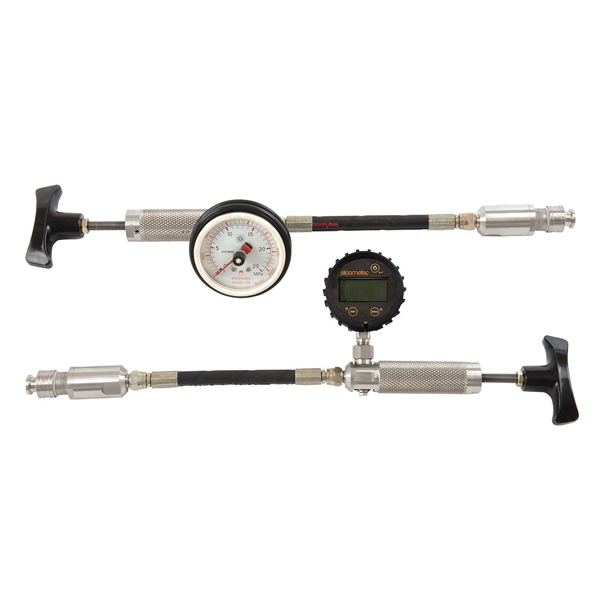
Digital Hydraulic Testers
- Measurement range: Up to 50 MPa
- Accuracy: ±1%
- Advantages: Auto-ranging capability, high precision across full range
Mechanical Testers
- Advantages: Robust field operation without electronics or power requirements
- Configuration: Supplied in fixed measurement ranges (not auto-ranging)
- Procurement requirement: Scale selection must be specified at time of order based on expected coating adhesion strength
Example: Elcometer 106 mechanical testers require range specification during procurement. This is a critical specification requirement, not an optional parameter.
Minex Group Portfolio – Elcometer Adhesion Testing Equipment
Minex Group distributes Elcometer adhesion testing instruments for industrial use. The table below summarizes the portfolio to support rapid comparison and informed selection.
| Product | Method / Type | Typical Applications | Key Technical Specifications |
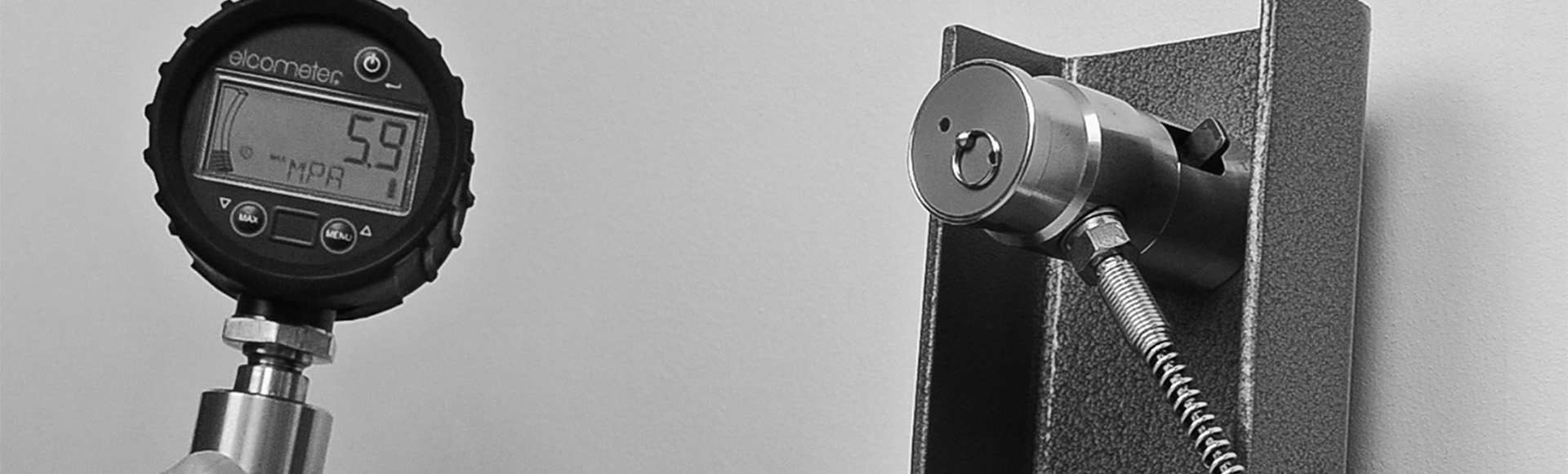
| Elcometer 506 Pull-Off Adhesion Tester | Hydraulic Pull Off Adhesion Tester (manual) | Industrial inspection of coatings on steel, concrete and wood; suitable for flat and curved surfaces | Measurement range 0–50 MPa; ±1% accuracy; interchangeable dolly sizes (14.2 mm, 20 mm, 50 mm); IP65 protection; digital data output. Manual hydraulic model. The Elcometer 510 is a separate automatic instrument. |
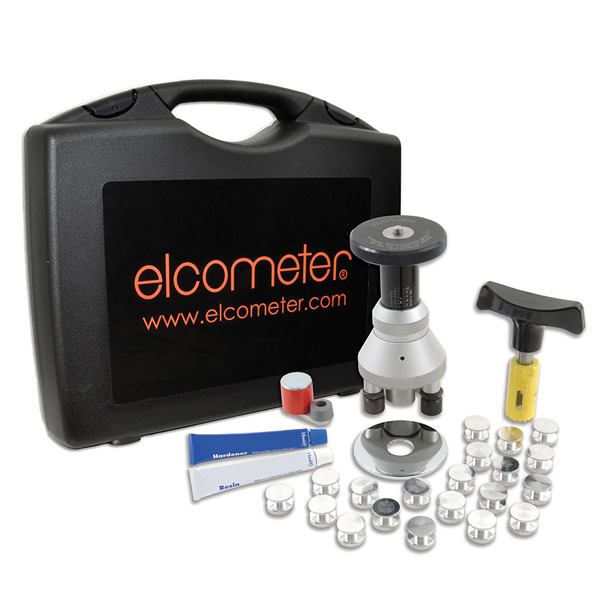
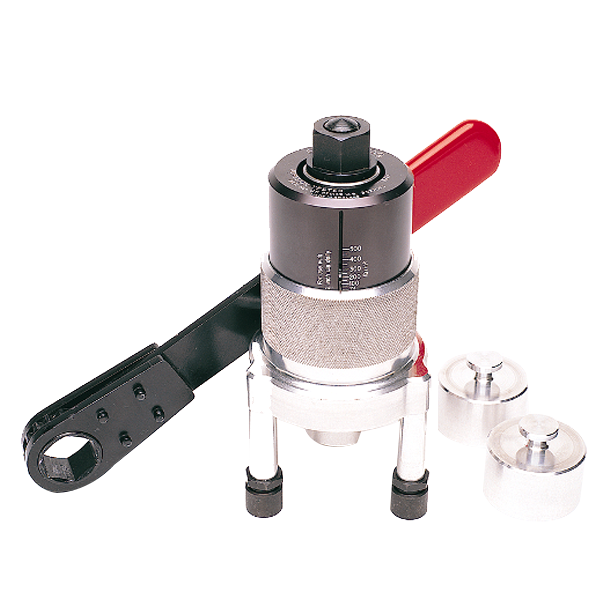
| Elcometer 106 Pull-Off Adhesion Tester | Mechanical Pull Off Adhesion Tester | Field testing of protective coatings on bridges, steel structures and waterproofing systems | Available in five distinct mechanical scales (instrument is not auto-ranging): • Scale 1: 0–3.5 MPa • Scale 2: 0–7 MPa • Scale 3: 0–15 MPa • Scale 4: 0–22 MPa • Scale 5: 0–0.2 MPa. The appropriate scale must be selected based on expected adhesion values. Ordering an insufficient scale will limit usability. Compatible with 14.2 mm, 20 mm, 40 mm (accessory) and 50 mm dollies. When using the 40 mm dolly, divide the scale reading by 4. |
| Elcometer 106/6 Pull-Off Adhesion Tester | Mechanical Pull Off Adhesion Tester for Concrete | Adhesion testing of coatings applied to concrete substrates | Supplied with 50 mm dolly; compliant with ASTM D7234 and EN 1542. |
| Elcometer 108 Hydraulic Adhesion Tester | Hydraulic Pull Off Adhesion Tester | Pipelines, tanks, smooth or uneven surfaces including curved geometries | Scale range 0–25 MPa; effective operating range 2–18 MPa; hand-powered hydraulic system; designed for curved surfaces. Not suitable for coatings exceeding 25 MPa. |
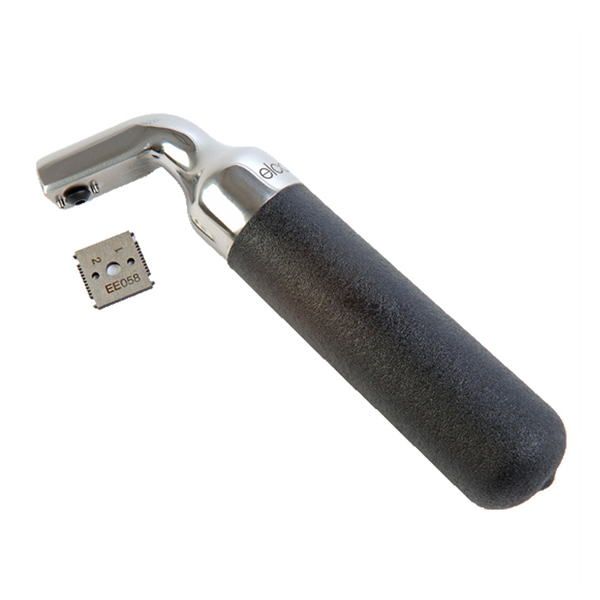
| Elcometer 107 Cross Hatch Cutter | Cross Hatch Adhesion Tester | Manufacturing QC, organic coatings on coated panels | Available in 1 mm, 1.5 mm (11 teeth), 2 mm and 3 mm spacing; 4-sided cutter blades; ASTM and ISO versions. |
| Elcometer 1542 Cross Hatch Adhesion Tester | Cross Hatch Adhesion Tester | Laboratory testing of coatings up to 250 µm on flat panel surfaces | Adjustable guide wheel; available in 1 mm, 2 mm, 3 mm spacing. |
| Elcometer 1540 Cross Cut Tester | Cross Cut Adhesion Tester | Basic adhesion testing of coatings up to 50–60 µm | Fixed 1 mm spacing; suitable only for thin coatings. |
Technical Consultation and Application Support
Selecting adhesion testing equipment requires ensuring that coating adhesion is measured correctly, interpreted accurately, and defensible under technical or contractual scrutiny.
When to consult a specialist:
- Complex multilayer coating systems
- Structural concrete substrates
- Pipeline or cylindrical asset testing
- Projects requiring strict compliance with ASTM D4541, ISO 4624, or other international standards
- Uncertainty about appropriate test method or instrument configuration
Early consultation prevents costly misapplication of test methods and ensures procurement specifications align with actual project requirements.
Support Available from Minex Group
Minex technical experts provide application-specific guidance on:
- Substrate surface conditions and material properties
- Coating system architecture (thickness, layers, chemistry)
- Measurement range and instrument capacity requirements
- Operational environment (field vs. laboratory, temperature, accessibility)
- Test method selection and standards compliance
For project-specific consultation or technical clarification, contact Minex Group to discuss your application directly with an adhesion testing specialist.
Frequently Asked Questions
A pull-off adhesion test is the most widely accepted method for measuring the adhesion of coatings in industrial environments. The test applies controlled tensile stress perpendicular to the coated surface using a bonded dolly (loading fixture). The force required to detach the coating is measured quantitatively in MPa or PSI, making this method essential for thick protective coating systems on steel, concrete, and other rigid substrates.
Cross-hatch adhesion testing is a shear-based test method primarily used for thin organic coatings and production-line quality control. A defined cross hatch pattern is cut through the coating film, and pressure sensitive tape is applied and removed to evaluate detached flakes. The result provides a standardized classification under ASTM D3359 or ISO 2409 rather than a numerical adhesion strength value.
Concrete requires special consideration due to its porosity and variable cohesive strength. For reliable results, pull-off adhesion testing should be performed using 50 mm dollies to increase surface area and reduce premature substrate failure. This approach is aligned with ASTM D7234 and EN 1542, commonly specified for industrial flooring and infrastructure repair coatings.
The selection depends on coating thickness, required reporting accuracy, and standards compliance:
- Pull-off adhesion testing is preferred for thick (>250 µm) protective coating systems where quantitative adhesion values are required.
- Cross-hatch testing is typically used for thin decorative or finishing layers where a rapid pass/fail classification is sufficient.
ASTM D4541 defines standardized procedures for pull-off adhesion testing of coatings in both laboratory and field testing conditions. It specifies loading rates, fixture requirements, and interpretation principles to ensure consistent tensile adhesion measurement across projects and industries.
Testing on curved substrates introduces alignment challenges. Hydraulic pull-off adhesion testers equipped with actuator skirts or curved-surface accessories maintain perpendicular loading on pipelines, tanks, and cylindrical structures. This prevents eccentric loading errors and ensures accurate measurements on non-flat geometries.
Failure mode interpretation is one of the most valuable outcomes of adhesion testing:
- Adhesive failure occurs at the interface between coating and substrate (or between coating layers).
- Cohesive failure occurs within the coating film itself or within the substrate.
Engineers examine the fracture surface after testing to identify the weakest plane in the coating system.
The decision depends on operational conditions:
- Mechanical adhesion testers are ideal for remote or hazardous sites because they require no batteries and are inherently robust.
- Digital hydraulic adhesion testers offer higher precision, data logging, and documentation advantages for laboratory work or compliance-driven inspections.
Both can cover industrial ranges up to 50 MPa depending on model configuration.
Both ISO 4624 and ASTM standards address pull-off tensile adhesion testing. ISO 4624 is commonly referenced internationally for paints and varnishes, while ASTM D4541 is widely specified in North American industrial coating contracts. In practice, both standards ensure comparable methodological rigor when properly applied.
For heavy-duty industrial coatings, engineers typically require:
- Measurement range covering approximately 0.2–50 MPa
- High accuracy (often ±1% for digital systems)
- Interchangeable dollies (14 mm, 20 mm, 50 mm) for different substrates
- Rugged field suitability, ideally with IP65 protection for harsh environments
Selecting equipment with these instrumental parameters ensures reliable adhesion determination across steel, concrete, wood, and complex coating systems.