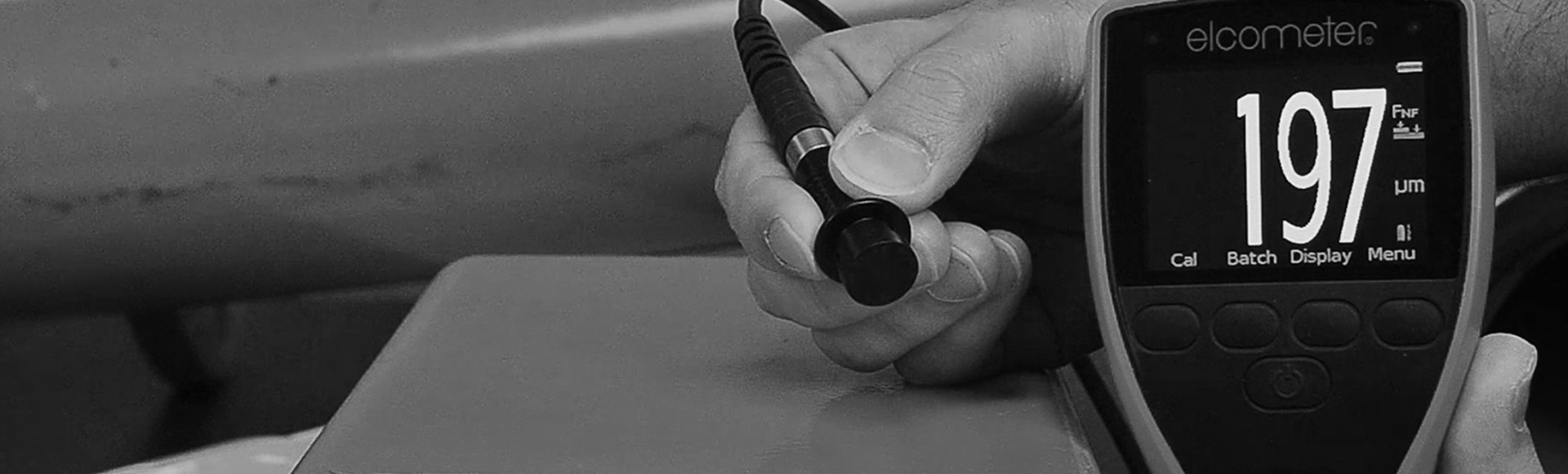
Film Thickness
How to Select the Right Film Thickness Measurement Equipment for Industrial Applications
Film thickness measurement is rarely just a quality control step. In industrial environments, measuring coating thickness serves as a critical control mechanism that protects coating performance, durability, regulatory compliance, and long-term material costs.
Whether you're supervising protective coatings on structural steel, validating paint thickness in automotive refinishing, auditing powder coatings on metal plates, or performing dry film thickness measurement on blast-cleaned steel, selecting the wrong coating thickness gauge introduces more than measurement errors—it creates technical and financial risk throughout your coating process.
This guide takes a technical consultancy approach to help experienced engineers, procurement managers, and operational teams select the right thickness gage. We'll cover substrate type, measuring range, component geometry, and applicable coating thickness standards to ensure your choice aligns with your specific requirements.
Minex Group distributes professional film thickness and coating thickness gauges, supporting customers in selecting and implementing solutions that meet EU and international standards.
Film Thickness Measurement Starts With Process Control — Not With a Product
Before selecting a coating thickness gage, the relevant question is not:
"Which thickness gauge should we buy?"
Instead, it is:
"At which stage of the coating process must we measure coating thickness?"
Coating thickness measurement typically occurs at three critical stages:
- During wet film application
- Before curing of powder coatings
- After curing as part of dry film thickness measurement
Each stage requires a different measurement principle and technical approach.
Wet Film Thickness: Controlling the Coating Application in Real Time
Measuring wet film thickness allows engineers to assess coverage during the coating application phase, before curing permanently sets the system in place.
By gauging wet films quickly using mechanical coating thickness gauges such as combs or wheels, applicators can predict final dry film thickness when volume solids are known. This ensures accurate measurement during application and prevents under-coverage or excessive material use.
Wet film thickness measurement proves particularly valuable in:
- Industrial manufacturing
- Protective coatings on steel
- Organic coatings on metal substrate systems
- Architectural coating materials
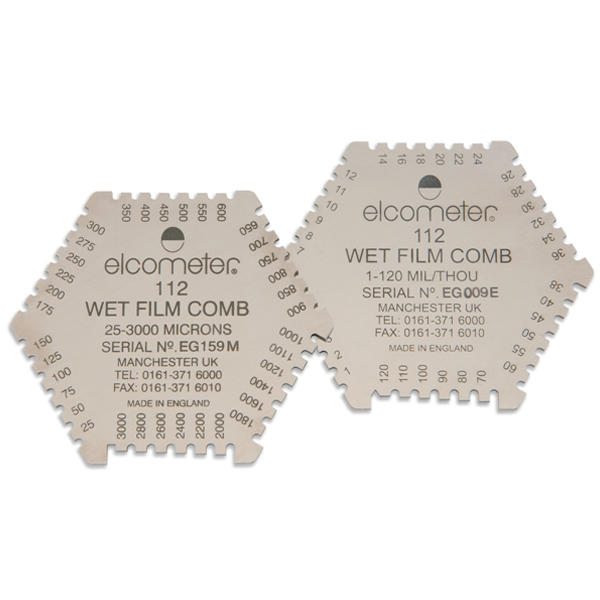
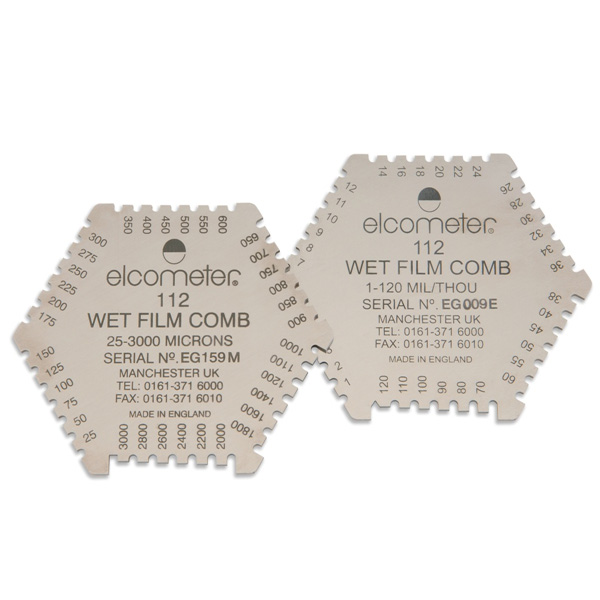
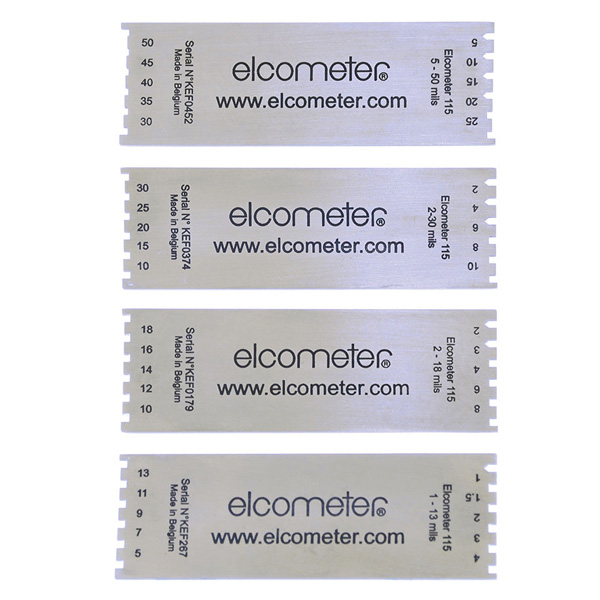
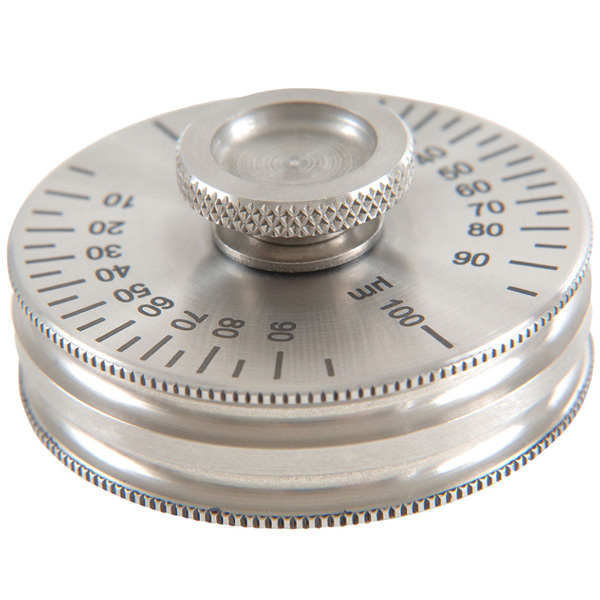
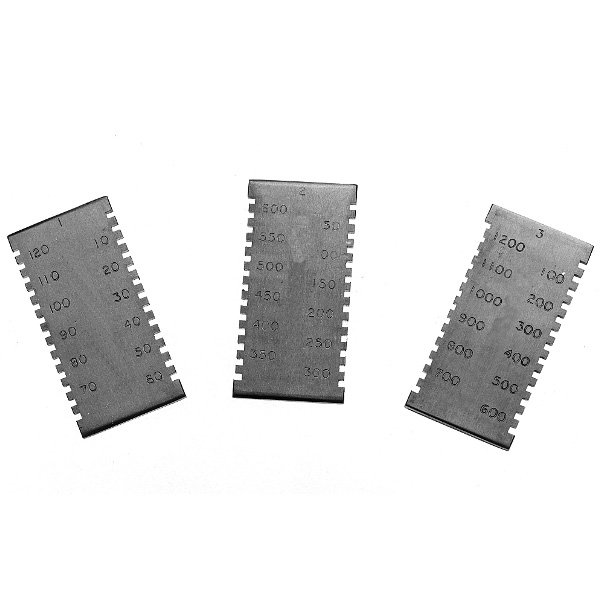
Mechanical coating thickness measurement tools include stainless steel combs, aluminum combs, and wet film wheels. These devices assess coverage through physical contact with the coated surface.
For curved surfaces, eccentric wheel instruments provide improved stability compared to standard comb designs.
In environments requiring retained documentation, disposable wet film combs offer physical traceability of application depth.
Powder Coatings: Measuring Before and After Curing
In powder coating processes, coating thickness measurement should occur twice.
Before Curing
An uncured powder thickness gauge (mechanical comb type) is used to measure coating thickness before the oven stage. Measuring powder coatings at this stage prevents over-application and reduces material costs.
After Curing
Once cured, dry film thickness measurement must be performed using either magnetic induction or eddy current methods, depending on the metal substrate.
Pre-cure measurement improves efficiency. Post-cure measurement confirms specification compliance.
Dry Film Thickness Measurement: Compliance and Performance Assurance
Dry film thickness measurement is the definitive validation step in protective coatings and paint systems.
In EU practice, dry film thickness measurement is governed primarily by:
- ISO 19840 (rough steel surfaces)
- ISO 2808 (general film thickness determination)
- ISO 12944-5 (nominal DFT requirements for corrosion categories)
Dry film thickness measurement ensures that protective coatings applied to steel achieve required durability categories (C2–CX).
Measurement Technologies: Magnetic Induction and Eddy Current
Magnetic Induction (Ferrous Substrates)
Magnetic induction coating thickness measurement delivers reliable results on steel and other ferrous substrates by tracking changes in magnetic flux density between a permanent magnet or electromagnetic induction system and the metal substrate. As coating thickness increases, magnetic attraction decreases—a relationship that enables precise quantification.
This approach excels at measuring non-magnetic coatings on steel, including paint, epoxy, and other organic coatings.
Magnetic induction systems leverage:
- Permanent magnet pull-off principles
- Electromagnetic induction with magnetic flux monitoring
These methods serve as the industry standard for coated steel structures, pipelines, hot-dip galvanizing layers, and other protective coatings applied to magnetic substrates.
Eddy Current (Non-Ferrous Metal Substrates)
Eddy current coating thickness measurement provides accurate results on non-ferrous metals such as aluminum by generating a high-frequency alternating magnetic field through a coil. The interaction with the non-ferrous metal substrate produces an electromagnetic response that correlates directly to coating thickness.
Eddy current performs optimally for:
- Automotive aluminum panels
- Architectural aluminum systems
- Electrically conductive, non-magnetic substrates
Dual-technology coating thickness gauges automatically select between magnetic induction and eddy current modes when working across mixed substrate environments, streamlining multi-material workflows.
Substrate and Geometry: Why Surface Matters
Substrate type and surface condition are key determinants of measurement reliability when you measure coating thickness.
For blast-cleaned steel, surface roughness requires proper accounting. ISO 19840 provides the framework for profile correction when measuring coatings on rough surfaces, ensuring accurate measurement and data capture.
Profile compensation delivers precise readings and validates true conformity.
Component geometry informs optimal performance:
- Curved surfaces benefit from matched coating thickness probe configurations
- Thin substrates perform best with specific sensor designs
- Small coated metal plates achieve precision through strategic probe positioning
Successful coating thickness gage selection integrates both surface texture and component shape into the specification process.
Measuring Range and Application Alignment
The measuring range of a coating thickness gauge must match the intended application to measure the thickness accurately.
Typical dry film thickness ranges include:
- Automotive paint thickness: 80–180 µm
- Architectural powder coatings: 60–120 µm
- Marine protective coatings: 250–500 µm
- Pipeline and heavy-duty systems: up to several millimeters
Some industrial coating thickness gauges support measuring range capability up to 31 mm, required for certain protective coatings and lining systems.
Over-specification increases material costs. Under-specification limits usability.
When Destructive Film Thickness Testing Is Required
Non-destructive thickness gauges quantify total system depth across all applied coating layers.
When individual layer verification is required—primer, intermediate, topcoat—proven destructive techniques such as the Paint Inspection Gauge deliver the necessary resolution.
The Paint Inspection Gauge (P.I.G.) employs a precision fine wire cutting mechanism to expose cross-sections, enabling direct measurement of individual layers under its integrated 50× microscope.
Destructive testing provides the optimal approach for:
- Verifying individual layer specifications
- Measuring coatings on non-metallic substrates
- Conducting failure analysis
- Performing laboratory validation
Calibration, Verification and Accurate Measurement
Accurate measurement of coating thickness stems from robust calibration and verification protocols.
Optimal instrument performance follows manufacturer-recommended service intervals for your thickness gage.
Effective verification protocols include:
- Zero confirmation on uncoated substrate
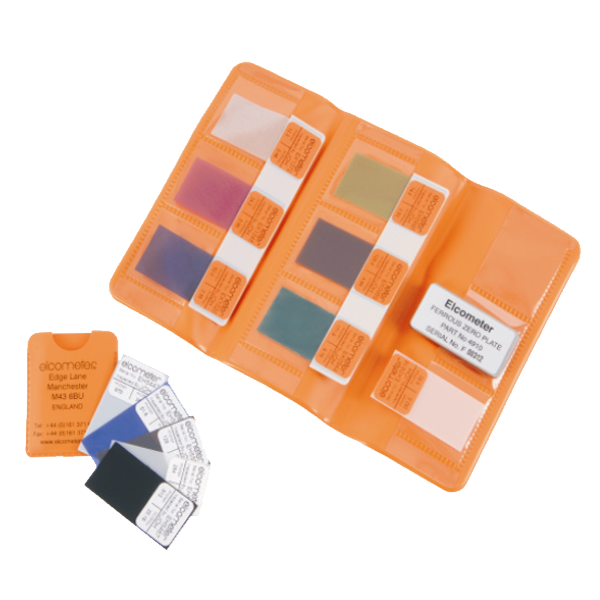
- Application of certified calibration foils
- One-point calibration adjustment as needed
Coating thickness standards mandate documented verification, particularly within ISO 19840 inspection frameworks.
Digital Reporting and Traceable Coating Thickness Data
Advanced thickness gauges enable comprehensive data workflows through:
- Batch storage architecture
- Integrated statistical analysis
- USB and Bluetooth connectivity
- Seamless inspection software integration
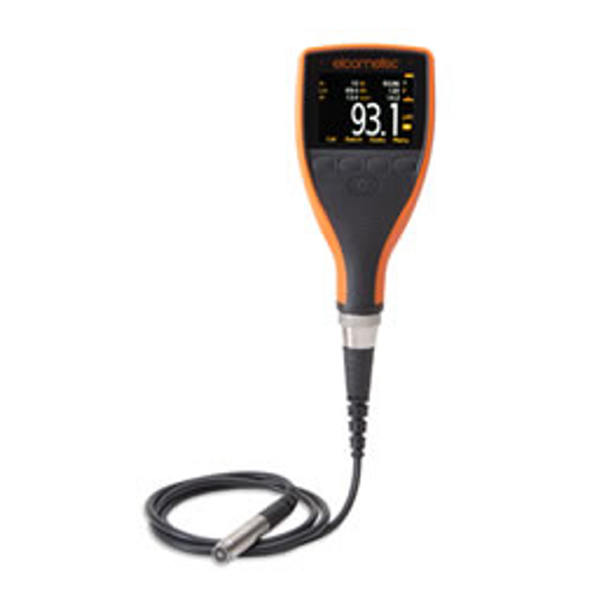
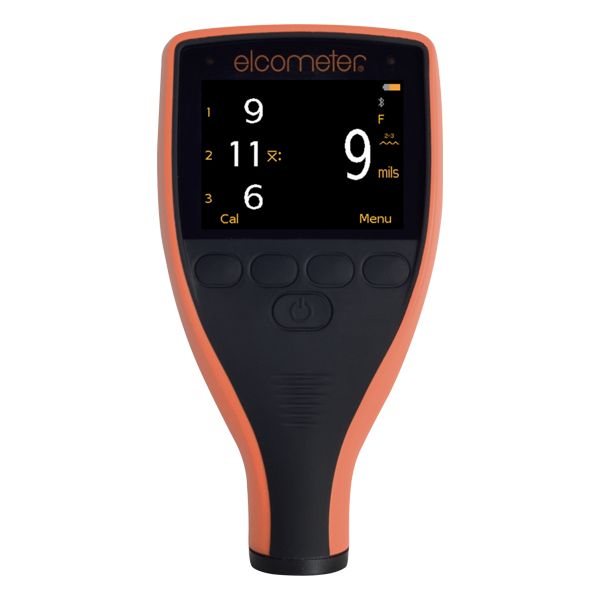
The Elcometer 456, for instance, archives up to 150,000 readings across 2,500 batches and integrates directly with ElcoMaster® Software for structured reporting and full traceability.
Professional documentation captures:
- Instrument identification and serial data
- Calibration adjustment verification records
- Measurement density per inspection zone
- Mean values and individual readings
- Referenced acceptance criteria
Comprehensive documentation strengthens audit readiness and contractual compliance.
Minex Group Film Thickness Equipment Portfolio
Professional Coating Thickness Measurement Solutions Distributed by Minex
Below is a structured overview of available film thickness measurement equipment.
Wet Film Thickness Measurement
| Product | Best Use Cases | Key Benefits |
| Elcometer 112 & 3236 Hexagonal Wet Film Combs | Measuring wet film thickness in industrial coating application | Reusable stainless steel; 24 or 36 steps; measuring range up to 3000µm, with Elcometer 112 Hexagonal Wet Film Comb (Part Number B112----3B) measuring from 3000 up to 8750µm |
| Elcometer 112 AL Aluminium Wet Film Combs | Cost-effective mechanical coating thickness measurement | Lightweight; pack of 10 |
| Elcometer 115 Wet Film Combs | Standard wet film thickness control | ±5% accuracy; robust design |
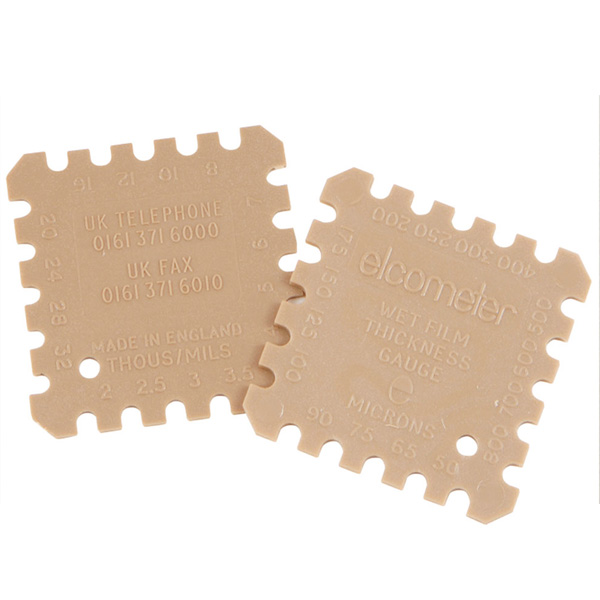
| Elcometer 154 Plastic Wet Film Comb | Disposable wet film documentation | Supplied in bulk packs of 500; retained QA record |
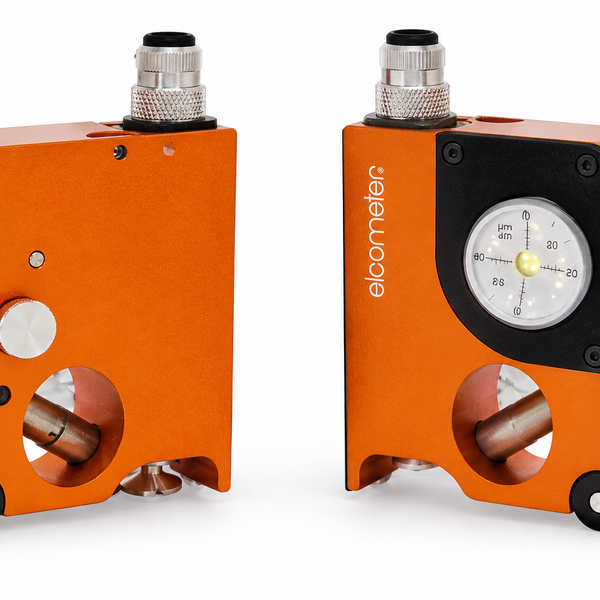
| Elcometer 3230 Wet Film Wheel | Measuring wet films quickly on curved surfaces | Eccentric design; improved stability |
| Elcometer 3238 Long Edge Wet Film Combs | High accuracy wet film thickness measurement | ±2.5µm precision; 24 stages |
Powder Coating Control
| Product | Best Use Cases | Key Benefits |
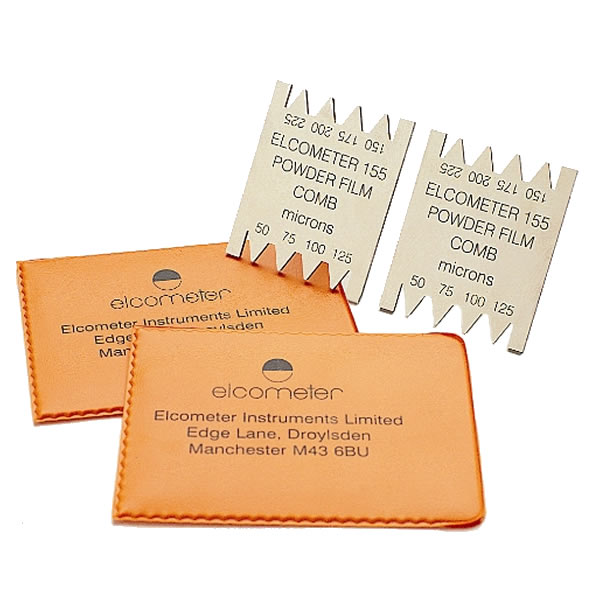
| Elcometer 155 Uncured Powder Film Comb | Measuring powder coatings before curing | 50–1250µm measuring range; reduces rework. Note: Not available for sale in the USA. |
Dry Film Thickness Gauges
| Product | Best Use Cases | Key Benefits |
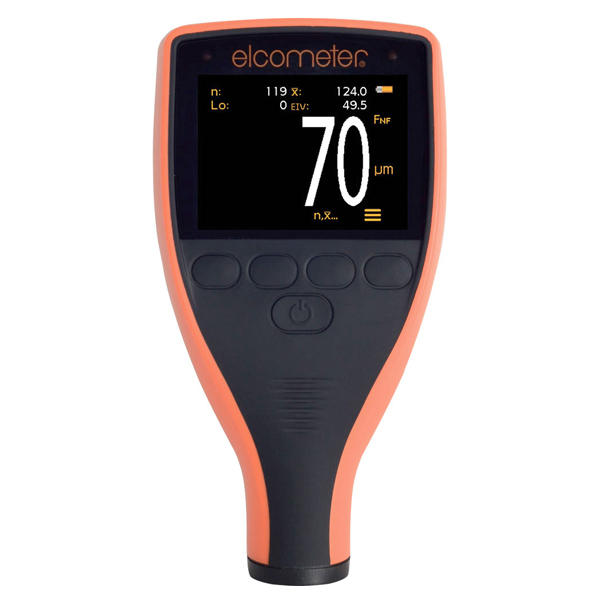
| Elcometer 311 Automotive Paint Meter | Automotive paint thickness measurement | Fast readings; Elcometer Index Value (EIV) for overall paint condition assessment; automatic substrate detection available on Dual Ferrous/Non-Ferrous (FNF) models only (Model B is ferrous-only) |
| Elcometer 456 Dry Coating Thickness Gauge | Industrial dry film thickness measurement | Measuring range up to 31mm; magnetic induction & eddy current; IP64; stores up to 150,000 readings across 2,500 batches; ElcoMaster® Software integration |
| Elcometer 456 IPC (Industrial Protective Coating) | Measuring coatings on blast-cleaned steel | Pre-calibrated for Smooth, Fine, Medium and Coarse surface roughness profiles |
Destructive Testing
| Product | Best Use Cases | Key Benefits |
| Elcometer 141 Paint Inspection Gauge (P.I.G.) | Measuring individual layers | Proven destructive technique; built-in 50x magnification microscope |
Calibration & Verification
| Product | Best Use Cases | Key Benefits |
| Elcometer 990 Calibration Foils & Zero Test Plates | Calibration adjustment and verification | ±1% accuracy; ISO traceability |
Speak With a Film Thickness Measurement Specialist
Selecting the correct coating thickness gauge directly impacts coating durability, compliance with coating thickness standards, and long-term material costs.
If you need support defining the correct measuring range, substrate compatibility, surface profile correction, or integration into your inspection workflow:
Contact the Minex technical team for expert consultancy tailored to your coating process and industry requirements.
Precision in film thickness measurement begins with selecting the correct technology — not just a device.
Frequently Asked Questions
Film thickness measurement is the process of determining the thickness of a protective coating applied to a substrate. It ensures compliance with coating thickness standards such as ISO 12944 and prevents premature corrosion, coating failure, and material waste.
Correct coating thickness:
- Ensures corrosion protection performance
- Achieves ISO 12944 durability classification
- Prevents coating cracking or delamination
- Controls material costs
- Supports QA and compliance audits
| Method | Used For |
| Magnetic Induction | Measuring coatings on steel |
| Eddy Current | Measuring coatings on aluminum |
| Wet Film Comb / Wheel | Thickness during coating application |
| Destructive (Wedge Cut / P.I.G.) | Multi-layer or non-metal substrates |
In the EU, primary coating thickness standards include:
- ISO 19840 – DFT measurement on rough steel
- ISO 2808 – Film thickness determination
- ISO 12944-5 – Defines required DFT for corrosion protection
ASTM D7091 and SSPC-PA 2 (AMPP) are often referenced in international projects but are not EU standards.
- Measure the thickness of uncured powder before curing using a powder comb.
- Measure cured coating using magnetic induction or eddy current thickness gauge.
Pre-cure measurement reduces rework. Post-cure measurement confirms compliance.
- Full calibration: according to manufacturer schedule.
- Verification: daily, at shift start, after substrate change, or after impact.
Verification requires zero plates on uncoated substrate and certified calibration foils.
| Application | Typical Range |
| Automotive | 80–180µm |
| Architectural powder | 60–120µm |
| Marine | 250–500µm |
| Pipelines | 300µm to several mm |
Always follow project specification or ISO 12944 classification when you measure coating thickness.
- Incorrect calibration adjustment
- No surface profile correction
- Dirty coating thickness probe
- Measuring near edges
- Temperature variation
Re-verify calibration and apply ISO 19840 methodology to correct and achieve accurate measurement.
Destructive testing is required when:
- Individual layers must be measured
- Substrate is non-metallic
- Failure analysis is needed
Non-destructive thickness gauges measure the thickness of total coating layers only.
For ISO compliance, reports should include:
- Calibration adjustment records
- Number of readings
- Mean and individual values
- Acceptance criteria reference
- Inspector identification
Digital coating thickness gauges with batch storage improve audit traceability.