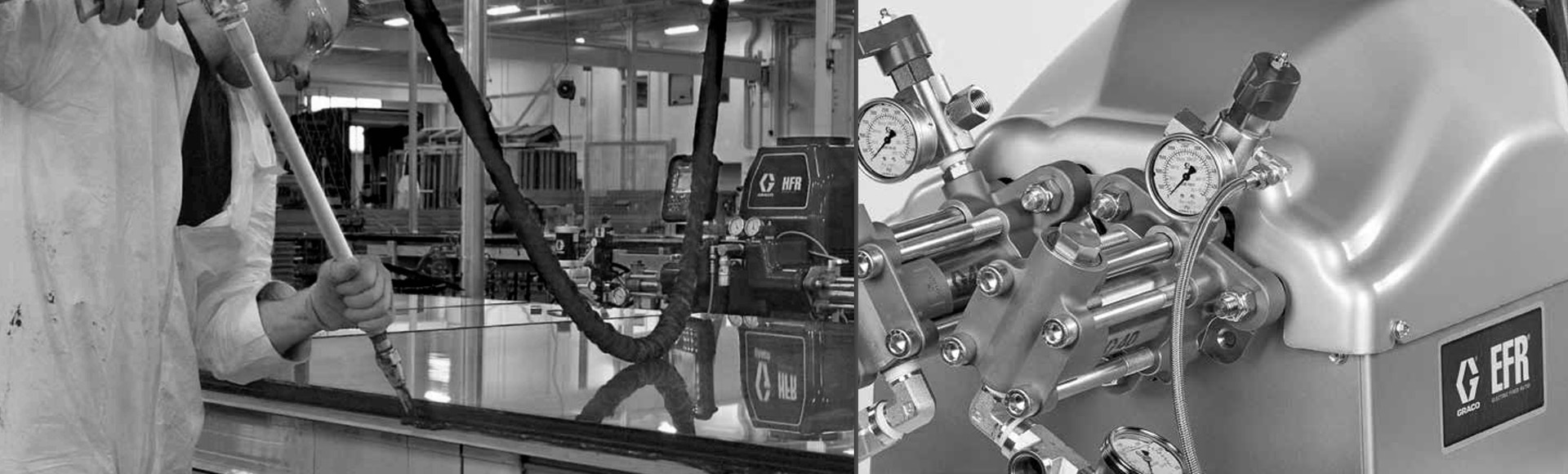
Meter, Mix and Dispense Equipment
Selecting the right meter mix dispense equipment is not a simple purchase—it's a strategic production decision that directly impacts process control, accuracy, reliability, waste reduction, throughput, and long-term performance across your complete line.
In modern manufacturing environments—automotive, electronics, glazing, battery production, aerospace, and countless other industries—adhesive dispensing systems and two-component dispensing technology are critical to bonding, sealing, potting, encapsulation, coatings, and structural assembly.
When a dispensing system performs well, it's almost invisible. When it fails, it disrupts your entire production process.
This consultancy guide explains how to select the right dispensing equipment using a structured engineering evaluation—ensuring accurate dispensing, repeatability, and durable products across your applications.
Minex Group supplies engineered dispensing systems as a distributor of leading manufacturers. Our objective is to help you define the right solution for your particular needs.
Start with the Process: Material and Application Define the System Architecture
Every successful meter mix dispense selection begins with a comprehensive understanding of your process parameters:
- Material chemistry (1K vs two-component adhesives or sealants)
- Viscosity profile
- Filler and particle loading
- Required shot size or continuous flow
- Target accuracy and repeatability
- Required speed and throughput
- Automation and PLC integration
- Maintenance philosophy and lifecycle cost
The most effective approach aligns dispensing technology directly with these process requirements. When equipment is engineered around your specific materials and production conditions, rather than adapted from generic solutions, you achieve optimal performance, efficiency, and reliability.
This material-first methodology ensures compatibility from the start and eliminates the costly adjustments that come from mismatched systems.
Material Properties: Viscosity, Fillers and Chemical Behavior Drive Equipment Design
Material rheology forms the foundation of effective dispensing system design.
Whether you're processing silicones, epoxies, polyurethanes, structural adhesives, sealants, coatings or encapsulation compounds, viscosity and filler content directly influence:
- Pump technology selection
- Pressure requirements
- Component wear resistance specifications
- Valve design and materials
- Heating or conditioning systems
Matching equipment to material characteristics ensures long-term performance. Highly filled materials—such as thermal interface compounds or silica-loaded sealants—generate considerable abrasion during dispensing. Systems engineered with hardened components, wear-resistant pump housings, and appropriate dispensing valves maintain accuracy and reliability over extended production runs.
Similarly, moisture-sensitive materials like certain polyurethane formulations benefit from protective systems that prevent crystallization and preserve internal component integrity.
Key performance indicators to evaluate:
- Pump rebuild frequency
- Seal replacement intervals
- Pressure stability during operation
- Material utilization efficiency
When maintenance cycles prove shorter than anticipated, the root cause typically traces back to material-equipment compatibility rather than operational factors. Proper system specification from the outset minimizes these issues and maximizes productive uptime.
Dosing Accuracy, Shot Size and Flow Requirements
Dispensing precision requirements vary significantly across applications, and understanding these tolerances shapes the right equipment architecture.
Electronics potting and encapsulation typically require micro-shot precision with tight volumetric control. Structural bonding applications may accommodate ±2–3% variation. Foam dispensing often prioritizes throughput and coverage over micro-volume accuracy.
Technology selection aligns with these precision demands. Servo-driven electric meter mix systems deliver precise micro-shots down to 0.3 cc while eliminating common bead defects such as start/stop inconsistencies—ideal for controlled, repeatable small-volume applications.
Hydraulic architectures excel in high-flow scenarios with polyurethanes or epoxies, where maintaining pressure stability and consistent flow volume across larger shot sizes becomes critical.
For continuous bead applications—seam sealing, underbody coatings, anti-flutter treatments—the system must sustain uninterrupted flow without refill delays. Closed-loop control actively compensates for robot speed variations, preserving bead geometry and dimensional repeatability throughout the dispensing path.
The essential specification question becomes: "What level of variation can our product absorb while maintaining quality and performance requirements?" rather than simply evaluating maximum machine capability. This application-centered approach ensures you're investing in the precision you actually need.
Metering Architecture: Piston-Based Precision and Closed-Loop Continuous Flow
Metering architecture fundamentally determines how material is measured, controlled, and delivered during the dispensing process. Understanding the core technologies enables appropriate system specification for your application.
Piston-Based Positive Displacement Metering
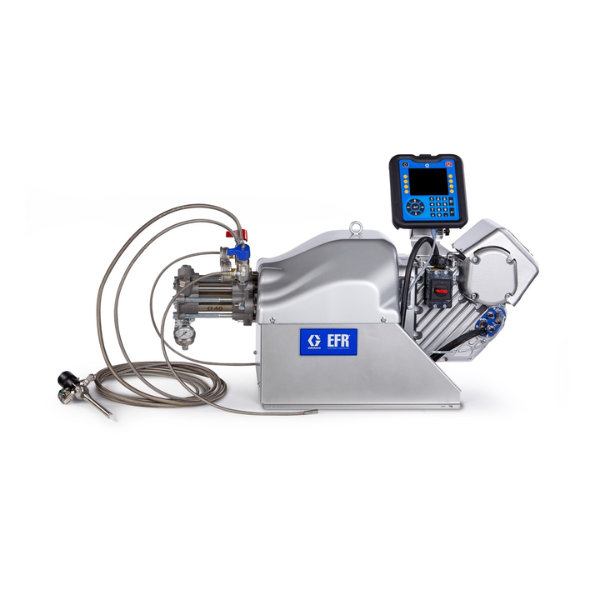
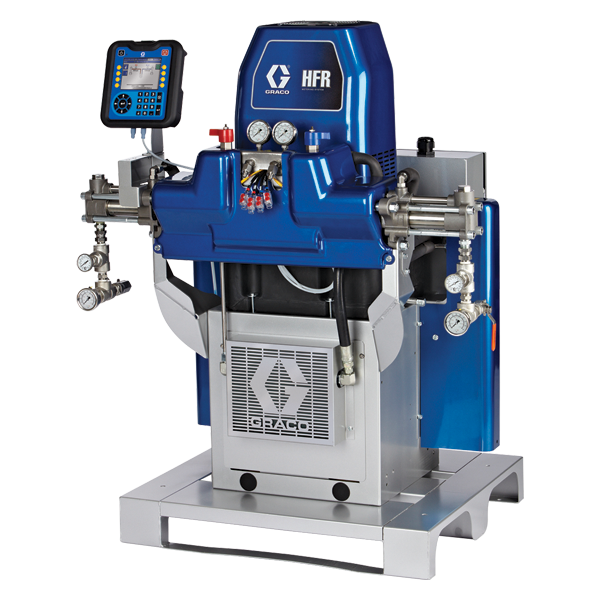
Piston-based systems use positive displacement pumps to deliver precise volumetric control through mechanical cycling. In the Graco EFR (Electric Fixed Ratio) and HFR (Hydraulic Fixed Ratio) configurations, Z-Pumps provide the metering mechanism—designed for high-pressure capability and stable ratio performance across industrial applications.
This architecture offers:
- High volumetric accuracy and shot-to-shot repeatability
- Pressure stability when processing viscous materials
- Wear resistance for abrasive or highly filled formulations
- Consistent fixed-ratio metering in two-component systems
Electric servo-driven systems (such as the EFR) excel in applications requiring precise micro-shots and programmable dispensing patterns. Hydraulic variants (such as the HFR) handle higher flow rates where sustained pressure and continuous output are critical.
Closed-Loop Continuous Flow Regulation
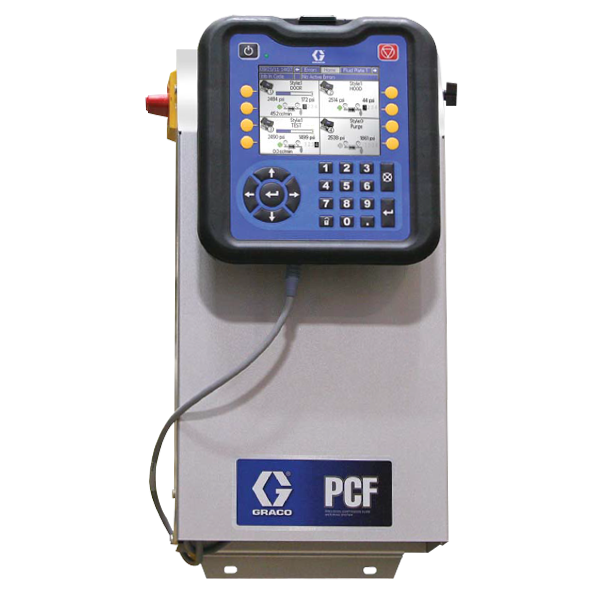
An alternative approach uses closed-loop flow regulation rather than discrete metering cycles. Systems like the Graco PCF (Precision Continuous Flow) employ fluid plate regulators with integrated flowmeters to continuously monitor and adjust output in real time.
This architecture provides:
- Dynamic compensation for viscosity variation during production
- Automatic adjustment to changing application speeds
- Maintained bead geometry during acceleration and deceleration
- Uninterrupted flow without refill interruptions
This technology suits continuous bead applications—seam sealing, coating lines, or robotic path dispensing—where flow consistency across variable speeds is essential.
Comparative Architecture Selection
When specifying metering systems, consider the following architecture categories and their typical applications:
- Servo-driven electric piston metering (e.g., Graco EFR) — micro-shot control, electronics potting, precision assembly
- Hydraulic piston metering (e.g., Graco HFR) — high-flow structural bonding, large-volume encapsulation
- Closed-loop continuous flow (e.g., Graco PCF) — automotive sealing, robotic bead dispensing, coating applications
- Variable-ratio proportioning systems (e.g., Graco ExactaBlend) — glazing applications, multi-formulation production lines
The selection process evaluates material viscosity, required accuracy, shot size or flow rate, production speed, and whether fixed or variable ratio capability is needed—then matches these requirements to the appropriate metering architecture.
Fixed Ratio vs Variable Ratio Meter Mix Systems
Two-component dispensing systems fall into two fundamental control categories based on how mixing ratios are established and maintained during production.
Fixed-Ratio Metering
Fixed-ratio systems mechanically lock the component proportions, preventing adjustment during operation. This architecture is well-suited for applications where:
- Material formulations are validated and controlled
- Process consistency requires protection against ratio deviation
- Manufacturing specifications demand shot-to-shot repeatability
- Quality documentation and traceability are essential
Examples of fixed-ratio configurations include:
The Graco EFR (Electric Fixed Ratio) System supports mechanically linked ratios from 1:1 to 12:1. Servo-driven electric motors provide precise volumetric control while mechanical linkage between pumps ensures ratio integrity across all operating conditions.
The Graco HFR (Hydraulic Fixed Ratio) System offers broader ratio coverage—1:1 to 16:1 for standard polyurethane and epoxy applications, with extended configurations up to 1:1 to 32:1 for specialized applications such as flexible packaging and filtration production. This range accommodates diverse material systems while maintaining fixed-ratio process control.
Variable-Ratio Metering
Variable-ratio systems allow controlled adjustment of component proportions, typically through electronic ratio control. This architecture addresses production environments requiring formulation flexibility.
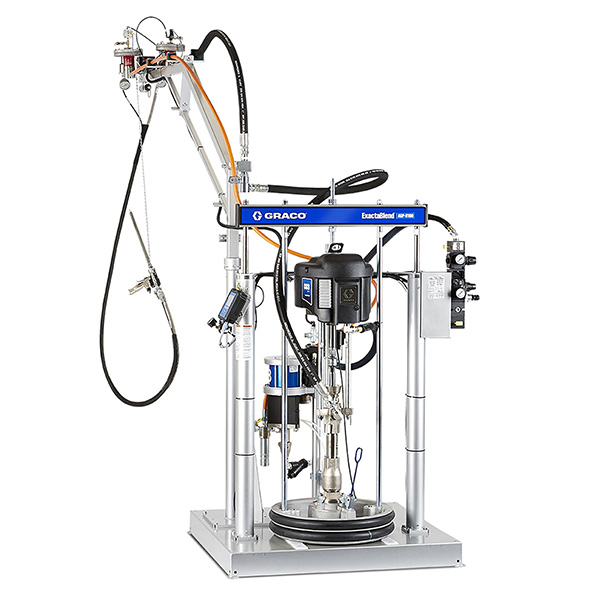
The Graco ExactaBlend Advanced Glazing Proportioner exemplifies this approach, designed specifically for structural glazing and insulating glass manufacturing where different sealant formulations and substrates require ratio adaptation.
It provides:
- 6:1 to 14:1 weight ratios for silicone and polysulfide sealants
- 12:1 to 20:1 ratios for urethane-based materials
- Electronic ratio adjustment with process control limits
This electronic control enables formulation changes within defined parameters while maintaining metering precision and reducing manual intervention errors.
Selection Considerations
The choice between fixed and variable ratio architecture depends on production requirements: whether process control benefits from mechanical ratio locking, or whether operational flexibility justifies electronically adjustable proportioning within validated ranges.
Abrasive Materials and Wear Mitigation
Material abrasiveness directly impacts component lifecycle and maintenance frequency in dispensing systems.
Filled sealants, thermal interface compounds, and structural adhesives containing hard particulates—such as silica, alumina, or metal fillers—accelerate wear in pump housings, valve seats, check valves, and internal flow passages.
Wear mitigation approaches include:
- Hardened or coated piston pump components resistant to abrasive erosion
- Ceramic or silicon nitride ball checks (such as Elite-grade configurations) for extended service life
- Enlarged internal flow paths to reduce fluid velocity and particle impact
- Optimized pressure parameters to minimize turbulence and contact stress
- Scheduled component inspection and replacement intervals
Systems engineered with abrasion-resistant materials and appropriate flow geometry reduce unplanned downtime, material waste from component failures, and total cost of ownership in abrasive applications.
Automation, Sensors and Closed-Loop Process Control
Integration with automated production systems requires consideration of control architecture, communication protocols, and feedback mechanisms.
Key integration elements include:
- PLC communication standards (Ethernet/IP, Profinet, Modbus)
- Robot synchronization and trigger protocols
- Real-time pressure monitoring
- Volumetric or mass flow sensing
- Closed-loop feedback for dynamic compensation
Closed-loop systems—such as the Graco PCF configuration—continuously monitor flow output and adjust delivery rates in response to changing application speeds or process conditions. This dynamic compensation maintains consistent bead dimensions and material placement during robotic path dispensing or variable-speed production.
In high-speed automated environments, the absence of integrated process feedback can result in bead geometry variation, volumetric inconsistencies, and quality deviations that static dispensing systems cannot address.
Reducing Waste and Preventing Curing in the System
Material waste in two-component dispensing extends beyond dispensed volume to include purge requirements, system retention, and in-system curing losses.
Two-component materials begin reacting immediately after mixing. Without proper purge protocols, mixed material cures within hoses, static mixers, and dispensing valves—requiring disposal of contaminated components and production interruption for cleaning.
Waste reduction strategies include:
- Mix-at-the-tip dispensing valves that minimize mixed material retention
- Automated purge systems (such as base purge functionality integrated in systems like ExactaBlend )
- Appropriately sized static mixers matched to shot volume and cycle time
- Scheduled purge intervals based on material pot life and production cadence
- Preventive maintenance protocols for seal integrity and valve cleanliness
Effective waste management reduces direct material costs, minimizes environmental impact from disposal, and improves overall equipment efficiency.
Data Logging, Traceability and Quality Assurance
Process documentation and traceability have become standard requirements in quality-controlled manufacturing environments.
Typical data capture capabilities include:
- Mix ratio verification and deviation logging
- Flow rate trends and volumetric totals
- System alarm and fault tracking
- Material batch usage and consumption history
- Pressure and temperature profiles
Systems such as the Graco ExactaBlend provide integrated USB data export for documentation and analysis. EFR and HFR configurations support process monitoring and alarm outputs compatible with manufacturing execution systems (MES) and quality management protocols.
Digital traceability enables root cause analysis during quality investigations, supports regulatory compliance documentation, and provides objective process verification beyond operator reporting.
Minex Group Meter Mix Dispense Equipment Portfolio
Minex Group distributes engineered dispensing systems for adhesives, sealants, polyurethanes, silicones and epoxies across various industries.
| Product Name | Best Industrial Applications | Key Technical Advantages |
| Graco Electric Fixed Ratio (EFR) System | Automotive, battery manufacturing, solar, electronics, general manufacturing. Ideal for precise bonding, sealing, potting and encapsulation. | Servo-driven meter mix dispense technology delivering micro-shot precision from 0.3 cc up to 3200 cc/min. Fixed mix ratios from 1:1 to 12:1. Mechanically linked Z-pumps ensure on-ratio performance. Maximum working pressure up to 241 bar (3500 psi). Elite configurations available for abrasive materials. |
| Graco ExactaBlend Advanced Glazing Proportioner | Glazing, window production, structural glass, automotive glazing, construction industries. | Variable weight mixing ratios: 6:1–14:1 (silicones/polysulfides) and 12:1–20:1 (urethanes). Dispensing range from 500 to 4000 g/min. Maximum working pressure up to 276 bar (4000 psi) depending on valve configuration. Integrated gel timers. Base purge functionality. USB data logging for quality assurance. |
| Graco HFR (Hydraulic Fixed Ratio) Metering System | Polyurethane foams (NVH), elastomers, polyurea, epoxies in automotive, aerospace and marine industries. | Fixed ratios from 1:1–16:1 (standard) and up to 1:1–32:1 (special configurations). ±1% accuracy. High flow capacity up to 19 L/min. Maximum working pressure up to 207 bar (3000 psi). IsoGuard Select™ protection. Rebuildable horizontal piston pumps. |
| Graco PCF (Precision Continuous Flow) System | Automotive seam sealing, underbody coatings, anti-flutter, sound deadening and continuous bead adhesive dispensing. | Closed-loop technology adjusts to viscosity, temperature and robot speed. Flow range from 25 cc/min up to 22,500 cc/min depending on flowmeter configuration. Controls up to 16 applicators from one system. Eliminates refill delays for high-speed production environments. |
Engineering the Right Dispensing Solution
Successful dispensing system specification requires alignment across multiple engineering and operational dimensions:
- Material properties and rheological behavior
- Application requirements and accuracy tolerances
- Process control expectations and quality standards
- Automation architecture and integration protocols
- Maintenance strategy and lifecycle planning
- Long-term production goals and scalability
A Consultative Approach
Minex Group brings technical expertise to this evaluation process, working with engineering and production teams to define dispensing solutions matched to specific manufacturing environments and process requirements.
Whether you're specifying a new dispensing system, upgrading existing equipment for improved performance, or addressing challenges related to accuracy, material waste, or throughput limitations—engaging with application specialists early in the evaluation process ensures proper system architecture from the outset.
Our technical team can assess your material characteristics, production parameters, and integration requirements to identify the most appropriate dispensing technology for your application.
Frequently Asked Questions
Start with the process fundamentals:
- Single component or two component materials
- Viscosity at operating temperature
- Filler content and abrasiveness
- Required shot size or continuous bead profile
- Target dosing accuracy
- Production speed and takt time
- Automation level and PLC integration
- Maintenance strategy and lifecycle cost
From there, the architecture becomes clearer:
- Micro-shot precision and electric servo control → Graco EFR
- High-flow polyurethane or epoxy processing → Graco HFR
- Continuous robotic seam sealing → Graco PCF
- Variable-ratio glazing production → ExactaBlend
The right dispensing equipment is defined by process control requirements and material behavior — not by machine format alone.
Material rheology determines metering architecture.
Viscosity defines pressure demand and pump sizing.
Filler loading affects wear rate and component selection.
Cure time influences purge strategy and mix-head configuration.
Highly abrasive materials such as thermal interface compounds require hardened piston components and Elite configurations with silicon nitride ball checks.
Moisture-sensitive polyurethanes require protective systems to prevent crystallization and protect internal components.
Material behavior must dictate the system configuration to ensure reliability and repeatability.
The Graco Electric Fixed Ratio (EFR) System supports fixed mix ratios from 1:1 to 12:1.
Its servo-driven electric architecture combined with mechanically linked Graco Z-Pumps ensures precise on-ratio performance, even during pump changeovers.
EFR is particularly suitable for precision bonding, sealing, potting and encapsulation where micro-shot accuracy and repeatability are critical.
The Graco HFR (Hydraulic Fixed Ratio) Metering System supports:
- Fixed ratios from 1:1 to 16:1 for general polyurethane and epoxy applications
- Fixed ratios up to 1:1 to 32:1 for specific flexible packaging and filtration configurations
It delivers ±1% dosing accuracy with high flow capacity up to 19 L/min, making it suitable for high-volume foaming, elastomers and structural applications.
The Graco ExactaBlend Advanced Glazing Proportioner supports:
- 6:1 to 14:1 weight ratios for silicones and polysulfides
- 12:1 to 20:1 weight ratios for urethane materials
This flexibility makes it particularly suitable for structural glazing and insulating glass manufacturing where product variants require controlled ratio adjustment.
Integrated gel timers and base purge functionality reduce curing-related downtime and material waste.
Matching material viscosity with system pressure capability is critical for stable performance.
- Graco EFR
- Flow up to 3200 cc/min
- Maximum working pressure up to 241 bar (3500 psi)
- Graco HFR
- Flow up to 19 L/min
- Maximum working pressure up to 207 bar (3000 psi)
- Graco ExactaBlend
- Dispensing range from 500 to 4000 g/min
- Maximum working pressure up to 276 bar (4000 psi) depending on valve configuration
- Graco PCF
- Continuous flow range from 25 cc/min up to 22,500 cc/min depending on flowmeter configuration
Ensuring pressure compatibility with material viscosity protects components and maintains consistent process control.
Both systems use positive displacement piston metering (Graco Z-Pumps), but they serve different production environments.
Choose Graco EFR when:
- Electric servo precision is required
- Micro-shot dispensing is critical
- Abrasive materials require Elite pump configurations
- Applications involve precision bonding, sealing or encapsulation
Choose Graco HFR when:
- High-flow polyurethane or epoxy processing dominates
- Large-volume foaming or elastomer applications are required
- Hydraulic architecture aligns with plant infrastructure
The selection depends on precision range, volume demand and process dynamics.
The Graco PCF (Precision Continuous Flow) System is recommended when:
- Continuous bead dispensing is required
- Robotic seam sealing is used
- Bead geometry must remain consistent during acceleration and deceleration
- Refill delays cannot interrupt production
PCF uses a closed-loop fluid plate regulator and flowmeter system to dynamically adjust output in real time. It can control up to 16 applicators from a single system.
If bead consistency varies with robot speed changes, closed-loop control is essential.
Two component materials can cure inside hoses and applicators if purge management is inadequate.
Effective strategies include:
- Mix-at-the-tip dispensing valves
- Base purge functionality (integrated in ExactaBlend)
- Correct static mixer sizing
- Scheduled purge intervals
- Preventive maintenance
Reducing purge waste improves efficiency and lowers long-term operating cost.
For quality-sensitive manufacturing environments, dispensing systems should provide:
- Mix ratio verification
- Flow rate monitoring
- Alarm tracking
- Material usage history
ExactaBlend includes USB data reporting.
EFR and HFR configurations support documentation suitable for compliance-driven industries.
Digital traceability strengthens quality assurance and simplifies audits.
Evaluating dispensing equipment requires a lifecycle perspective.
Consider:
- Pump rebuildability
- Wear resistance in abrasive environments
- Downtime risk
- Spare parts strategy
- Energy consumption
- Material waste
Rebuildable horizontal piston pumps and hardened components reduce long-term operating cost and improve reliability.
The right dispensing solution is the one that delivers stable performance over years of production — not simply the lowest initial investment.