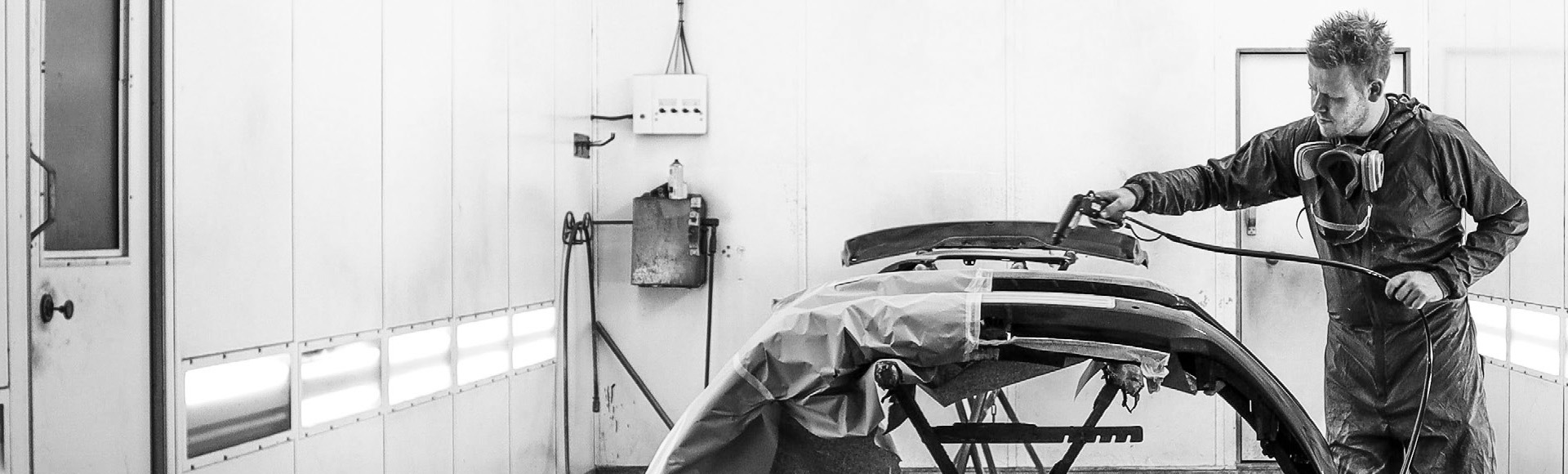
Electrostatic Surface Cleaning
How Engineers and Operations Managers Select the Right Static Neutralization and Dust Removal Solution
In modern industrial production environments, contamination caused by static electricity is rarely a minor issue. Static charges cause dust, fibers, and microscopic particles to adhere to surfaces, often at the most critical stages of manufacturing.
In sectors such as automotive manufacturing, electronics assembly, plastics processing, medical device production, and aerospace component manufacturing, even minimal contamination can lead to costly defects: paint imperfections, bonding failures, electronic damage, or compromised product quality.
Electrostatic surface cleaning systems solve this problem by combining static neutralization with controlled airflow, allowing dust and particles to be removed efficiently without re-contaminating the product surface.
However, selecting the correct equipment is not simply a matter of choosing a static elimination tool. The correct solution depends on several operational variables, including surface geometry, production speed, air supply infrastructure, environmental conditions, and the sensitivity of the components being handled.
This guide provides a practical decision framework used by engineers, procurement specialists, and operational managers to determine which electrostatic surface cleaning technology best fits their production environment.
Why Electrostatic Surface Cleaning Matters in Industrial Manufacturing
Static electricity is generated continuously during manufacturing processes. Friction between materials, transport on conveyors, cutting, forming, injection molding, winding, and packaging operations all generate electrostatic charges.
Once charged, surfaces behave like magnets for airborne contaminants. Dust, fibers, and micro-particles adhere strongly and cannot be removed with conventional compressed air alone.
In many industrial processes this creates measurable problems:
- Paint and coating defects caused by dust contamination
- Adhesion failures in bonding or lamination processes
- Contamination of precision components during assembly
- Electrostatic discharge (ESD) damage to sensitive electronics
- Reduced product quality and higher rejection rates
Electrostatic surface cleaning systems address both aspects of the problem simultaneously:
- Neutralizing the static charge on the surface
- Removing particles using controlled ionized airflow
By eliminating the electrostatic attraction forces, dust can be removed efficiently without simply being pushed around the surface.
Technical Variables That Determine the Correct Electrostatic Cleaning System
When engineers evaluate electrostatic surface cleaning equipment, the selection process typically begins with a set of practical operational questions rather than product specifications.
The goal is to match the cleaning technology with the physical realities of the production environment.
The following factors typically drive the equipment selection process.
Surface Geometry and Production Configuration
One of the most important technical considerations is the scale and geometry of the surface that must be cleaned.
In many assembly environments, operators clean individual components at workstations. These parts may have complex shapes, cavities, or sensitive surfaces that require precise, localized cleaning. In these cases, ionizing air guns provide the flexibility required for manual cleaning operations.
However, many production lines involve continuous surfaces moving through automated processes, such as plastic films, automotive panels, or packaging materials. Cleaning such surfaces manually is impractical.
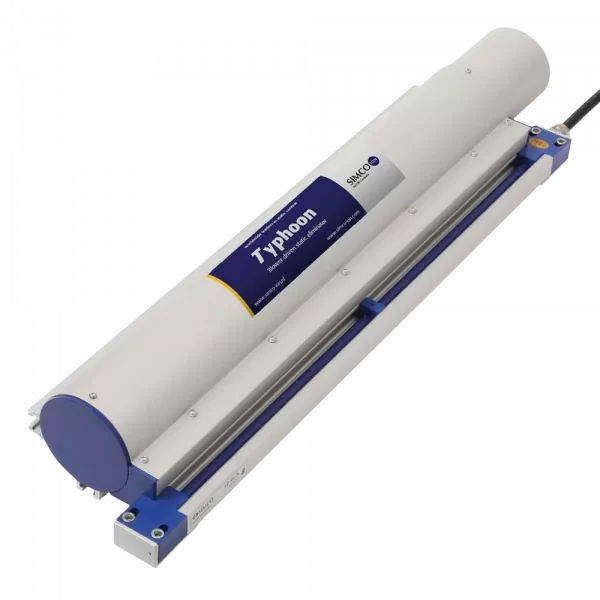
For these applications, ionizing air knife systems create a uniform curtain of ionized air across the entire width of the production line, allowing surfaces to be cleaned automatically as they pass through the process.
From a process engineering perspective, this distinction is usually the first decision point:
- Manual workstation cleaning → ionizing air guns
- Continuous production line cleaning → ionizing air knife systems
Air Supply Strategy and Long-Term Operating Costs
Another major consideration for operations managers is the cost of compressed air.
Compressed air is widely available in most factories, but it is also one of the most expensive utilities in industrial environments. Systems that rely heavily on compressed air can generate significant operational costs over time.
Traditional ionizing air guns operate using compressed air and provide excellent precision for targeted cleaning tasks. However, when large surfaces must be cleaned continuously, compressed air consumption can become inefficient.
Typical compressed air consumption levels include:
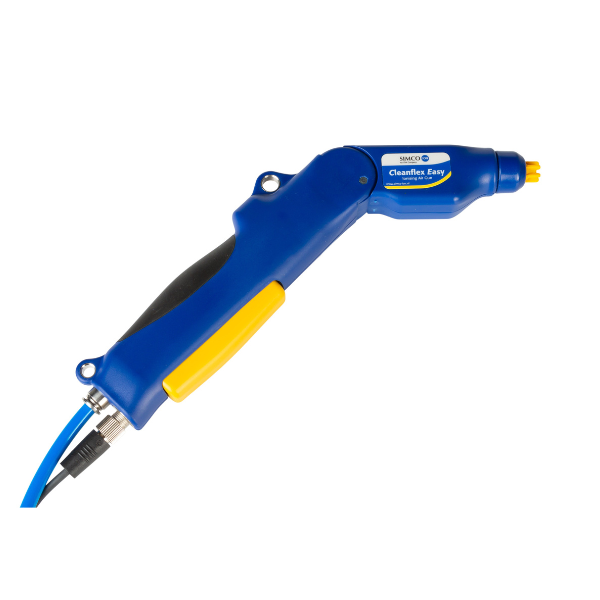
- Simco-Ion Cleanflex Easy: 200 l/min at 3 bar
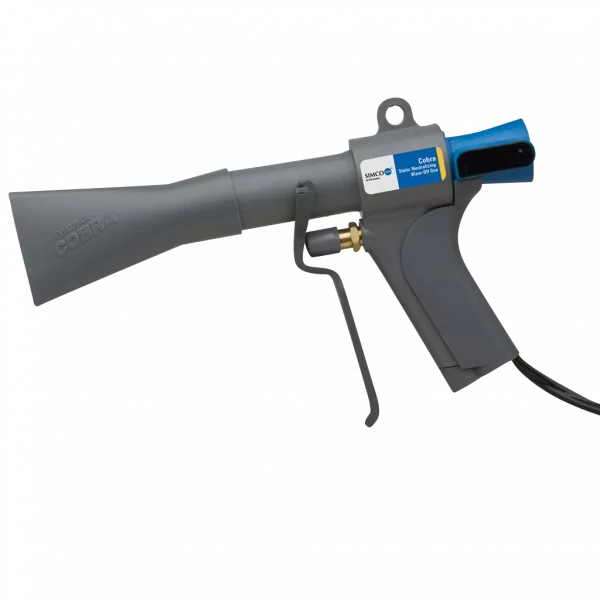
- Simco-Ion Cobra: 200 l/min at 2 bar
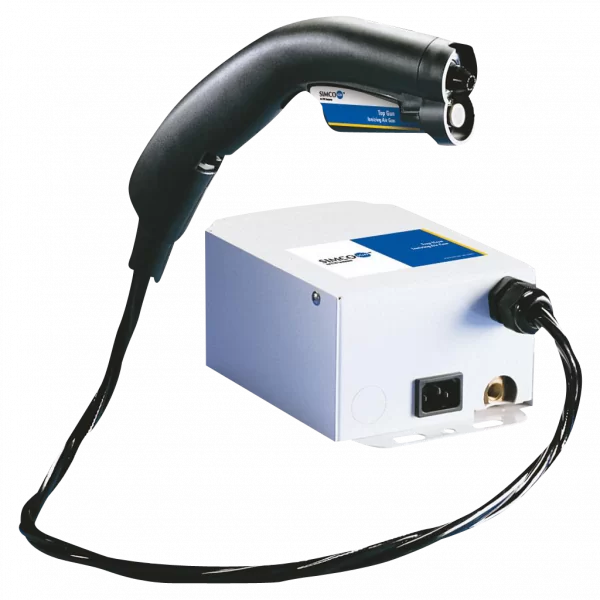
- Simco-Ion Top Gun III: 68 l/min at 2 bar
Blower-driven ionizing air knife systems address this challenge by generating airflow mechanically rather than relying entirely on compressed air. These systems can reduce operating costs by 30–70 percent, making them particularly attractive for high-volume production environments.
For operations managers responsible for long-term energy efficiency, this factor often strongly influences equipment selection.
Air Cleanliness and Filtration Requirements
In many industrial environments, compressed air itself can introduce contamination if it is not properly filtered.
This is especially critical in sectors such as:
- medical device manufacturing
- electronics assembly
- precision component production
- aerospace manufacturing
Even microscopic oil aerosols or particulate contamination from compressed air lines can compromise product quality.
For these environments, ionizing air guns equipped with integrated ultra-fine filtration systems ensure that the air used for cleaning does not introduce secondary contamination. Filtration levels down to 0.01 micron are commonly used to ensure a clean ionized air stream.
Engineers working in high-cleanliness production environments typically consider this feature essential rather than optional.
Duty Cycle, Durability, and Industrial Robustness
Production environments vary significantly in terms of mechanical stress, exposure to dust, and overall operating conditions.
In heavy industrial sectors such as automotive manufacturing, shipbuilding, and metal fabrication, cleaning equipment must withstand harsh conditions and continuous use.
Equipment designed for these environments often includes:
- impact-resistant housings
- self-cleaning emitter pins to reduce maintenance
- reinforced cables for extended operational life
For example, the Simco-Ion Cobra is specifically designed for heavy industrial environments and incorporates an impact-resistant housing and air amplification technology.
In contrast, tools such as the Simco-Ion Top Gun III are classified for light industrial applications, making them well suited to controlled manufacturing environments such as electronics, aerospace component assembly, and precision manufacturing.
Selecting equipment with the appropriate durability profile helps avoid unnecessary maintenance and downtime.
Ergonomics and Operator Productivity
Where cleaning operations are performed manually, ergonomics becomes a critical factor.
Operators may use ionizing air guns repeatedly throughout the day, and poorly designed tools can contribute to fatigue, repetitive strain, or reduced productivity.
Well-designed industrial ionizing guns incorporate:
- lightweight construction
- balanced airflow design
- ergonomic trigger mechanisms
- optional hands-free operation
The ergonomic characteristics of the Minex portfolio illustrate this clearly:
- Cleanflex Easy: 0.3 kg weight, approx. 75 dB noise level
- Cobra: 0.6 kg weight, approx. 95 dB noise level
- Top Gun III: 0.8 kg weight, approx. 76 dB noise level
Some systems also offer foot-pedal controlled configurations, allowing operators to manipulate components with both hands while activating the cleaning airflow.
Hazardous Production Environments and ATEX Compliance
Certain industrial environments contain flammable vapors, combustible dust, or volatile chemicals.
Examples include:
- automotive paint booths
- solvent-based coating lines
- chemical processing facilities
- plastics and powder-handling operations
In these environments, equipment must comply with ATEX certification requirements for explosion-hazardous zones.
The Simco-Ion Typhoon Air Knife can be configured with ATEX-approved ionizing bars such as:
- P-Sh-N-EX
- Performax Easy EX (available in 230V or 24V configurations)
These solutions enable safe installation in hazardous production environments.
Electrostatic Discharge (ESD) Sensitivity
In electronics manufacturing and e-mobility production environments, controlling static electricity is not only about removing dust—it is also about preventing electrostatic discharge damage.
Microprocessors, semiconductor components, and high-density circuit boards can be damaged by even small voltage fluctuations.
Ionizing cleaning systems used in these environments must maintain precise ion balance levels, typically within ±30 volts, to prevent ESD events during cleaning operations.
Engineers responsible for electronics manufacturing processes typically require equipment designed specifically for ESD-sensitive environments.
Effective Working Distance
The effective reach of an ionizing cleaning system determines where the equipment can be installed within the production process.
Standard ionizing air guns are typically most effective within 300 mm of the surface being cleaned.
Heavy-duty ionizing guns designed for industrial applications can extend this reach to 600 mm, making them suitable for larger parts.
For automated production lines, blower-driven ionizing air knife systems can operate effectively at distances of up to 2000 mm, enabling them to clean wide surfaces and large components.
Correctly matching working distance to the physical layout of the production line ensures optimal cleaning performance.
Electrostatic Surface Cleaning Equipment Available Through Minex
Minex distributes electrostatic surface cleaning solutions developed by specialized static control manufacturers. These systems are designed for a wide range of industrial environments and applications.
The table below provides a quick technical overview of the electrostatic cleaning solutions available through the Minex portfolio, highlighting their primary benefits and typical industrial applications.
| Product | Key Technical Benefits | Typical Industrial Applications |
| Simco-Ion Cleanflex Easy | Lightweight ionizing air gun with integrated 24V DC power unit, low noise operation (75 dB), compressed air consumption of 200 l/min at 3 bar, ergonomic full-hand trigger, and 0.3 kg weight. The PRO version provides precise ion balance of ±30 V for ESD-sensitive applications. Working distance up to 300 mm. | Cleaning circuit boards and electronic assemblies, e-mobility component manufacturing, plastics and packaging processes where static neutralization is required before labeling or material handling. |
| Simco-Ion Cobra | Heavy-duty industrial ionizing air gun with 0.6 kg weight, 200 l/min air consumption at 2 bar, and noise level around 95 dB. Features air amplification technology (6:1 airflow), impact-resistant housing, and self-cleaning emitter pin. Two Cobra guns can connect to a single A2A5G power unit, enabling scalable installations. Effective working distance up to 600 mm. | Automotive production lines, shipbuilding, heavy industrial manufacturing environments, and cleaning large components before coating or painting. |
| Simco-Ion Top Gun III | Ionizing air gun designed for light industrial applications, featuring integrated 0.01-micron compressed air filtration, 68 l/min air consumption at 2 bar, operating noise around 76 dB, and 0.8 kg weight. Each unit connects to a dedicated power unit. Provides efficient airflow and strong blow-off performance with working distance up to 300 mm. | Medical device manufacturing, aerospace component cleaning, precision manufacturing, and electronics assembly environments requiring contamination-free airflow. |
| Simco-Ion Top Gun III – Sidekick | Hands-free ionizing cleaning solution using a foot-pedal operated system and flexible mounting arm. Shares the filtration, airflow performance, and air consumption characteristics of the Top Gun III. | Electronics assembly, micro-component cleaning, and precision assembly stations requiring high productivity and ergonomic operation. |
| Simco-Ion Typhoon Air Knife | Blower-driven ionizing air knife system designed for continuous cleaning across wide surfaces. Reduces operating costs by 30–70% compared with compressed air systems and operates at ≤80 dB (measured at 100 cm). Includes an integrated air pressure sensor that monitors system performance and alerts operators when filter cleaning is required. Standard configurations use EP-Sh-N anti-static bars or Performax IQ Easy (24V DC). Hazardous environments can be equipped with P-Sh-N-EX or Performax Easy EX (230V or 24V) bars. Standard Typhoon systems using EP-Sh-N bars connect to the A2A7M power unit. Effective working distance up to 2000 mm. | Automotive manufacturing lines for full vehicle bodies before painting, plastics processing lines, thermoforming operations, packaging production, and textile manufacturing. |
When Application-Specific Expertise Makes the Difference
Although electrostatic surface cleaning equipment is widely used across industries, the optimal configuration often depends on detailed process variables such as production speed, contamination levels, surface material properties, and airflow dynamics.
For this reason, many industrial manufacturers prefer to evaluate their cleaning requirements in collaboration with static control specialists who can analyze the process and recommend the most effective solution.
Minex supports industrial companies with technical consultation, equipment selection, and integration guidance, helping ensure that electrostatic cleaning systems perform reliably within the specific conditions of each production environment.
Discuss Your Electrostatic Cleaning Application with Minex Specialists
Selecting the correct electrostatic surface cleaning solution can significantly improve production efficiency, reduce contamination defects, and optimize operating costs.
If you would like expert support in selecting the most appropriate equipment for your manufacturing process, the Minex team can assist with:
- evaluation of static-related contamination issues
- identification of suitable electrostatic cleaning technologies
- recommendations for integration into existing production lines
Contact the Minex static control specialists to discuss your application and receive tailored technical guidance.
Frequently Asked Questions
Electrostatic surface cleaning is the use of air ionization and controlled airflow to neutralize static charges and remove dust and particles from product surfaces during manufacturing.
Static-charged surfaces attract airborne particles, which can cause coating defects, bonding failures, and electrostatic discharge damage to sensitive components, reducing yields and product reliability.
Grounding and humidity help control static on conductive materials, but ionization becomes necessary when insulative materials or isolated conductors cannot be effectively grounded, especially near sensitive electronics.
These devices generate positive and negative ions in a moving air stream. When the ionized airflow reaches a charged surface, the ions neutralize the static charge, allowing the airflow to detach and remove particles.
Selection depends on several operational factors including surface size and geometry, production speed, contamination level, available airflow infrastructure, and environmental constraints such as cleanliness classification or hazardous-area requirements.
Manual ionizing air guns are typically used at workstations for targeted cleaning tasks, while automated systems such as ionizing bars or air knives are installed on production lines to continuously neutralize static and remove contamination from moving parts or materials.
Ionization systems used in electronics manufacturing must maintain tight ion balance and sufficient ion density to neutralize charge without creating voltage offsets that could trigger electrostatic discharge events.
Compressed air used in cleaning processes must be filtered to remove oil aerosols and particulates. Without proper filtration, the cleaning process itself can introduce contamination onto the product surface.
Compressed air is one of the most energy-intensive utilities in manufacturing. Systems that optimize airflow or rely on blower-driven technology can significantly reduce compressed air consumption and overall operating costs.
Yes. In environments with flammable gases, vapors, or combustible dust, static control equipment must comply with relevant explosion protection standards such as ATEX-type certification requirements to ensure safe operation.