Static Bonding
How to Choose the Right Static Bonding System for Industrial Production Lines
Electrostatic bonding systems have become a cornerstone of modern manufacturing - used to temporarily fix substrates in place, control film adhesion, eliminate air pockets during lamination, and stabilize components throughout automated handling. Across plastics, packaging, textiles, electronics, and high-speed assembly, static bonding offers a clean, efficient alternative to mechanical fixturing or chemical adhesives.
The operating principle is straightforward: by generating a controlled electric field at high voltage, these systems create attractive forces between surfaces - keeping everything aligned without introducing mechanical stress or contaminating agents into the process. Static electricity, in this context, isn't a hazard to be eliminated - it's a precision tool to be controlled.
What's rarely straightforward, however, is the selection decision.
Getting this right goes well beyond choosing a voltage rating from a datasheet. The actual reliability of the process depends on how precisely the electrostatic solution matches the physical geometry of the machine, the line speed, and the facility's control architecture. A system that performs flawlessly in one environment can destabilize an otherwise identical line if even one of these variables is mismatched.
In practice, engineers and procurement managers need to evaluate several interdependent parameters simultaneously: voltage requirements, electrode standoff distance, web or substrate velocity, spark-over protection strategy, automation and I/O connectivity, grounding system design, and physical installation constraints. Each of these directly affects process stability, charge consistency, and long-term equipment uptime.
What follows is a structured decision framework developed through industrial consultancy practice - designed to cut through spec-sheet comparisons and identify which bonding system genuinely fits a given production environment.
Matching Generator Voltage to Installation Distance and Machine Layout
With the selection framework established, the logical starting point for any system specification is the relationship between generator voltage and the physical gap between the charging electrode and the substrate surface. Get this pairing wrong, and no amount of downstream adjustment will recover stable charge transfer.
High-voltage generators create a controlled potential difference between the charging element and the passing substrate - producing an electric field strong enough to deposit a consistent static charge onto the surface. Industrial units typically span two broad operating ranges: 0–20 kV for close-proximity applications, and up to 0–60 kV where greater standoff distances are unavoidable.
The physics here are unambiguous. Below 30 kV, effective electric charge transfer requires the electrode to sit roughly 20 mm from the substrate. Push beyond that distance at lower voltage, and field strength degrades faster than most line speeds can compensate for. Generators capable of reaching 30–60 kV extend that working envelope to approximately 75 mm - enough headroom to work around the structural constraints that are, in practice, the dominant installation challenge.
This is precisely why the evaluation should start with the machine, not the generator catalog. Before specifying voltage, map the available mounting positions around the material path. On extrusion lines, lamination systems, and converting equipment, rollers, safety guards, and metal structural frames routinely block the ideal electrode position. If the geometry of the machine dictates a standoff beyond 20 mm, a higher-voltage generator isn't a premium option - it's a technical necessity.
A common and costly mistake is to select a lower-voltage system based on unit price, then discover during commissioning that the only viable mounting point sits 50 mm from the web. The result is chronic undercharging, inconsistent bonding, and ultimately, process instability that gets misdiagnosed as a material or speed problem.
Measure the available installation space first. Let that number drive the voltage specification.
Maintaining Stable Electrostatic Bonding at High Line Speeds
Voltage and distance define what the system can do. Line speed determines whether it will - consistently, across every meter of production.
As web velocity increases, the dynamics of static charge accumulation and dissipation shift. At high speeds, the substrate spends less time within the electric field, compressing the window available for effective charge transfer. Simultaneously, the risk of uncontrolled discharge grows: when stored electric charge exceeds the breakdown voltage of the air gap, electrons bridge the potential difference instantaneously - what's commonly known as spark-over. In printing, plastics converting, packaging, and textile operations running at production speeds, this isn't a theoretical risk. It's a recurring process failure in systems that weren't designed for the velocity they're running at.
Two hardware and control features separate systems built for high-speed environments from those that merely tolerate them.
Individual resistor protection at each emitter pin limits the current available at any single discharge point. The resistance introduced at each pin is what contains a spark-over event locally - without it, a single discharge propagates along the full length of the charging bar, turning a manageable event into a line stoppage and potentially damaging the electrode itself. In high-speed production, the question is when a spark occurs, not if - and the system needs to be designed accordingly.
Dynamic output control is the second non-negotiable. Generators that hold a fixed voltage output regardless of line speed are, by definition, miscalibrated for most of the production cycle - during ramp-up, slowdown, and any speed variation in between. Closed-loop systems that continuously adjust voltage output relative to actual machine velocity maintain consistent charge density across all operating conditions. The practical result is stable bonding through acceleration and deceleration phases that would otherwise produce rejects or require operator intervention.
Specifying a high-voltage generator without these two features for a high-speed line is a design gap, not a cost saving. The downstream consequences - inconsistent bonding, premature emitter wear, and misdiagnosed process variability - invariably cost more to manage than the specification delta.
Integrating Static Bonding into Compact Automation Environments
Voltage, distance, and speed cover the core electrical specification. The third physical constraint - and the one most likely to be underestimated during system design - is installation geometry in motion.
Robotics, electronics assembly, and pick-and-place systems present a specific challenge that static production lines don't: the charging system needs to move with the machine. Traditional architectures route high-voltage cable from a fixed generator to a remote charging electrode - a perfectly adequate arrangement on a static web line, but a progressive failure mode on any moving assembly. Every cycle flexes the cable. Over thousands of operating hours, mechanical fatigue at connectors and cable connections becomes the primary reliability risk, not the generator or the electrode itself.
The engineering response to this constraint is to eliminate the cable run entirely. Compact generators designed for direct mounting on the moving component - typically 24 VDC input, around 500 g, and rated to withstand mechanical accelerations up to 6 G - shift the high-voltage generation to the point of use. The low-voltage supply cable feeding the unit is mechanically forgiving by comparison; routing 24 V through a cable carrier is a solved problem on any modern automation platform.
The reliability gain is structural, not incremental. By shortening the high-voltage path to near zero, the dominant failure mechanism of conventional installations is removed from the equation entirely. For automation engineers specifying systems on robotic arms or linear slides, this architecture should be the default starting point - not an upgrade considered after the first cable failure in the field.
Protecting Machine Control Systems from Electrostatic Discharge
Specifying the right generator, electrode geometry, and mounting architecture gets static charge onto the substrate reliably. What's equally critical - and just as frequently underspecified - is controlling where that energy goes when something unexpected happens.
Electrostatic discharge is an inherent consequence of working with high electrostatic potentials. The question isn't whether discharge events will occur, but whether the system is designed to contain them before they reach sensitive electronics. On a modern production line, a single uncontrolled static spark propagating into the control cabinet can corrupt PLC logic, trigger false sensor readings, or trip safety systems - none of which get attributed to the bonding system until significant diagnostic time has been lost.
Three layers of protection work together in well-engineered installations.
Current-limiting resistors at each emitter pin - already established as essential for high-speed performance - serve a dual function here. The resistance they introduce doesn't just contain spark propagation along the electrode; it caps the stored energy available to any single discharge event, protecting downstream electronics from the impulse.
Adaptive output control addresses the scenario that generates the most unnecessary discharge risk: an energised electrode with no substrate present. Generators equipped with material-detection logic automatically reduce output voltage when the charging zone is clear - during web breaks, changeovers, or machine stops. Keeping a fully charged electrode live against open air is the fastest way to generate unproductive spark events and accumulate static electricity on surrounding metal structures.
Grounding completes the circuit - literally. Even with resistor protection and adaptive control in place, electric charge will build on conductive machine components unless there's a defined, low-impedance connection to earth. A properly designed grounding system isn't a safety formality; it's the mechanism that prevents metal frames, roller shafts, and guarding from becoming unintended charge reservoirs that discharge unpredictably into nearby sensors or operator contact points. This is particularly relevant in environments handling flammable materials or solvents, where uncontrolled static electricity represents a serious ignition risk - and where grounding equipment must be specified, tested, and documented as part of the installation.
These three elements aren't independent options to be selected à la carte. In any environment where PLCs, vision systems, or servo drives share the machine with a static bonding system, all three are the baseline specification.
Connecting Static Bonding Systems to Industry 4.0 Control Architecture
Protection and containment address what happens when the system encounters an anomaly. Integration determines how well it participates in the broader production environment - and on modern automated lines, a component that can't communicate with the control architecture is a liability, regardless of its standalone performance.
Current-generation generators connect directly to the machine PLC via 4–20 mA analogue signals or 24 VDC digital inputs, allowing output voltage to track real-time production parameters automatically. Line speed changes, format changeovers, and scheduled stops can all trigger proportional adjustments to charge output without operator intervention - the same closed-loop logic that governs every other process variable on the line. The connection between generator and controller is, in this sense, what transforms a standalone device into an active participant in the production process.
Connector specification matters more than it typically gets credit for during procurement. The CM Tiny series uses an M12 5-pin interface; the CM Lite and CM5 generators use a Sub-D 25-pin connector. Getting this wrong late in the project means either a wiring rework or an adapter solution - neither of which belongs in a clean panel build. Confirm the interface standard against the existing I/O architecture before the order is placed.
For facilities running Profibus or CANopen backbones, generators supporting these protocols extend visibility beyond simple on/off control. Voltage output, operating status, and fault conditions become addressable nodes on the network - readable by SCADA, loggable by the historian, and actionable by maintenance systems. In practice, this means a charge dropout or emitter degradation gets caught by the condition monitoring layer rather than by a quality rejection downstream.
The cumulative picture across voltage, speed, mounting architecture, discharge protection, and control integration points to a consistent principle: a static bonding system specified only for its electrical performance will underperform in any environment that demands process reliability at scale. The integration layer is what converts a functional component into a manageable, auditable part of the production system.
Static Bonding Solutions Available Through the Minex Portfolio
Minex supplies a range of electrostatic charging generators and charging bars designed to support various industrial bonding applications. As a distributor of electrostatic control equipment, Minex provides solutions suitable for production environments ranging from compact automation systems to high-speed converting lines.
| Product | Best Industrial Use Cases | Key Benefits & Technical Advantages |
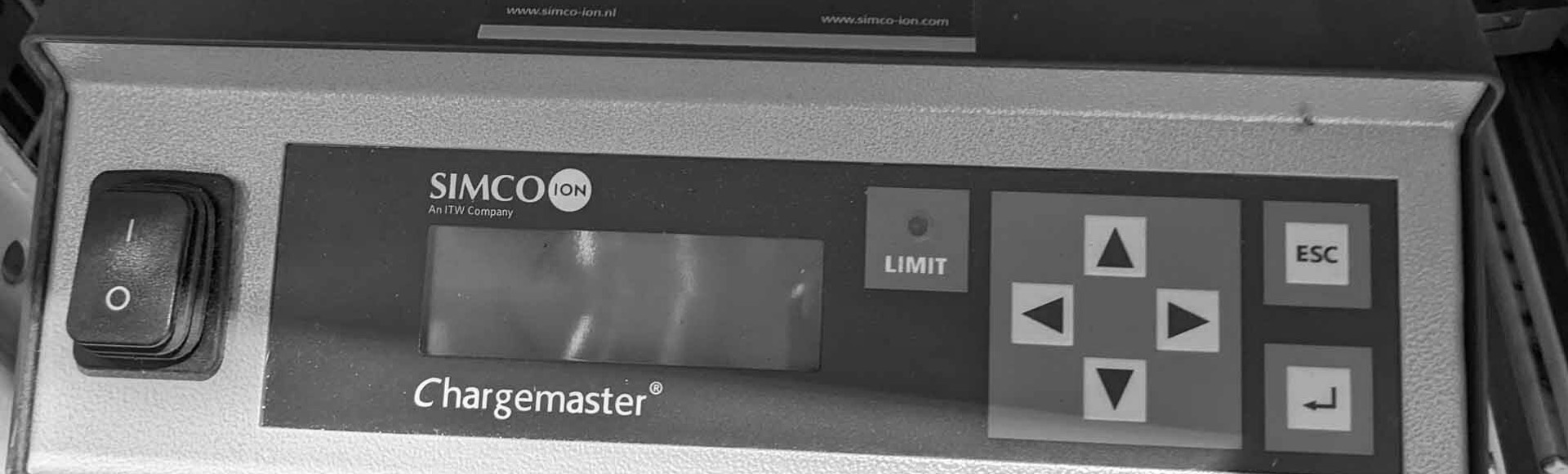
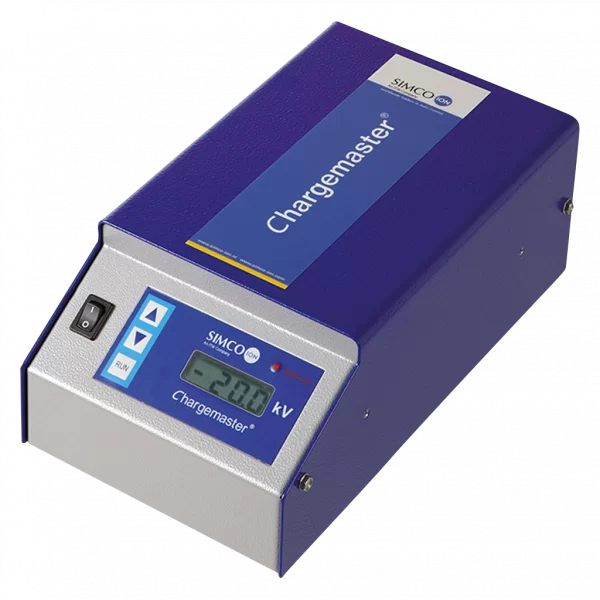
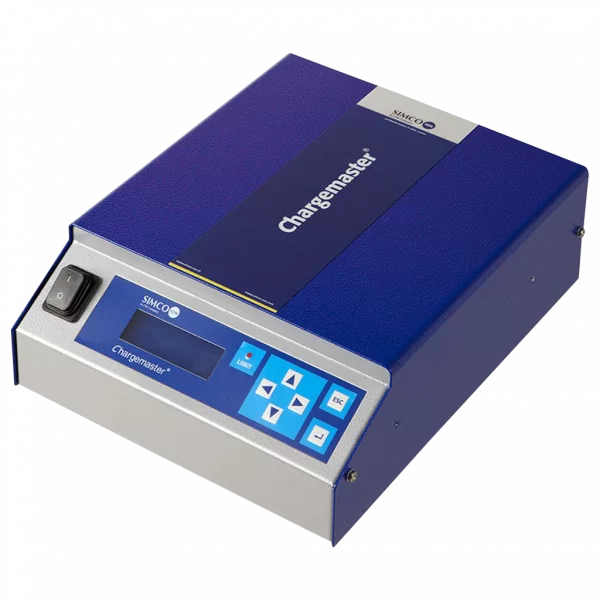
| CM Lite – Static Charging Generator | Packaging, food and pharmaceutical production, automotive manufacturing, film static cling and label positioning | Mid-sized electrostatic generator delivering 0–20 kV output with selectable positive or negative polarity. Compatible with 120 V or 230 V AC input power. Includes digital display, remote control compatibility, and integrated warnings for overload or spark events. |
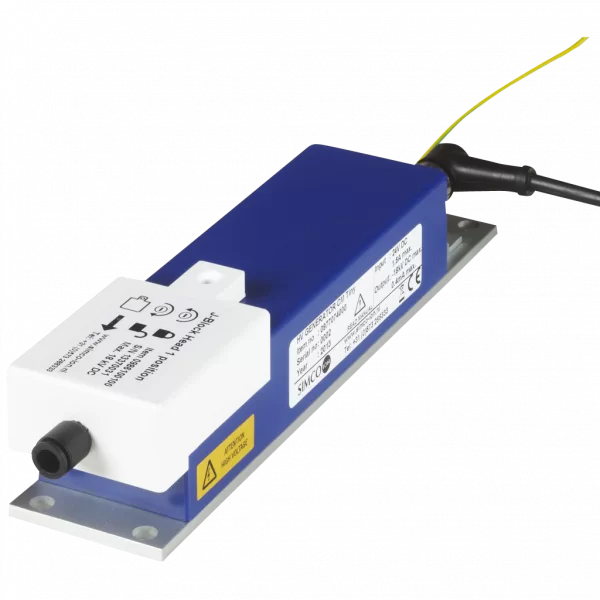
| CM Tiny / CM Tiny IQ – Static Charging Generator | Electronics manufacturing, medical device production, compact automation systems and robotic pick-and-place handling | Ultra-compact electrostatic generator weighing approximately 500 g and powered by 24 V DC. Designed for moving machine components and capable of withstanding high mechanical forces up to 6 G. The generator provides 0–20 kV negative output voltage only, which must be considered when polarity requirements are defined by the material properties. |
| CM5-30 / CM5-60 – Static Charging Generator | Automotive, aerospace, plastics processing, e-mobility manufacturing and high-speed production lines | Advanced electrostatic generator delivering 30 kV or 60 kV output with selectable polarity and universal 100–240 V AC input power. Incorporates Advanced Current Control for stable electrostatic charge generation and supports Profibus and CANopen communication. The CM5 is also backwards compatible with ECM30/60 and ECM DI30/60 generators and includes a quick setup menu allowing it to operate immediately as an ECM30/60 replacement during system upgrades. |
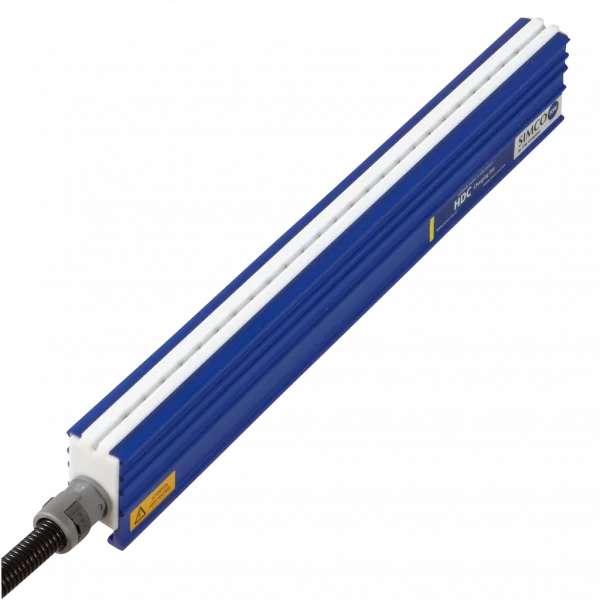
| HDC – Static Charging Bar | Plastics processing, packaging production, textile manufacturing and lamination applications | Charging bar designed for standard electrostatic charging processes. Includes resistor protection to reduce spark-over and protect machine control systems. Charging bars are available in customizable lengths from 87.5 mm up to 4,675 mm, with a cross-section of 30 mm width and 53 mm height. High-voltage cable exits can be configured straight or at 90° to support tight installation environments. |
| HDR – Static Charging Bar | High-speed converting lines, printing production, plastics processing and textile manufacturing | High-velocity charging bar with individual resistor protection on each emitter pin, minimizing spark-over risk and maintaining stable electrostatic bonding at high machine speeds. Like the HDC model, HDR bars are available in lengths from 87.5 mm to 4,675 mm and offer straight or right-angled high-voltage cable exits to accommodate different machine layouts. |
When the Specification Demands More Than a Datasheet
The framework covered in this guide addresses the variables that can be evaluated systematically: voltage-to-distance ratios, speed-dependent control requirements, mounting constraints, discharge protection, and control integration. What it can't fully account for is the interaction between all of these factors simultaneously - in a specific machine, running a specific substrate, in a specific electrical environment.
Material conductivity, static charge distribution across the web width, polarity requirements, and the grounding characteristics of the surrounding structure all influence how electrostatic forces actually behave in operation. These are variables that reveal themselves during commissioning, not during specification - unless someone with direct application experience is involved earlier in the process. In some cases, even the form of the substrate - its surface energy, thickness, or the presence of dissimilar materials in a laminate - can shift the behaviour of the electric field in ways that only become apparent once the system is running under real production conditions.
This is where a focused technical consultation pays for itself. Not a sales conversation, but a working session where the actual machine layout, line speed profile, and control architecture are on the table. The output is a specific configuration: generator voltage range, electrode type and positioning, grounding system design, polarity setup, and I/O connection approach - matched to the application rather than selected from a generic recommendation matrix.
If you are designing a new line or reworking an existing static bonding process, the Minex technical team works through exactly this kind of application analysis. The goal is a configuration that performs on day one and remains stable as production conditions evolve - not a system that requires repeated field adjustment to hold tolerance.
Bring your machine layout and operational parameters to the conversation. That's where the useful work happens.
Frequently Asked Questions
A static bonding system uses controlled electrostatic charging to temporarily adhere materials during manufacturing processes. By generating an electrostatic field between materials, it stabilizes films, sheets, or components without adhesives. This technique is commonly used in plastics processing, packaging production, lamination, and automated handling where materials must remain aligned during processing.
Electrostatic bonding works by applying high voltage from a static generator to a charging bar positioned near the material surface. The charging bar emits ions that create an electrostatic field, producing attraction between materials. The strength and stability of this bonding depend on several factors, including generator voltage, installation distance, machine speed, and the electrical characteristics of the materials being processed.
Industrial electrostatic generators typically operate in two main voltage ranges:
- 0–20 kV systems are suitable for short working distances of around 20 mm.
- 30–60 kV systems allow greater installation distance, often up to 75 mm, which is useful when machine layout prevents close mounting.
The correct voltage should be selected based on available installation space and the mechanical configuration of the production line.
High-speed production lines require charging systems designed to prevent uncontrolled discharge. Stability is achieved through two key technical solutions:
- Emitter pins equipped with individual resistors, which limit current during potential spark-over events.
- Generators capable of dynamic output adjustment, allowing the electrostatic charge level to adapt to changes in machine speed.
Together, these features ensure consistent bonding during acceleration, deceleration, and continuous high-speed operation.
Spark-over occurs when accumulated electrostatic charge discharges suddenly between the charging bar and nearby surfaces. This can happen when machine speeds are high, the working distance is incorrect, or protective components are missing. Without proper protection, spark-over may cause electromagnetic interference that can affect machine control systems. Charging bars with resistor protection and generators with current monitoring significantly reduce this risk.
Yes. Modern electrostatic bonding systems can integrate with production line control systems using standard industrial interfaces such as 24 V DC signals or 4–20 mA control inputs. More advanced generators may also support communication protocols like Profibus or CANopen, allowing centralized monitoring, remote configuration, and automatic adjustment of electrostatic output according to machine conditions.
In robotic or highly dynamic applications, compact electrostatic generators are often used. These units typically operate on 24 V DC power, weigh approximately 500 grams, and are designed to tolerate mechanical forces up to 6 G. By installing the generator directly on moving machine components, the need to route high-voltage cables through moving cable tracks is eliminated, improving reliability.
The charging bar should be selected based on production speed and application characteristics:
- HDC-type charging bars are suitable for standard electrostatic charging tasks on flat surfaces.
- HDR-type charging bars are designed for high-velocity web applications where production speed increases the risk of spark-over.
In both cases, resistor protection within the charging bar is important for ensuring safe operation and protecting machine controls.
Static bonding is widely used across manufacturing sectors where material positioning or lamination requires temporary adhesion. Typical applications include:
- plastics extrusion and film processing
- packaging and converting lines
- textile manufacturing
- printing and laminating systems
- electronics assembly
- automated handling and pick-and-place processes
These environments benefit from electrostatic bonding because it eliminates adhesives and enables stable material control at high production speeds.
Electrical interference can be minimized by combining several protective measures. Charging bars should incorporate current-limiting resistors, while generators should include automatic current reduction when material is not present in the charging zone. In addition, proper machine grounding and equipotential bonding help ensure that electrostatic discharge does not propagate into PLC systems or other sensitive control electronics.