.jpg)
Industrial Mobile Electric Vacuum Cleaners
References
How Engineers and Industrial Buyers Select the Right Industrial Mobile Electric Vacuum Cleaner
Industrial mobile electric vacuum cleaners are not simple cleaning devices. In production environments, shipyards, construction sites, or maintenance operations, they function as process support equipment. They protect workers from hazardous dust, support regulatory compliance, recover valuable materials, and prevent downtime caused by debris accumulation.
For engineers, procurement teams, and operations managers, selecting the right system requires a structured evaluation of the operational environment, material characteristics, airflow requirements, filtration safety, and waste-handling logistics.
In practice, the most effective equipment decisions are made when vacuum systems are treated as an integrated part of the production workflow rather than as standalone cleaning tools. The following guide reflects how experienced industrial consultants approach vacuum selection when advising manufacturing plants, heavy industry sites, and infrastructure projects.
Material Profile First: What Exactly Must the Vacuum Recover?
The starting point in any industrial vacuum selection process is material characterization. Different debris streams place completely different demands on extraction equipment.
Fine dust from grinding or sanding behaves very differently from heavy metallic chips or slurry produced during machining. Liquids, abrasive particles, powders, and mixed waste streams require different internal separation systems and filter configurations.
For example, metalworking operations often generate a mixture of metal chips, cutting oil, and coolant, while shipyard maintenance may involve wet abrasive residues after surface preparation. In construction environments, debris may include both dry cement dust and water used during cleaning operations.
In these cases, vacuum systems designed for combined wet and dry recovery provide the operational flexibility required for real industrial conditions.
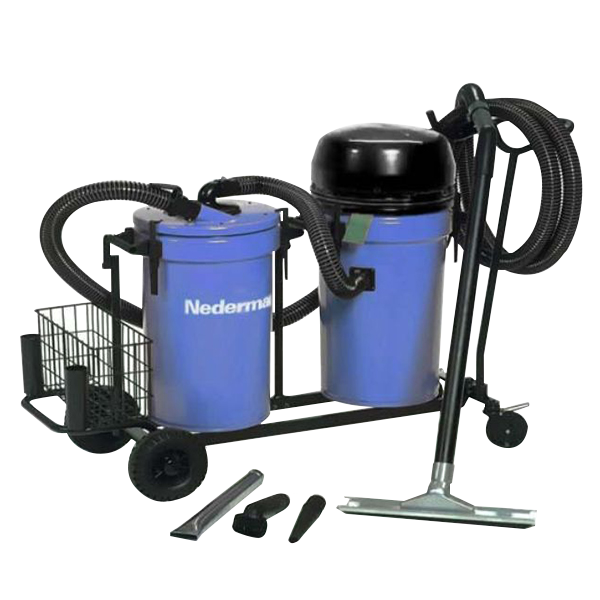
Machines such as the Nederman 306 E and the Delfin DM3 EL are designed to handle mixed material flows. They separate liquids from solids internally while protecting the filtration system from contamination. This allows operators to recover coolant fluids, abrasive slurry, and solid debris simultaneously without risking equipment damage.
From a technical procurement perspective, the decision logic is straightforward. If the application involves only dry dust, a dedicated dry extraction system may be sufficient. If liquids are present, even occasionally, wet or wet/dry capable systems become essential.
Failure to assess this early usually results in filter damage, loss of suction performance, and avoidable maintenance cost.
Filtration Architecture and Pre-Separation: Where Long-Term Reliability Is Won or Lost
Industrial vacuum performance is often reduced to motor power or airflow figures. In reality, experienced engineers know that filtration architecture is what determines long-term reliability.
Fine dust particles, abrasive materials, and hazardous substances can rapidly clog filters if the machine lacks effective pre-separation. Once filters become saturated, suction performance drops, maintenance frequency rises, and operator exposure risk increases.
This is where cyclonic pre-separation becomes important. These systems remove heavy particles before they reach the primary filter, which helps maintain airflow stability and reduces premature filter loading.
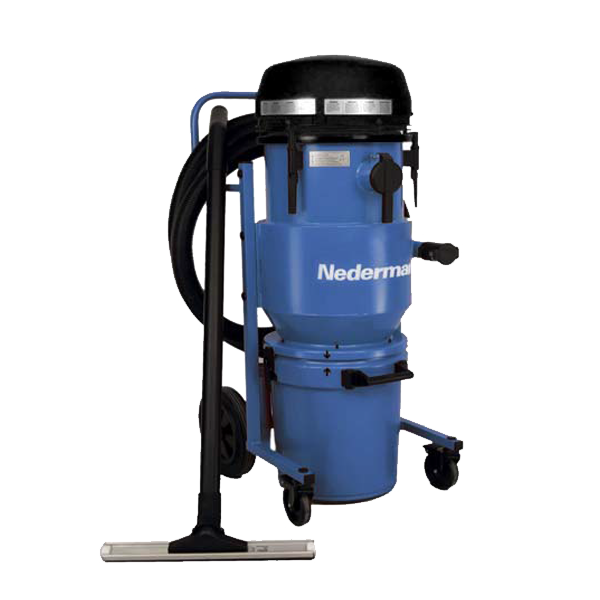
Cyclonic separation improves operational stability by preventing premature clogging, maintaining more constant suction, reducing service interruptions, and extending cartridge filter life in high-dust applications. In the Minex portfolio, this is especially relevant for units such as the Nederman 216 E and Nederman 426 E , which use cyclonic pre-separation to protect their filter systems when handling heavy dust loads.
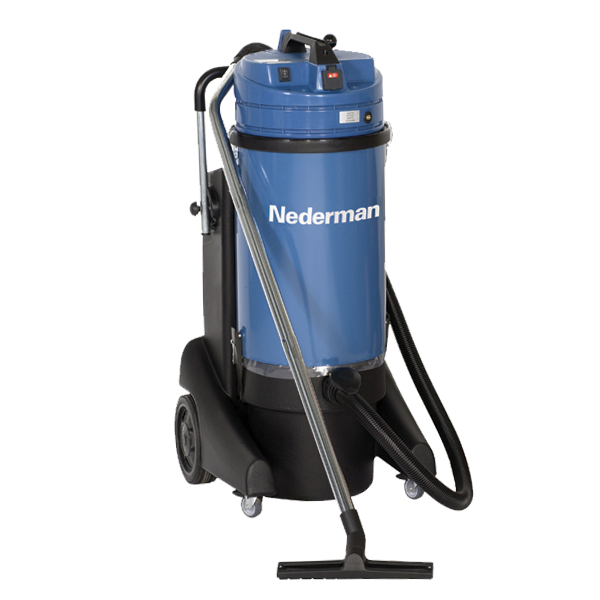
This benefit should, however, be distinguished from the long service life of the cleanable bag filters used on the Nederman 160 E and Nederman 300 E. Those two units are specifically noted for high-quality cleanable bag filters with a service life of approximately 4,000 to 6,000 operating hours under the right operating conditions. That is a separate design advantage and should not be confused with cyclonic pre-separation.
For applications involving hazardous dust or very fine particulate matter, additional filtration stages are required. Systems may include Class M or HEPA filtration, which capture very small particles and support compliance with occupational safety requirements.
For example, the Nederman 216 E integrates cyclonic pre-separation technology that removes heavier dust before it reaches the primary filter. This makes it particularly suitable for composite materials, powders, grit, and granular debris.
In sectors such as shipbuilding, energy generation, and chemical processing, filtration technology is not simply a performance feature. It is often a compliance-critical engineering requirement.
Airflow vs Vacuum Pressure: Matching Performance to the Physics of the Application
Industrial vacuum specifications commonly reference airflow and vacuum pressure. Understanding the difference is critical if the machine is expected to perform consistently in the field.
Airflow determines how quickly material is transported through the system. Higher airflow supports the collection of large volumes of lighter material such as sanding dust, grinding fines, or fumes over broad working areas.
Vacuum pressure determines how heavy or dense the material can be lifted. Dense debris such as sand, metallic particles, heavy grit, or liquids requires stronger suction force.
Most industrial applications require a balance between the two. Surface preparation processes using grinders or shot blasters generate continuous high dust volumes and therefore demand strong airflow. Heavy debris recovery from shipyards, utilities, and construction environments places greater importance on vacuum pressure.
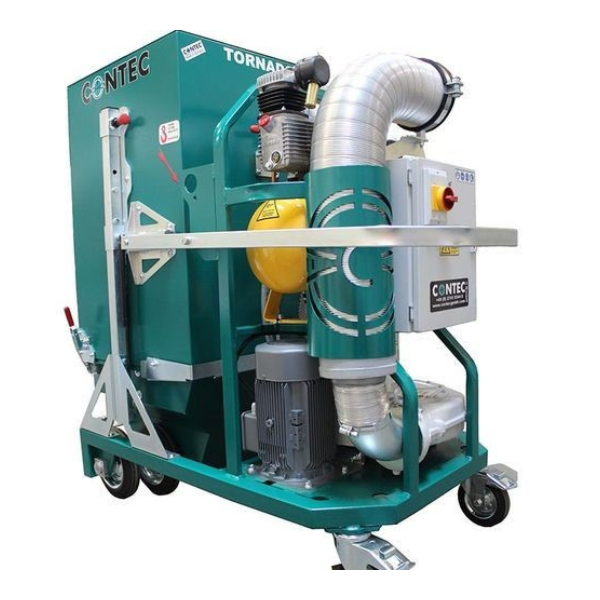
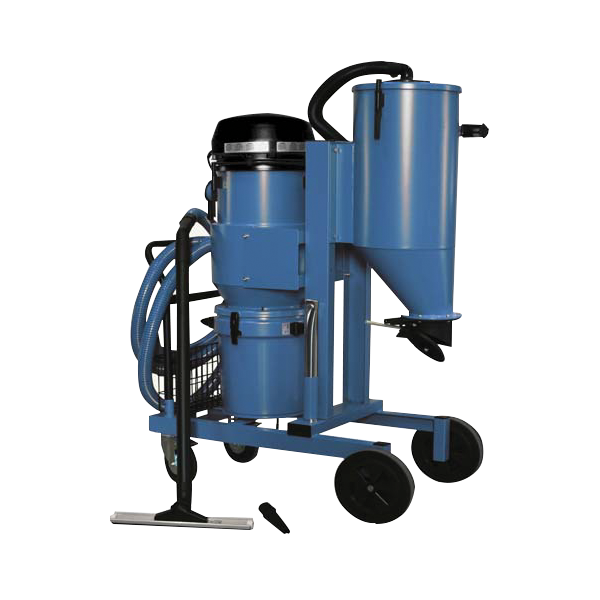
Some industrial systems are designed to prioritize very high airflow for large-scale dust recovery. The Contec Tornado B , for example, delivers airflow up to 27 m3/min, making it suitable for heavy material removal and integration with high-capacity surface preparation equipment.
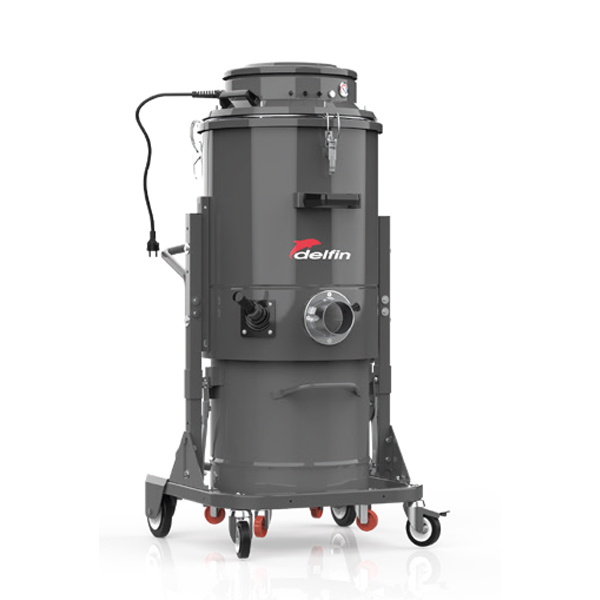
Similarly, the Delfin DM3 EL uses three independent bypass motors to deliver 540 m3/h airflow, supporting stable suction during continuous industrial extraction.
From a consultancy standpoint, airflow and pressure should always be interpreted against the actual production process generating the waste, not in isolation from the application.
Mobility and Ergonomic Design in Real Industrial Conditions
Industrial vacuum systems rarely operate in ideal environments. Narrow corridors, stairs, uneven ground, and confined maintenance spaces are normal in factories, construction sites, energy facilities, and shipyards.
That is why mobility and ergonomics have direct operational consequences.
Some systems prioritize lightweight portability so maintenance personnel can move the unit between workstations or floors. Others prioritize heavy-duty transportability, using stronger frames and large industrial wheels for demanding environments.
The Nederman 300 E is a strong example of mobility designed around real site conditions. It is engineered with a balanced chassis that allows easier transport on stairs and through narrow access points, while its compact 60 cm width supports movement through standard industrial doorways.
By contrast, systems intended for heavier waste recovery, such as the Nederman 426 E , incorporate forklift slots and robust swiveling locking wheels so larger waste loads can be moved more safely.
Certain machines also support contractor logistics. The Contec Tornado B, for instance, can lower its frame to 130 cm, allowing transport in standard service vans.
In applications where the vacuum must be relocated frequently, mobility is not a secondary comfort feature. It directly affects productivity, operator fatigue, and total usability.
Waste Handling Efficiency and Container Design
Waste handling is often underestimated during equipment selection, yet it has a direct effect on uptime and operator safety.
Small bins may appear convenient, but in high-volume environments they require frequent emptying, interrupt workflow, and increase operator exposure during disposal. Larger containers reduce emptying frequency but may need more robust handling features.
Industrial vacuum systems address this through different container and discharge designs.
Some units include tippable containers that allow quick discharge without manual lifting. Others use roll-out tanks for simpler removal of collected material. In environments where hazardous dust exposure is a concern, sealed bagging systems such as Longopac are often preferred because they reduce direct operator contact with waste.
High-capacity machines such as the Nederman 426 E combine a 58-litre cyclonic silo with a 47-litre dust container, allowing longer operating intervals before disposal is required.
For continuous production environments, the correct waste-handling design can reduce downtime materially while improving dust-control discipline.
Tool-Integrated Extraction: Capturing Dust at Source
Many industrial mobile electric vacuum cleaners are designed to work directly with power tools used in manufacturing, construction, and maintenance.
This matters because source extraction is more effective than cleaning dust after it has dispersed into the working environment.
Certain units incorporate automatic start/stop synchronization, allowing the vacuum to start when the connected tool starts and continue briefly after the tool stops to clear the hose. This improves dust capture, lowers energy consumption, and reduces unnecessary noise during idle periods.
The Nederman 160 E includes automatic start/stop functionality for electrical tools, making it well suited to small grinders, sanders, and welding extraction tasks.
The Nederman 300 E extends this concept further by supporting both electrical and pneumatic tool integration, which is particularly useful in industrial maintenance environments where tool types may vary by workstation or job type.
From an operational standpoint, tool-synchronized extraction improves housekeeping, reduces airborne dust exposure, and lowers the need for secondary cleanup.
Industrial Mobile Electric Vacuum Cleaners Available Through Minex Group
Minex Group distributes a portfolio of industrial mobile electric vacuum cleaners designed to support a wide range of industrial applications, from lightweight maintenance extraction to heavy-duty debris recovery.
The table below summarizes the available models and highlights their typical applications and technical advantages.
| Product Model | Typical Applications | Key Technical Benefits |
| Nederman 160 E | Floor cleaning, small grinders and sanders, welding extraction | Lightweight unit (19 kg), automatic start/stop for electric tools, cleanable bag filters with 4,000-6,000 hour service life |
| Nederman 216 E | Composite materials, powders, grit and granules in construction and chemical industries | Cyclonic pre-separation technology, airflow up to 460 m3/h, optional HEPA filtration |
| Nederman 300 E | Maintenance operations, stairs and confined industrial spaces, tool extraction | Balanced design for stair mobility, compact 60 cm width, automatic start/stop for pneumatic and electric tools, cleanable bag filters with 4,000-6,000 hour service life |
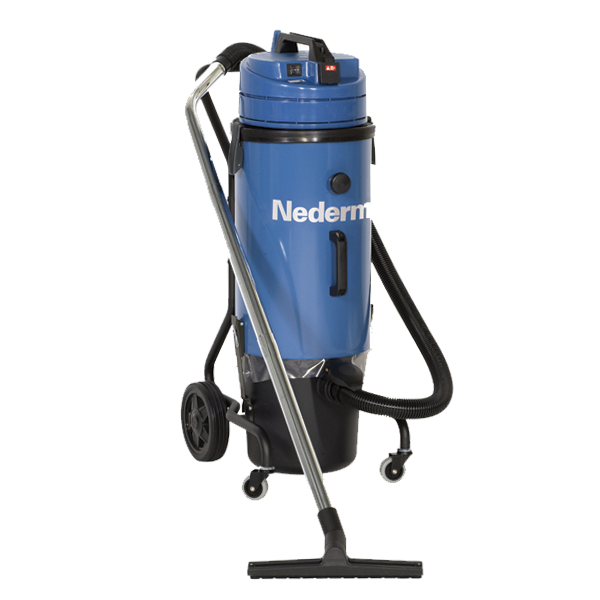
| Nederman 306 E | Wet and dry industrial extraction, construction spills, metalworking processes | Dual container system (40 L + 47 L), ball float protection for liquid recovery, tippable container |
| Nederman 426 E | Heavy-duty industrial waste recovery and large debris collection | 58 L cyclonic silo with 47 L dust container, forklift slots, swivel locking wheels |
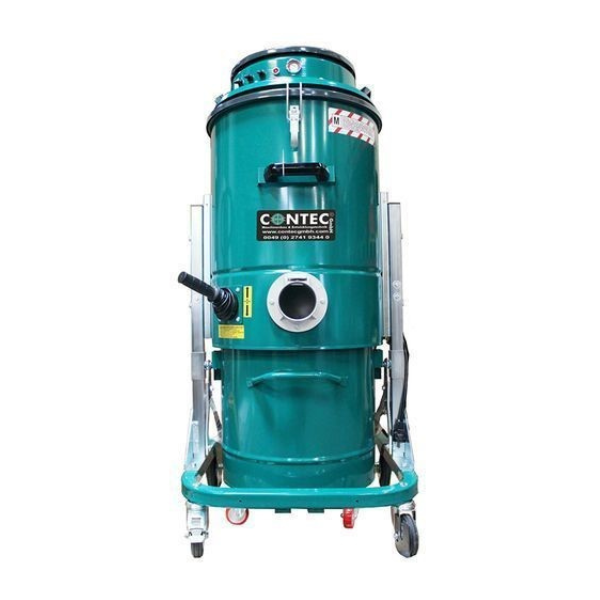
| Contec CDM 3000 | Surface preparation equipment such as grinders, multi-prep machines and shot blasters | Robust metal construction, three 1.15 kW motors, airflow 540 m3/h, Class M / HEPA filtration |
| Contec Tornado B | Heavy debris removal, large surface preparation operations | Very high airflow (27 m3/min), automatic air-pressure filter cleaning system, Longopac bagging system |
| Delfin DM3 EL | Mixed material extraction in manufacturing and machining environments | Three independent bypass motors (3.45 kW), airflow 540 m3/h, antistatic Class M filter, 60 L roll-out steel tank |
When Application Complexity Increases, Specialist Input Matters
In heavy industry, cleaning requirements are rarely standard. Each operation produces different types of dust, debris, liquids, and waste that require specialized recovery solutions. Whether you are integrating systems directly into production lines, managing hazardous materials, or navigating tight regulatory frameworks, your environment is unique.
That is why the best equipment choices aren't made by scrolling through a catalog—they are the result of targeted, application-specific technical evaluations.
At Minex Group, our industrial vacuum recovery specialists work alongside engineers, procurement teams, and operations managers to look beyond the spec sheet. We help you deconstruct your technical requirements to pinpoint the exact solution for your workflow.
Whether you are tackling complex dust extraction, heavy-duty debris recovery, or integrated tool cleaning, a conversation with a Minex expert ensures your equipment doesn't just work—it delivers long-term reliability and peak operational performance.
Frequently Asked Questions
Airflow and vacuum pressure describe two different performance characteristics of an industrial vacuum system, and both matter when selecting equipment.
Airflow, measured in Cubic Feet per Minute (CFM) or cubic metres per hour (m3/h), represents the volume of air moving through the system. High airflow is essential for capturing and transporting light materials such as fine dust, sanding particles, or welding fumes across larger working zones.
Vacuum pressure, often referred to as water lift, describes the suction force of the machine. It is usually expressed in inches of water (H2O) or kilopascals (kPa). Higher vacuum pressure is needed to lift heavier or denser materials such as sand, metal chips, grit, or liquids.
In simple engineering terms, airflow governs transport speed and dust capture volume, while vacuum pressure governs pulling force.
Filtration class should be selected according to the Occupational Exposure Limit of the dust being generated.
L-Class filtration is used for lower-risk dusts and typically provides about 99 percent efficiency.
M-Class filtration is designed for medium-risk industrial dusts such as silica, wood dust, concrete dust, and composite particles. It generally requires 99.9 percent filtration efficiency and airflow monitoring to alert operators if performance falls below safe operating levels.
H-Class filtration is used for highly hazardous dusts such as asbestos, lead, carcinogenic particles, or pathogenic contaminants. In practice, H-Class or HEPA systems generally capture between about 99.95 percent and 99.995 percent of very fine particles depending on the specific filter class and system design.
For many industrial environments involving silica, concrete, or fine mineral dust, M-Class is the practical minimum.
No. A HEPA filter alone does not mean the full vacuum system is certified for hazardous dust.
A HEPA filter may capture a very high percentage of fine particles, but hazardous-dust certification applies to the complete machine. That includes the housing, seals, filter chamber, waste collection system, and bag-change design.
This distinction matters because hazardous particles can escape during operation or maintenance if the rest of the system is not properly sealed, even when the filter itself is highly efficient.
Cyclonic pre-separators are recommended when the application involves large dust volumes or heavy debris.
They use centrifugal force to remove a large proportion of material before it reaches the main filter. In many industrial applications, that can mean separating up to 95 percent of incoming material before primary filtration.
The result is reduced clogging, more stable suction, lower maintenance frequency, and longer cartridge filter life. This is especially valuable in sectors such as construction, shipbuilding, and surface preparation where dust loading is high and continuous.
No. Dry-only units should not be used for liquids.
Standard dry vacuums do not include liquid shut-off devices such as float valves. If liquids are drawn into the system, filters may become saturated, moisture may reach the motor, and the machine may be exposed to electrical or corrosion-related damage.
If the environment includes even occasional spills, slurry, coolant, or other liquids, a proper wet/dry unit with internal separation should be specified.
Automatic Start/Stop allows the vacuum to activate when a connected tool begins running and continue briefly after the tool stops so residual dust is cleared from the hose.
This improves source capture, reduces unnecessary runtime, lowers energy use, and cuts idle noise. For teams using grinders, sanders, and similar tools, it also creates a cleaner and more disciplined operating routine.
Static buildup is a real engineering issue when dry powders or fine dust travel at speed through hoses and containers. It can create shocks for operators and, in some environments, contribute to ignition risk.
For these applications, antistatic or ESD-configured systems should be specified. These typically use conductive hoses, grounded connectors, conductive inlets, and metal canisters or grounding paths to safely dissipate charge.
This becomes especially important when extracting fine powders, chemical dusts, or potentially combustible materials.
Longopac is a continuous bagging system used to dispose of waste without exposing the operator to the collected dust.
Instead of opening a canister and emptying it manually, the operator seals and cuts a section of the continuous bag, leaving the waste enclosed. This reduces exposure, avoids dust clouds during disposal, and improves containment of hazardous particulate matter.
That is why Longopac is widely used where silica dust or other sensitive dust fractions must be handled more safely.
Maintenance intervals depend on the application, dust loading, and filtration design.
As a general rule, primary filters should be cleaned routinely using manual or automatic cleaning systems. HEPA filters should be inspected at scheduled intervals, often quarterly, and replaced based on condition and operating hours.
For the Minex portfolio specifically, the 4,000-6,000 hour service life refers to the cleanable bag filters used on the Nederman 160 E and Nederman 300 E. That figure should not be generalised to all systems with cyclonic pre-separation. In systems such as the Nederman 216 E and 426 E, pre-separation helps protect the primary filter and extend its service life, but the filtration architecture is different.
An ATEX-certified vacuum is required when the operating environment contains combustible dusts or flammable vapours that could create an explosion risk.
Examples include aluminium dust, flour, sugar dust, certain chemical powders, and some wood dust environments. In those settings, the vacuum itself must not become an ignition source.
ATEX-certified units address this through brushless or protected motor designs, non-sparking materials, full grounding, and control of static discharge.
Where combustible dust is present, this is not a preference issue. It is a safety and compliance requirement.