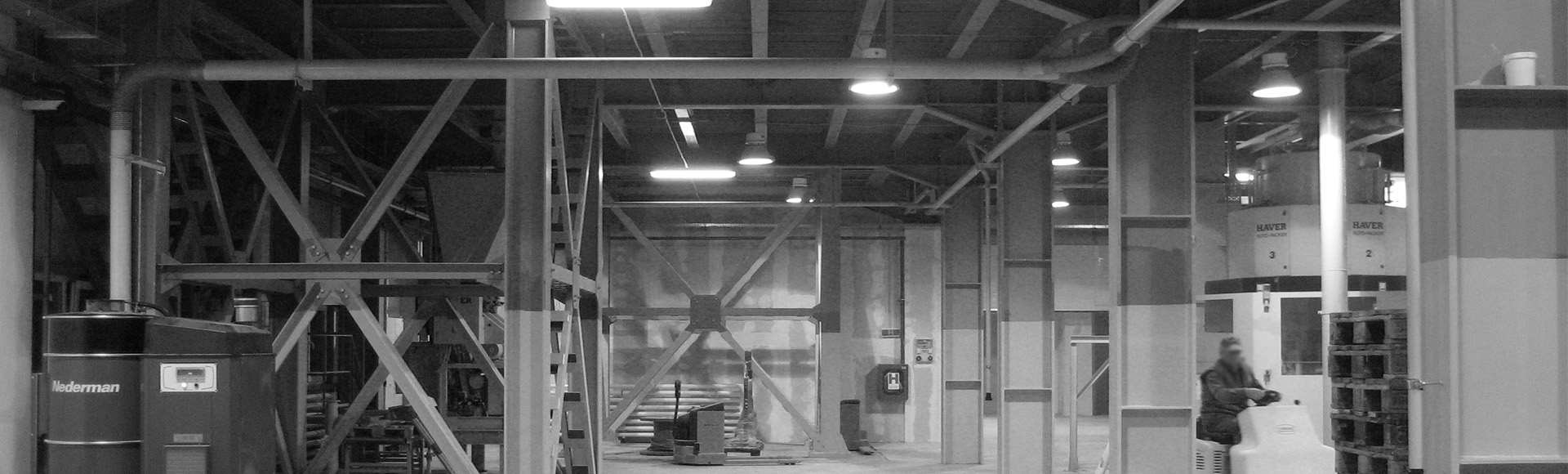
Industrial Vacuum Cleaners for Centralized Systems
References
How to Select Industrial Vacuum Cleaners for Centralized Systems
Centralized industrial vacuum systems are now standard infrastructure across shipbuilding, heavy manufacturing, infrastructure construction, automotive production, energy utilities, and advanced fabrication. Their function spans dust and debris extraction, material recovery, air quality control, and production line hygiene - often simultaneously across multiple work stations fed by a single engineered network.
In facilities where continuous or high-volume generation of dust, metal shavings, chips, oils, or hazardous particulate is a operational reality, portable and standalone vacuum units are structurally inadequate. They cannot maintain consistent extraction across distributed collection points, cannot handle the duty cycles demanded by continuous production, and introduce logistical overhead that centralized systems eliminate by design.
Specifying the correct centralized vacuum system requires more than a capacity comparison. The relevant parameters - material type and particle characteristics, pipeline layout and pressure loss, simultaneous operator demand, filtration requirements, and duty cycle - are interdependent. A system optimized against one variable while underspecified against another will not perform to expectation under production conditions.
This guide provides engineers, procurement specialists, and operational managers with a structured technical framework for evaluating those parameters. The objective is a specification that integrates with the facility's process environment and sustains reliable performance across its operational life.
Why Centralized Industrial Vacuum Systems Require Engineering-Driven Evaluation
Unlike portable industrial vacuum cleaners, centralized vacuum systems function as permanent infrastructure integrated into the facility’s production processes.
In a centralized architecture, a powerful vacuum pump or vacuum unit generates suction that is distributed through a fixed pipeline network to multiple cleaning or extraction points throughout the plant. Operators connect hoses, tools, or accessories to these points to remove dust, debris, liquids, metal chips, or other materials generated during industrial processes.
Because these vacuum systems operate across large facilities and serve multiple operators simultaneously, performance depends on several interacting factors:
- pipe network length and geometry
- the type and density of transported materials
- filtration and filter cleaning technology
- number of simultaneous operators
- automation and energy control systems
- maintenance strategy and operational duty cycles
If these variables are not evaluated correctly during the engineering phase, the consequences often include:
- suction loss across long distances
- reduced vacuum performance at extraction points
- excessive filter wear
- increased maintenance requirements
- unnecessary energy consumption
- reduced operational efficiency
For these reasons, centralized industrial vacuum systems should always be specified using a process engineering approach, rather than simply selecting a vacuum cleaner from a product catalogue.
Vacuum Level and Airflow: The Core Performance Parameters Engineers Must Balance
The most critical technical relationship in any industrial vacuum system is the balance between vacuum level and airflow capacity.
These two parameters determine whether the system can transport materials safely and efficiently across the pipeline network while maintaining sufficient suction for operators working simultaneously.
Vacuum level - typically measured in kilopascals (kPa) - represents the lifting and transport power of the system. High vacuum levels are essential when materials must be transported over long distances or when the system must handle dense or abrasive debris.
This scenario frequently occurs in industries such as:
- shipbuilding and offshore maintenance
- infrastructure rehabilitation and blasting operations
- cement or heavy construction environments
- large-scale manufacturing plants
In these environments, systems capable of generating vacuum levels approaching or exceeding 48 kPa are often required to move abrasive blasting media, heavy debris, or dense materials through extended pipeline networks.
Airflow capacity - typically measured in cubic meters per hour (m³/h) - becomes the dominant parameter in applications involving airborne contaminants such as dust, welding fumes, grinding particles, or hazardous dust.
Processes such as grinding, sanding, cutting, or welding require continuous airflow to capture contaminants at the source and maintain safe air quality inside the facility.
The engineering challenge lies in designing a vacuum system capable of balancing these two performance requirements. Systems optimized purely for airflow may struggle to transport heavy materials such as metal shavings, chips, cement dust, or abrasive debris, while high-vacuum systems may not provide sufficient airflow for effective fume extraction.
To determine the correct balance, engineers must evaluate:
- total pipeline length and routing
- number of bends and pressure losses
- material density and particle size
- transport distance and vertical elevation
- maximum number of simultaneous operators
Only after these variables are quantified can the correct industrial vacuum cleaner or centralized vacuum unit be selected.
Material Characteristics and Their Impact on Filtration and Separation Design
Industrial vacuum systems must handle a wide range of materials, each imposing different mechanical and filtration requirements on the system.
In heavy industries, abrasive materials such as blasting grit, sand, and metallic debris represent some of the most demanding applications. Without adequate protection, these materials can quickly damage filters, pipelines, and vacuum components.
To protect the system, many centralized installations incorporate cyclone pre-separation technology. Cyclone separators remove heavy particles before the airflow reaches the main filtration stage. In particularly demanding environments such as shipyards or infrastructure maintenance projects, these separators may use wear-resistant materials like manganese steel.
At the opposite end of the spectrum are applications involving fine dust, welding fumes, or hazardous dust particles. These materials require high-efficiency filtration capable of capturing microscopic particles while maintaining airflow stability.
Modern industrial filtration systems therefore often combine several filtration stages, including:
- high-efficiency cartridge or bag filters
- advanced filter materials such as ePTFE membranes
- secondary filtration stages such as H14 HEPA filters
These systems ensure that contaminated air is safely cleaned before being released or recirculated, protecting workers and supporting regulatory compliance.
Selecting the wrong filtration architecture can significantly increase maintenance frequency, reduce system performance, and compromise plant safety.
Automation, Energy Efficiency and the Role of VFD and PLC Control
Energy consumption represents one of the largest lifecycle costs of centralized industrial vacuum systems. In facilities with continuous production lines, vacuum pumps may operate for extended periods if the system is not properly controlled.
Modern systems address this challenge through the integration of Variable Frequency Drives (VFD) and Programmable Logic Controllers (PLC).
A VFD enables the motor driving the vacuum pump to adjust its speed based on real-time demand. When fewer operators are using the system, the motor slows down, reducing energy consumption and mechanical wear.
PLC-based control systems provide advanced automation capabilities by monitoring variables such as:
- pressure differentials
- filter loading conditions
- extraction demand from operators
- operational modes and alarms
These systems can switch automatically between different operating modes, such as maximum vacuum mode for heavy debris transport or constant airflow mode for fume extraction.
In many industrial installations, this demand-based control strategy can reduce energy consumption by up to 50 percent, while improving reliability and extending equipment lifespan.
Designing Central Vacuum Systems for Multiple Operators
Centralized vacuum systems are often required to serve multiple workstations simultaneously across large facilities.
Operators working on grinding, welding, blasting, machining, or cleaning tasks may all require access to vacuum extraction at the same time.
If the system is not engineered correctly, suction power may decrease when multiple extraction points are activated simultaneously. Operators located further from the central vacuum unit may experience reduced performance.
For this reason, engineers must determine the maximum number of simultaneous operators expected during peak production.
Typical centralized installations fall into several categories:
- compact systems supporting 1–5 operators
- mid-range systems supporting up to 6 workstations
- large industrial systems supporting 2–10 simultaneous users
Correct system sizing ensures that the vacuum system delivers consistent performance, reliability, and productivity throughout the facility.
Filtration Technologies for Continuous Industrial Operation
Industrial plants operating around the clock require vacuum systems capable of maintaining performance under continuous load.
One of the most effective technologies used in modern industrial vacuum cleaners is automatic reverse air pulse filter cleaning. This technology periodically sends bursts of compressed air through the filter to remove accumulated dust and debris.
Combined with advanced filtration media such as ePTFE membranes, this system maintains airflow stability while preventing deep particle penetration into the filter.
When properly designed and maintained, such systems can achieve filter lifetimes of up to 6,000 operating hours, significantly reducing downtime and maintenance costs.
These technologies are particularly important in industries where hazardous dust, combustible dust, or explosive dust may be present.
Installation Considerations: Layout, Noise and Facility Integration
Engineering a centralized vacuum system requires careful consideration of the installation environment.
The layout of the pipeline network must minimize unnecessary pressure losses by keeping pipe runs as straight and short as possible. Excessive bends, leaks, or poorly designed connections can reduce system performance.
Facilities must also evaluate available space for installing the central vacuum unit. In many cases, these units are placed in a technical room or dedicated service area to reduce operator exposure to noise and vibration.
Modern centralized vacuum units frequently incorporate acoustic enclosures and silencers to maintain operating noise levels between 62 and 74 dB, which is generally acceptable within enclosed industrial facilities.
Compact designs that fit on a standard pallet footprint also allow greater flexibility when integrating vacuum systems into existing production plants, warehouses, or manufacturing environments.
Industrial Vacuum Cleaners for Centralized Systems Distributed by Minex
Minex Group distributes a complete line of industrial vacuum systems designed to meet the needs of various industries and operational environments.
These systems are engineered by leading manufacturers and selected by Minex to support applications ranging from heavy industrial debris recovery to precision dust extraction.
| Product | Best Use Cases | Key Benefits and Technical Features |
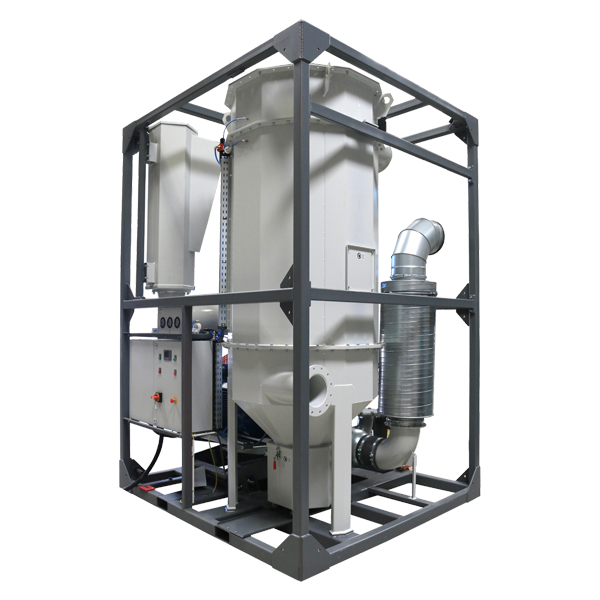
| PV MNX Units | Shipbuilding, offshore maintenance, infrastructure blasting recovery | Designed for heavy debris and abrasive materials recovery. Equipped with cyclone pre-separators and manganese steel protection. Airflow up to 4,520 m³/h and maximum vacuum up to 48 kPa. Automatic filter cleaning and Siemens PLC controls ensure reliable performance in demanding environments. |
| Nederman E-PAK 500 | Welding shops, automotive repair, general manufacturing | Supports up to six simultaneous extraction points. Automatic vacuum valves activate only when tools operate, improving efficiency and reducing energy consumption. Ideal for dust, grinding particles and welding fumes. |
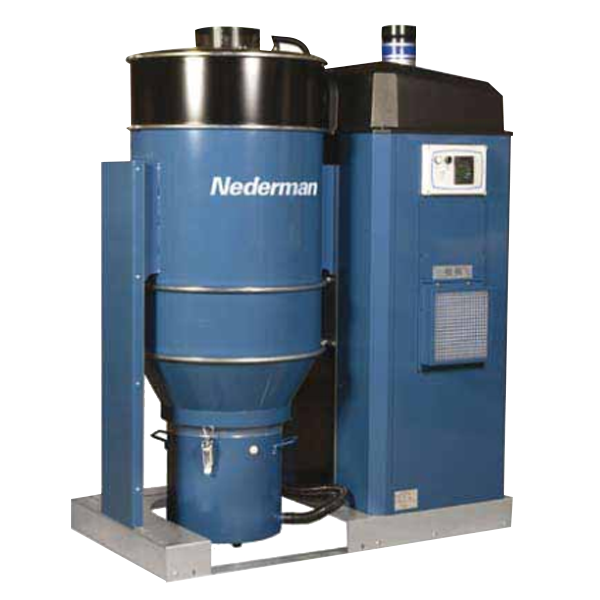
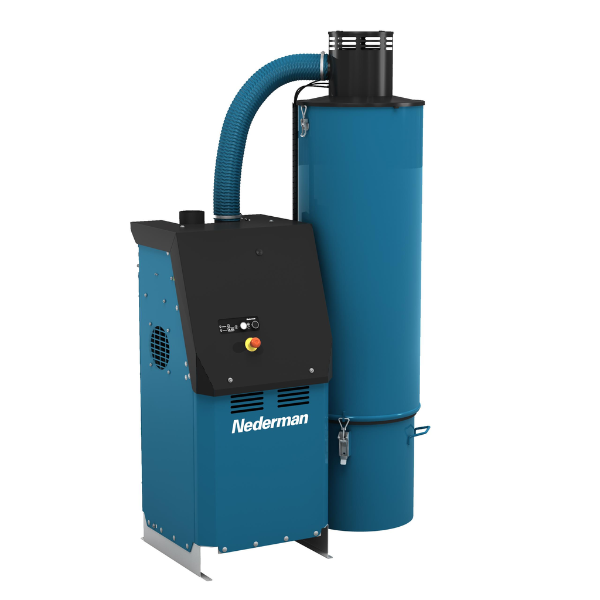
| Nederman FlexPAK | Heavy manufacturing and industrial plants | Supports 2–10 users depending on configuration. FlexPAK 800 handles heavy materials such as metal chips and gravel. FlexPAK 1000 supports continuous airflow for welding fume extraction. VFD-controlled motors and PLC automation ensure optimal performance. |
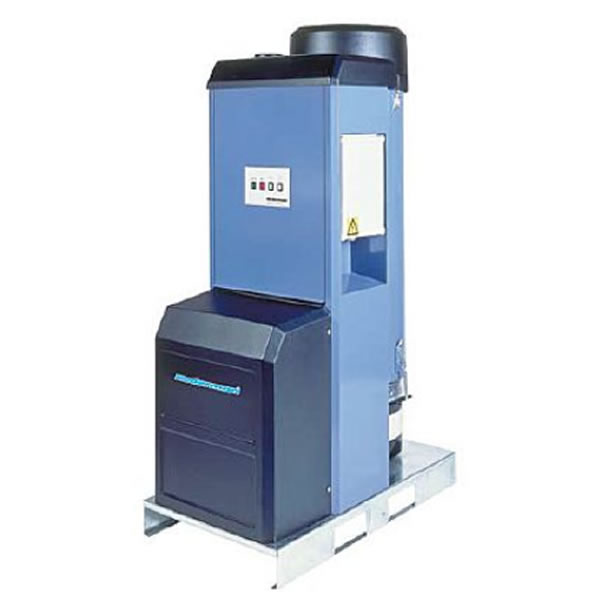
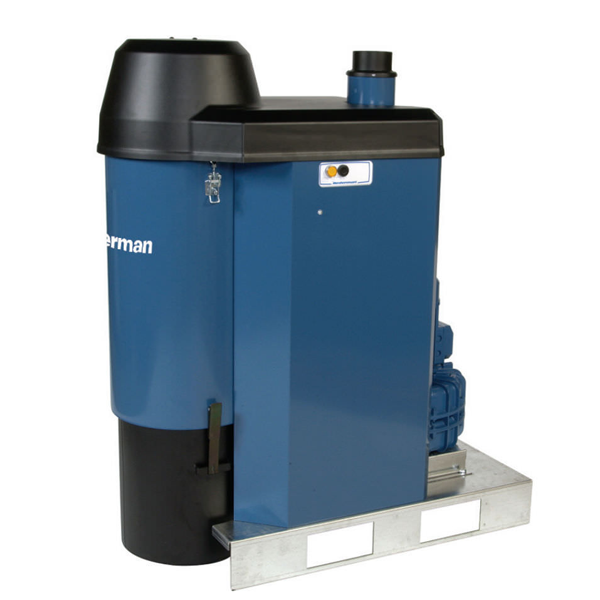
| Nederman PAK-M | Manufacturing environments with limited installation space | Compact pallet-size design. Designed to serve 1–5 extraction points simultaneously. Energy-efficient VFD control. Equipped with ePTFE filters and automatic filter cleaning. Optional H14 filtration for strict air quality requirements. |
| Nederman L-PAK (150 / 250) | Welding workshops, automotive paint shops, construction sites, bakeries and industrial laundries | Environmentally friendly design with high recyclability. Automatic start/stop operation. High-efficiency filtration reduces operating costs while maintaining reliable performance. |
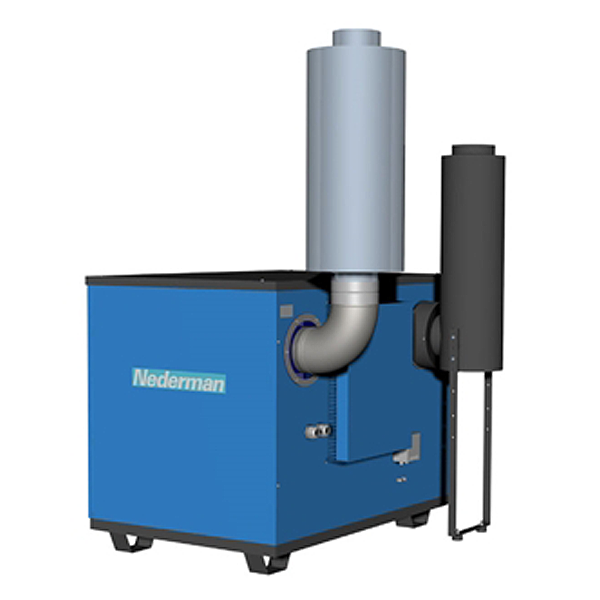
| Nederman RBU | Large industrial plants with long pipeline networks | Roots-type compressor delivering vacuum levels up to 45 kPa. Designed for heavy debris transport over long distances. Includes oil-bath gear systems, safety valves and backflush valves. |
Engineering Support for Centralized Vacuum System Design
Selecting the right industrial vacuum cleaner for centralized systems requires careful evaluation of materials, airflow requirements, filtration technologies, and facility layout.
In demanding industrial environments - particularly shipyards, heavy manufacturing plants, and infrastructure projects - centralized vacuum installations often require custom engineering and technical consultancy.
If your facility is planning a new centralized vacuum installation or upgrading an existing system, the Minex technical team can support you with:
- system sizing and airflow calculations
- filtration and dust management strategy
- pipeline design optimization
- selection of the most suitable vacuum solution
Speak with a Minex technical expert to identify the right centralized industrial vacuum system for your facility.
Frequently Asked Questions
A centralized industrial vacuum system uses one or more central vacuum units connected through a fixed pipe network to multiple suction points across a facility.
This approach replaces multiple portable industrial vacuums and allows operators to connect hoses or tools anywhere in the plant.
Centralized systems are preferred when:
- several operators require vacuum simultaneously
- standardized cleaning and dust control are necessary
- facilities must manage hazardous dust or combustible dust
- maintenance and energy efficiency must be optimized
They provide greater reliability, improved air quality control, and lower long-term maintenance requirements compared with multiple portable units.
Sizing a centralized vacuum system requires evaluating airflow, vacuum level, material characteristics, pipeline length, and the number of operators.
Engineers must ensure the system provides sufficient suction at every extraction point without oversizing the vacuum pump.
Correct sizing prevents suction loss, excessive energy consumption, and operational inefficiencies.
Industrial vacuum systems typically combine several filtration stages.
Cyclone pre-separators remove heavy debris before it reaches the filter. Cartridge or bag filters capture fine dust particles, while HEPA filtration may be required when handling hazardous or explosive dust.
This filtration architecture protects workers, improves air quality, and ensures regulatory compliance.
Centralized vacuum systems help control airborne contaminants, combustible dust, and hazardous particles generated during industrial processes.
By capturing dust and debris directly at the source, they reduce contamination risks and support compliance with occupational exposure limits.
Regular inspection, filter maintenance, and airflow verification are essential to ensure safe operation.
Modern vacuum systems integrate VFD drives and PLC automation to adjust pump speed based on demand.
This demand-based operation improves energy efficiency, reduces mechanical wear, and allows integration with plant automation systems and Industry 4.0 monitoring platforms.
System design must consider pipeline routing, installation space, noise control, and integration with production lines.
Shorter, straighter pipelines improve vacuum efficiency and reduce pressure losses. Installing the central vacuum unit in a technical room can also help reduce operator exposure to noise.
With proper design and regular maintenance, centralized industrial vacuum systems can operate reliably for 15–20 years or more.
Preventive maintenance typically includes:
- filter cleaning or replacement
- pipeline inspections for leaks or blockages
- verification of airflow indicators and safety devices
Facilities that follow structured maintenance programs benefit from improved reliability, consistent performance, and predictable operating costs.