Ventilation Accessories
References
How to Select the Right Spray Booth Filter for Your Operation: A Technical Selection Guide
A spray booth filter is one of the lowest-cost consumables in an industrial coating operation. It is also one of the most consequential. The wrong filter choice doesn't announce itself with a dramatic failure — it bleeds performance slowly. Coating defects creep up because paint particles and fine paint overspray recirculate into the paint booth. Energy consumption rises as pressure drop climbs and exhaust fans work harder to compensate. Maintenance crews swap booth filters more frequently than the spraying operation demands, eating into productive hours. And in the worst case, mixing incompatible chemical coatings — particularly flammable or combustible liquids — on a single filter creates conditions for self-combustion that no filtration strategy can reverse.
For engineers, procurement managers, and operational leaders across spray booths in shipyards, metalworking facilities, automotive plants, aerospace manufacturing, and surface treatment operations, filter selection is an engineering decision. It requires matching six specific operational variables against the design and material composition of available filter products. This guide walks through each variable in practical terms, then maps them directly to the Andreae filter range available through the Minex Group portfolio so you can protect your entire production process with confidence.
Filtration Efficiency: When the Decimal Points Define Your Finish Quality
Filtration efficiency is expressed as a percentage of captured paint overspray relative to what enters the filter. The numbers cluster between 93% and 99.7% depending on the coating type, which can make the differences appear trivial on paper. In practice, they are not.
Consider an automotive finishing line where a class-A surface is the baseline expectation. At 98.2% efficiency (achievable with standard kraft paper exhaust filters spraying high solids), roughly 1.8% of extremely small particles passes through the filter and either enters the exhaust air stream or recirculates within the paint booth. On a high-throughput primary line spraying several hundred square meters per shift, that residual paint overspray accumulates — on surfaces, on fixtures, and in the air workers breathe. The result is rework, re-sanding, or quality rejections that cost multiples of what a high quality filter would have added. In regulated sectors, this passthrough also pushes facilities out of compliance with limits on hazardous air pollutants.
At 99.4% or 99.7% efficiency, that passthrough drops to a fraction. The difference is achieved through high efficiency diffusion media — typically a polyester backing layer that captures finer paint particles the primary kraft paper layer cannot hold. This secondary stage is what separates adequate booth filters from high-performance filtration systems designed for precision spray finishing operations.
A critical nuance that published headline figures can obscure: efficiency ratings vary significantly by coating type. A filter rated at 98.2% efficiency for high solids may only achieve 93.1% when spraying lacquers during the same spraying process. The same filter spraying polyester coatings lands at approximately 97.8%. Engineers calculating overspray passthrough for paint booth design or air quality compliance must reference the efficiency figure that corresponds to the specific coating chemistry in use — not the highest number on the datasheet.
The practical decision: if your spraying operation tolerates minor surface imperfections (general industrial coating, furniture finishing, non-cosmetic metal parts), standard kraft-paper efficiency in the 98% range for high solids is entirely adequate. If your process demands flawless finishes — automotive topcoats, aerospace components, any application where post-spray defects mean rejection — you need a filter with high efficiency diffusion media, and you should target 99.4% or higher.
Holding Capacity: The Variable That Controls Your Maintenance Calendar
Holding capacity, measured in kg/m², tells you how much paint overspray a filter can absorb before replacement. This is the single most impactful factor for spray booths where downtime costs real money, especially during sustained booth use across multiple shifts.
A filter rated at 13 kg/m² for polyester coatings reaches saturation faster than one rated at 17.3 kg/m² under the same spray volume. That difference is not marginal — designs engineered with additional paper strips or combined media layers hold up to five times more overspray than conventional paint booth filters. In a shipyard or high-volume metal fabrication facility running continuous spray finishing operations, that translates directly into fewer changeovers per week, less maintenance labor, and more productive booth hours.
To apply this practically, estimate your operation's daily overspray output. Your coating supplier can help quantify this based on application method (HVLP, airless, electrostatic spraying operations), transfer efficiency, and daily throughput. Divide the filter's max load rating by your daily deposit rate, and you have a projected service life per filter. That number — not the unit price — should drive your procurement math. A filter that costs 30% more but lasts three times longer is not a premium; it is a cost reduction.
Holding capacity varies substantially by coating type. Lacquers, high-solids paints, and polyester bi-component coatings each deposit at different densities. The Andreae HE Original Filter holds 14.7 kg/m² spraying polyester, but only 9 kg/m² for lacquers — a 39% reduction from the same physical filter. Make sure you read the load figure that corresponds to what you actually spray, not the peak number from a different chemistry.
Airflow Resistance and Pressure Drop: The Hidden Energy Tax on Your Exhaust System
Every spray booth filter creates resistance to airflow. That resistance, measured as pressure drop in pascals (Pa), increases as the filter loads with overspray. The consequences are twofold: your exhaust fan and ventilation fans consume more energy to maintain the required air velocity through the paint booth, and if the pressure drop rises too far, airflow becomes unstable — leading to uneven coating application, turbulence near the workpiece, and inconsistent finish quality. In poorly managed exhaust systems, excessive resistance can sweep air currents in unintended directions, contaminate makeup air paths, and create air supply contamination that defeats the purpose of intake filters entirely.
All Andreae booth filters operate within a shared baseline pressure envelope. The recommended air velocity across the filter face is 0.5 to 1.0 m/s, and the initial pressure drop at clean-filter state is:
- At 0.5 m/s: 20–21 Pa
- At 0.75 m/s: 30–32 Pa
- At 1.0 m/s: 40–42 Pa
The maximum recommended pressure drop is 128 Pa, though the filter structure can sustain up to 256 Pa before mechanical failure. Operating beyond 128 Pa is not advisable — airflow instability and the energy penalty outweigh any remaining filter life. Visible gauges or pressure activated devices mounted on your exhaust ducts are the most reliable way to monitor this threshold rather than relying on calendar-based estimates.
The material that most effectively reduces airflow resistance is fiberglass, used as a backing layer behind the primary kraft paper. Fiberglass-backed filters maintain a flatter pressure curve over their lifespan, reducing the load on exhaust fans and delivering measurably lower energy costs. Compared to different filters relying solely on kraft paper, this construction offers a tangible advantage where mechanical ventilation costs are a significant line item.
The practical takeaway: if your facility runs extended shifts and you notice energy cost creep or inconsistent booth velocity readings toward the end of a filter's life, airflow resistance is the factor to prioritize. Use 128 Pa as your changeover trigger — do not push booth filters into the 200+ Pa range to extract marginal additional life.
Material Composition: What Each Layer Adds — and What It Demands
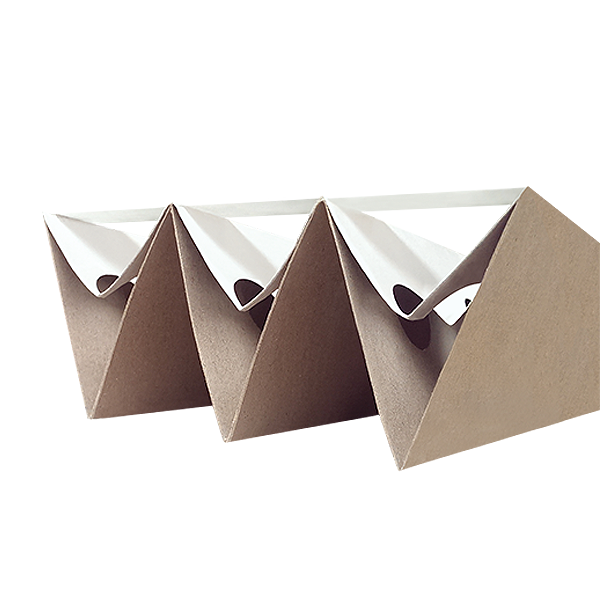
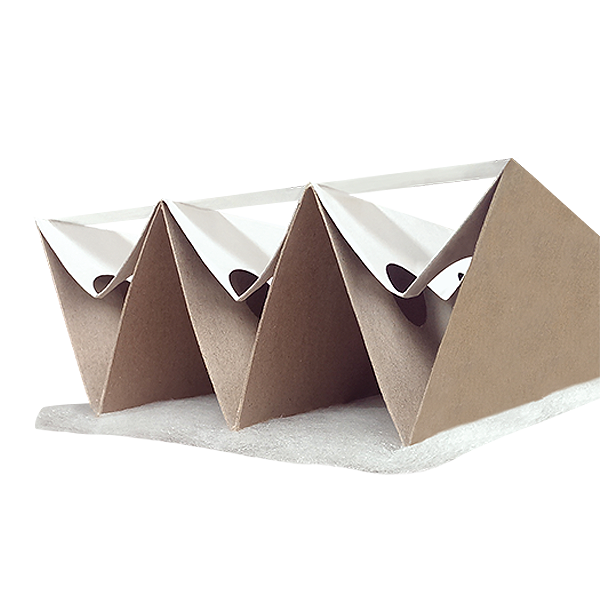
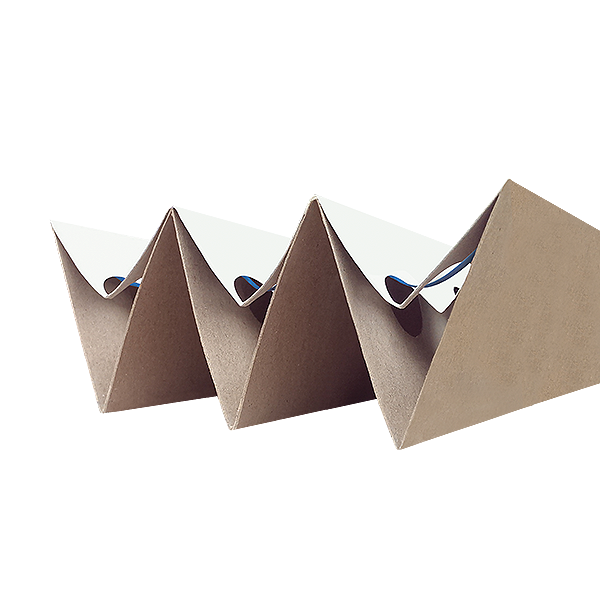
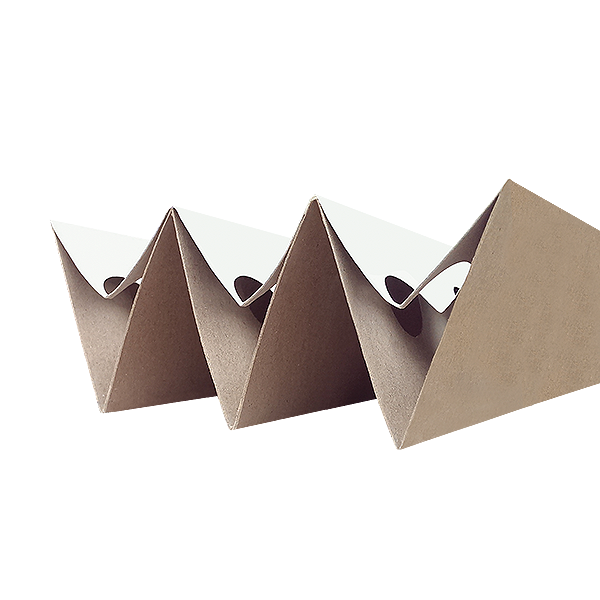
All Andreae spray booth filters share a common foundation: two layers of heavy kraft paper, punched, pleated, and glued into the characteristic accordion geometry that creates a large surface area within a compact frame. This design and material composition defines the primary line of defense against paint overspray in any paint booth exhaust system. What differentiates each model is what is added to that base.
Kraft paper alone provides reliable general-purpose filtration. The pleated structure traps overspray mechanically while allowing air to pass through. Extension limiters — built into some models — prevent the pleats from over-expanding under airflow, ensuring the filter is maintained completely within its intended geometry throughout sustained booth use.
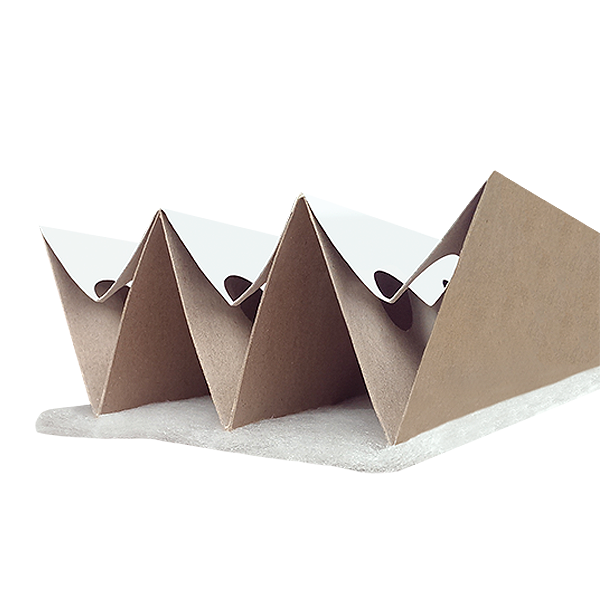
Polyester layers (60 g/m²), applied to the back, act as high efficiency diffusion media. They drive the jump from ~98% to 99%+ efficiency, blocking potential contaminants and extremely small particles the primary layer cannot hold. They also extend service life by sharing the load with the kraft paper — essential for filtration systems serving precision coating lines.
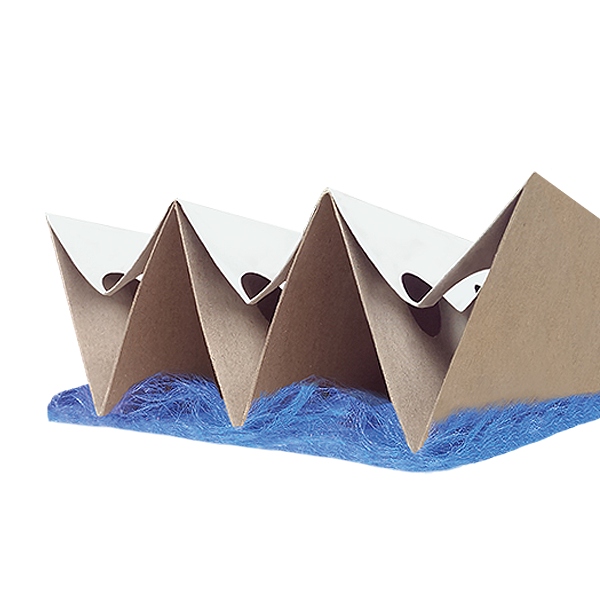
Fiberglass layers contribute holding capacity and low airflow resistance, stabilizing booth performance over long filter runs. However, fiberglass is a mechanical irritant to skin, eyes, and respiratory tracts. Maintenance teams need appropriate PPE — gloves and eye protection at minimum. If skin irritation occurs, wash with mild soap and running water but do not rub or scratch, as this may force fibers deeper into the skin. If eye irritation occurs, flush eyes with running water for at least 15 minutes.
Large paper strips, added to the front face, dramatically increase surface area for initial overspray capture. This is the mechanism behind the "5× holding capacity" specification — the strips provide staged capture where the heaviest paint overspray is trapped upfront, extending the life of deeper filtration layers.
On disposal: Andreae filters are made from recycled paper and classified as non-toxic. However, disposal protocols vary. Standard kraft-paper-only models follow standard waste channels per local regulations. For the Andreae Original Filter and Andreae HE Original Filter , the Safety Data Sheets mandate a stricter protocol: once full of paint, these filters must be placed in a closed, water-filled metal container and sent to a specialized disposal organism in accordance with country-specific regulations. Loaded filters with combustible residues must be stored away from hot surfaces, and only fixed lighting units should be used in filter storage zones to eliminate ignition sources near flammable vapors.
Production Volume and Intensity: Matching the Filter to Your Throughput
Not every spraying operation needs the most advanced filter. A vehicle repair shop spraying two or three panels per day has fundamentally different requirements than an aerospace primary line running three shifts of continuous spray finishing operations. Buying the highest-capacity booth filter for a low-intensity operation is overspending. Running a budget filter in a high-throughput paint booth means constant changeovers, inconsistent quality, and higher total cost of ownership.
For low-to-moderate intensity operations — repair shops, small batch manufacturing, intermittent spray work — entry-level kraft paper construction provides reliable performance at the lowest cost per unit. These operations typically do not require supply filters or high efficiency diffusion media beyond the primary exhaust stage.
For high-intensity environments — shipyards, large-scale metal fabrication, continuous automotive or aerospace lines — you need maximum holding capacity combined with either high efficiency or low airflow resistance (or both). Your filtration strategy must account for the full airflow path: intake filters delivering fresh air free of contaminants, exhaust filters capturing paint overspray before it reaches exhaust ducts, and adequate ventilation maintaining safe conditions throughout every spray booth on the floor.
Paint Type and Chemical Compatibility: The Factor That Can Burn Your Facility Down
This section carries the single most critical safety message in this guide.
Different coating chemistries — lacquers, high-solids paints, polyester bi-component systems — load booth filters at different rates and with different chemical properties. Load data is published per coating type precisely so you can plan your filtration strategy accordingly.
But the far more urgent concern is chemical mixing. Spraying two different chemical substances into the same filter can trigger a hazardous exothermic reaction leading to self-combustion. This is a documented failure mode in industrial spray booths handling combustible liquids and reactive coating chemistries. The resulting fire spreads rapidly, particularly where air exhausted from the exhaust system recirculates near flammable vapors or piping systems carrying solvents, or where spray booths lack adequate separation from any combustible exterior wall.
Operational protocol requirement: filters must be dedicated to a single chemical substance type. When switching coatings during any spraying operation, the previous filter must be removed and replaced before the new substance is sprayed. This must be posted via a suitable sign at filter access doors of every paint booth, documented as a mandatory written procedure, and verified through regular audits focused on improving workplace safety across the facility.
The Andreae Filter Range: Minex Group Portfolio at a Glance
All models below are manufactured by Andreae and distributed by Minex Group as part of our ventilation accessories portfolio. Every filter shares foundational two-layer kraft paper construction and operates within a recommended air velocity of 0.5–1.0 m/s, with a max recommended pressure drop of 128 Pa (structurally possible up to 256 Pa).
| Product | Construction | Max Load by Coating Type (kg/m²) | Efficiency by Coating Type (up to) | Best Operational Fit | Why Choose This Filter |
| Andreae Starter Filter | Standard heavy kraft paper | Lacquers: 10 · High Solids: 12 · Polyester: 13 | Lacquers: 93.10% · High Solids: 98.20% · Polyester: 97.80% | Vehicle repair shops, occasional spray painting, budget-conscious applications | Most economical spray booth filter in the range. Simple, flexible design with quick installation for low-volume spraying operations. |
| Andreae Original Filter | Heavy kraft paper with built-in extension limiters | Lacquers: 10 · High Solids: 12 · Polyester: 13 | Lacquers: 93.10% · High Solids: 98.20% · Polyester: 97.80% | Wood finishing, furniture coating, general-purpose industrial spray booths | Industry benchmark for over 50 years. Extension limiters guarantee maximum load capacity and prevent paint overspray from recirculating. SDS requires disposal in a closed, water-filled metal container via specialized waste handling. |
| Andreae HC Original Filter | Kraft paper + large paper strips on the front | Lacquers: 13.7 · High Solids: 14.7 · Polyester: 13.9 | Lacquers: 93.90% · High Solids: 98.30% · Polyester: 98.20% | Shipyards, aerospace, heavy-duty metal fabrication, high-volume manufacturing | Holds up to five times more paint overspray than conventional booth filters. Front paper strips stage the capture process, drastically reducing changeover frequency in high-throughput spray booths. |
| Andreae HE Original Filter | Kraft paper + polyester layer (60 g/m²) on the back | Lacquers: 9 · High Solids: 12.2 · Polyester: 14.7 | Lacquers: 97.90% · High Solids: 99% · Polyester: 99.40% | Automotive finishing, precision coating, operations where surface contamination means rejection | Polyester layer functions as high efficiency diffusion media, capturing extremely small particles. Near-total overspray capture for demanding spray finishing operations. SDS requires disposal in a closed, water-filled metal container via specialized waste handling. |
| Andreae HH Original Filter | Kraft paper + fiberglass layer | Lacquers: 11 · High Solids: 13 · Polyester: 15 | Lacquers: 97% · High Solids: 98.50% · Polyester: 98.50% | Heavy-duty industrial spray booths, woodworking, energy-efficiency-focused operations | Lowest airflow resistance in the range. Stabilizes exhaust system velocity and reduces energy costs during sustained booth use. Fiberglass requires PPE during handling. Wash skin with mild soap — do not rub. Flush eyes for 15 minutes if irritated. |
| Andreae HP Original Filter | Kraft paper + polyester layer + large paper strips | Lacquers: 13.7 · High Solids: 16.2 · Polyester: 17.3 | Lacquers: 98.50% · High Solids: 98.80% · Polyester: 99.70% | Aerospace, continuous high-volume manufacturing, maximum performance requirements | Most advanced paint booth filter in the portfolio. Combines HC holding capacity with HE efficiency. Highest load rating (17.3 kg/m²) and highest efficiency (99.7%) for operations that cannot compromise on either dimension. |
Quick-Match: From Your Spray Booth to Your Filter
Vehicle repair shop or small-batch spraying operation with standard finish requirements → Andreae Starter Filter or Andreae Original Filter at the best cost point.
High paint volume and frequent filter changeovers in a shipyard, fabrication shop, or heavy coating environment → Andreae HC Original Filter — five times the holding capacity means a fraction of the downtime.
Surface finish quality is the non-negotiable priority and any paint particle contamination means rework or rejection → Andreae HE Original Filter delivers 99.4% capture (on polyester).
Rising energy costs and unstable booth airflow in woodworking or high-duty-cycle spray booths → Andreae HH Original Filter gives the flattest pressure curve and lowest resistance in the range.
Everything at once — maximum capacity, maximum efficiency, no compromises across your entire production process → Andreae HP Original Filter is the only model engineered to deliver at that level.
Safety and Disposal: Non-Negotiable Operational Standards
All Andreae filters are manufactured from recycled paper and classified as non-toxic. However, disposal protocols vary by model.
Standard disposal (Andreae Starter Filter, Andreae HC Original Filter, Andreae HH Original Filter, Andreae HP Original Filter): standard waste channels per local regulations. Store loaded filters away from hot surfaces, combustible liquids, and flammable vapors. Use only fixed lighting units in storage zones to eliminate ignition risk near combustible residues.
Mandatory specialized disposal (Andreae Original Filter, Andreae HE Original Filter): Safety Data Sheets require that paint-loaded filters be placed in a closed, water-filled metal container and sent to a specialized disposal organism per country-specific regulations. This is manufacturer-mandated, not optional.
The overriding rule for every spray booth filter in this portfolio: never spray two different chemical substances into the same filter. Mixing incompatible coating chemistries initiates an exothermic reaction leading to self-combustion. Dedicate each filter to a single substance type and enforce changeover procedures. This is a fire prevention requirement, not a recommendation.
Need Help Matching the Right Filter to Your Specific Spray Booth?
Every paint booth environment has its own combination of coating chemistry, throughput volume, finish quality requirements, and maintenance constraints. Whether you are specifying booth filters for a new installation, optimizing your filtration strategy for an existing line, or calculating changeover intervals against your specific production output — our technical advisers work through the variables with you and recommend the right Andreae spray booth filter for your exact operating conditions.
Minex Group supplies filtration systems and ventilation solutions across shipbuilding, metalworking, automotive, aerospace, woodworking, and general manufacturing. We don't just distribute filters — we help you match the right product to every spray booth on your floor.
Frequently Asked Questions
Price per unit is the wrong starting point. Match the filter against five variables: the filtration efficiency your finish quality demands, the holding capacity your spray volume requires, the airflow resistance your paint booth energy budget can sustain, the material composition that fits your handling and disposal protocols, and the specific coating chemistry you spray. A high quality filter adequate on all five dimensions at the lowest total cost of ownership is the right choice. The portfolio comparison table above lets you cross-reference every Andreae model against these variables for your specific spraying operation.
General practice suggests changing exhaust filters roughly every 80–100 spray hours, or every 3–4 weeks in regularly used spray booths, while intake filters and supply filters have longer intervals depending on usage. The definitive changeover trigger is static pressure. When pressure drop across the booth filters approaches 128 Pa, the filter has reached its limit regardless of calendar time. If your exhaust fan cannot maintain the required air velocity, the filter needs replacement. Pushing further degrades coating quality, increases energy consumption, and accelerates wear on fan blades and motors.
Industrial paint booth filtration stages across multiple positions. Pre-filters protect downstream media. Intake filters clean incoming fresh air, blocking potential contaminants and preventing air supply contamination that causes finish defects. Exhaust filters — the category this guide addresses — capture paint overspray after it passes the workpiece, protecting workers, exhaust ducts, and the environment. Some operations add high efficiency diffusion media (polyester or fiberglass backing) for finer capture of extremely small particles, or activated carbon filters to address hazardous air pollutants. The right combination of different filters depends on your coating chemistry, regulatory requirements, and finish quality targets.
Every percentage point a booth filter fails to capture becomes paint overspray that either enters the air exhausted through the exhaust system or recirculates inside the spray booth. In cosmetic coating applications, even a 1–2% gap translates into measurable rework. Beyond finish quality, efficiency directly affects compliance with limits on hazardous air pollutants. Selecting paint booth filters based solely on the highest published number is insufficient — confirm that the efficiency figure applies to the specific coating type in your spraying process, since performance varies between lacquers, high solids, and polyester.
The most reliable indicator is your pressure gauge. When static pressure exceeds 128 Pa for Andreae booth filters, the filter has passed its optimal service window. Visible gauges or pressure activated devices on exhaust ducts provide real-time monitoring far more reliable than calendar estimates. Visual signs — heavy paint build-up, discoloration, reduced airflow, uneven spray patterns, paint particles settling on surfaces — supplement pressure readings. Continuing to spray risks poor adhesion, elevated emissions from air exhausted through the exhaust system, and accelerated exhaust fan wear.
Every booth filter begins at a baseline pressure drop of 20–42 Pa depending on air velocity. As it loads with paint overspray, pressure climbs and exhaust fans work harder to maintain adequate ventilation, driving energy consumption upward. Filters with low-resistance materials — fiberglass backing in the Andreae HH Original Filter — climb more slowly, delivering stable performance and lower energy costs. In facilities relying on mechanical ventilation, the energy impact compounds across every spray booth on the floor. The most effective filtration strategy is replacing filters at the 128 Pa threshold rather than extracting marginal additional life at escalating energy cost.
No. Spraying two different chemical substances into the same filter can trigger self-combustion — especially with flammable or combustible liquids. This is confirmed across every Andreae Safety Data Sheet and is not mitigated by any filter design or material composition. Each coating chemistry must have its own dedicated filter. When switching substances during any spraying operation, the loaded filter must be removed and replaced before the new coating is sprayed. Post a suitable sign at filter access doors, document the procedure, and audit compliance regularly.