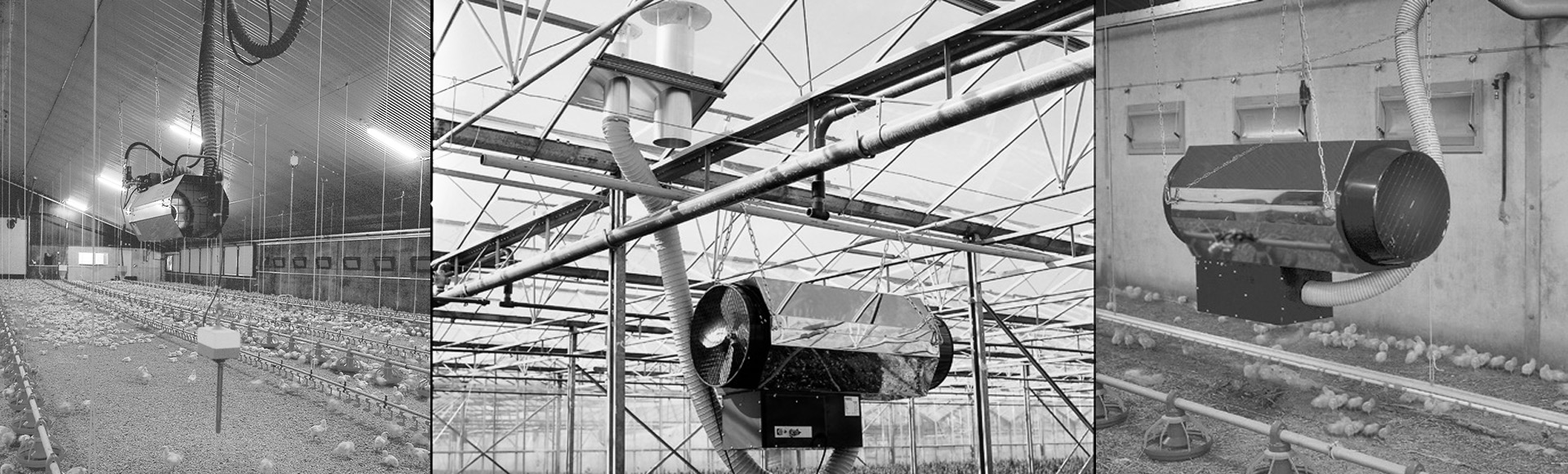
Industrial Gas Heaters
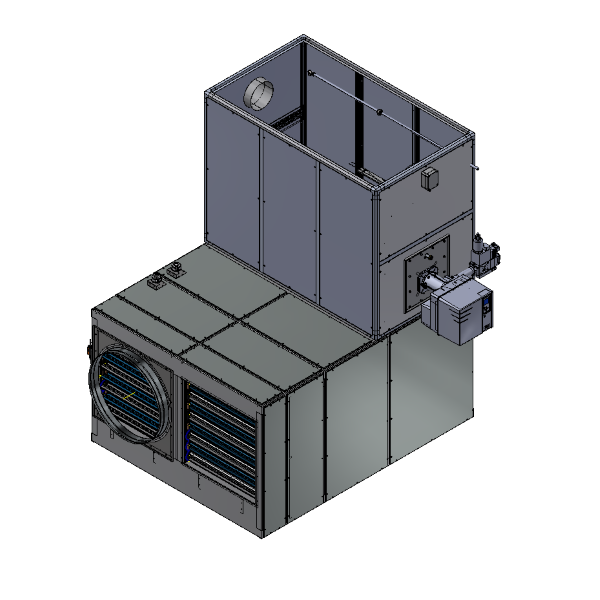
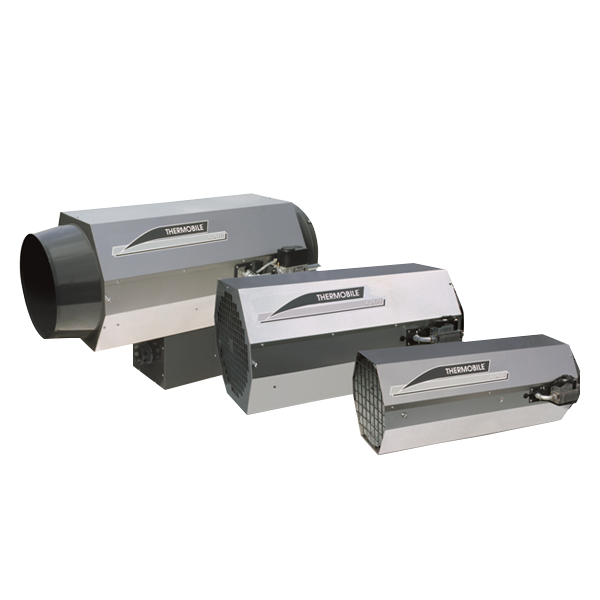
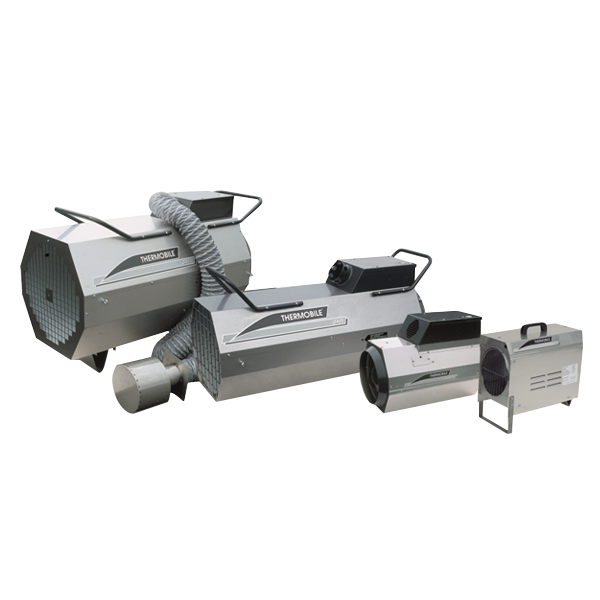
References
Choosing the Right Industrial Gas Heaters
Selecting an industrial gas heater is rarely a purely technical decision. On paper, many units appear similar. They may share comparable kilowatt ratings, airflow figures, or fuel types. In practice, however, the context in which the heater operates determines whether it becomes a long-term asset or a recurring operational problem. This is just as true in commercial environments, such as large retail spaces or logistics facilities.
Engineers, operational managers, and procurement teams are typically balancing multiple priorities at once. Process quality, safety, installation constraints, energy efficiency, and long-term operating costs all come into play. The purpose of this guide is to clarify what truly matters when choosing an industrial gas heater and to show how those considerations translate into the most suitable Minex solutions for different environments. Minex offers certified systems that meet industry standards for both industrial and commercial applications. In a competitive market for industrial and commercial gas heaters, selecting solutions that deliver consistent efficiency and reliability is essential.
Start with the Air, Not the Heat
The most important question is not how much heat you need, but what kind of air the process can tolerate.
In some environments, combustion byproducts are simply unacceptable. Painting operations are the most obvious example. Even small amounts of exhaust gases or excess moisture can compromise surface quality, extend curing times, or lead to costly rework. In these situations, indirect heating is not a preference—it is a requirement. The heating system must deliver clean, dry air while keeping combustion completely isolated from the airflow. These systems are specifically designed to supply warm air without introducing contaminants, which is essential for sensitive industrial processes.
Other environments are far less sensitive to air purity. Construction sites, agricultural drying applications, and large, ventilated industrial halls often prioritize speed and efficiency instead. In these scenarios, direct-fired heaters deliver instant, highly efficient heat and are often the most economical solution, provided that ventilation is sufficient.
This initial distinction—clean air versus maximum heat output—quickly narrows the field and helps avoid costly mismatches between heating technology and application.
Fuel Availability Shapes the Entire Installation
Fuel choice is rarely theoretical. It is dictated by site infrastructure, mobility requirements, and how permanent the installation needs to be.
Permanent industrial facilities usually have access to natural gas and benefit from fixed installations that integrate into central control systems. Temporary sites, by contrast, need independence from fixed infrastructure. Construction projects, emergency installations, and remote facilities rely on propane or LPG because these fuels can be transported, stored, and deployed quickly.
In some industrial settings, diesel remains relevant, particularly where gas supply is unavailable or inconsistent. The key consideration is not only fuel cost, but operational continuity. A heater is only effective if it can be reliably supplied under real working conditions. A wide range of fuel options and heater models exists to match the specific needs of each site.
The Application Defines the Performance Priorities
Once air quality and fuel type are clear, the application itself defines what “performance” actually means.
In painting and surface treatment, stability is critical. Manufacturing plants also depend on precise temperature control and consistent heating to maintain product quality and process efficiency. Temperatures must remain stable, airflow must be controlled, and noise levels should be kept low. These systems are often integrated into larger process lines and managed centrally, which makes consistency and system compatibility just as important as heating capacity.
Construction and drying applications sit at the other end of the spectrum. Here, speed and robustness matter most. Heaters are exposed to dust, moisture, and mechanical stress. They must deliver high heat quickly, adapt to changing site layouts, and operate reliably in harsh conditions.
Warehousing and industrial storage fall somewhere in between. These environments typically require large volumes of air to be heated evenly over long periods. Energy efficiency and operating costs play a major role, while air cleanliness may or may not be a limiting factor depending on the stored materials.
Understanding which of these priorities dominates helps prevent over-engineering—or worse, under-specifying—the heating system.
Fixed or Portable Heaters: Think Beyond the Current Project
Mobility is often underestimated during the selection process. A heater chosen for a “temporary” need may remain in service for years, while a fixed installation may need to adapt to future layout changes or expansions.
Fixed units are well suited to factories, hangars, and permanent halls where space efficiency and system integration are important. Ceiling- or wall-mounted heaters free up floor space and can be managed centrally.
Mobile units, on the other hand, are invaluable when layouts change frequently, access is limited, or operations are seasonal. Portable heaters are particularly useful for temporary setups or when heating is required in multiple locations, such as a shop floor or construction site. The ability to operate horizontally or vertically, or to move the unit as work progresses, often determines whether heating supports operations or becomes an obstacle.
Airflow Is What Makes Heat Useful
Heating capacity alone does not heat a space—air movement does.
Large industrial spaces require sufficient airflow and air throw to distribute heat evenly. Some zones within these spaces can be especially difficult to heat and may require targeted airflow solutions to avoid cold spots. In paint booths and ducted systems, fans must overcome filters and static pressure without sacrificing performance. In open halls or warehouses, long air throw ensures that heat reaches working areas without complex ducting.
Matching airflow performance to the space is what turns theoretical kilowatts into real comfort and stable process conditions.
Control and Safety Are Not Optional Extras
In industrial environments, heaters often operate unattended for long periods. Reliable control and built-in safety systems are therefore essential. Modern control systems are designed to be intuitive and easy to use, simplifying both daily operation and routine maintenance.
Thermostat integration allows temperatures to be maintained within tight tolerances, which is critical for curing processes, frost protection, or livestock environments. Safety features such as flame monitoring, overheating protection, and hose-break protection help safeguard both personnel and infrastructure.
In harsh or dusty environments, control components must also be protected against moisture and contamination to ensure long-term reliability and safe operation.
| Application / Environment | Key Operational Requirements | Recommended Minex Series | Why This Is the Right Fit |
| Painting & Surface Treatment | • 100% clean air• No combustion byproducts• Precise temperature control• High airflow through filters and ducts | UHR MNX | Indirect heating with a stainless-steel combustion chamber ensures contaminant-free air. High airflow supports paint booths and drying tunnels, while integration into central control panels allows accurate curing and process control. |
| General Industry & Production Halls | • Heating large air volumes• High energy efficiency• Long air throw• Fixed installation | AGA E Series | Direct-fired technology delivers instant heat with 100% thermal efficiency. Large air throw distributes heat evenly across wide, ventilated spaces, making it a cost-effective solution for industrial halls. |
| Warehousing & Storage (Sensitive Goods) | • Consistent ambient heating• Low impact on humidity and air quality• Fixed installation | UHR MNX | Indirect heating prevents combustion gases and excess moisture from entering the space, protecting stored materials while maintaining stable temperatures over long operating periods. |
| Construction Sites & Temporary Facilities | • Fast drying and frost protection• Robust, mobile equipment• Flexible installation• Off-grid operation | GA E Series | Designed specifically for drying new buildings and defrosting pipes. Compact, durable construction with horizontal or vertical installation options. Propane operation ensures independence from fixed gas infrastructure. |
| Military & Defense / Field Operations | • High durability• Mobility and portability• Dust and moisture resistance• Operation in remote locations | GA E Series / AGA E Series | GA E offers portability and propane operation for temporary bases and field use. AGA E provides robust, dust- and moisture-protected components and reliable performance in harsh environments. |
A Final Word from the Field
The best industrial gas heater is not the most powerful or the most advanced—it is the one that fits the reality of the site, the process, and the people who operate it.
If you are evaluating heating solutions for a specific application, speaking with specialists who understand both the technical and operational context can save time, cost, and future headaches.
Contact Minex to discuss your application and operating conditions.
Our experts will help you select the most effective, safe, and economical industrial gas heater for your environment—today and in the long term. Contact Minex to find the right industrial gas heater for your job—no matter the size or type of project, we’ll help you discover the best solution for your specific requirements.
Frequently Asked Questions
The difference lies in how the heat is transferred to the air.
Direct-fired industrial gas heaters heat the air directly in the flame path. This makes them extremely efficient and fast, but it also means that combustion byproducts enter the heated airstream. They are commonly used in large, ventilated industrial spaces or as part of make-up air systems designed to replace exhausted air. Direct-fired heaters are also suitable for certain commercial spaces where ventilation is sufficient and air quality requirements are less stringent.
Indirect-fired industrial gas heaters use a sealed combustion chamber and a heat exchanger. Heat is transferred through the exchanger, while combustion gases are exhausted separately through a flue, keeping the supply air clean and uncontaminated.
An indirect-fired heater should be used whenever air cleanliness matters.
Typical situations include:
- Enclosed or occupied workplaces
- Industrial processes sensitive to fumes or moisture
- Applications where combustion gases are unacceptable
- Environments where the health and comfort of employees are a priority, such as warehouses and manufacturing plants, to ensure improved air quality and consistent heating
Because combustion is isolated from the airflow, indirect-fired systems are widely regarded as the safer and more versatile choice for indoor industrial environments when properly vented.
Direct-fired heaters can be used indoors only when sufficient ventilation is provided and the application allows combustion byproducts in the air.
They are commonly used in large, ventilated industrial spaces or as part of make-up air systems designed to replace exhausted air. For enclosed or tightly controlled environments, indirect-fired heaters are generally preferred because they keep the flame and exhaust completely separate from the supply air. This separation helps maintain a comfortable and safe indoor environment for workers and occupants.
For paint booths, indirect-fired heating is typically preferred when finish quality and air purity are critical.
Indirect systems prevent combustion byproducts and excess moisture from entering the process air, reducing the risk of coating defects. While some modern paint-booth designs use direct-fired make-up air systems for rapid heat-up and high efficiency, these setups rely heavily on carefully engineered ventilation and air-quality control. The final choice depends on booth design, process sensitivity, and regulatory requirements. The effectiveness of the heating system also depends on where the industrial gas heater is located within or near the paint booth, as strategic placement optimizes heat distribution and maintenance access.
Yes. Direct-fired heating introduces water vapor into the airstream because moisture is a natural byproduct of gas combustion.
This added humidity is one reason indirect-fired heaters are often selected for applications where air quality, moisture control, or surface finishes are important. Indirect systems exhaust combustion products separately, delivering cleaner and typically drier heated air. This is especially important in commercial and industrial spaces where humidity control is critical for both processes and stored goods.
Fuel choice depends primarily on site infrastructure and mobility needs.
- Natural gas is best suited for permanent industrial installations with a fixed gas supply.
- Propane/LPG is ideal for temporary, mobile, or remote sites because it can be delivered and stored on-site.
In practice, the best fuel is the one that the facility can reliably supply over time, not simply the one with the lowest nominal energy cost.
Industrial gas heater sizing depends on heat loss, not just the size of the space.
Key factors include:
- Building volume and insulation quality
- Air changes and ventilation rate
- Required temperature increase
In many industrial environments, airflow losses from ventilation or infiltration are significant. If these are ignored, even a high-capacity heater may struggle to maintain stable conditions.
Heating capacity produces energy, but airflow is what delivers that energy where it’s needed.
If airflow or air throw is insufficient:
- heat stratifies near the ceiling,
- cold zones remain underheated,
- process temperatures become unstable.
This is especially important in large halls, warehouses, paint booths, and make-up air systems, where consistent air distribution is as critical as burner output. Proper airflow ensures all areas remain warm and comfortable for both workers and processes.
Industrial gas heaters should always include:
- Reliable ignition and flame monitoring
- Overheating protection
- Proper combustion control
For indirect-fired systems, correct flue and exhaust installation is essential to safely remove combustion gases. For direct-fired systems, safe operation depends heavily on correct commissioning and adequate ventilation.
The most common mistake is choosing a heater based mainly on kW or BTU output, without first considering air quality requirements and ventilation conditions.
Another frequent issue is selecting a system that the site cannot reliably fuel—for example, planning a natural-gas heater for a location that ultimately requires propane delivery.