Painting Accesories
References
How to Choose Industrial Painting Accessories for Reliable Coating Results
Industrial painting accessories are not supporting equipment. They are the elements that determine whether a coating process remains stable, efficient, and predictable from the first spray pass to the last. The design of these accessories plays a crucial role in optimizing performance, space efficiency, and reliability in industrial applications. Most application problems—uneven finishes, pressure loss, clogged tips, or inconsistent film thickness—are not caused by the paint itself, but by accessories that were not selected according to the real operating conditions.
This guide explains how to choose industrial painting accessories based on application objectives, not product names, so your entire painting system works as one.
Start with the objective, not the accessory
Before selecting any painting accessory, the most important question is not what product do I need, but what problem am I trying to avoid.
In most industrial coating operations, accessory selection revolves around five recurring objectives:
- keeping the paint homogeneous
- maintaining stable pressure and flow
- reducing downtime during spraying
- controlling viscosity without altering the formulation
- and adapting to on-site or regulated environments.
Once the primary objective is clear, the correct product category usually becomes obvious.
Agitators: how to keep paint homogeneous throughout the process
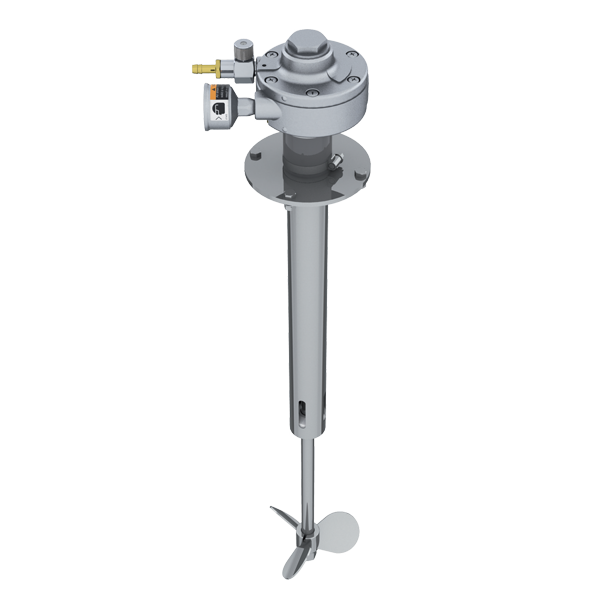
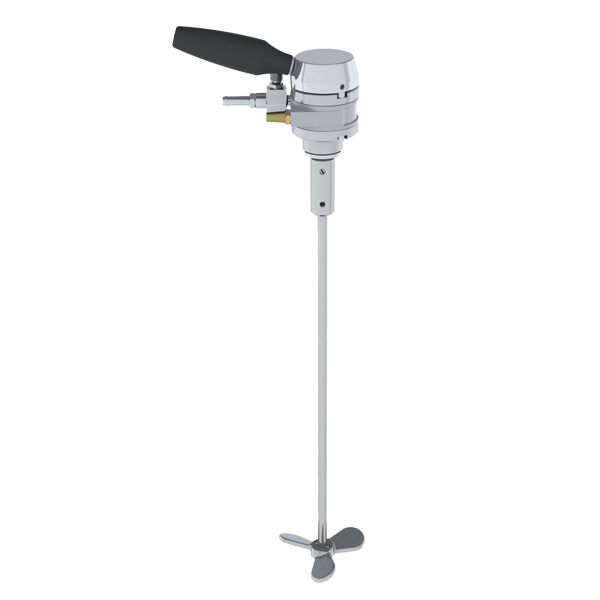
Agitators are used to prevent pigments and solids from settling, which is one of the most common causes of inconsistent coating quality. Even coatings that appear stable at the beginning of a shift can change behavior over time if they are not continuously mixed.
Industrial agitators are especially important when working with pigmented paints, high-solids coatings, or materials that remain in containers for extended periods. In large-scale industrial environments, drum or barrel agitators are typically required to maintain uniformity in 60-liter or 200-liter containers, and these agitators are built for durability and reliable performance in demanding industrial conditions. In contrast, smaller operations such as automotive touch-ups or contractor work benefit from compact agitators designed for small batches prepared directly on site.
The key factor when selecting an agitator is not only container size, but also how effectively the agitation reaches the bottom of the container. Inadequate mixing often creates the illusion of stability while leaving heavier components unmixed below the surface.
Pressure pots: ensuring consistent material supply to the spray gun
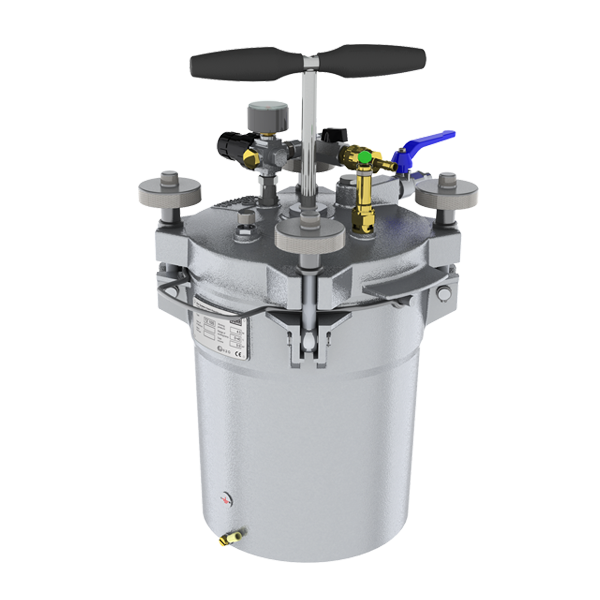
Pressure pots play a central role in maintaining a stable and controlled supply of coating material during application. Their function is to deliver paint at a constant pressure and flow rate, preventing pulsation and material starvation that can negatively affect finish quality. Pressure pots are engineered for precise control and consistent performance in demanding industrial applications.
Pressure pots become essential when spraying requires uniform delivery over time, particularly in automotive production, industrial finishing, and wood or furniture applications. Some pressure pot configurations include integrated agitation, which is especially useful when working with materials that tend to settle even during spraying.
Choosing the right pressure pot depends on whether the coating requires continuous stirring and whether mobility is needed. In environments where frequent material changes occur, ease of cleaning and corrosion resistance also become important considerations.
High-pressure paint hoses: preserving pressure over distance
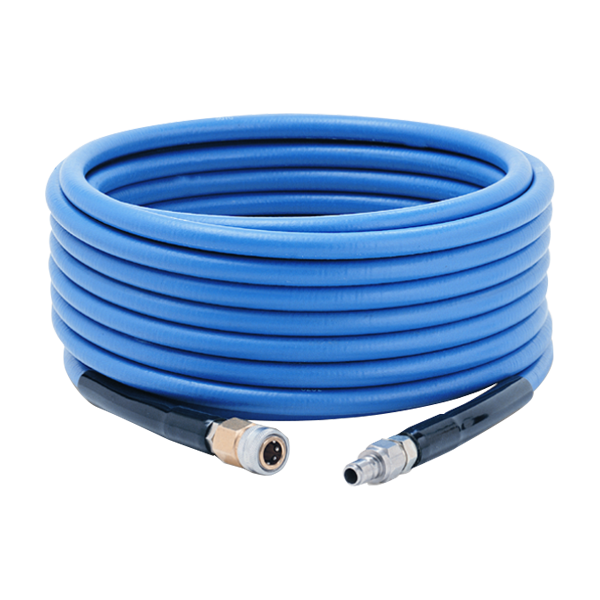
Paint hoses are often underestimated, yet they are one of the most frequent sources of pressure loss in industrial painting systems. Hose length, internal diameter, and flexibility all directly affect how efficiently material reaches the spray gun.
As hose length increases, friction inside the hose also increases, especially with thicker or high-solids coatings. This is why longer hose runs require a larger internal diameter to maintain consistent pressure. In practical terms, spraying over distances greater than approximately 15 meters often requires upsizing the hose diameter to avoid pressure drop and uneven atomization.
In contractor services and heavy equipment applications, hose flexibility and weight are just as important as technical specifications. It is crucial to select hoses that fit the specific requirements of your spray system to ensure optimal performance. A lighter, more flexible hose reduces operator fatigue and improves control during long spraying sessions.
Airless spray tips: controlling application quality and downtime
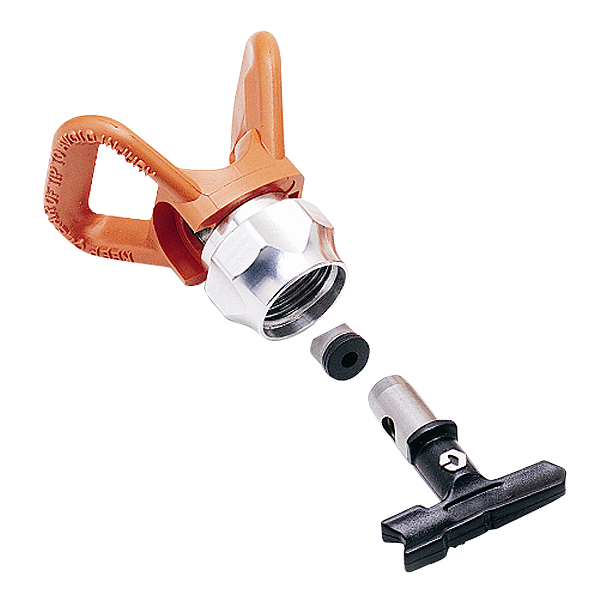
Airless spray tips are the final delivery point of the painting system and have a direct impact on both productivity and finish quality. Tip clogging is one of the most common causes of downtime, particularly when spraying high-solids or abrasive coatings.
Modern airless spray tip designs focus on fast clog clearing and tool-free maintenance. These features allow operators to restore spray patterns quickly without stopping production. Pressure resistance is another critical factor, as industrial airless applications often operate at very high pressures.
A fine spray tip is essential for detailed work, providing precise application, but even a fine tip can develop issues like leaking if not properly maintained. Choosing a good spray tip or nozzle is key to achieving consistent spray patterns and reliable performance. The first number on a spray tip refers to the spray width, and understanding this number helps users select the correct tip for their specific job. Ensuring the nozzle is compatible with the sprayer is crucial for optimal results. This is particularly important for house painting projects, where selecting the right tip ensures even coverage on walls, ceilings, and other surfaces.
Selecting the right spray tip category ensures consistent film formation while minimizing interruptions, which is especially important in heavy equipment and construction machinery applications where production speed and coating performance must be maintained simultaneously.
Fluid heaters: controlling viscosity without adding solvents
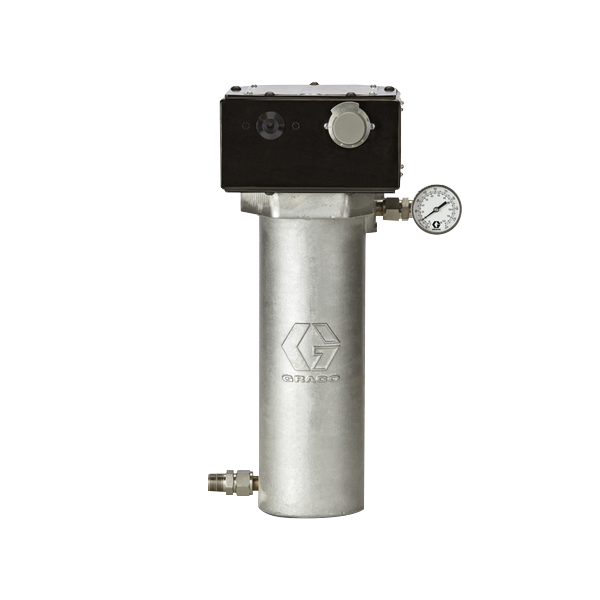
Viscosity is one of the most sensitive variables in coating application. Fluid heaters are a reliable heating solution for industrial painting applications, ensuring consistent material properties throughout the process. When viscosity fluctuates, spray patterns change, film thickness becomes inconsistent, and finish quality suffers. While thinning is sometimes used to compensate, it also alters coating properties and performance.
Fluid heaters provide a more controlled solution, allowing users to maintain optimal viscosity by regulating material temperature instead of changing the formulation. This approach is particularly effective for high-solids, epoxy, and urethane coatings, as well as in environments where ambient temperatures vary significantly.
By stabilizing temperature, fluid heaters ensure predictable flow and atomization, making them especially valuable in heavy equipment, automotive, and structural steel applications where thick protective coatings must be applied consistently.
Selecting accessories as a system, not as individual parts
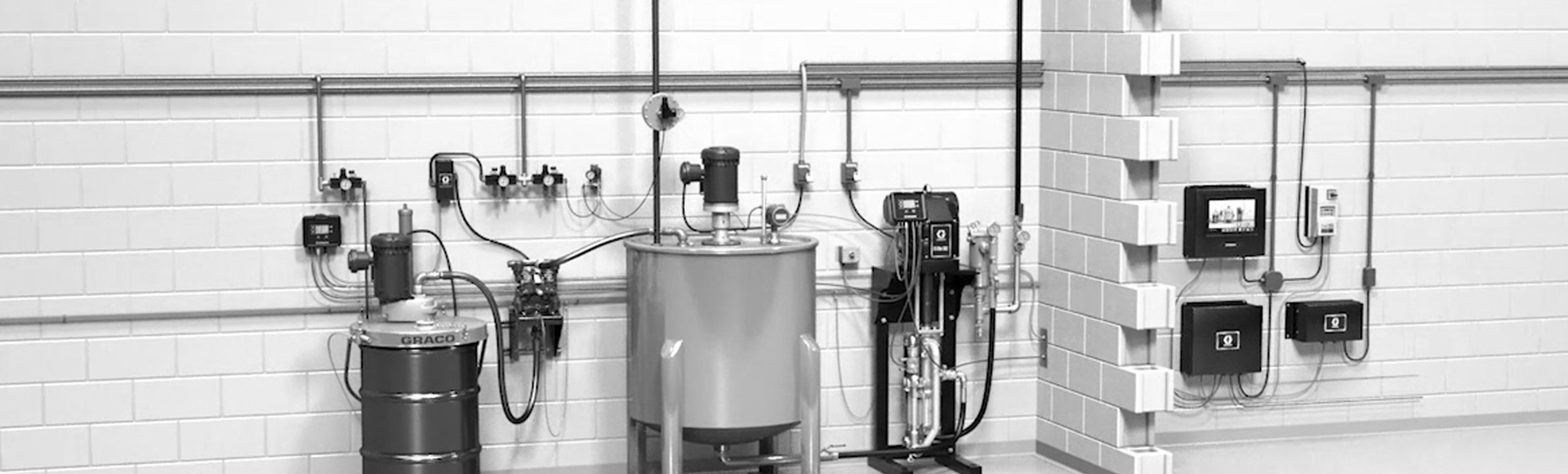
The most reliable industrial painting setups are designed as complete systems rather than collections of individual components. Agitators ensure material stability, pressure pots regulate supply, heaters control viscosity, hoses preserve pressure, and spray tips deliver the final result.
If one element is undersized or mismatched, the entire process becomes less predictable. Viewing the painting system as an integrated whole reduces defects, material waste, and downtime, while improving overall efficiency and coating quality.
Safety precautions for industrial painting accessories
When working with industrial painting accessories, safety is as critical as performance. The right precautions not only protect your team but also ensure your equipment—whether spray tips, agitators, or industrial tanks—delivers reliable results throughout the project.
Start by equipping every person on the job with the recommended protective gear: gloves, safety glasses, and masks are essential when handling paint, spray equipment, or cleaning nozzles. Always use a tip guard to prevent accidental discharge and shield operators from high-pressure spray and liquids.
Before installation or use, review the control options and settings for each piece of equipment. Understanding how to adjust wattage, spray width, and flow ensures you can meet the demands of each application while minimizing risk. For jobs involving heat—such as with fluid heaters or when working near industrial tanks—be mindful of hot surfaces and allow assemblies to cool before maintenance or replacement.
Ventilation is another key factor. Industrial painting often involves gases and volatile liquids; ensure your workspace is well-ventilated to keep fumes at safe levels and maintain air quality. Regularly inspect hoses, agitators, and spray tips for wear, clogs, or leaks, and replace any damaged parts promptly to maintain optimal performance and prevent mess or accidents.
Keep your equipment clean—especially nozzles and spray tips—to avoid blockages that can disrupt the process or create hazardous pressure build-up. Always follow the manufacturer’s instructions for installation, use, and replacement, and choose accessories that are suitable for your specific medium, diameter, and job requirements.
For large-scale or demanding projects, take regular breaks to reduce fatigue and maintain focus. Keep a first aid kit accessible, and ensure all team members know how to respond to spills, splatters, or other emergencies. Restrict access to the work area, keeping children and unauthorized personnel away from active equipment.
Finally, consult with Minex Group’s customer support or your project specialist if you have questions about the best accessories, control options, or safety guidelines for your application. By prioritizing safety at every stage—from selection to installation and ongoing use—you protect your team, your equipment, and the quality of your coating results.
With the right precautions and high-quality accessories, you can complete every project with confidence, efficiency, and peace of mind.
Get expert support for your painting accessories
Choosing the right industrial painting accessories becomes much easier when you focus on objectives instead of individual products. By understanding how agitators, pressure pots, hoses, spray tips, and heaters work together, you can build a system that delivers consistent results across applications.
Explore the complete line of industrial painting accessories available on this page, designed for a wide range of applications, or contact our specialists for guidance tailored to your process, coating type, and working conditions.
Frequently Asked Questions
Start by identifying your main objective, such as preventing settling, maintaining pressure, or controlling viscosity. The accessory category that addresses that objective is usually the right starting point.
Not all coatings require continuous agitation, but any material that settles over time will benefit from it.
Because pressure loss increases with hose length and material viscosity. Incorrect hose sizing often causes uneven spray patterns.
Heating is preferred when viscosity control is needed without altering the coating’s chemical properties.
Price varies depending on quality and brand. Some options offer multiple spray tips at a lower price than premium brands, making them cost-effective for both professional and DIY painting jobs.
Our ordering process is convenient and reliable, allowing you to place orders quickly and receive fast fulfillment. Qualifying orders may also benefit from free shipping.
Most standard items, such as flanged immersion heaters, are kept in stock for quick replacement and immediate delivery.