Plate Processing Centers
References
Plate Processing Centers for Steel Plate Cutting and Advanced Fabrication
Modern steel fabrication no longer stops at basic cutting. To remain competitive, industrial operations must control costs, boost productivity, and consistently deliver high-quality parts - whether you're working with structural steel, heavy plate, or complex thick-section components.
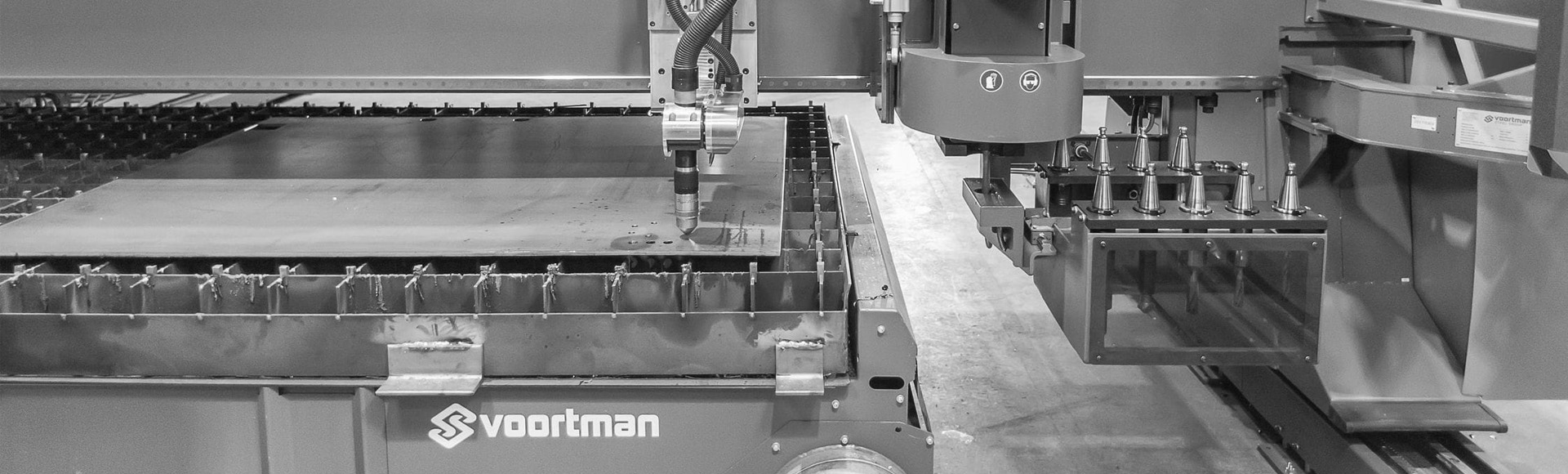
A plate processing center is fundamentally different from a standard steel cutting machine. It's a fully integrated production system designed to consolidate multiple manufacturing operations - plasma cutting, oxy-fuel cutting, drilling, milling, tapping, bevel preparation, and surface finishing - within a single controlled environment.
For engineers and procurement professionals, selecting the right system means understanding how machine architecture, cutting technologies, material capacity, thickness range, and automation interact within your actual production environment.
As an industrial equipment distributor, Minex Group works with fabricators and heavy construction companies to specify and implement Voortman plate processing centers that align with their technical and operational requirements. This guide walks through the key capabilities you should evaluate - in practical, operational terms.
Plate Processing in Modern Steel Fabrication
In most fabrication businesses, the plate processor must handle far more than thermal cutting alone. Modern plate processing services typically involve:
- Cutting and drilling in a single setup
- Drilling milling operations for slots, holes, and counter boring
- Bevel cutting for weld preparation and improved welding quality
- Thick plate and heavy steel plate processing across demanding thickness ranges
- Downstream compatibility with bending, forming, press brakes, and welding operations
A modern steel plate cutting machine delivers precise output - parts ready for welding or assembly - minimizing grinding, rework, and manual processing services.
The key differences between plate processing centers are not only the cutting methods they use, but how efficiently they manage material flow and support complete production processes.
Pass-Through vs Moving Gantry: Choosing the Right Plate Processing Architecture
The first strategic decision when selecting a plate processing system is architectural.
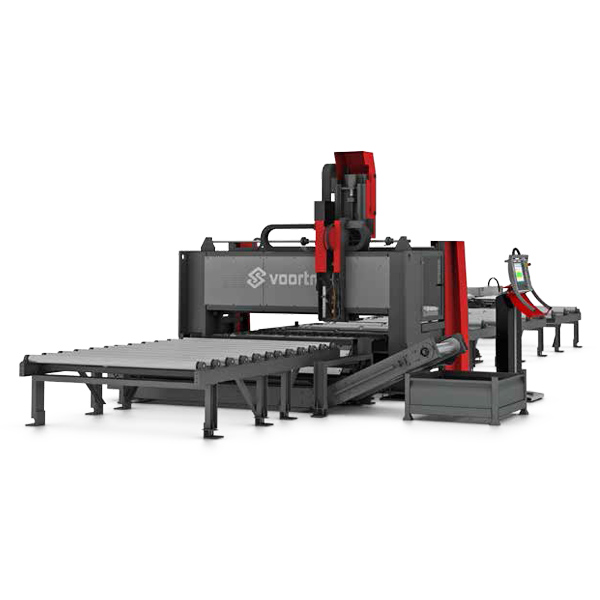
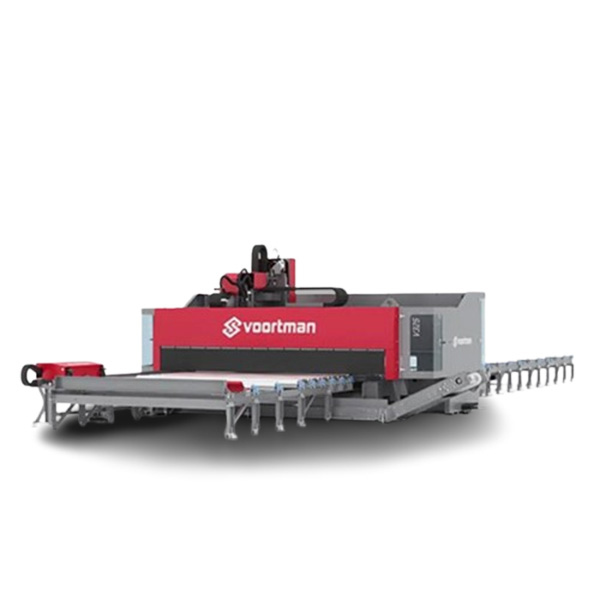
A Pass-Through Plate Processing Center (such as the Voortman V320 or Voortman V325) moves the plate through the machine. This configuration is optimized for continuous production flow, high output, and efficient load handling.
In high-volume fabrication environments - particularly in structural steel construction or shipbuilding - pass-through systems deliver:
- Automated load and unload functionality
- Reduced crane dependency and less manual handling
- Efficient cutting and drilling cycles for repetitive jobs
- Extended unmanned productivity and speed
These systems are ideal when production involves consistent material thickness and high throughput requirements.
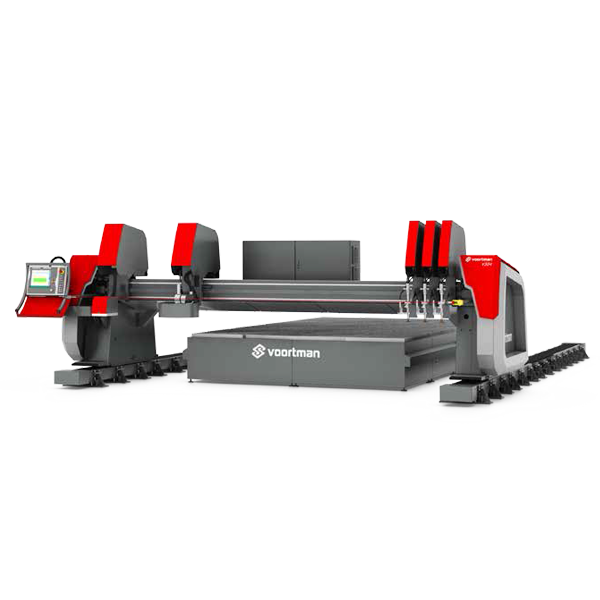
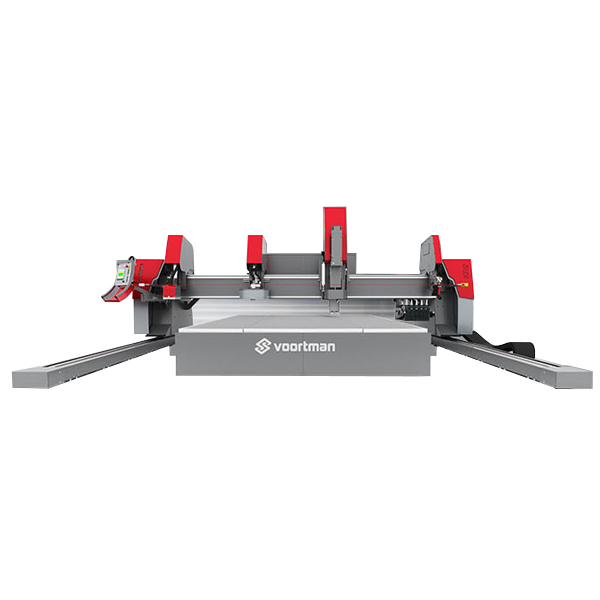
In contrast, a Moving Gantry Plate Processing Center (such as the Voortman V303, V304 or V310)keeps the steel plate stationary while the bridge travels across it. This architecture is especially effective for oversized plate, complex projects, or heavy steel plate that is difficult to reposition.
For job-based fabrication or mixed manufacturing processes, moving gantry systems provide flexibility without compromising precision, quality, or cutting speed.
Evaluating Cutting Methods: Plasma Cutting, Oxy Fuel Cutting and Laser Cutting
Different cutting methods exist because steel behaves differently across thickness ranges, heat input, and thermal cutting conditions.
Plasma Cutting: High-Speed Versatility for Structural Steel
Plasma cutting remains one of the most efficient thermal cutting techniques for steel plate between approximately 6 mm and 100 mm thickness.
Modern plasma systems, including high-definition plasma cutter configurations, deliver:
- High cutting speed for industrial production
- Strong hole quality for bolt-ready drilled hole requirements
- Reduced secondary grinding and finishing
- Stable arc control via advanced plasma torch technology
Plasma cutting is often the most cost-efficient choice for general fabrication and structural steel plate processing.
Oxy Fuel Cutting: Essential for Thick Plate and Heavy Steel Plate
Oxy fuel cutting (sometimes written oxy-fuel cutting or oxy fuel) remains indispensable for thick plate applications up to approximately 200 mm thickness.
For heavy steel plate fabrication, oxy fuel cutting provides:
- Reliable penetration in extreme thickness
- Multi-torch configurations for increased output
- Stable performance in heavy industry and construction
Oxy fuel cutting uses a gas-fuel flame to preheat the steel surface before cutting, making it ideal for large-format heavy plate processing where plasma may not be sufficient.
Laser Cutting: Precision for Thin Plate and Complex Geometry
Laser cutting is typically selected for thinner material where high precision and minimal heat-affected surface are required.
Laser systems deliver:
- Superior accuracy below ±0.1 mm
- Minimal heat distortion
- Clean edge quality for finished product requirements
While laser cutting is not the primary solution for heavy plate, it is highly effective in precision fabrication environments.
Multi-Process Plate Processing: Integrating Cutting, Drilling and Milling
Many fabrication plants still separate cutting, drilling, and milling into different stations. This increases material handling, load time, and work in progress.
Advanced Plate Processing Centers integrate multiple manufacturing processes within a single system.
The Voortman V310, for example, combines:
- Plasma cutting and oxy fuel cutting
- Carbide drilling for high-quality holes
- Drilling milling and slot creation
- Tapping and counter boring
- 3D bevel cutting for weld-ready edges
This integrated cutting and drilling approach eliminates secondary processing services and reduces internal transport cost. The result is high quality parts that exit the machine ready for welding or further fabrication.
Hybrid techniques allow contours to be plasma cut and then finish milled for higher precision - without additional programming.
For heavy machinery manufacturers, steel construction companies, and complex fabrication projects, this integration significantly improves production flow and cost control.
Automation and Material Handling: Maximizing Productivity
True productivity is not defined by cutting speed alone. It is defined by how efficiently the system manages material, load cycles, and part output.
Pass-through systems such as the Voortman V320 feature automated unloading via conveyor and drop-door tables, allowing parts up to 500 x 500 mm to discharge automatically. This supports long unmanned production cycles.
The Voortman V325 integrates underside deburring, reducing manual grinding and surface finishing work by up to 30%. Automated swarf removal ensures drilling debris does not interfere with plasma cutting quality.
When evaluating a plate processor, consider:
- How efficiently it handles load cycles and material flow
- How automation supports continuous process efficiency
- Whether it reduces manual processing services such as grinding, shearing, and rework
In modern fabrication business environments, automation directly impacts cost, output, and long-term competitiveness.
Thickness Range, Drilling Power and Heavy-Duty Capability
Material thickness defines structural requirements of the machine.
For standard structural steel up to approximately 75 mm thickness, SK40 spindle configurations provide sufficient drilling and milling capability.
For heavy steel plate and thick plate applications up to 100 mm - especially when large diameter holes (up to 70 mm) are required - high-torque SK50/CAT50 spindles delivering up to 610 Nm are necessary.
These heavy-duty systems are capable of:
- Large hole drilling
- Slot milling and counter boring
- Stable bevel cutting in thick material
In heavy construction and yellow goods manufacturing, these capabilities determine whether a plate processing system can replace secondary operations entirely.
Bevel Cutting and Welding Preparation in Heavy Fabrication
Manual weld preparation remains one of the most time-consuming steps in steel fabrication.
Integrated 3D bevel cutting allows automated A, V, X, K and Y geometries directly during the cutting process. This reduces manual grinding and ensures consistent weld preparation quality.
In shipbuilding and heavy construction industry environments, automated bevel cutting significantly improves welding consistency and reduces labor cost.
Software, Consumables and Cost Control
Over the lifecycle of a plate processing system, operating cost matters more than initial investment.
Software platforms such as VACAM and SigmaNEST allow:
- Real-time buffering and scheduling
- Continuous plate loading during processing
- Optimized nesting for material utilization
Technologies such as TrueVolt voltage monitoring and Instant Cut path optimization extend consumable life and improve plasma cutting efficiency.
Oil-based dross inhibition reduces slag adhesion and minimizes cleanup.
When evaluating plate processing services capability internally, procurement teams should focus on cost per finished part rather than machine price alone.
Voortman Plate Processing Centers Distributed by Minex Group
Minex Group distributes the following Plate Processing Centers. The table below provides a clear overview of architecture, best-use environments and core capabilities.
| Plate Processing Center | Machine Architecture | Best Use Cases | Key Capabilities |
| Voortman V303 | Moving Gantry | General fabrication, job-based production | Flexible steel plate cutting machine with plasma cutting, high precision below 0.1 mm, TrueVolt optimization and intuitive control system. |
| Voortman V304 | Moving Gantry | Steel service centers, heavy industry | Multi-torch oxy fuel cutting for thick plate, Xtensive Bevel Cutting automation, efficient material usage and high output. |
| Voortman V310 | Moving Gantry | Heavy machinery, complex fabrication projects | Integrated plasma cutting, oxy fuel cutting, drilling, milling, tapping and bevel cutting in one system; automatic tool changer for unmanned operation. |
| Voortman V320 | Pass-Through | Shipbuilding, structural steel fabrication | Continuous plate processing with automated load/unload, HD Multidrop cutting close to plate edge, high productivity flow. |
| Voortman V325 | Pass-Through | Heavy engineering, yellow goods manufacturing | Heavy-duty drilling up to 70 mm, SK50/CAT50 spindle (610 Nm), integrated deburring and automated chip removal for thick plate processing. |
Minex Group acts as the equipment distributor and implementation partner, supporting configuration, integration and commissioning tailored to each fabrication business.
Speak With a Plate Processing Specialist
Every steel fabrication environment is different - in thickness range, production volume, automation goals, and downstream manufacturing processes such as welding, bending and forming.
Selecting the correct plate processing center requires aligning machine architecture, cutting methods, drilling milling capability and automation level with your specific projects and customers.
If you would like a tailored technical evaluation or comparative analysis between systems, contact Minex Group to discuss your production requirements.
Our specialists will help you configure a solution designed for efficient, high quality steel plate processing and long-term productivity.
Frequently Asked Questions
A Plate Processing Center is an integrated steel plate cutting machine that combines plasma cutting, oxy fuel cutting, drilling, milling, tapping and bevel cutting within one controlled system.
Unlike standalone thermal cutting equipment, a plate processor performs cutting and drilling in a single setup, reducing handling, improving accuracy, and delivering high quality parts ready for welding or further fabrication.
A standard steel plate cutting machine performs thermal cutting only—such as plasma cutting, oxy fuel cutting or laser cutting.
A Plate Processing Center integrates multiple manufacturing processes, including drilling milling, counter boring and bevel cutting. This eliminates secondary plate processing services and reduces work in progress, load cycles and overall fabrication cost.
For thick plate and heavy steel plate applications, oxy fuel cutting is typically the preferred method, especially above 100 mm thickness.
Plasma cutting is more efficient for medium thickness steel plate, offering higher cutting speed and strong drilled hole quality.
In heavy construction and industrial fabrication, plasma cutting and oxy fuel cutting are the most common types of thermal cutting for structural steel.
Most modern plate processing systems handle steel plate from approximately 6 mm up to 100 mm thickness, depending on configuration.
Oxy fuel cutting extends this range further for very thick plate, while drilling and milling capacity depends on spindle torque. Heavy-duty systems are capable of drilling holes up to 70 mm diameter in heavy steel plate.
Integrated cutting and drilling reduces fabrication cost by eliminating secondary handling between machines.
When plasma cutting, oxy fuel cutting, drilling milling and bevel cutting are performed within one plate processing system, load time, internal transport and manual grinding decrease significantly.
This shortens lead time, improves output and increases overall productivity.
Bevel cutting is the process of creating angled edges (A, V, X, K or Y geometries) on steel plate to prepare it for welding.
Automated bevel cutting inside a Plate Processing Center replaces manual grinding and improves weld quality, consistency and surface preparation—especially in heavy construction and thick plate fabrication.
Accuracy depends on the cutting method and machine configuration.
Laser cutting provides the highest precision for thin steel plate. Plasma cutting delivers strong hole quality and high speed for structural steel. Oxy fuel cutting is best suited for thick plate.
When cutting and drilling occur in one setup, dimensional consistency improves because the material remains clamped during the entire process.
The appropriate automation level depends on production volume and material handling strategy.
Modern plate processing systems may include automated loading, conveyor unloading, chip removal and intelligent nesting software.
In high-volume fabrication environments, automation increases productivity by preventing idle time between cutting cycles.
When selecting a plate processing partner, evaluate thickness capability, cutting methods (plasma cutting and oxy fuel cutting), drilling milling integration, bevel cutting performance and automation level.
A reliable distributor should provide technical configuration support, commissioning expertise and experience in heavy steel plate fabrication projects.
Minex Group acts as an equipment distributor and implementation partner for Voortman Plate Processing Centers, supporting steel fabricators and construction companies in configuring efficient plate processing systems.