Profile Processing Machines
References
The Definitive Guide to Industrial Profile Processing Machines for Structural Steel Fabrication
Selecting a profile processing machine is not simply a procurement decision. For structural steel fabricators and heavy-industry operations, it is a long-term production strategy choice - one that directly determines throughput, labor efficiency, machining precision, and the ability to deliver complex steel components with repeatable, industry-standard quality.
Whether you are drilling bolt holes in beams, cutting flat bar and angle profiles, or producing weld preparations for offshore assemblies, the machine you select becomes the backbone of your fabrication operation. It defines what you can produce, how efficiently you can run your drill lines, and how reliably your shop can meet tight tolerances over years of production.
Modern fabrication environments increasingly rely on integrated solutions such as CNC beam drill lines, advanced drill lines, and robotic CNC plasma cutting systems to replace manual workflows and fragmented multi-station processing.
At Minex Group, as an equipment distributor and industrial solution partner, our role is to support engineering and procurement teams in aligning real production requirements with the right machine capabilities - whether that involves beam drilling, sawing, milling, or robotic coping. The objective is not simply to purchase equipment, but to engineer sustainable production capacity.
Facility Layout, Footprint, and Infeed Conveyor Planning
Space is always a constraint in structural steel fabrication, even in large plants. In practice, throughput limitations often arise not because machines are slow, but because inefficient layout creates cross-transports, long roller runs, or poor positioning between stations.
Compact machine concepts directly address this reality. Movable-cabin systems can reduce installation footprint by up to 50%, making them particularly suitable for workshops where expansion is not possible.
At the same time, robotic CNC plasma cutting cells consolidate coping, beveling, slot cutting, and weld preparation into one compact enclosure - eliminating secondary edge preparation stations and minimizing workflow interruptions.
The real planning question is not:
“How large is the machine?”
It is:
“How much total floor space will the complete workflow require - including infeed conveyor, outfeed zones, buffers, and material handling clearance?”
Matching CNC Beam Drill Lines and Plasma Processing to Real Production Requirements
Profile processing is not uniform. The difference between drilling repetitive bolt hole patterns and producing multi-angle weld preparations with contour slots is substantial - and it determines the correct machine category.
If your production is dominated by machining operations such as:
- bolt holes
- tapping
- countersinking
- heavy milling on thick structural steel
then multi-head CNC beam drill lines are the most efficient solution.
However, when parts require:
- complex 3D copes
- bevel cuts
- contour slots
- weld preparations across multiple faces
a robotic CNC plasma cutting system becomes the more appropriate technology.
Beam drill systems optimize repetitive drilling and milling. Robotic plasma systems excel at complex geometry shaping in one automated cycle.
Experienced fabricators understand that part geometry must determine the technology - not legacy equipment preferences.
Throughput Engineering: Why Sub-Axes Define Productivity
Throughput in profile processing depends less on raw spindle speed and more on architecture: how many faces can be processed without repositioning.
High-output drill lines use independent sub-axes and multi-head processing to drill, mill, and mark multiple sides simultaneously. This eliminates intermediate movements and can reduce cycle time dramatically for complex parts.
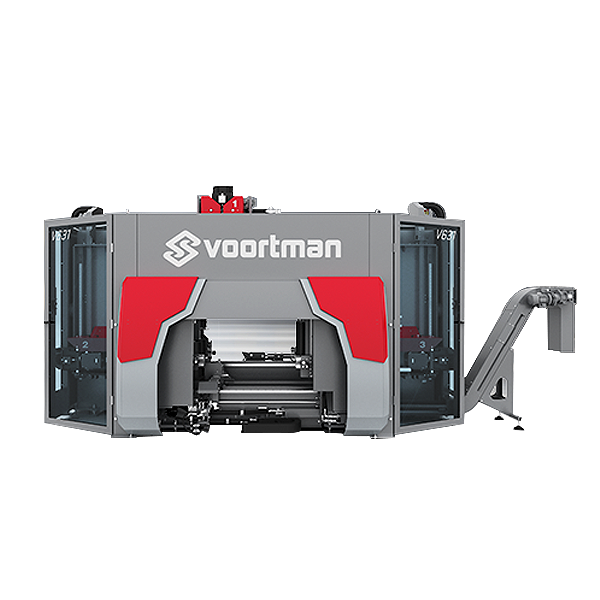
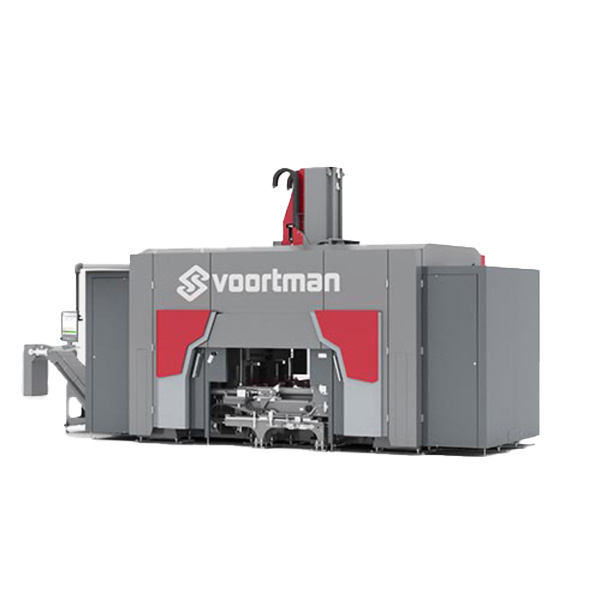
The V633 is a prime example, engineered around four independent sub-axes and 300 mm of X-axis travel to eliminate repositioning losses entirely.
For procurement teams, the correct productivity metric is not theoretical drilling speed - it is total cycle time per finished profile, including handling, tool changes, and repositioning.
Automation as an Operational Multiplier
Automation is no longer optional in modern structural steel production. It reduces dependency on scarce skilled labor, improves shift consistency, and maximizes uptime.
Key automation multipliers include:
- Automatic Tool Changers (ATC)
- Short Product Removal Systems (SPRS)
- automated chip evacuation
- stable servo-driven handling for heavy profiles
Tool capacity is a real operational differentiator:
- V600: 5 stations
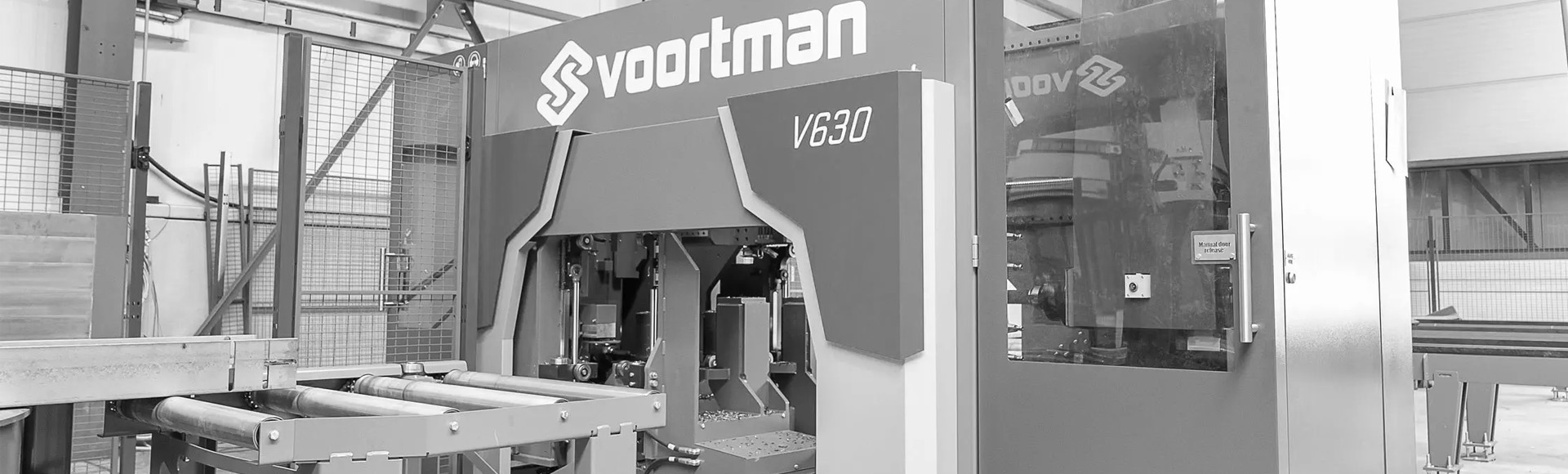
- V630: 3 × 6 (18 tools total)
- V631: 3 × 8 (24 tools total)
- V633: 3 × 14 (42 tools total)
This is what enables continuous unmanned batches and reduces operator intervention.
Material Handling, Roller Feeds vs. Servo Gripper Trucks
Material handling determines real-world machining accuracy.
Roller feed systems provide the fastest measuring, minimal footprint, and bidirectional feeding - ideal for many structural steel workflows.
Servo-driven gripper trucks provide the highest stability for extremely heavy profiles, dynamically adapting to load and reducing vibration over long beam lengths.
Poor handling translates directly into positioning errors, reduced precision, tool wear, and inconsistent weld preparation quality.
A profile processing machine can only deliver its full capabilities when material handling ensures stable datum referencing and controlled positioning.
VACAM Software and Multi System Integration (MSI)
Modern high-volume fabricators are not buying standalone machines - they are building integrated production systems.
VACAM software supports DSTV/3D file import, toolpath optimization, and ERP/MES connectivity.
Beyond this, Voortman’s Multi System Integration (MSI) is a major system-level capability: connecting saws, drill lines, conveyors, cross transports, and buffers into one autonomous production flow. Materials are routed automatically across machines, minimizing manual transport and enabling traceability across the entire line.
For large structural steel operations, MSI transforms production from isolated machine islands into a unified automated system.
Engineering Constraints Procurement Must Validate Up Front
To avoid costly mismatches, procurement teams must confirm the physical envelope and weight limits of each machine.
Key operating constraints include:
- V600: up to 1,050 mm
- V630: 10 × 60 mm up to 450 × 1,140 mm (13,200 kg positioning weight)
- V631:
- up to 460 × 1,050 mm (15,000 kg)
- or up to 610 × 1,250 mm (19,800 kg), depending on model
- V633: 10 × 50 mm up to 460 × 1,140 mm (15,000 kg)
- V807: profiles from 10 × 50 mm up to 460 × 1,140 mm, unlimited length up to 15,000 kg
- VB Range saw capacities:
- VB1050: up to 500 × 1,130 mm
- VB1250: up to 600 × 1,250 mm
These numbers define whether your heaviest beams and largest sections can be processed without manual exceptions.
Minex Group Profile Processing Machine Portfolio
| Machine Model | Best Industrial Use Cases | Key Technical Benefits & Capacities |
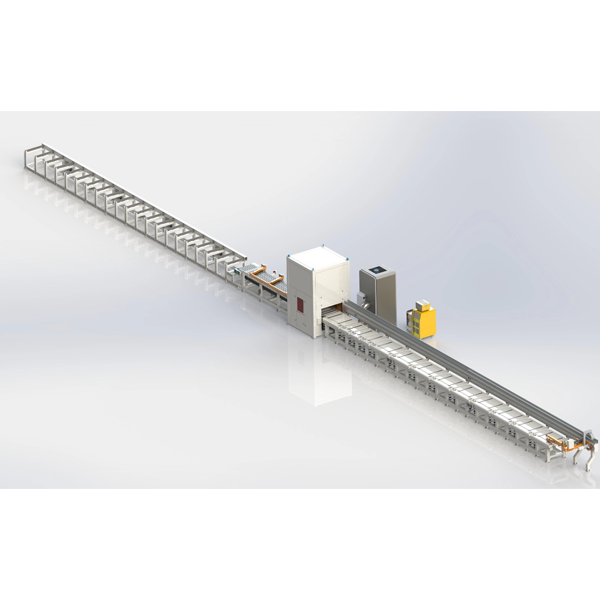
| DIG Automation Engineering Profile Cutting Line | Shipbuilding, offshore structures, maritime steel profiles | Robotic 3D plasma cutting. Fully automated line including storage, blasting, cutting, end milling, sorting. MES integration. |
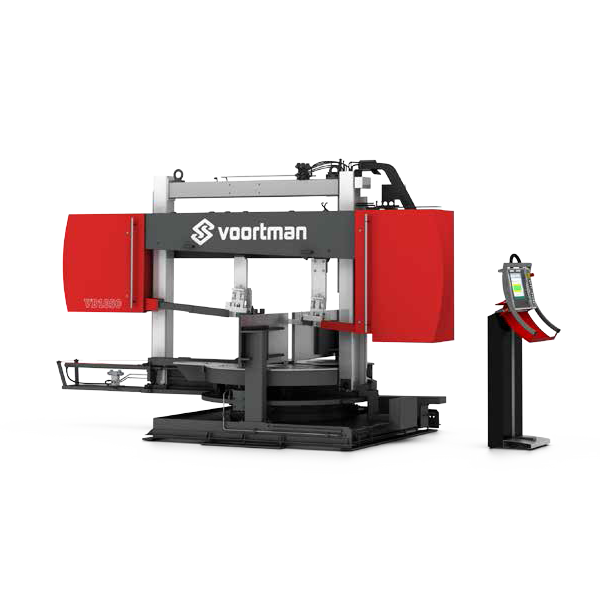
| Voortman VB Range (Beam Sawing) | Structural steel beam cutting, straight and miter cuts | Heavy welded band saw system with SPRS. VB1050: up to 500 × 1,130 mm. VB1250: up to 600 × 1,250 mm. |
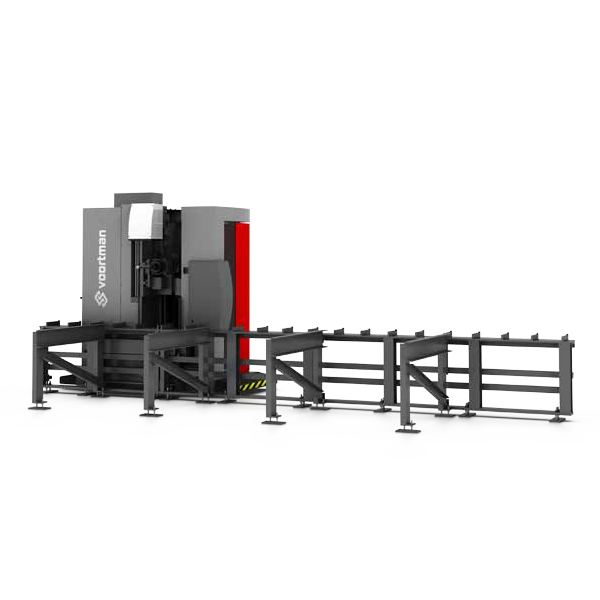
| Voortman V600 - Beam Drilling System | Compact workshops, standalone beam drilling | Movable cabin reduces footprint by 50%. Laser measurement. Up to 1,050 mm. Tool changer: 5 stations. |
| Voortman V630 - Beam Drilling | High-volume drill lines for structural steel | Three independent drill heads. 10 × 60 mm to 450 × 1,140 mm. Tool changer: 3 × 6. Positioning weight: 13,200 kg. |
| Voortman V631 - Beam Drilling and Milling | Heavy engineering, rail, thick-profile milling | Fastest milling due to short tool lengths. 3 × 8 ATC. Up to 460 × 1,050 mm (15,000 kg) or 610 × 1,250 mm (19,800 kg). |
| Voortman V633 - Beam Drilling, Marking and Milling | Maximum-output structural steel production | Four independent sub-axes. 300 mm X-axis travel. 10 × 50 mm to 460 × 1,140 mm. Tool changer: 3 × 14. Weight: 15,000 kg. |
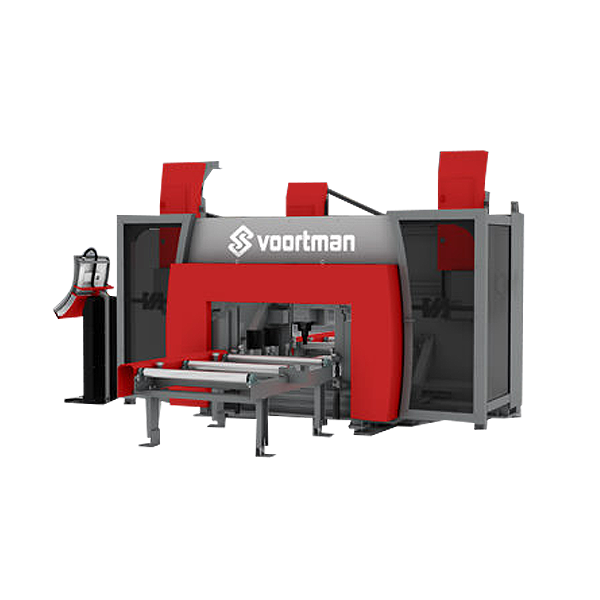
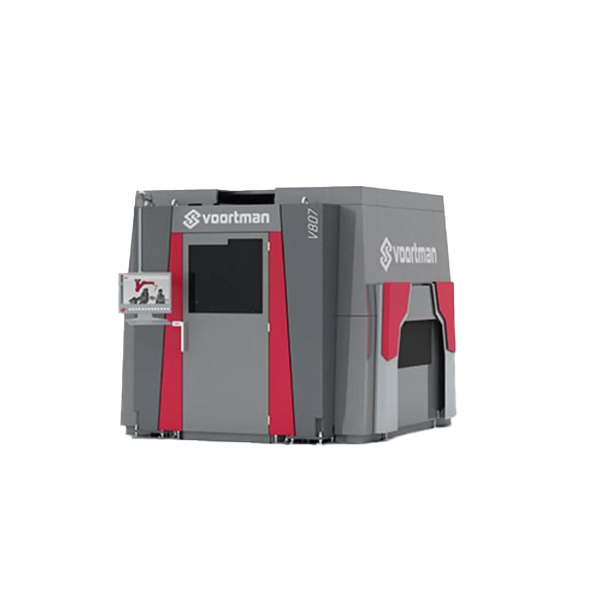
| Voortman V807 - Robotic plasma processing machine | Coping, beveling, slots, weld preparations in one pass | 6-axis robot + 360° W-axis. 10 × 50 mm to 460 × 1,140 mm. Unlimited length up to 15,000 kg. Smallest footprint. |
Frequently Asked Questions
A profile processing machine is CNC equipment designed specifically to automate drilling, milling, sawing, coping, and beveling of structural steel profiles such as beams, H-sections, channels, angle profiles, and flat bar.
In practical fabrication terms, it replaces manual layout plus multiple standalone stations with one controlled workflow, improving precision, repeatability, and production efficiency across structural steel, shipbuilding, offshore, and heavy machinery applications.
Choose a CNC beam drill line / drill line approach when your production is dominated by repetitive machining tasks such as bolt holes, tapping, countersinking, and milling on standard structural steel profiles. Machines such as the Voortman V600 - Beam Drilling System, Voortman V630 - Beam Drilling, and Voortman V633 - Beam Drilling, Marking and Milling are positioned for this type of high-throughput work.
Choose robotic CNC plasma cutting when your components require complex geometry: copes, bevels, notches, slots, and weld preparations on multiple faces - especially where one-pass processing reduces handling and secondary operations. That is the core application logic behind the Voortman V807 - Robotic plasma processing machine.
The simplest decision rule is:
If the challenge is repeatable machining volume, prioritize beam drilling/milling. If the challenge is geometry complexity and weld preparation, prioritize robotic plasma processing.
Footprint planning should start from the workflow, not the machine envelope. The installation footprint includes infeed conveyor space, outfeed zones, buffers, profile positioning areas, and clearance for material handling equipment.
Movable-cabin concepts can reduce installation footprint by up to 50%, which is particularly valuable in workshops with layout constraints. Robotic plasma processing cells consolidate coping and beveling into one compact enclosure, minimizing cross-transport and intermediate staging.
A procurement-grade layout review should always map:
material storage → infeed conveyor → machine → outfeed → sorting/stacking → next station.
For procurement and engineering, the first non-negotiable screen is whether the machine can handle your real profile envelope - both cross-section and weight - without exceptions or manual workarounds.
Key screening constraints include:
- Voortman V600: up to 1,050 mm operating range
- Voortman V630: 10 × 60 mm up to 450 × 1,140 mm (13,200 kg positioning weight)
- Voortman V631:
- up to 460 × 1,050 mm (15,000 kg capacity)
- or up to 610 × 1,250 mm (19,800 kg capacity), depending on model
- Voortman V633: up to 460 × 1,140 mm (15,000 kg capacity)
- Voortman V807: 10 × 50 mm up to 460 × 1,140 mm, unlimited length up to 15,000 kg
- Voortman VB Range (Beam Sawing):
- VB1050 up to 500 × 1,130 mm
- VB1250 up to 600 × 1,250 mm
These limits define whether your heaviest beams and largest sections can be processed without parallel manual routes.
Throughput depends less on headline drill speed and more on whether the machine can process multiple faces without repositioning - and how long it can run without operator interruptions.
High-productivity drill lines use independent sub-axes and multi-head architectures to perform drilling, milling, and marking on multiple sides simultaneously. This eliminates intermediate movements and can significantly reduce cycle time for complex parts.
For benchmarking, productivity should always be evaluated as:
total cycle time per finished profile, including repositioning, tool changes, and handling delays.
ROI is driven by automation features that reduce manual intervention and maximize uptime.
The most valuable multipliers include:
- Automatic Tool Changers (ATC)
- Short Product Removal Systems (SPRS)
- Automated chip evacuation
- Servo-driven grippers for heavy profiles
- Continuous batch processing with minimal operator input
Tool capacity comparisons are especially important:
- V600: 5 stations
- V630: 3 × 6 tool changers (18 tools total)
- V631: 3 × 8 tool changers (24 tools total)
- V633: 3 × 14 tool changers (42 tools total)[
These features enable multitasking, shift consistency, and realistic unmanned operation.
Material handling stability is critical for machining accuracy, tool life, and repeatability.
Roller feed systems provide fast bidirectional movement on compact footprints, making them efficient for many structural steel applications. Servo-driven gripper trucks provide maximum stability for extremely heavy or long profiles, dynamically adapting to load forces during movement.
If handling is unstable, the result is positioning drift, vibration-related wear, and inconsistent weld preparation quality - regardless of machine power.
Multi System Integration (MSI) matters when you are no longer buying a single machine - you are building a connected production system.
MSI links multiple machines (for example beam sawing + drilling + marking + downstream handling) through conveyors, cross transports, buffers, and unified production control. Instead of standalone machine islands, MSI enables autonomous routing, minimized manual transport, predictable throughput, and traceability across the entire line.
For high-volume structural steel fabricators, MSI is one of the most significant system-level advantages available today.
Modern profile processing relies on CNC software environments such as VACAM that support DSTV/3D file import, automatic toolpath optimization, reduced manual programming, and ERP/MES connectivity.
The value is not just digital file handling - it is centralized production data, fewer programming errors, faster preparation, and consistent traceability, especially when multiple machines are integrated through MSI.
Robotic plasma systems maintain precision through advanced measurement and compensation strategies that account for real-world variation in structural steel profiles.
Key mechanisms include 360° rotation for full-face access, automated parameter selection, and real-time compensation that stabilizes cut quality and bevel accuracy despite incoming profile deviations.
This is especially critical for complex copes, bevels, slots, and weld preparations where manual correction would otherwise be unavoidable.
Automated profile processing improves safety by reducing manual handling of heavy beams and minimizing operator exposure to cutting zones and repetitive drilling tasks.
Quality improves because CNC-controlled operations deliver repeatable hole positioning, consistent marking, and weld-ready preparations. The result is fewer defects, less rework, improved assembly fit-up, and more predictable project delivery - especially in structural steel and offshore fabrication.