Fumes and Dust Filters
References
Industrial Fumes & Dust Filter Selection Guide
Selecting an industrial fume extraction system is rarely a straightforward specification exercise. Datasheets give you airflow figures and filter classes, but they don't tell you whether a unit will hold up across three production shifts, whether its cleaning mechanism suits your particulate load, or whether it meets the regulatory threshold for the alloys your team is actually welding. In practice, the gap between a technically adequate fume extraction system and the right system often comes down to six operational variables that need to be assessed together — not in isolation.
Weld fume, fine dust particles, and toxic fumes from cutting and grinding all behave differently in airflow, interact differently with filter media, and carry different regulatory implications. A filtration solution that handles one process well may be entirely wrong for another. Fume extraction systems that are not matched to the specific demands of the application create maintenance challenges, reduce overall air quality in the working environment, and expose employees to contaminants that a correctly specified system would have captured at source. In addition, the wrong system creates avoidable maintenance costs and compliance gaps within the first year of operation that a properly engineered solution would have prevented entirely.
This guide walks through each of those variables in the order a technical consultant would address them, explains what they actually mean for day-to-day operations, and translates them into clear decision criteria. The Minex Group portfolio of distributed fume and dust filtration equipment is presented at the end as a reference matrix, so you can cross-check your requirements against available solutions efficiently.
Duty Cycle First: Why Running Hours Define Your System Architecture
Before airflow, before filter class, before anything else — establish your duty cycle. This single variable determines whether you need a light-duty extraction unit or a continuous-duty system, and getting it wrong is the most common and most costly selection error in industrial fume extraction.
The logic is straightforward: every filter has a design duty cycle, and operating beyond it leads to accelerated filter saturation, declining suction performance, and eventually unplanned downtime. A unit rated for intermittent use will not hold up in a multi-shift robotic welding cell, regardless of how well its other specifications match the application. Maintenance costs escalate rapidly when cleaning cycles, filter replacements, and motor servicing become reactive rather than planned, and the facility ends up operating fume extraction systems that are perpetually underperforming relative to the demands placed on them.
For intermittent or light operations — a maintenance workshop, a fabrication bay with variable output, or a manufacturing environment that includes sanding, light grinding, or low-frequency welding — portable fume extractors with disposable nanofiber filters are technically sound and commercially efficient. These units are designed specifically to handle lower-frequency fume extraction demands, and they are ideally suited to environments where the duty cycle does not justify the capital expenditure of a continuous-duty system. Consumable management remains simple, and the units are capable of delivering adequate capture performance across a wide range of light manufacturing and fabrication tasks. For many light-duty applications, a portable fume extractor is not a provisional solution — it is the ideal solution, offering the right balance of filtration performance, operational flexibility, and total cost of ownership for the application it is designed to serve.
For multi-shift production, automated welding cells, or any application where the fume extraction system runs alongside continuous output, the specification must include a high-vacuum unit with continuous-run capability and automatic filter cleaning. Anything less creates a maintenance dependency that sits directly in the critical path of production.
Source Capture vs. Ambient Filtration: The Decision That Shapes Everything Downstream
Once duty cycle is established, the next question is positional: where does the extraction happen relative to the contaminant source? This is not a preference decision — it is an engineering decision, and it has implications for every other variable in the selection process.
Source capture — extracting dust and fume particles directly at the point of generation, via extraction arms, hoods, on-torch systems, or integrated capture points — is the technically superior approach in the majority of industrial settings. It intercepts weld fume and contaminants before they disperse into the welder's breathing zone or the wider working environment, requires significantly lower airflow to achieve effective fume extraction, and consumes less energy as a result. When source capture is feasible, it should always be the first choice. Decades of field application across cutting and grinding environments consistently demonstrate that source capture fume extraction systems outperform ambient solutions on every efficiency and health metric when correctly installed.
The qualification is scale. In shipbuilding, heavy fabrication of large structural assemblies, or any environment where the workpiece is too large or complex for a fixed or semi-fixed extraction point, source capture becomes geometrically impractical. In these cases, ambient air cleaners — using high-capacity recirculation systems to continuously filter and recirculate air throughout the facility — are not a compromise but the correct engineering response to the constraints of the environment. Ambient air cleaners and air purification towers are designed specifically to respond to the challenge of large-scale manufacturing environments where individual source capture is not feasible. They improve overall air quality and clean air distribution across the full workshop volume by removing accumulated weld fume, smoke, odors, and airborne dust from the facility air in a continuous cycle. In facilities where employees work across a large floor area and workpieces take many different forms — from small fabricated components to complete line assemblies and large structural sections — ambient air purification provides the facility-level air quality control that source capture alone cannot deliver at that scale. These ambient systems should be understood as a complement to, rather than a substitute for, personal respiratory protection in high-intensity zones where smoke concentrations are at their highest.
Understanding which mode applies to your facility determines the class of equipment you're evaluating, the airflow capacity you need, and the footprint implications for your floor layout. It needs to be resolved before the product selection conversation begins.
Airflow Engineering: Getting the Numbers Right Without Disrupting the Process
Airflow capacity is the specification most engineers go to first, and it is genuinely important — but it needs to be read in context. Both under-extraction and over-extraction are operational failures, and the risk of over-extraction is significantly underappreciated, particularly in on-torch applications.
For general extraction systems using arms and mobile units, the operating range is typically 700 to 1,200 m³/h. Centralized multi-arm extraction systems serving several workstations simultaneously, or dedicated systems for plasma and laser cutting tables, require substantially higher capacity — up to 4,500 m³/h. At the ambient end of the spectrum, large-workshop air purification systems operate at up to 10,000 m³/h, with air distribution engineered to ensure clean air reaches the full working volume of the facility without creating cold zones or dead spots.
On-torch fume extraction is the case where airflow engineering demands the most precision. The operating window is narrow — typically 150 to 180 m³/h — and it is adjustable for a reason. If airflow exceeds the threshold, the extraction system pulls shielding gas away from the weld pool, directly compromising weld integrity. This is not a theoretical risk; it is a documented failure mode in production environments where airflow controls have been set by default rather than by application. Any specification for on-torch fume extraction must include adjustable airflow controls as a functional requirement, not an optional feature. Fume extractors that do not offer precision flow adjustment are simply not suited to this application, regardless of their other capabilities. When evaluating fume extractors for on-torch use, adjustable air controls are the single most important feature to verify — they are what make the difference between a system that protects air quality and one that undermines process integrity.
Filter Cleaning Mechanisms: The Operational Variable That Determines Long-Term Cost
Filter cleaning mechanism is the specification detail most frequently treated as a secondary consideration during procurement, and it is the one that most directly drives long-term maintenance costs and operational complexity.
In environments with continuous or heavy particulate loads — shot blasting, cement processing, woodworking, high-output robotic welding — the filter medium accumulates dust and particles faster than periodic manual maintenance can address. Without an effective automatic cleaning mechanism, filtration performance degrades progressively between maintenance intervals, suction drops, and capture efficiency falls. The filters may technically remain in service, but they are no longer effectively removing contaminants from the working environment, and the air quality across the facility suffers as a result.
Automatic pulse-jet cleaning, in which compressed air is fired in controlled bursts through the filter cartridge to dislodge accumulated dust and particles into a collection drawer or sealed bag, extends filter life substantially and maintains consistent performance across the operating cycle. For continuous industrial applications, this is the standard that should be specified. Extraction systems with on-line reverse jet cleaning — meaning cleaning occurs while the unit continues to operate — eliminate the need for scheduled downtime to service the filters, which matters significantly in high-utilisation environments where maintenance windows are limited.
For light or intermittent applications, the calculus changes. Static disposable filter units are simpler to operate, require no compressed air infrastructure, and represent a lower initial capital cost. The decision between automatic and disposable cleaning should be driven by hours of operation and particulate load density — not by cost alone.
One budget distinction worth flagging for procurement managers: not all FilterBox configurations include pneumatic automatic cleaning as standard. The FilterBox 12M variant uses mechanical cleaning for dust applications and a combination of mechanical and compressed air cleaning for welding fume applications — appropriate for medium-frequency use and carrying a lower initial cost than the fully automatic pneumatic models. Clarify the cleaning variant against your duty cycle and contaminant type before finalising the specification.
Regulatory Compliance and Safety Classification: The Non-Negotiable Specification Layer
Every other selection criterion in this guide is a performance consideration. Regulatory compliance is a legal threshold, and it defines the minimum acceptable specification before any performance comparison is relevant.
The most critical classification for welding fume extraction systems in industrial environments is W3 approval, defined under EN 15012 and ISO 21904. W3 is mandatory whenever filtered air is recirculated back into the workplace rather than exhausted externally — a common configuration in facilities where heating and ventilation efficiency is a priority. Any unit operating in this mode without W3 approval is not compliant, regardless of its filtration performance.
Fire risk is a parallel compliance dimension that applies specifically to applications involving grinding, cutting, or any process that generates sparks or incandescent particles. The filter medium in a standard extraction unit is not designed to handle ignition events. Specifications for these environments must include integrated spark arrestors and fire-retardant filter media as baseline requirements. Fume extractors that are not equipped with these protections must not be deployed in spark-generating processes.
Combustible dust is a frequently overlooked compliance boundary. Standard fume extractors are explicitly not rated for explosive dust applications. If your processes generate combustible dust — from aluminium, magnesium, certain organic materials, or similar substances — a dedicated system engineered for that risk class is required. Using a standard extractor in this context is not a grey area; it is a safety and regulatory failure. The exception within the Minex portfolio is the Nederman MJC Cartridge Filter, which is specifically engineered for facilities handling potentially explosive free-flowing dusts. The MJC supports explosion relief area calculations for combustible dust classes St1, St2, and St3, with a reduced explosion pressure rating of Pred = 0.2 bar — making it the ideal solution for chemical, food processing, and woodworking environments where combustible dust is a process reality.
Finally, for processes involving toxic fumes — most notably hexavalent chromium from stainless steel welding — standard filter grades are insufficient for effectively removing these hazardous fume particles from the air. These applications require HEPA-grade filtration, and the system specification must reflect that explicitly.
Mobility and Installation Footprint: Matching System Architecture to Facility Dynamics
The final variable to assess before entering the product selection phase is physical: how static or dynamic is the working environment, and what are the floor space constraints?
In facilities with fixed production lines, robotic welding cells, or dedicated workstations, permanently installed or wall-mounted extraction systems are the appropriate configuration. They reduce floor clutter, simplify integration with existing ducting, compressed air accessories, and infrastructure, and remove the operational variability of units being repositioned between shifts. Compact plug-and-play stationary units are particularly well-suited to robotic cells where floor space is at a premium and the extraction geometry is fixed. These systems are also easier to integrate into existing facility controls and automation infrastructure, and they are designed specifically to operate continuously without the handling demands that mobile equipment introduces.
Dynamic environments — vehicle repair facilities, shipyards, general fabrication workshops where operators and workpieces move — require a fundamentally different approach. Here, compact mobile units with flexible hoses and integrated extraction arms allow the capture point to follow the work. Portable fume extractors are not a compromise in these environments; they are what makes effective source capture operationally viable across a facility where work positions change constantly. The flexibility to reposition the extraction point without disrupting production is a critical operational advantage in these settings, and mobile fume extraction systems designed specifically for dynamic environments deliver exactly that combination of portability and performance. For manufacturing facilities that operate across multiple bays or produce components of varying scale — from individual fabricated parts to complete line assemblies — portable fume extractors provide the operational resources needed to maintain effective air quality control without fixed infrastructure. In this form, distributed portable filtration is often the most practical and cost-effective solution available to operations managers working within real facility constraints.
The practical implication: specify your installation configuration before engaging with product dimensions or connection options. A technically excellent unit specified in the wrong mobility class will either limit your operational flexibility or occupy floor space that your processes cannot afford.
Minex Group Fumes and Dust Filter Portfolio
The table below presents the full Minex Group portfolio of distributed fume and dust filtration equipment, with each product mapped to its optimal application context and its decisive technical advantages. Use your assessed requirements across the six criteria above to cross-reference the right solution for your facility.
| Product | Ideal Application | Sectors | Key Technical Advantages |
|---|---|---|---|
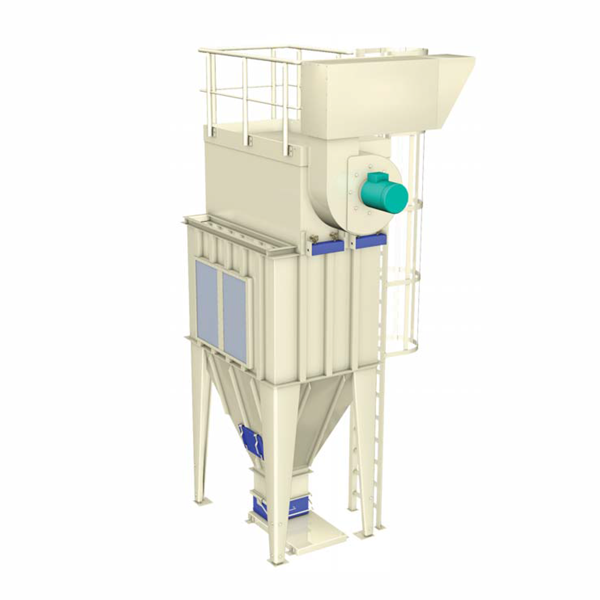
| Pat Jet MNX Dust Filter | Continuous heavy-duty process dust extraction with high particulate loads | Metalworking, powder coating, sandblasting/shot blasting, cement, chemical, food | Continuous automatic pulse-jet cleaning via compressed air; heavy-gauge steel construction; safe top-replacement cartridge system with sealed dust bags for contained disposal |
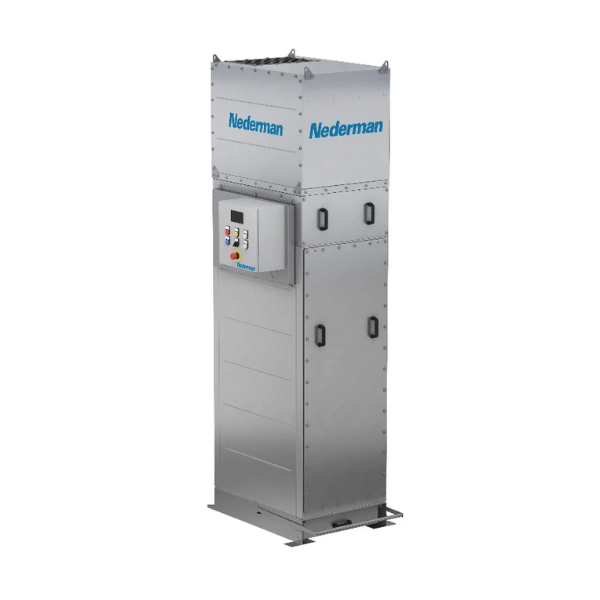
| Nederman MCP-GO SmartFilter | Centralised extraction for multiple simultaneous automated or semi-automated stations | Robotic/cobot welding cells, plasma cutting tables, laser cutting tables | Plug-and-play footprint under 1m²; capacity up to 4,500 m³/h serving up to 5 extraction arms; 6 fire-retardant nanofiber cartridges rated MERV 14 / ePM1 80%; integrated pulse-jet self-cleaning; requires 3-phase 400V supply (230V/460V on select models) |
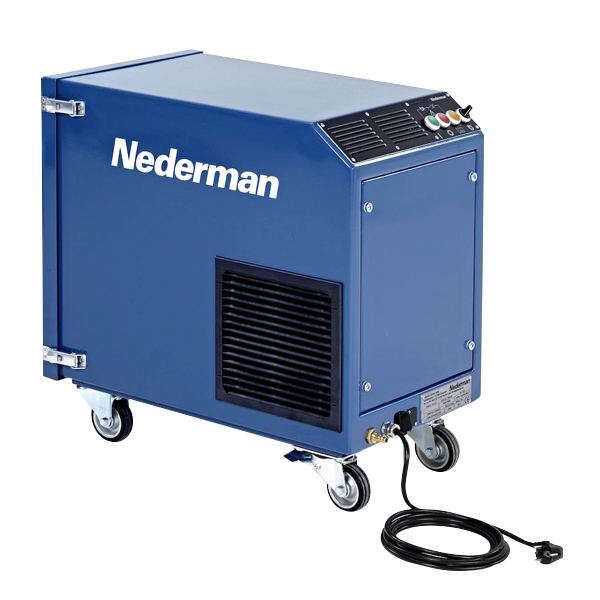
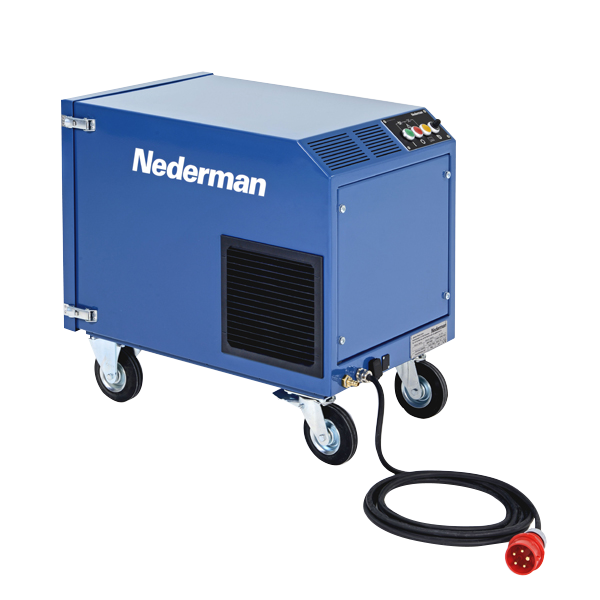
| Nederman FilterBox | Medium-to-heavy fume and dust extraction at fixed or semi-fixed workstations | Cutting, grinding, welding; food and pharma variants available | Up to 1,200 m³/h; W3 approved for air recirculation; FilterBox 12M uses mechanical cleaning for dust applications and combined mechanical/pneumatic cleaning for welding fumes; fully automatic pneumatic cleaning on advanced models; LCD operational display; optional HEPA filtration for toxic fumes including hexavalent chromium |
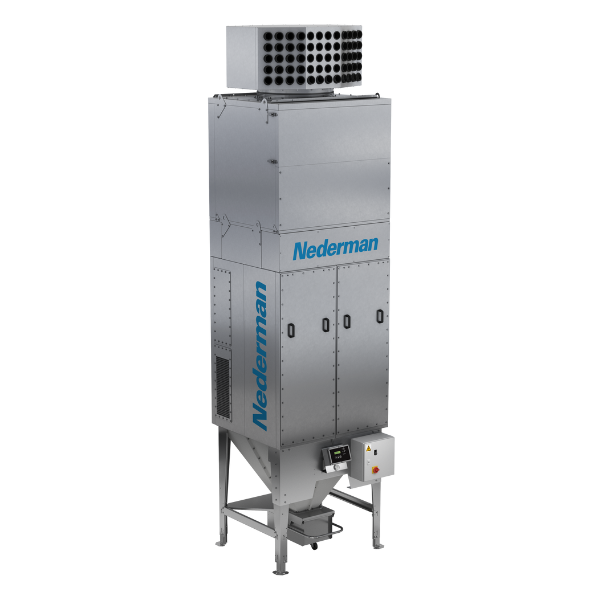
| Nederman MCP-12S-APT Air Purification Tower | Ambient air purification in large-volume workshops where source capture is not feasible | Shipbuilding, large-scale metalworking, heavy machinery fabrication | 10,000 m³/h decentralised indoor purification; floor-level intake; 60 individually adjustable high-velocity nozzles for full-volume clean air distribution; no heat energy losses to the facility |
| Nederman FE 24/7 1.5 | Continuous-duty single-torch fume extraction in production and automated welding environments | Continuous production welding, robotic/cobot welding cells | Maintenance-free side-channel blower rated for continuous shifts; 35 kPa vacuum pressure; integrated spark arrestor; automatic start/stop; W3 approved; requires 1-phase 230V supply |
| Nederman FE 24/7 2.5 | Continuous-duty dual-torch fume extraction for simultaneous two-station operation | Continuous production welding, robotic/cobot welding cells with dual-torch configuration | All performance features of the FE 24/7 1.5 with added capacity for simultaneous two-torch extraction; maximum airflow 270 m³/h; requires 3-phase 400V supply |
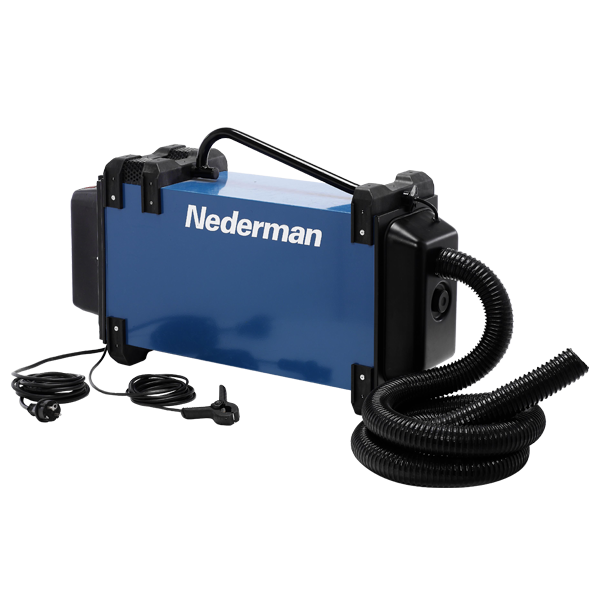
| Nederman FE 840 (also referenced as FE 840+) & FE 860 | On-torch source extraction and portable fume capture in confined or restricted-access spaces | Shipyards, confined space welding, field maintenance and service operations | High portability; FE 860 features precision-adjustable airflow controls to preserve shielding gas integrity; ISO 21904 compliant; reinforced nanofiber filters with up to 5× longer service life than standard polyester media |
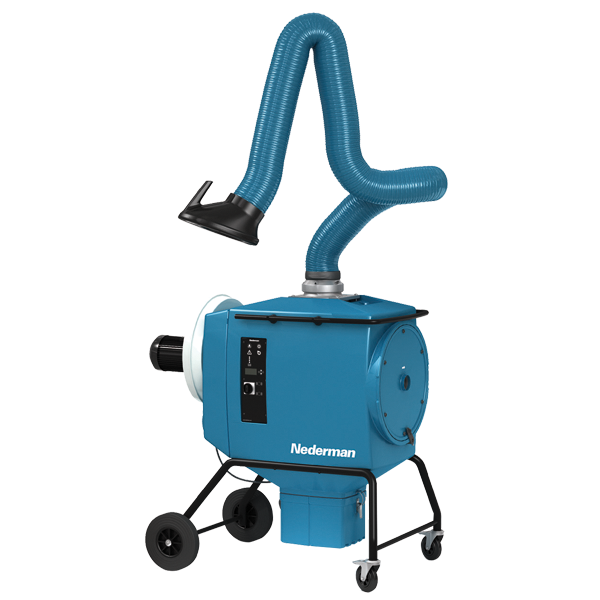
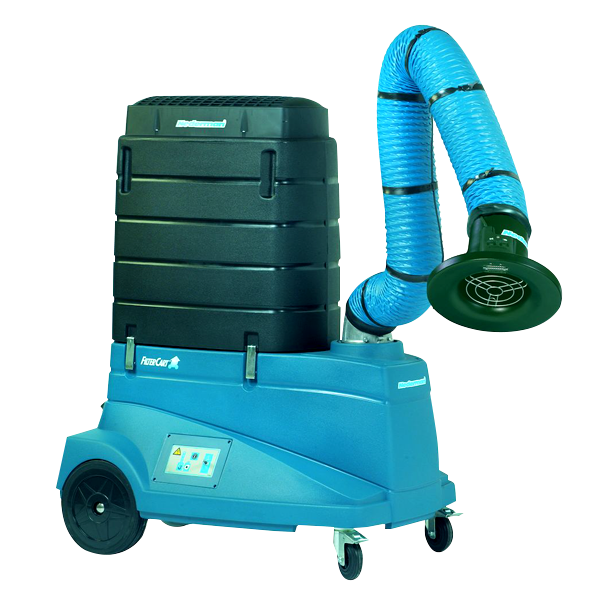
| Nederman FilterCart W3 | Mobile source capture for intermittent manual welding across multiple workstations | General fabrication, maintenance welding, job shops | Fully mobile with integrated extraction arm; 30m² disposable nanofiber filter rated MERV 14 / W3 class; integrated LED work light in extraction hood; optional HEPA 13 upgrade; requires 1-phase 230V supply |
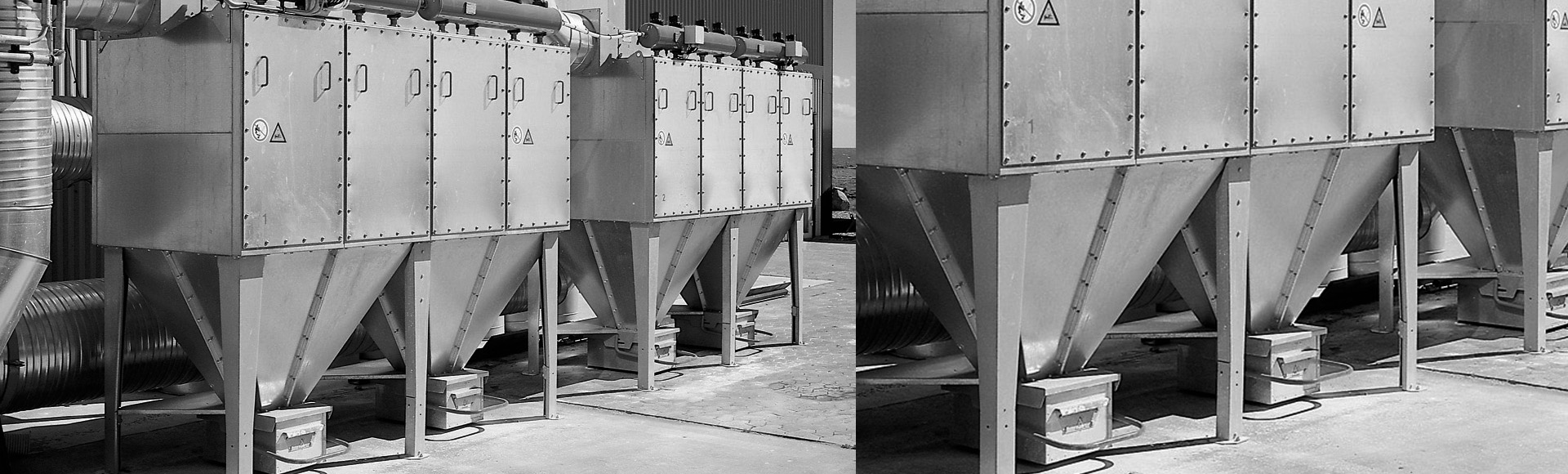
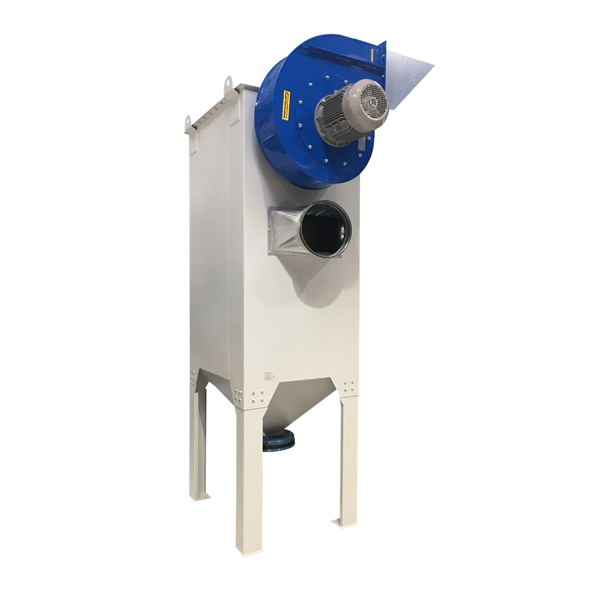
| Nederman MJC Cartridge Filter | High-volume continuous process dust extraction for free-flowing industrial dust, including potentially explosive dust classes | General process industries, woodworking, bulk material handling, chemical and food industries, high-temperature processes | Large pre-separation chamber substantially reduces filter loading; on-line reverse jet cleaning with no operational downtime for maintenance; rated to 80°C continuous operating temperature; scalable filter area from 48m² to 739m²; supports explosion relief area calculations for combustible dust classes St1, St2, and St3 with reduced explosion pressure Pred = 0.2 bar |
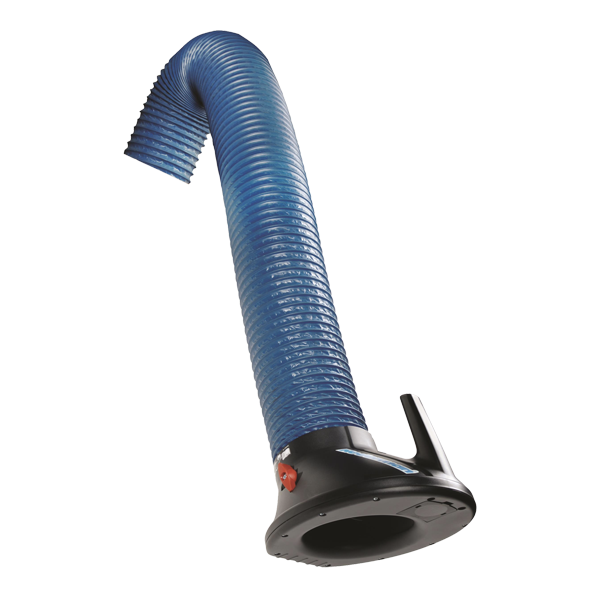
| Nederman Original Extraction Arm | Flexible source capture at individual welding or metalworking workstations | Individual welding benches, metalworking workstations, laboratory fume extraction | 360° rotation swivel joint; available in 2 to 5 metre reach lengths; integrated hood damper; compatible with wall, ceiling, or mobile filter unit mounting |
Need a Second Opinion Before You Commit to a Specification?
Industrial filtration decisions carry real consequences — for operator health, regulatory compliance, and production continuity. If your application sits outside the standard parameters covered in this guide, involves multiple contaminant types, requires a multi-station system design, or you simply want an independent technical review before finalising your specification, the Minex Group technical team is the right conversation to have.
Frequently Asked Questions
The answer sits in your workflow dynamics, not in the product catalogue. If your operators move between workpieces, work across a large floor area, or regularly operate in confined spaces such as ship hulls or tank interiors, a portable unit is not a compromise — it is the only configuration that makes source capture operationally viable. Mobility is what keeps the extraction point at the contaminant source when the work moves, and portable fume extractors are designed specifically to handle this operational reality effectively.
Conversely, if your production is centralised — a fixed welding bench, a dedicated cutting table, a robotic cell — a stationary or wall-mounted fume extraction system will consistently outperform a portable unit over time. Stationary installations typically offer larger filter surface areas, more robust automatic cleaning mechanisms, and lower maintenance costs across their service life. The right choice is the one that matches the physical reality of how work happens in your facility, not the one that looks most flexible on paper.
Almost always, this is a mismatch between particulate density and cleaning technology. If you are running a high-output process — continuous robotic welding, grinding, or abrasive blasting — with a manual-clean or disposable filter, the dust and particles accumulate faster than the filter medium can recover between manual interventions. The result is progressive pressure buildup that forces particles deeper into the media, eventually blinding the filters permanently rather than just loading them temporarily. The solution is not more frequent filter changes; it is specifying an automatic pulse-jet cleaning system that removes accumulated particulate continuously during operation, maintaining consistent pressure drop and extending filter service life substantially.
Yes, if it is not correctly specified for on-torch applications. This is one of the most practically damaging mismatches in welding environments. When vacuum pressure exceeds the correct operating range — or when the system lacks precision flow adjustment — it extracts shielding gas along with the weld fume, exposing the weld pool to atmospheric contamination. The result is porosity, oxidation, and structural defects that may not be visible in a surface inspection but will compromise integrity. The engineering response is to specify a unit with adjustable airflow controls, calibrated to the 150 to 180 m³/h range that balances effective fume extraction with shielding gas stability. This is a precision requirement, not a guideline.
The upfront price difference between disposable and self-cleaning systems is real, but it is the wrong figure to use for a procurement decision. The relevant metric is total cost of ownership across the expected service life of the installation.
Disposable filters carry a lower initial capital cost but generate continuous recurring expenditure — replacement filter media, labour time for changeouts, and associated production downtime during each intervention. In high-utilisation environments, maintenance costs accumulate quickly and the total spend on consumables alone can exceed the cost of a self-cleaning system within the first two years of operation.
Self-cleaning systems — specifically pulse-jet automatic cleaning using compressed air — require a higher initial investment but can extend filter service life by three to five times under equivalent load conditions, with filter maintenance happening on-line rather than requiring operational stops. In any application running beyond intermittent duty, the total cost crossover point is typically reached well within the first year of operation. For continuous production environments, self-cleaning filtration is not a premium option; it is the economically rational choice.
Not efficiently, and attempting to use one system for both without appropriate engineering between the two particulate classes will degrade filtration performance for both applications. Large abrasive particles from grinding and the sub-micron particles produced by various cutting and grinding processes behave differently in airflow and interact with filter media differently. A system designed specifically for fine fume filtration will clog rapidly if exposed to heavy grinding dust. The correct approach is either a dedicated system for each process, or a multi-stage configuration that uses a pre-separator or spark arrestor chamber to capture coarse particles and incandescent material before they reach the high-efficiency fine-fume filter stage. Combining both in a single-stage unit without this separation is a filter management and performance problem in waiting.
Considerably less than most engineers budget for, particularly with current generation equipment. Modern centralised filtration units are engineered with a vertical footprint designed specifically to preserve premium production floor space. As a practical reference point, the Nederman MCP-GO SmartFilter — designed specifically for automated and robotic welding environments — delivers centralised fume extraction capacity for up to five simultaneous extraction arms at up to 4,500 m³/h from a floor footprint of under one square metre, making it an ideal solution for congested manufacturing cells where floor space is a hard constraint.
One planning detail that is consistently overlooked: always factor service clearance into your space allocation — the physical access required to pull a filter cartridge, empty a dust drawer, or service the cleaning mechanism. The machine's external dimensions are not the same as the space the machine needs to be maintained safely and efficiently.
Yes, and the relationship is direct. Longer arms — in the 4 to 5 metre range — provide the reach necessary for larger workpieces or wider workstation layouts, but they introduce internal friction and pressure drop across the arm length. If the fan motor is not sized to compensate for that resistance, the suction at the hoods will be insufficient for effective fume capture, regardless of what the unit delivers at its inlet. Reach without adequate suction at the capture point achieves nothing. When specifying longer extraction arms, always verify that the connected fume extraction system's motor and fan are rated to maintain the required hood velocity at the arm's full extension, not just at the unit's discharge.
Calendar-based filter replacement is an unreliable maintenance strategy that leads to either unnecessary expenditure or operational risk, depending on which direction the error goes. The technically correct approach is pressure differential monitoring. Quality fume extraction systems use a differential pressure gauge — often presented on an LED or LCD display — that measures the resistance across the filter medium. When the pressure drop reaches the threshold defined by the manufacturer, the medium is at capacity. Below that threshold, changing the filters wastes serviceable life and consumable budget. Beyond it, the degraded filtration restricts airflow, reduces capture efficiency, and places increased load on the motor — shortening its service life and increasing the risk of workers being exposed to weld fume and dust particles that the system is no longer effectively removing from the working environment.
It is safe under specific, clearly defined conditions — and genuinely hazardous outside them. Recirculating clean air back into the workplace is a common practice in facilities where heating costs are a significant operational expense, and it is technically sound when the fume extraction system is explicitly rated for recirculation mode and fitted with high-efficiency filter media such as nanofiber or HEPA. Where it becomes a serious health and regulatory risk is in applications involving toxic fumes or carcinogenic materials — stainless steel welding being the most common example. In these environments, a system that is not rated to the W3 standard under EN 15012 will not remove fine hazardous particles to the level required for safe recirculation. The practical consequence is that invisible carcinogenic material re-enters the working environment with each recirculation cycle, degrading air quality and exposing workers to risks that the fume extraction system was installed to prevent. If recirculation is part of your facility's energy strategy, W3 certification and appropriate filter grade are non-negotiable prerequisites.
Dust collection and disposal is the operational detail that gets the least attention during procurement and creates the most practical problems during maintenance. For high-volume processes, the priority is a contained, low-contact disposal system. Sealed dust bags or easy-empty collection drawers that can be removed and replaced without releasing accumulated dust particles, smoke residue, or odors back into the working environment are the standard expectation for industrial applications.
Where the collected material includes toxic fumes residue or hazardous particulate — fine metal dust, carcinogenic weld fume deposits, or reactive metal particles — the requirement goes further. Contamination-free exchange systems, such as Longopac continuous bagging, ensure that maintenance personnel are not exposed to a concentrated release of hazardous material the moment the collection chamber is opened. This is not a secondary consideration; in facilities handling toxic fumes and fine particulate, the dust disposal mechanism is a direct occupational health control that needs to be specified alongside filter grade and cleaning mechanism from the outset.