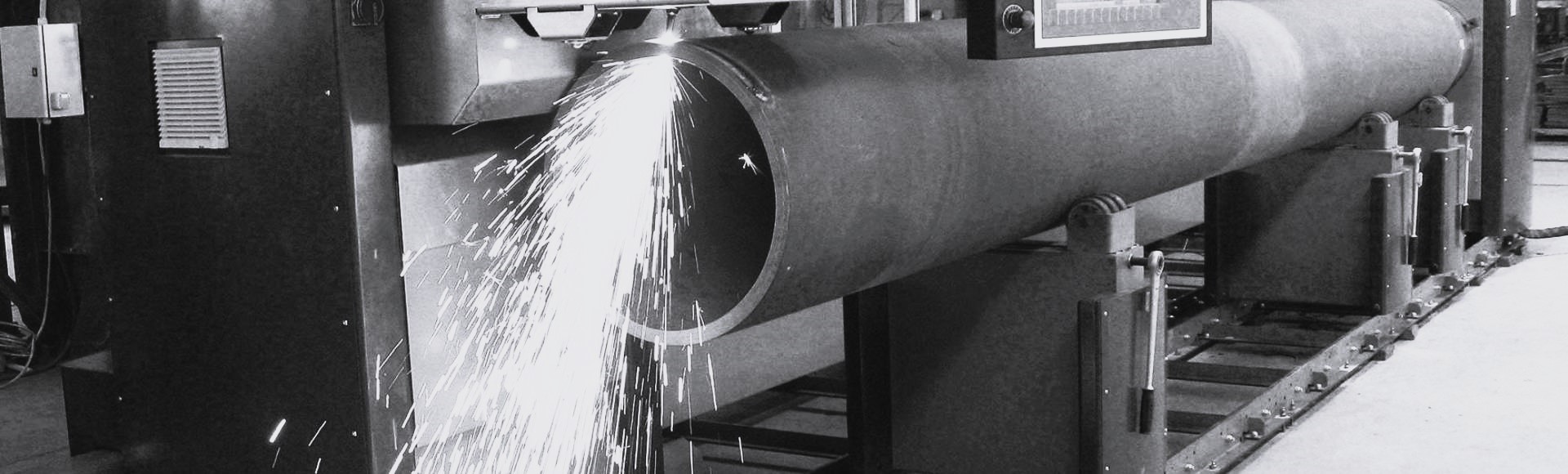
Pipe Processing Machines
References
How To Choose The Right Pipe Cutting and Beveling Machine for Industrial Fabrication
Selecting a pipe cutting and beveling machine is rarely a simple equipment purchase. For most industrial manufacturers, it's a strategic production decision - one that directly impacts weld quality and structural compliance, throughput capacity and delivery schedules, material efficiency and waste reduction, and long-term fabrication flexibility.
Get it right and it becomes an asset that scales with your business. Get it wrong and you inherit years of operational friction that no amount of skilled labour can fully compensate for.
Who This Guide Is For
This guide is written for experienced technical audiences who need to make the right decision based on real production constraints: engineers evaluating technical specifications against application requirements, procurement managers balancing capital investment with operational ROI, plant directors planning production capacity for 3-5 year growth, and fabrication specialists who understand the downstream impact of cutting decisions.
What This Guide Covers
The primary focus is on thermal cutting technologies - laser, plasma, and oxy-fuel - for profiling and beveling operations. Mechanical bandsaws for cut-to-length operations are covered in the Alternative Technologies section below, particularly relevant when heat-affected zones must be avoided entirely.
Start With What You're Actually Cutting
The best pipe cutting machine isn't defined by brand, power rating, or maximum diameter specification. It's defined by the reality of your production floor.
Before you evaluate a single model, you need honest answers to a handful of fundamental questions.
- What materials are you processing today, and what will your contract mix look like in three to five years?
- What wall thicknesses dominate your workload?
- Are you cutting simple round pipes and tubes, or are you routinely producing complex structural intersections with saddle cuts and custom bevels?
- Is weld preparation still handled manually through hand cutting and grinding, or have you automated it?
- And critically: are you operating in a high-volume repetition environment, or is high-mix complexity your daily reality?
Your answers to these questions will narrow the cutting machines field significantly. Every other consideration - software integration, footprint, automation level - flows downstream from them.
Material Thickness and Metallurgy: The First Hard Constraint
Every cutting process is constrained by physics. The moment you define your material composition and thickness range, you eliminate a substantial portion of the available options. This isn't a limitation to work around - it's the most reliable shortcut to the correct decision.
Thin-Wall Materials: Laser Territory
Thin-walled tubes - particularly stainless steel or reflective alloys like aluminium - demand high precision and minimal heat input. Fibre laser tube cutting excels here because it produces the smallest heat-affected zone and the cleanest edge quality of any available technology.
This is why automotive, rail manufacturing, and precision fabrication environments rely almost exclusively on fibre laser systems. Distortion is unacceptable, tolerances are tight, and cycle times need to be fast.
Heavy-Wall Materials: Plasma and Oxy-Fuel Territory
As wall thickness increases, particularly in structural carbon steel and heavy wall pipe above 50 mm, laser becomes less economical and often hits technical limitations. The decision shifts toward plasma pipe cutting or oxy fuel cutting, where penetration depth and process robustness outweigh micro-level precision.
For shipbuilding, offshore structures, and heavy machinery manufacturing, these technologies aren't legacy options or compromises - they're the right tool for the job. Oxy fuel cutting remains the only viable option for the thickest materials, handling carbon steel up to approximately 180 mm with reliable pierce angles and consistent root gap offsets.
The Blurred Boundary
The laser-versus-plasma boundary isn't as clean as it once was. Voortman's V845 and V842 Baseline systems now bring heavy-duty laser capability into the medium-to-large profile range, competing with and sometimes complementing the upper end of the DNE laser portfolio.
If your production sits at the mid-heavy intersection - structural steel fabrication with larger pipe diameters but still precision-dependent - it's worth evaluating laser options from both manufacturers before defaulting to plasma.
Quick Decision Guide
Thin, high-precision profiles? Laser is usually the answer.
Thick structural steel dominates your workload? Plasma or oxy fuel becomes unavoidable.
Somewhere in between? Evaluate both technologies before deciding.
Geometry Complexity: Pipes Are Rarely Just Pipes
In industrial fabrication, pipe processing almost never stops at straight cuts. The operational value - and the technical challenge - lies in complexity: saddle cuts for branch connections, penetrations, miter intersections, structural node preparation, complex profile shapes, and pressure vessel heads and domes.
When Complexity Changes Everything
A standard round pipe is relatively straightforward. But introduce U-channels, I-beams, square profiles, or special geometries and the machine requirements change substantially. You now need advanced chucking systems with secure clamp mechanisms, multi-axis control, and stable contour interpolation.
This matters especially in structural steel fabrication and process plant engineering, where beams and non-round profiles are part of everyday work - not exceptions.
The Pressure Vessel Challenge
Even more specialised is pressure vessel manufacturing, where dished ends and domes require machine capabilities that most cutting machines simply cannot support. Heat exchangers and pressure vessels demand precise cutting on complex curvature with accurate CNC cut paths.
This is frequently overlooked until late in the procurement process - a costly oversight when it forces workarounds or secondary operations.
How Modern Systems Handle Complexity
Modern CNC pipe cutting machines address these challenges through sophisticated control systems that manage lead ins and lead outs automatically, compensate for plasma beam divergence, and ensure consistent quality across varying pipe sizes. A single operator can manage these complex cutting parts once the machine is properly programmed with CAD design IDs and actual CNC cut paths.
The Bottom Line
If your fabrication involves anything beyond straight tube severance, geometry must be treated as a primary decision driver, not an afterthought.
Weld Preparation and Beveling: Where the Real ROI Often Lives
Many plants significantly underestimate the cost of weld preparation. Manual bevel grinding remains one of the most expensive hidden bottlenecks in industrial fabrication. It consumes skilled labour, introduces variability across shifts, and slows throughput in ways that are easy to absorb individually but devastating at scale.
When Automated Beveling Becomes Mandatory
Modern pipe cutting and beveling systems increasingly deliver weld-ready edges through automated beveling - not as a premium add-on, but as a core capability.
If your operation requires V, Y, or K bevel preparations with precise root gap offsets, particularly for offshore, pipeline, or energy applications, multi-axis CNC beveling isn't optional. It's mandatory.
The Business Case in Three Points
A beveling machine capable of true 3D beveling with custom bevels delivers three immediate returns:
- First, it eliminates downstream labour. No more manual grinding between cutting and welding.
- Second, it reduces pipe fitting time. Parts arrive at the welding station ready to assemble.
- Third, it standardises welding quality regardless of which operator is on shift.
For mechanical contractors and heavy-industry customers working with pressure vessels, the ability to produce accurate cuts with proper bevel angles directly off one machine often justifies the investment - before any other productivity gains are calculated.
Beyond Cutting: Traceability and Compliance
The integration of automated beveling also supports better job planning and material tracking. Modern systems can uniquely label parts with QR codes that reference pipe heat numbers, spool numbers, and CAD design IDs, ensuring full traceability from cutting through to final welding and installation.
This level of integration helps operators maximize pipe utilization while maintaining compliance requirements across complex projects.
Workpiece Size and Weight: Capacity Is a Logistics System, Not a Spec
Pipe diameter and workpiece weight aren't just technical parameters - they define your entire material handling ecosystem.
A machine rated for 4,000 mm monopiles isn't simply a larger version of a workshop cutter. It's a fundamentally different system that requires heavy-duty roller beds, crane integration, operator access platforms, coordinated infeed and outfeed logistics, substantial floor space, and purpose-designed structural foundations.
Two Different Worlds
Extreme capacity systems serve wind energy, maritime infrastructure, and offshore fabrication. These are designed around massive workpieces and the logistical reality of handling them safely and efficiently. Maximum weight specifications can reach 45 tons, requiring specialized material handling beyond what a single operator could manage without automation support.
General fabrication environments, by contrast, typically focus on speed and automation for lighter tubes under 500 kg. Here, bundled loading and continuous feeding determine productivity. The machine features prioritize rapid changeover between different pipe sizes and the ability to quickly respond to varying production requirements.
Think Workflow, Not Datasheet
Capacity decisions must be made in the context of your workflow - not just the maximum diameter printed on a datasheet.
Consider how materials move onto and off the machine bed, how operators access the cutting process safely, and whether your floor can support the structural loads involved.
Throughput Strategy: High Volume vs High Mix
How your production is structured matters as much as what you're cutting. These two approaches require fundamentally different machine architectures and operating strategies.
High Volume: Speed Is Everything
If you're operating in an automotive-style throughput environment - repetitive, high-volume, cycle-time driven - then automation is essential and non-negotiable. Bundled loading, automatic unloading, and nesting parts optimisation determine profitability at volume. Every second of unnecessary handling or reconfiguration costs real money.
In these environments, the cutting process must be optimized for speed, with minimal operator intervention once production runs are established.
High Mix: Flexibility Is Everything
If you're operating in structural steel fabrication or project-based engineering, flexibility matters more than raw speed. You need a system capable of switching between profiles, diameters, bevel types, and geometries without constant reconfiguration or loss of setup time.
This is where advanced CNC profiling systems consistently outperform: they're built for complexity, not repetition. The ability to track jobs through integrated software, manage nesting parts across multiple projects, and maintain accurate documentation becomes critical.
Supporting Equipment for High-Mix Environments
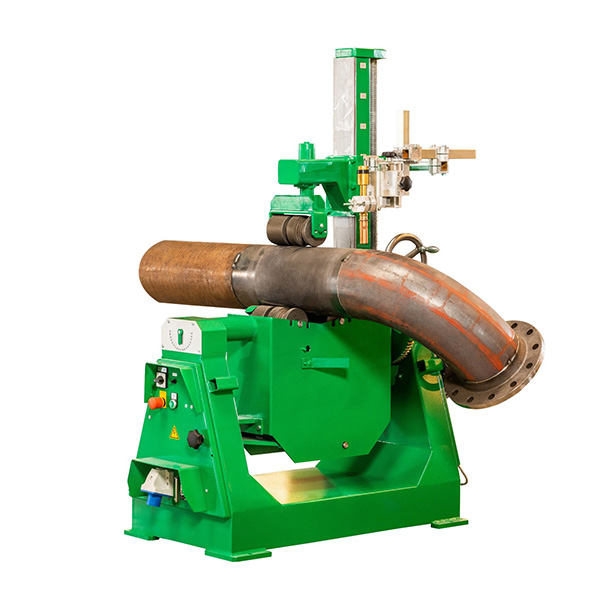
For high-mix workshop environments, supporting equipment also plays a vital role. Welding rotators and positioners, such as the Kistler U-Range, become essential tools for efficiently positioning pipes for both manual cutting operations and circumferential welding. They enable a single operator to handle workpieces that would otherwise require multiple personnel or complex fixturing.
The Decision That Shapes Everything Else
Knowing whether you're buying for volume or variability is one of the most important procurement distinctions you'll make. The wrong choice here affects not just machine operation but your entire production planning methodology.
CNC vs PLC Control: Matching Technology to Workforce Reality
Control architecture is easy to overlook in equipment procurement, but it shapes daily usability as much as any mechanical specification. The wrong system - even technically excellent hardware - creates friction at the operator level that compounds over time.
When CNC Makes Sense
A CNC-controlled multi-axis system is well-suited to operations that require CAD/BIM integration, Tekla workflows, complex contouring, automated beveling, and digital production planning. These environments benefit from the full capability stack: importing spool designs, managing actual CNC cut paths with precision, and coordinating complex cutting and beveling operations across multiple axes.
When PLC Makes More Sense
Not every plant needs this level of complexity. For maintenance workshops, field operations, or simpler cutting requirements, PLC-based portable systems offer a better balance: faster deployment, straightforward menu-driven programming, and minimal training overhead. A single operator can be productive within hours rather than days.
Match Technology to Your Team
The best control decision aligns not just with your fabrication requirements, but with the operational reality of your shop floor - including the skill profile of the people who will run the machine day to day.
Software Integration: The Decision Factor Operations Leaders Often Miss
For operational and procurement managers overseeing complex fabrication environments, the software ecosystem around a machine can matter as much as the hardware itself. This is particularly relevant at the heavy industrial end of the portfolio.
Beyond Manual Programming
Voortman's MO series supports integration with PypeServer Enterprise, a production management platform that significantly changes how cutting operations interact with the wider engineering and logistics workflow.
Rather than manually programming cuts from reference drawings or relying on paper parts lists, PypeServer enables direct CAD file import, defect-aware nesting, and real-time production tracking through PypeServer Cloud.
Complete Assembly Management
PypeServer's spool importing capability allows fabricators to bring in complete assemblies with all associated metadata - pipe heat numbers, material specifications, weld requirements, and assembly sequences. The system can then uniquely label parts with identifiers that persist through the entire fabrication and installation process, eliminating errors that occur when parts are misidentified during assembly.
When Integration Becomes Strategic
For plants running high-value, schedule-sensitive projects - offshore wind fabrication, pressure vessel manufacturing, complex process plant work - this kind of ERP-level integration isn't a convenience feature. It's a material reduction in lead time and error rate.
The ability to track jobs from initial design through final installation, while maintaining full material traceability, becomes essential for compliance and quality assurance.
The Right Question for Heavy Industrial Systems
When evaluating the Voortman MO Classic or Heavy-Duty systems in particular, the question to ask isn't just what the machine can cut - but how cleanly it connects to your upstream design data and downstream production planning.
Plants that have this integration in place consistently report measurable gains in nesting efficiency and material utilisation, which on large-diameter structural work translates directly to project margin.
Note: If your operation uses Tekla Structures, Aveva, or similar engineering platforms, confirm PypeServer compatibility during the evaluation process. The integration pathway is well-established, but your IT and production planning teams should be part of the procurement conversation from the outset.
Minex Group Pipe Processing Portfolio
Minex Group distributes and integrates pipe processing solutions from leading manufacturers, working with customers to match technology to application rather than product to spec sheet. The portfolio below provides a clear overview of available systems, their industrial fit, and where they deliver the most value.
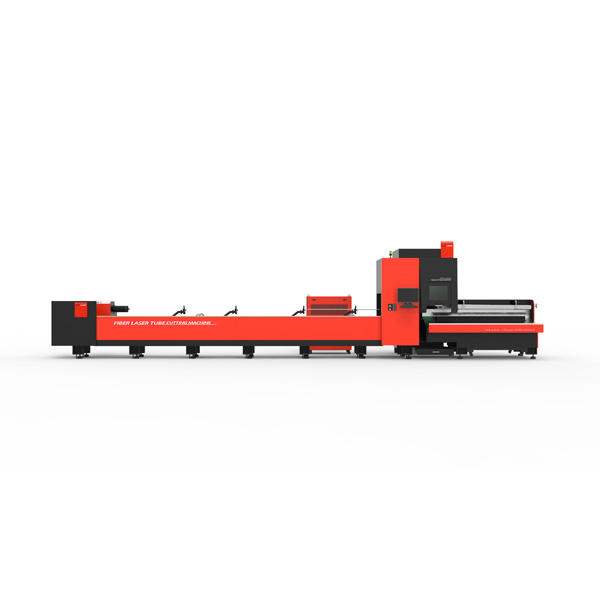
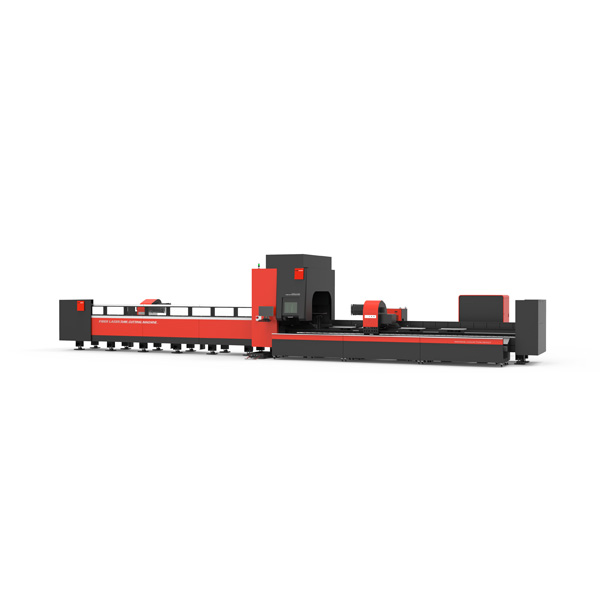
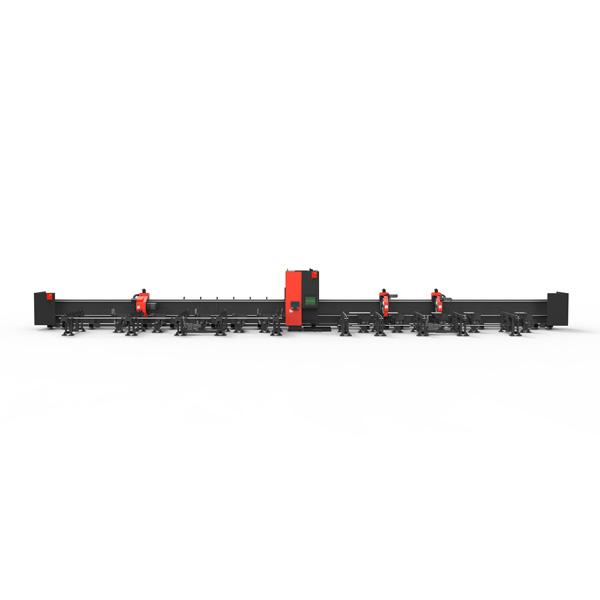
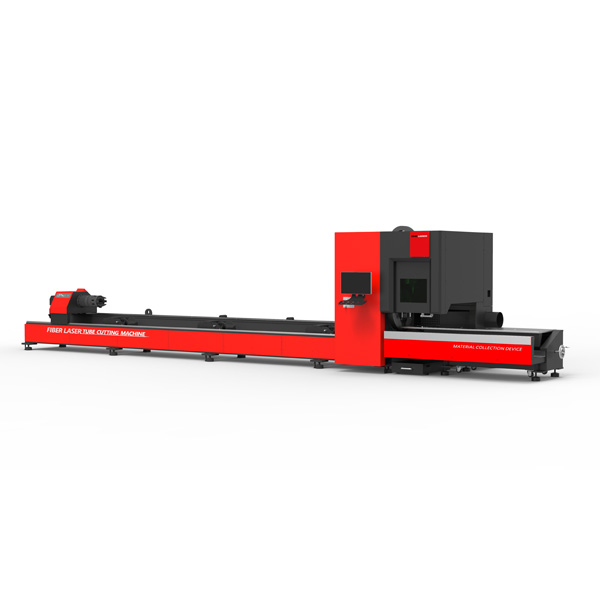
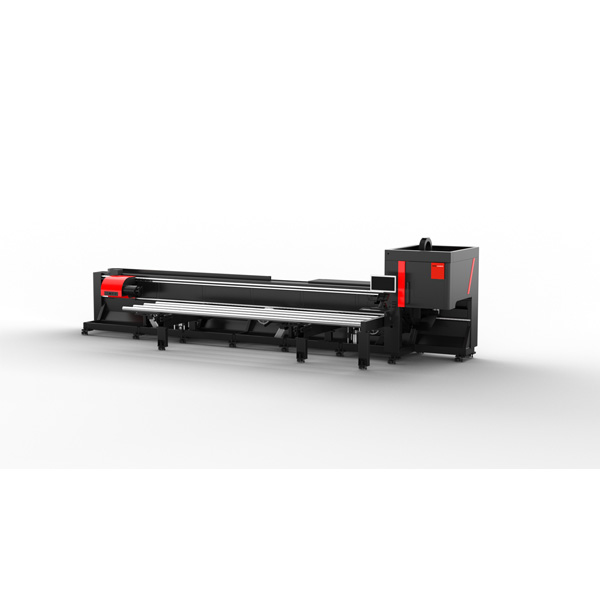
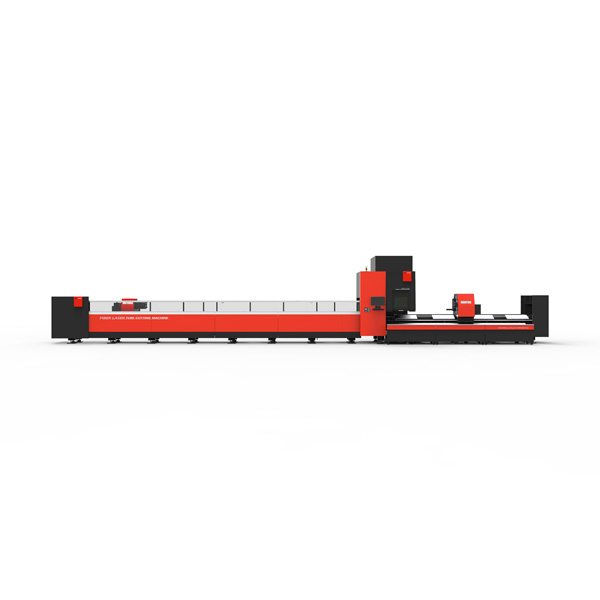
Fiber Laser Tube Cutting Systems - DNE Laser
Best suited for: Automotive, Furniture, Light Steel Structures, Precision Tube Fabrication
The DNE range covers the full span of laser tube cutting requirements, from entry-level fabrication through to heavy-duty structural applications.
The Standard Series - D-Tube 160, 240, and 360 models handle tubes up to 360 mm diameter with 500 kg load capacity. These systems address the core of most precision and medium-volume production environments, offering exceptional speed and accuracy for high-mix, medium-volume work.
The Heavy-Duty Option - The D-Tube 520 is a genuinely rare proposition: heavy-duty laser capacity handling circular tubes from 50 mm to 510 mm diameter and up to 1,500 kg maximum weight. This specification begins to overlap with the lighter end of the Voortman laser portfolio, positioning the D-Tube 520 as an ideal solution for fabricators working with heavier structural tubes who still require the precision and speed advantages of laser technology.
The Bridge Model - The D-Tube 380 sits between these two series, offering a practical bridge for operations whose workload spans both standard and heavier structural tube without justifying a full step up to the 520. This flexibility allows operators to maximize pipe processing efficiency across a broader range of materials and wall thicknesses.
| Machine Model | Best Industrial Fit | Key Advantages |
| D-Tube Eco Series (160–320) | Entry-level fabrication and furniture production | Cost-efficient ROI, high accuracy, standard profile versatility |
| D-Tube Series (160, 240, 360) | Automotive and rail throughput environments | Automated unloading, medium-volume optimisation, advanced nesting parts capability |
| D-Tube F Series (120–360) | High-tech job shops and precision fabrication | High acceleration, short tail cutting, broad alloy compatibility |
| D-Tube 380 | Bridge model: standard to heavier structural tube | Spans the capacity gap between D-Tube 360 and 520 series |
| D-Tube 520 | Structural steel and heavier tube processing | Heavy-duty laser: Ø50–510 mm circular tubes, up to 1,500 kg capacity |
| D-Tube 1660 K2T2 | Complex automated assembly manufacturing | Fully automated chucking, smart CNC architecture |
Pipe Cutting and Welding Automation - Kistler
Best suited for: Pipeline Construction, Chemical Plants, Maintenance, Shipbuilding
Kistler systems are engineered for demanding field and workshop environments where reliability and operator efficiency determine project success.
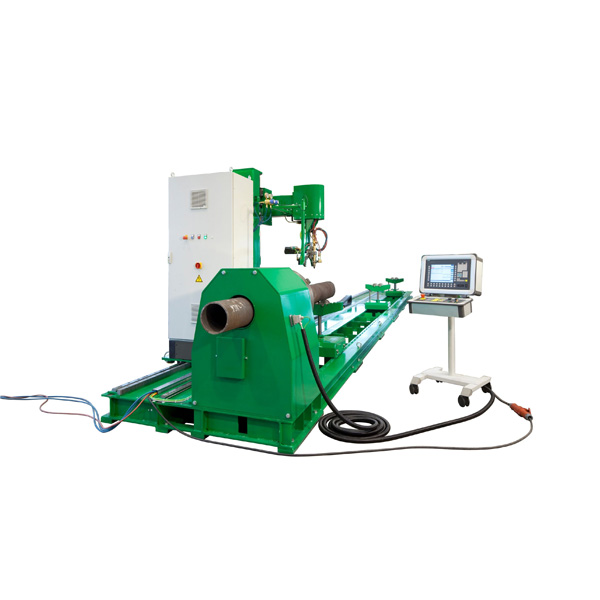
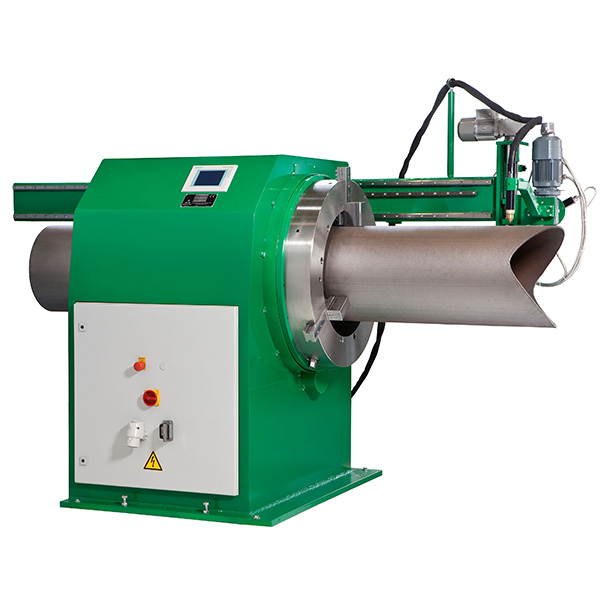
The RSM Range excels in applications requiring complex cutting and beveling operations on pressure vessels, heat exchangers, and structural pipe fitting assemblies.
The U-Range Rotators provide essential welding positioning capabilities for circumferential pipe welding and support manual cutting operations by allowing a single operator to safely rotate and position heavy pipes. These systems feature secure eccentric clamp mechanisms and tilting capabilities up to 135°, making them indispensable for workshops that handle varied pipe sizes and require flexible positioning for both cutting and welding operations.
| Machine Model | Best Industrial Fit | Key Advantages |
| RSM Range (400–1200) | CNC profiling for branches and pressure vessels | 5-axis contouring, plasma/oxy hybrid support, adaptive sensors for accurate cuts |
| SCM Range (300–630) | Portable field cutting and workshop repair | PLC simplicity, menu-driven programming, optional bevel upgrades |
| U Range Rotators (150–1000) | Welding positioning and circumferential workflows | Secure eccentric clamp, tilting up to 135°, single-operator efficiency for cutting and welding |
Heavy Industrial 3D Profiling Systems - Voortman
Best suited for: Offshore Wind, Heavy Steel Construction, Process Plant Engineering, Medium-to-Large Profile Laser Cutting
Voortman's portfolio spans further than plasma and oxy fuel alone.
The V845 and V842 Baseline Systems bring laser cutting capability to medium-to-large open profiles - a range that's underserved by most laser-only manufacturers. This positions Voortman as a genuine option for plants that previously assumed laser capability stopped at the DNE portfolio ceiling.
The MO Series remains the benchmark for full heavy industrial range, with PypeServer Enterprise integration available across the Classic and Heavy-Duty configurations. These systems represent over sixteen years of continuous development in heavy pipe cutting and beveling technology, refined through thousands of installations across mechanical contractors, structural steel fabrication shops, and pressure vessel manufacturers worldwide.
| Machine Model | Best Industrial Fit | Key Advantages |
| V842 Baseline | Laser cutting: small to medium range tubes and profiles | Heavy-duty laser for open profiles; complements or extends DNE range |
| V845 Baseline | Laser cutting: medium to large structural profiles | Heavy-duty laser capacity; bridges laser and plasma selection decisions |
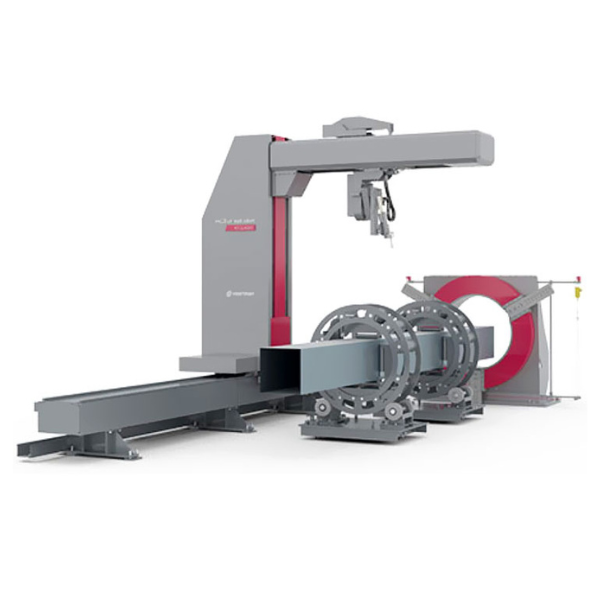
| MO Compact (600–900) | High-end profiling with limited floor space | Small footprint, 6-axis CNC beveling, ovality compensation |
| MO Classic (600–2000) | Versatile fabrication and pressure vessel production | Multi-profile cutting, dished-end dome capability, PypeServer integration for job planning |
| MO Heavy-Duty (2000–4000) | Monopiles, offshore infrastructure, extreme diameters | Up to 4,000 mm / 45 tons maximum weight, conveyor integration, +30% productivity gains[MV8] |
Alternative Technologies: When Thermal Cutting Isn't the Answer
While thermal cutting technologies dominate modern pipe processing, certain applications benefit from or require alternative approaches.
Mechanical Bandsaw Cutting - Voortman VB Range
Best suited for: High-volume cut-to-length operations, materials sensitive to heat-affected zones, applications requiring burr-free edges
For operations that require simple cut-to-length processing without profiling, beveling, or complex geometry, mechanical bandsaws offer distinct advantages.
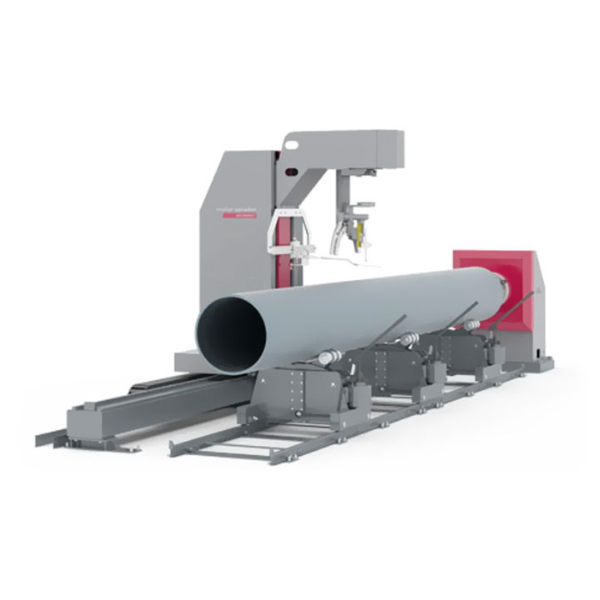
What the VB Range delivers: The Voortman VB Range handles heavy round pipes and square tubes up to 2,400 kg with zero heat-affected zone - critical for applications where material properties must remain unchanged. The cuts are burr-free, reducing or eliminating secondary deburring operations. Operating costs are lower with no consumables like plasma nozzles or laser optics, and the simpler operation requires minimal training.
Where it excels: Mechanical sawing is particularly valuable for structural steel fabrication shops that process large volumes of standard-length material but don't require the contouring capabilities of thermal cutting machines. While slower than laser for high-mix work, bandsaws excel in repetitive cut-to-length applications where edge quality and material integrity matter more than cycle time.
When to Choose Mechanical Sawing
Choose mechanical sawing over thermal cutting when:
- Material specifications prohibit heat-affected zones
- Production consists primarily of straight cuts to length
- Edge finish quality is critical with no oxidation or dross allowed
- Operating cost reduction is a primary concern
- Your workshop lacks thermal cutting expertise or infrastructure
Complementary, Not Competing
The VB Range complements rather than competes with thermal cutting systems. Many fabrication shops maintain both capabilities, using bandsaws for volume cut-to-length work and reserving thermal cutting capacity for profiling, beveling, and complex geometry.
Speak With a Minex Technical Expert
Minex Group supports customers through every stage of the selection process:
- evaluating production drawings,
- analysing mix complexity,
- modelling ROI scenarios, a
- nd integrating handling and logistics around the selected system.
Whether you're specifying for laser, plasma pipe cutting, oxy fuel cutting, advanced CNC profiling, or mechanical sawing, the goal is the same - the optimal configuration for your production reality, not the closest available standard.
Contact Minex Group to discuss your pipe processing requirements with an experienced technical consultant. Bring your drawings, your production mix, or simply your questions - and we'll help you find the right path forward.
Frequently Asked Questions
The right pipe cutting machine is defined by your production constraints, not by headline specifications. The four decision factors are material mix and wall thickness, whether you're working with thin stainless and aluminium or thick carbon steel and heavy wall pipe; geometry complexity, from straight cuts to intersections, saddle cuts, and dished ends for pressure vessels; production model, deciding between high-volume automation and high-mix flexibility with custom bevels; and workpiece size and handling logistics, from workshop tubes to 45-ton monopiles with maximum weight considerations.
A correct selection starts with what you cut every day and what you'll cut over the next 3-5 years. Understanding your specific pipe use cases and whether you're serving mechanical contractors, structural steel fabrication, or pressure vessel manufacturing helps narrow the field significantly.
Choose based on thickness, precision requirements, and weld preparation needs. Fiber laser systems like DNE D-Tube 160, 240, 360, 520, and Voortman V842 and V845 are best for thin-wall tube, stainless, aluminium, and high edge precision with minimal cutter kerf. Plasma pipe cutting systems like Voortman MO and Kistler RSM provide the best structural balance for steel up to approximately 50-80 mm with 3D beveling capability and manageable plasma beam divergence. Oxy fuel cutting is essential for carbon steel above 50 mm, especially heavy infrastructure up to approximately 180 mm thickness with reliable pierce angles.[MV1]
Laser dominates precision work and speed, plasma dominates structural versatility with cutting and beveling integration, and oxy fuel dominates extreme thickness. The cutting process you choose directly affects downstream pipe fitting and welding operation efficiency.
Typical industrial ranges vary by technology. Light and precision laser systems like DNE D-Tube 160, 240, and 360 handle diameters from 10 mm to 360 mm for standard round pipe and tube applications. Mid-heavy laser systems like the DNE D-Tube 520 handle circular tubes from 50 mm to 510 mm diameter and up to 1,500 kg. Heavy industrial profiling systems like the Voortman MO Heavy-Duty can process up to 4,000 mm diameter and 45 tons maximum weight. Mechanical sawing systems like the Voortman VB Range handle up to 2,400 kg workpiece capacity.[MV1]
Thickness capability depends on technology and the cutting process employed. Laser works best under approximately 25-30 mm depending on power and profile class, with excellent accuracy. Plasma commonly handles up to approximately 80 mm with proper torch configuration. Oxy fuel can cut up to approximately 180 mm for carbon steel only, particularly for heavy wall pipe. Different pipe sizes require different machine bed configurations and clamp systems to ensure accurate cuts across the full diameter range.
You need a dedicated beveling machine when weld preparation is part of your production bottleneck. If your fabrication requires V, Y, or K bevels with precise root gap offsets; branch connections with saddle cuts; offshore structural welding with custom bevels; pipeline fit-up without manual grinding; or pressure vessel and heat exchanger fabrication, then a dedicated multi-axis CNC beveling system is mandatory.
Machines like the Voortman MO series or Kistler RSM range produce weld-ready parts directly off the machine, eliminating downstream bevel grinding labor. The integration of cutting and beveling in one machine ensures consistent fit across all cutting parts, reducing pipe fitting time significantly.
The difference is complexity versus simplicity. CNC pipe cutting machine systems like Voortman MO and Kistler RSM [MV1] are required for CAD/BIM workflows, Tekla integration, complex 3D profiling with actual CNC cut paths, and automated management of lead ins and lead outs. PLC portable systems like Kistler SCM are ideal for field repair, maintenance workshops, and standard saddle and miter cuts without CAD programming.
CNC is for engineered complexity and job planning with full material traceability. PLC is for operational portability where a single operator needs to quickly respond to varying requirements without extensive programming.
Automation reduces non-cutting time and manual labor while enabling operators to maximize pipe utilization. Key productivity drivers include bundled loading and automatic unloading in high-volume environments, infeed and outfeed conveyor logistics integrated into the machine bed for heavy structural fabrication, nesting parts optimization and zero-tail utilization for material efficiency, and automated labeling systems that uniquely label parts with QR codes.
Advanced platforms like PypeServer Enterprise enable CAD import, defect-aware nesting, spool importing, and cloud production tracking. This turns the cutting cell into a managed workflow system where job planning and execution are seamlessly integrated, helping track jobs from design through installation.
Industrial pipe cutting and beveling systems require planned maintenance in three areas. Environmental control is critical, as dust extraction protects both the torch and machine bed for laser and plasma longevity. Torch consumables for plasma pipe cutting and oxy fuel cutting require regular nozzle and electrode replacement, with frequency depending on materials and wall thicknesses processed. Software and connectivity for cloud-enabled systems like PypeServer Cloud require IT planning for updates and tracking.
Maintenance planning should be included in total cost of ownership from day one. Regular clamp inspection, machine bed alignment checks, and verification of pierce angles and lead ins and lead outs ensure consistent accuracy over time.
ROI is driven by eliminating secondary processes, not by cutting speed alone. The strongest ROI contributors are labor savings from removing manual layout, bevel grinding, and pipe fitting correction; material yield improvement through nesting parts optimization, defect management, and zero-tail cutting; throughput gains from automation and reduced handling time between cutting and welding operations; error reduction through CAD-driven execution with actual CNC cut paths and automated marking to uniquely label parts; and reduced rework from accurate cuts with proper root gap offsets and custom bevels produced automatically.
A 6-axis beveling machine often pays back fastest because it removes entire downstream welding preparation steps. For mechanical contractors and pressure vessel fabricators, the elimination of hand cutting and grinding labor alone can justify the investment, particularly when supported by at least sixteen years of proven machine reliability and performance data.
Choose mechanical bandsaw cutting using the Voortman VB Range [MV1] when material specifications prohibit heat-affected zones that thermal cutting creates; when your production consists primarily of straight cut-to-length operations without profiling needs; when edge finish quality is critical, requiring burr-free cuts without oxidation or dross; when operating cost reduction is essential since there are no consumables like plasma nozzles or laser optics; or when you process materials sensitive to thermal distortion.
Mechanical sawing complements thermal cutting in many fabrication shops. Use bandsaws for high-volume cut-to-length work up to 2,400 kg capacity and reserve thermal cutting capacity for profiling, beveling, saddle cuts, and complex geometry where the investment in CNC capability delivers maximum value.