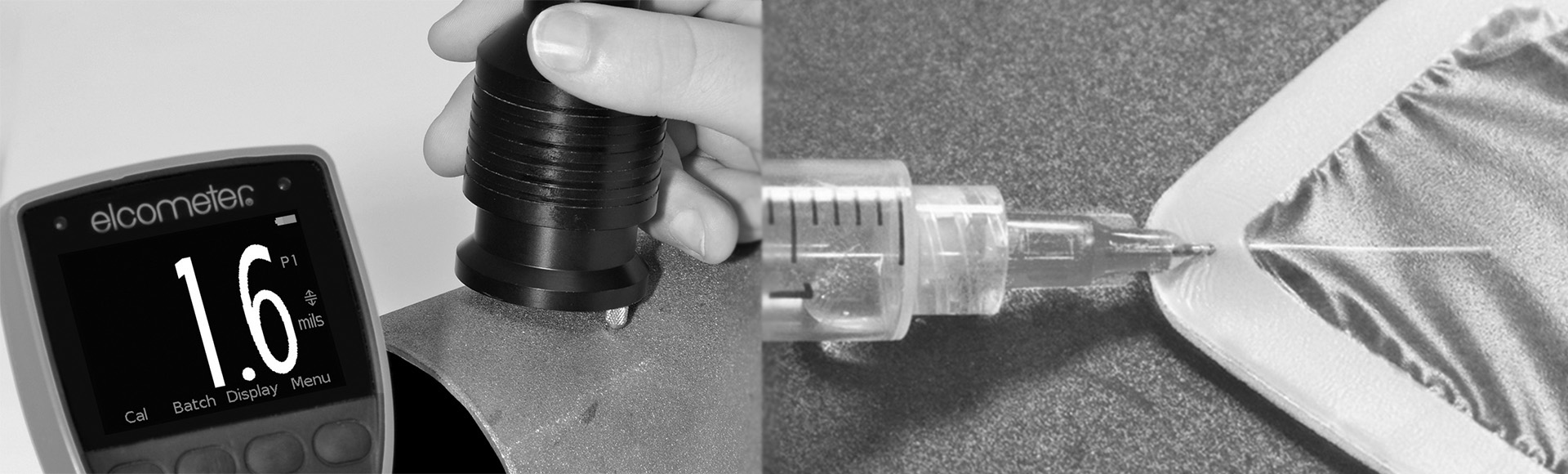
Surface Cleanliness and Surface Profile
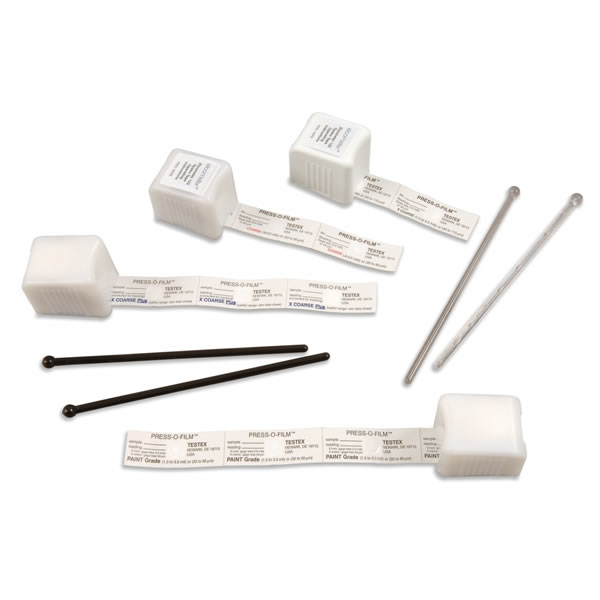
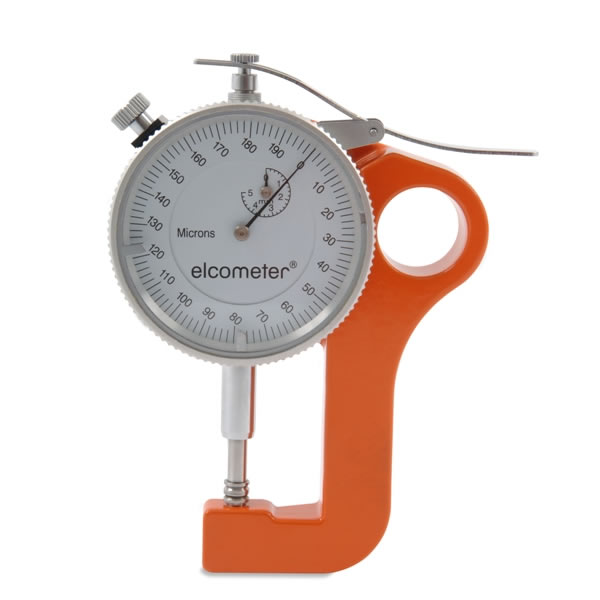
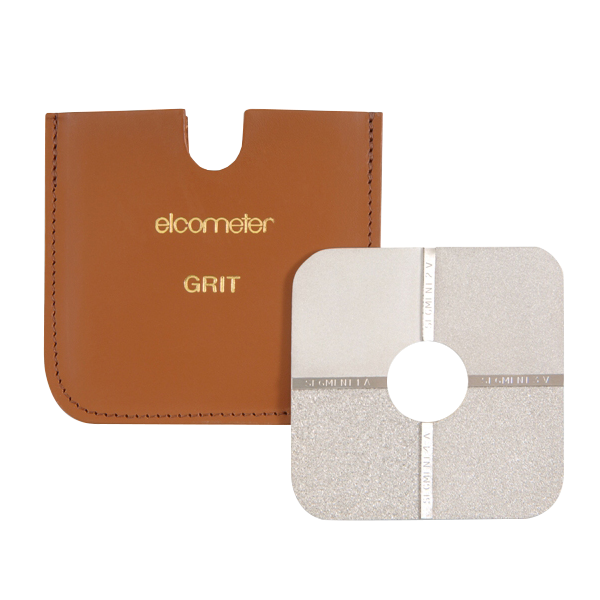
Surface Cleanliness and Surface Profile Control Equipment
In industrial blast cleaning and protective coatings work, most "coating failures" are not coating failures at all. They are surface-condition issues that only become visible after the system is in service: osmotic blistering from soluble salts, premature corrosion from chloride contamination, coating adhesion loss from the wrong surface profile, or local disbondment triggered by dust and other surface contaminants trapped under the first coat.
When the substrate is a steel surface exposed to marine or industrial environments, these mechanisms accelerate quickly, and small mistakes in surface preparation become expensive, visible, and difficult to dispute once the coating is in service.
That is why surface inspection equipment should never be selected as "nice-to-have instrumentation." It is selected as a control layer that protects schedule, quality, and contractual acceptance.
The industry professionals who consistently deliver durable protective coatings treat surface profile measurement and surface cleanliness verification as a decision workflow. They ask: what risk are we controlling, which standard defines the method, which environment are we operating in, and how do we document results in a way that is repeatable, calibration traceable, and usable for audit and future reference?
This guide follows that workflow in the same way a technical consultant would. It starts from project risk, moves through standards and field measurement realities, and finishes with a scan-friendly table of the surface cleanliness and surface profile equipment available through Minex Group.
Risk-Led Equipment Selection for Proper Surface Preparation
Before you choose an instrument, identify where the process is most likely to drift out of specification.
On metal surfaces, contamination typically enters the system through one of three routes: the blasting media (especially if recycled), the water used for washing or wet blasting, or environmental exposure—most commonly marine salt loading and condensation cycles that occur between surface preparation and coating.
Surface profile deviation, by contrast, tends to be process-driven. It stems from abrasive size and type, nozzle wear, pressure fluctuations, distance and angle control, and the frequent "silent culprit" on large sites—mixed media usage across shifts. Those variables control surface roughness and the anchor pattern on a blasted surface, which is why surface profile control is inseparable from controlling abrasive blast cleaning operations.
This distinction prevents a classic procurement mistake: buying a tool that measures something accurately, but not the thing that actually causes premature coating breakdown.
A water chloride result may help you manage inputs, but it does not prove the steel is clean. Abrasive testing can help prevent contamination transfer during blasting, but it does not confirm the substrate is salt-free before coating. A quick visual inspection estimate of profile can be acceptable on some low-risk work, but it may not satisfy the specified compliance route on audited projects—especially when you must record surface profile parameters across a defined surface area using a consistent sampling plan.
The right instrument is always the one that matches the inspection requirement, not the one that feels broadly "relevant."
Compliance With Standards: Protecting the Project and the Contractor
Coating and surface-preparation specifications in Europe rarely just ask for a “measurement”—they ask for a measurement performed in a defined way. If your instrument does not match the standard’s method, results can be rejected even when the prepared surface seems acceptable, because the test is not demonstrably comparable.
Standards you’ll most commonly see on European projects (and why they matter for tool choice)
Visual cleanliness and preparation grades
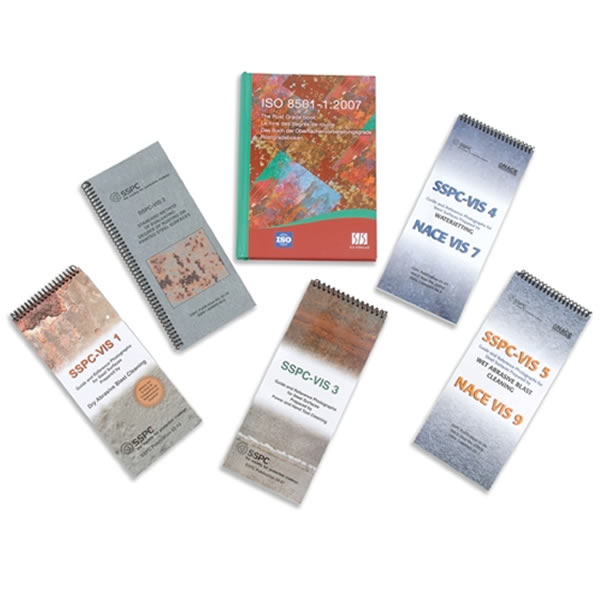
ISO 8501-1/-2/-3/-4 define what “Sa 2½”, edge preparation, and waterjet/flash-rust grades look like. Many projects also reference ASTM D2200 and/or SSPC VIS 1-5 photographic guides, and marine work may additionally cite IMO PSPC and even US Navy visual references. This is where pictorial standards become the practical control instrument. The specification defines the visual benchmark—your inspection tool must allow consistent comparison against that benchmark, including the presence of mill scale, corrosion products, foreign matter, visible oil, and other contaminants.
In practice, the “visual benchmark” is not just a cleanliness grade—it is a decision about whether the substrate is ready for coating. It is also where pre-cleaning steps matter. If the surface has visible oil or oily residues, solvent cleaning is typically used to remove them before blast cleaning so you do not drive contaminants into the profile. If heavy deposits exist, teams may use appropriate scraping methods—sometimes as basic as a dull putty knife—to remove gross contamination before final cleaning. These steps are not cosmetic; they are about ensuring the subsequent blast cleaning step creates clean, bondable steel rather than textured contamination.
Surface profile (anchor pattern)
ISO 8503 (Parts 1–5) and ASTM D4417 are the common surface profile families. They allow different compliance routes (comparator, stylus/probe, replica tape), so the specified method determines whether you should use a digital surface profile gauge, a surface comparator, or replica tape + gauge. If the contract language specifies a route, the route defines the method you must use to measure surface profile, not just the number you want to report.
Dust and salts (non-visible contamination)
ISO 8502-3 drives dust tape + magnified rating; ISO 8502-6 + ISO 8502-9 define the Bresle patch + conductivity workflow for soluble contaminants; ISO 8502-5 covers chloride-specific field testing (ion detection tubes). Many international specifications also reference AMPP/SSPC Guide 15 for field salt extraction and analysis on steel and other non-porous substrates. In practical QA terms, this is where you move from “looks clean” to “meets an acceptable level for contamination”—especially for soluble salts that remain invisible but can destroy coating performance.
Quick method → instrument check (before you buy)
| Spec requirement | Typical method cue | Instrument family |
| ISO 8502-3 dust | tape + magnifier | Dust tape test kit |
| ISO 8502-6/9 salts | Bresle patch + conductivity | Bresle kit + conductivity/salt meter |
| ISO 8502-5 chlorides | ion detection tubes | Chloride ion test kit |
| ISO 8503 / ASTM D4417 profile | comparator / probe / replica tape | Comparator, digital profile gauge, or replica tape + gauge |
From a project-risk perspective, “compliance” is demonstrated through traceable procedure + recorded results (batching logic, verification steps, and repeatable method), not just a single number. That is why procurement documentation often includes calibration evidence, calibration traceable records, and sometimes a long form certificate—and why auditors will look for evidence that procedures followed the manufacturer’s instructions and the “standard describes” method, not an improvised approximation.
Field Conditions Define What "Usable" Really Means in Industrial Blast Cleaning
Laboratory accuracy is irrelevant if the instrument does not survive the site.
Shipyards, offshore platforms, pipeline spreads, and heavy industrial construction expose instruments to abrasive dust, salt aerosol, impact events, solvents, and temperature swings that make touch screens and housings fail long before their sensors do. In field measurement conditions, "fit for purpose" means rugged enclosures, glove-friendly handling, and protective design details—often including a protective rubber holster and a protective lens shield where the instrument design supports it. These details reduce downtime and failure risk when you are measuring hundreds of points across large surfaces.
Practical handling matters too. A wrist strap may sound minor, but it reduces drop risk when inspectors are measuring on scaffolds, ladders, or near water. These are the realities that determine whether the inspection process is consistently executed or gradually abandoned due to friction.
There is also a hard operational truth: inspection methods that are too slow will be bypassed under schedule pressure. In high-volume industrial blast cleaning, the most robust QA system is the one that fits production flow while still meeting the compliance method.
That is why faster, repeatable digital methods are not a "modernisation preference." They are often the only way to keep inspection on the critical path without creating delays and without losing procedural integrity.
Measurement Speed and Production Flow: Keeping Inspection on the Critical Path
On shutdown projects or large abrasive blast campaigns, inspection is integrated into the critical path. When a method forces waiting time, the cost impact is rarely the consumable. It is crew downtime, delayed coating windows, rework scheduling, and missed environmental conditions.
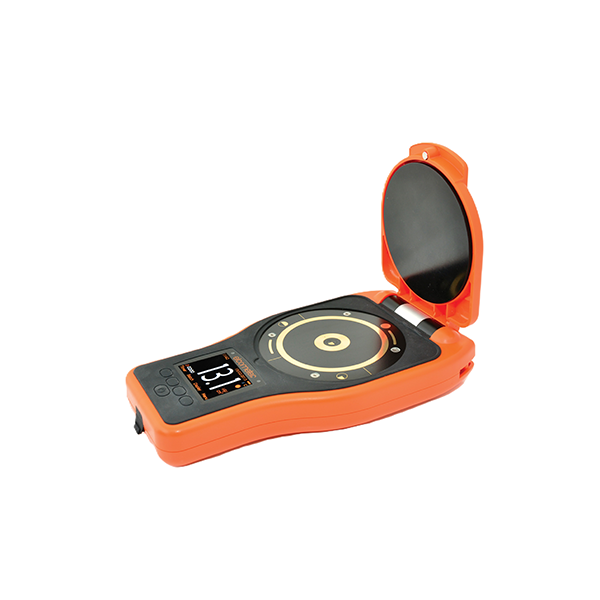
This is where high-speed salt measurement tools can be decisive. The Elcometer 130 Salt Contamination Meter is positioned for rapid assessment and produces results in around two minutes—significantly faster than traditional Bresle workflows on high-volume jobs. That speed becomes valuable when you are mapping contamination across multiple locations on a steel surface, particularly when you need to demonstrate that you tested the right areas and did not selectively sample only the "best" points.
For profile control, speed matters for the same reason. Where a specification or internal QA plan requires multiple readings, a slow method pushes teams toward under-sampling. A faster method allows a disciplined sampling plan to be executed consistently across shifts.
Accuracy and Resolution: Making Surface Profile Measurement Defensible
Surface profile deviations of a few microns can be trivial on a low-risk asset and unacceptable on a critical one. The same logic applies to salts: borderline values can still trigger long-term degradation mechanisms depending on coating system, film build, exposure class, and thermal cycling. This is how "almost acceptable" conditions become expensive warranty issues.
Digital profile gauges and automated salt calculations reduce interpretation error and make your QA defensible—particularly when multiple inspectors, subcontractors, or shifts are involved. They also allow you to standardize how you treat results: averages, distribution, and maximum values across a defined test area.
From a field practice standpoint, it is common to define minimum sampling density so results cannot be dismissed as anecdotal. Many teams treat ten readings per representative area as a practical baseline for profile verification on large surfaces, and ensure at least two readings in locations where geometry, weld profile, or access could bias the measurement. The point is not a universal rule; it is that you can demonstrate a repeatable approach aligned with the risk and the specification.
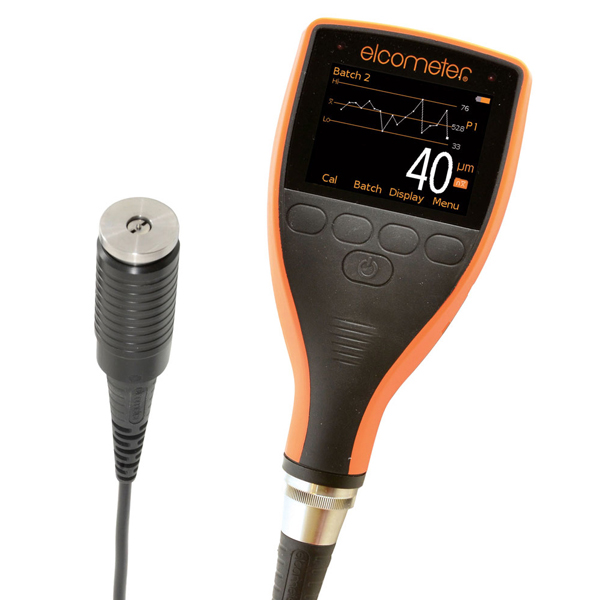
For high-volume profile measurement with traceable batching and wireless transfer, the Elcometer 224 Model T Digital Surface Profile Gauge with Bluetooth delivers rapid readings with stored batches and data transfer into reporting workflows. It is certified for ASTM D4417 Method B, SANS 5772, SSPC PA 17, and US Navy standards. In practical terms, you are not paying for "precision." You are paying for accurate measurement that reduces dispute risk and avoids the cost of small errors that become large breakdowns—especially where the compliance route requires documented repeatability.
Data Management and Traceability: Building Audit-Ready QA Systems
The strongest technical teams integrate data capture directly into their inspection method from the start.
Modern digital instruments with memory, batching, and export capabilities create a complete record of every measurement: the exact location, the environmental conditions, the batch identifier, and the readings themselves. This structured approach supports faster reporting, streamlined analysis, and consistent archiving for future reference—building a comprehensive quality record that demonstrates both competence and due diligence.
When you can provide complete, traceable documentation, discussions with external inspectors or client QA teams focus on the technical outcomes rather than procedural questions. Your data tells a clear story: where measurements were taken, how results were calculated, and why the surface meets specification. Advanced models that automate averaging and store contextual information ensure your procedure is repeatable, traceable, and fully aligned with standard requirements.
In practice, this is what transforms raw measurements into defensible evidence—documentation that supports your decisions today and provides reliable reference data for years to come.
Operator Skill and Subjectivity: Choosing the Method Your Workforce Can Execute Reliably
Some tools are deliberately simple because they work well in experienced hands. Comparators and pictorial standards are robust, fast, and field-friendly. But they depend on judgment, lighting, surface geometry, and operator consistency. Even on clean surfaces, subtle differences in viewing angle, surface texture, and local condition can produce different ratings—especially when blast cleaning exposes mixed substrate states.
Objective digital tools reduce that variability. They are not "better" in every scenario; they are better when inspection must be consistent across teams, shifts, contractors, or when results will be audited.
A useful way to think about it is this: if the same surface could reasonably be rated differently by two competent inspectors using a subjective method, and that difference would change acceptance, consider an objective measurement route where the specification allows it.
Consumables and Recurring Cost: The Logistics That Decide Whether Testing Happens
Many surface inspection workflows are consumable-driven: replica tape, Bresle patches, test solutions, and kit refills. The financial impact is not just the per-test cost; it is the logistical risk. If consumables run out mid-project, inspection stops—or worse, continues informally without proper method execution.
Replica tape is a good example because it is both widely used and frequently misunderstood in procurement conversations. Replica tape consists of a highly uniform thickness layer system, often described as an incompressible polyester substrate with a compressible foam layer. During use, the compressible foam is pressed onto the roughened profile; the foam collapses to reflect the peak-to-valley characteristics. The resulting thickness is then read using a micrometric thickness gauge designed to apply consistent anvil pressure.
This is a proven technique, supported by wide industry use and numerous independent studies in the broader coatings field, which is why it remains a common method when the compliance route specifies tape, including NACE SP0287 (formerly RP0287). The operational point is simple: it works well when the consumables are correct, the tape range is correct, the pressure application is consistent, and the procedure is repeated across a disciplined sampling plan.
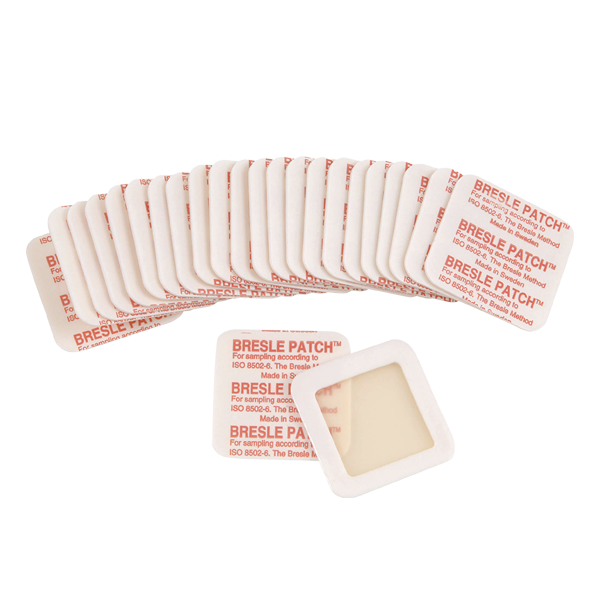
Bresle patches are similarly method-critical consumables. They create the sealed test area that makes salt extraction repeatable. If patch integrity is compromised, the measurement is compromised—so consumable quality, correct storage, and correct application matter as much as the meter itself.
When Digital Surface Inspection Becomes the Rational Choice
Digital tools become the rational choice when the site reality demands speed, consistency and traceability at scale. This typically shows up in high-volume inspection, audited projects, complex stakeholder environments, tight coating windows, and assets where failure cost is high.
In those conditions, the “cost” of a faster or more traceable instrument is often smaller than the cost of slow testing, inconsistent interpretation, or a rejected compliance route.
Surface Cleanliness and Surface Profile Equipment Available Through Minex
| Product | Typical application | Key operational benefit |
| Elcometer 122 Testex Replica Tape | Physical replication of blasted surface profile (peak-to-valley height) prior to coating | Reliable replica tape method; used with a thickness gauge for traceable profile control. |
| Elcometer 124 Thickness Gauge | Measuring peak-to-valley height from replica tape | Micron/mil resolution for accurate measurement with consistent anvil pressure. |
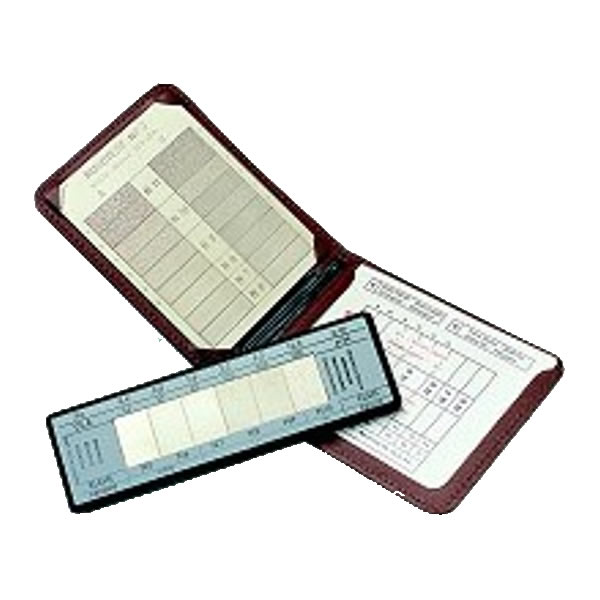
| Elcometer 125 Surface Comparator | Rapid field comparison of surface roughness on grit/shot blasted steel | Rugged, no electronics; fast tactile/visual verification in industrial blast cleaning environments, complying with ISO 8503-1 and ISO 8503-2. |
| Elcometer 128 Pictorial Surface Standards | Visual reference for surface preparation condition and cleanliness | Enables consistent visual inspection aligned to recognised preparation standards, covering ISO 8501-1 and ISO 8501-4 alongside various ASTM and SSPC visual standards. |
| Elcometer 129 Rubert & Rugotest Surface Comparators | Visual/tactile comparison of blasted surface roughness | Comparator blocks for quick compliance checks; manufactured in accordance with AS 3894.5. |
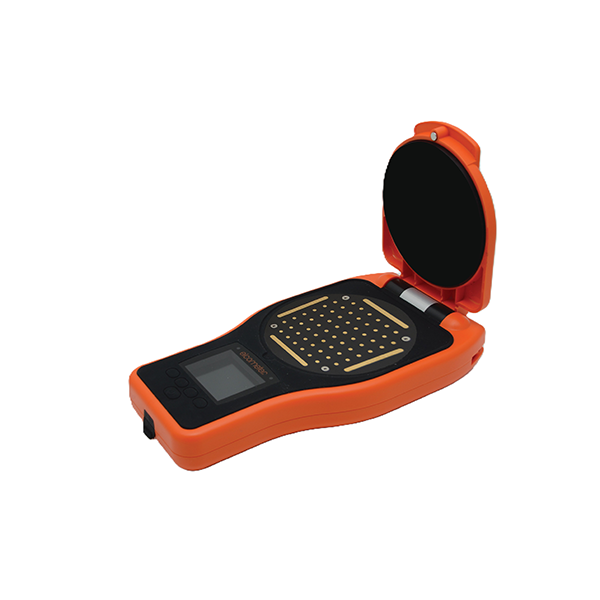
| Elcometer 130 Salt Contamination Meter | Rapid soluble salt measurement on steel surfaces | High-speed workflow (around 2 minutes) and rugged field design for harsh environments. |
| Elcometer 130 SSP Soluble Salt Profiler | Mapping level and distribution of soluble salts on surfaces | Produces multiple readings and supports salt distribution insight in a fast workflow. |
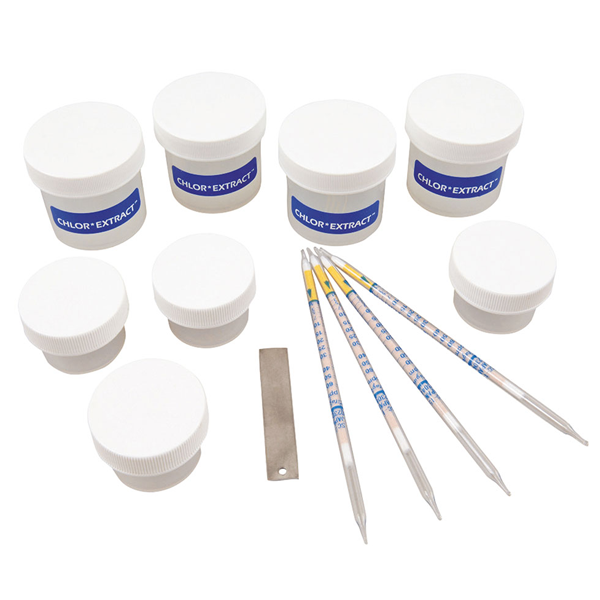
| Elcometer 134A Chloride Ion Test Kit for Abrasives | Testing abrasives (new or recycled) for chloride contamination | Field-ready checks to prevent contamination transfer during abrasive blast cleaning. |
| Elcometer 134 CSN Chloride, Sulphate & Nitrate Kit | Field measurement of surface chloride, sulphate, and nitrate ions | Single kit solution for accurately measuring multiple soluble ion types on surfaces in the field. |
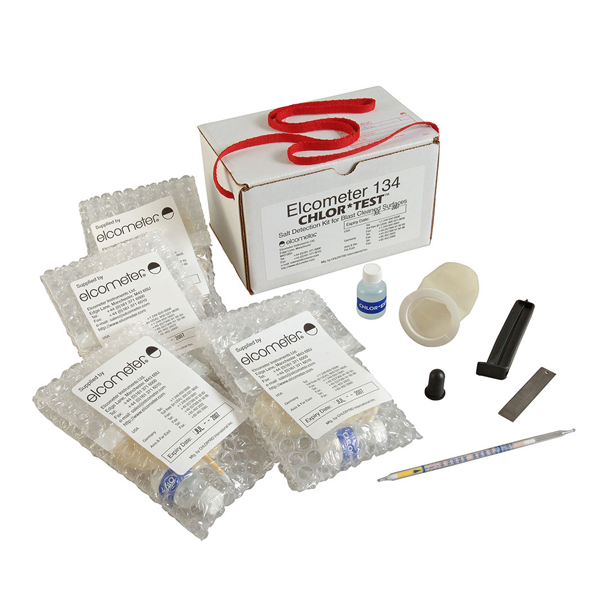
| Elcometer 134S Salt Detection Kit for Blast Cleaned Surfaces | Chloride salt detection on blast cleaned surfaces prior to coating | Portable kit designed for chloride checks before applying coatings. |
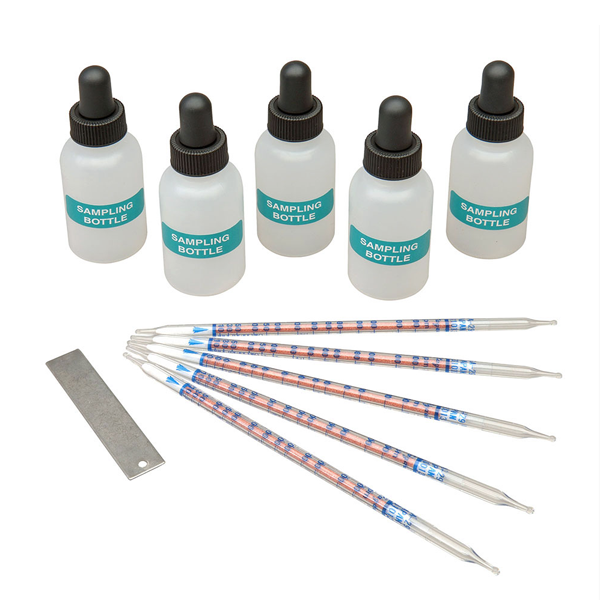
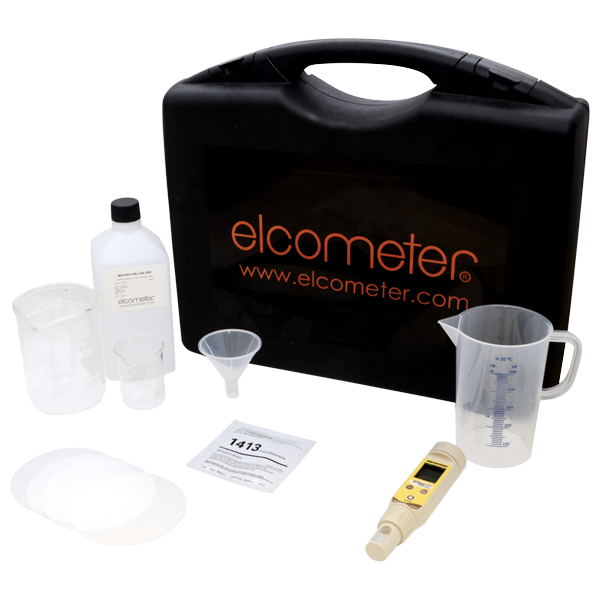
| Elcometer 134W Chloride Ion Test Kit for Water/Liquids | Monitoring chloride levels in water used in preparation processes | Supports control of water quality where chloride carryover is a corrosion risk. |
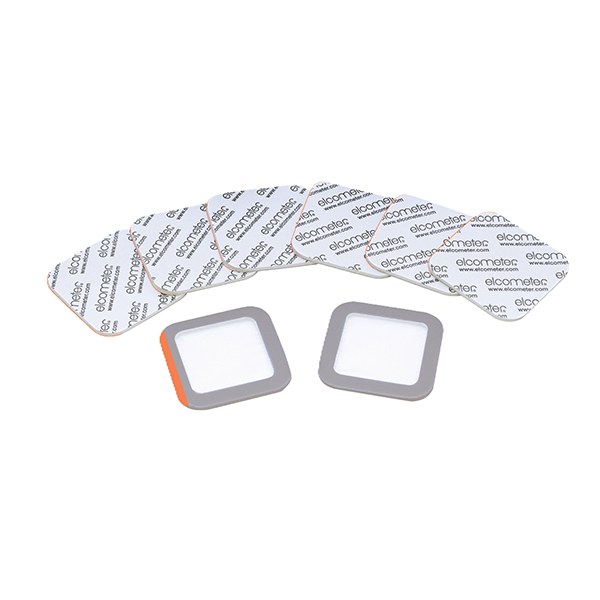
| Elcometer 135B Bresle Patch | Salt extraction chamber on uncoated steel | Creates a sealed test area for ISO-method salt extraction and repeatable sampling. |
| Elcometer 135C Bresle Test Patch | Salt extraction chamber with alternative patch design | Patch option used within Bresle workflows and kits for field extraction. |
| Elcometer 138 Abrasive Soluble Salt Test Kit – ASTM D4940 | Testing soluble salts in abrasive media | ASTM-aligned method to qualify abrasives and prevent contamination transfer that undermines coating adhesion. |
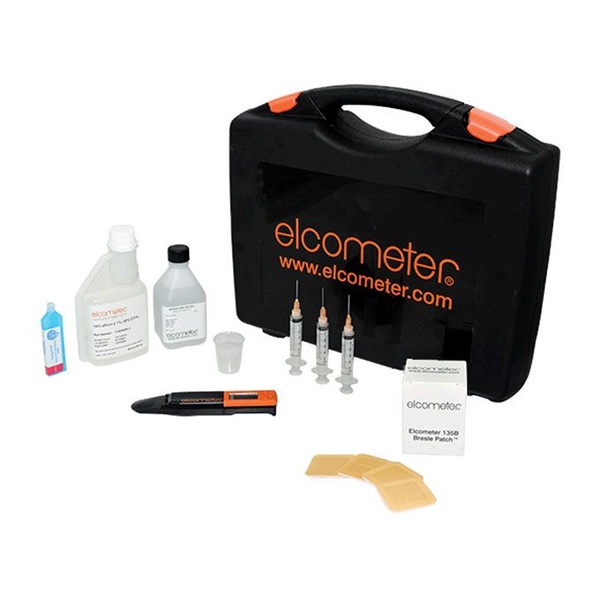
| Elcometer 138 Bresle Kit & Patches | On-site soluble salt measurement using Bresle extraction + meter | Field-ready kit; includes a meter and automates salt concentration calculations for ISO 8502 workflows. |
| Elcometer 138/2 Surface Contamination Kit | Low-cost method for measuring salt, pH, chloride, and iron (ferrous ion) concentration | Uses Elcometer 135A Bresle Samplers and test strips for multi-parameter surface contamination checks. |
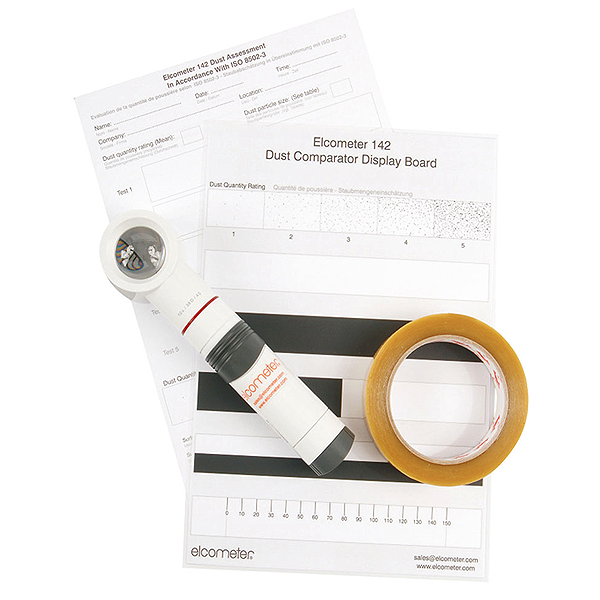
| Elcometer 142 ISO 8502-3 Dust Tape Test kit | Dust quantity/size assessment prior to coating | ISO-method dust tape sampling with magnified inspection support for consistent rating and QA documentation. |
| Elcometer 145 Dust Tape Roller | Uniform application pressure for dust tape sampling | Used together with the Elcometer 142 kit to ensure consistent sampling pressure and repeatable dust assessment results. |
| Elcometer 224 Model T Digital Surface Profile Gauge with Bluetooth | High-volume digital surface profile measurement | Batch storage and Bluetooth data transfer for rapid, traceable profile control across large surfaces; certified for ASTM D4417 Method B, SANS 5772, SSPC PA 17, and US Navy standards. |
Talk to Minex Technical Experts for Specification-to-Tool Matching
If you are working with mixed standards (ISO + ASTM/SSPC), audited projects, or complex site conditions, the fastest way to avoid incorrect procurement is to match three things upfront: the specification method, the site environment, and the documentation requirement.
Minex can support you as a distributor by helping you translate project requirements into the most appropriate equipment set—so your inspection approach is compliant, practical for the field, and defensible when results are reviewed.
If you share the coating specification (or even just the clause references such as ISO 8502-6/9, ISO 8503 / ASTM D4417 route, and acceptance thresholds), you can get a tool shortlist that fits the method your project will actually be judged against.
Frequently Asked Questions
While ISO 8503-1 comparators are excellent for rapid field checks, they are subjective. The primary risk is "operator bias." If your contract specifies ASTM D4417 Method B (Digital Depth Micrometer) or Method C (Replica Tape), a visual comparator will not be accepted during an audit. Digital gauges like the Elcometer 224 provide a traceable numerical average, which is often required to prove compliance in high-liability projects.
It depends on the "Compliance Route." The Bresle Patch is the global reference standard for extracting soluble salts. However, electronic meters like the Elcometer 130 are significantly faster (measuring in ~2 minutes vs. ~10 mins for manual extraction). Most modern specifications allow for "equivalent electronic methods," but you must verify that the meter correlates with ISO 8502-9 conductivity values to stay compliant.
Visual cleanliness (defined by ISO 8501-1) only identifies rust and mill scale. It cannot detect chlorides, sulfates, or nitrates. These soluble salts are hygroscopic; they pull moisture through the coating via osmosis, causing "osmotic blistering" and premature corrosion. AMPP (formerly NACE) research confirms that even a microscopic layer of salt trapped under a coating is the leading cause of premature system failure.
A single reading is never enough because blasted surfaces are inherently uneven. ASTM D4417 suggests taking at least 10 readings per area to calculate a representative average. If using Replica Tape (Testex), ISO 8503-5 requires taking two readings in the same spot and averaging them to account for the variation in the foam's compression.
It is Cross-Contamination. If you are recycling grit, the abrasive itself can become loaded with salts or oil from previous jobs. ASTM D4940 (Abrasive Soluble Salt Test) is the industry-standard "health check" for your media. If your abrasive is dirty, you are essentially "blasting salt into the steel," making it impossible to achieve a passing cleanliness grade regardless of how long you blast.
No. ISO 8503-5 and ASTM D4417 specifically require a dead-weight micrometer (like the Elcometer 124) that applies a specific, constant anvil pressure (typically $1.5\,N$). A standard hardware-store micrometer can "crush" the foam replica, leading to an artificially low profile reading and potential coating adhesion failure.
Compressed air often contains trace amounts of oil or moisture, or it simply moves dust from one spot to another. The Tape Test provides a permanent, visual record of the quantity and size of dust particles. Even "Size Class 1" dust (invisible to the naked eye) can act as a bond-breaker for high-performance coatings like polyurethanes or epoxies.