Metallisation Wires and Powders
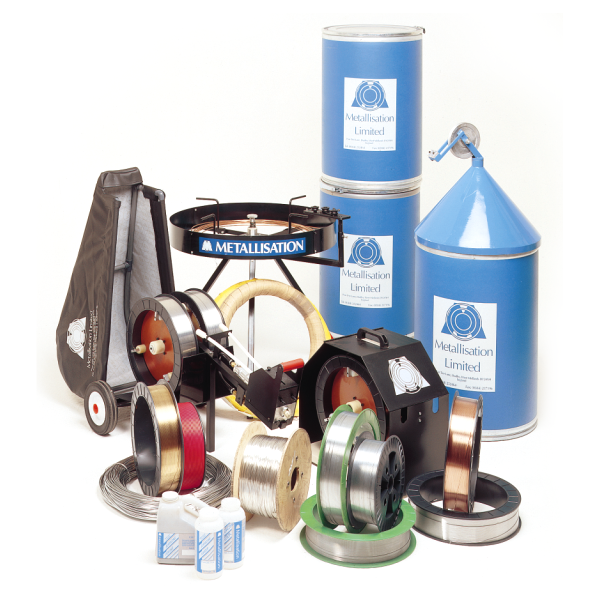
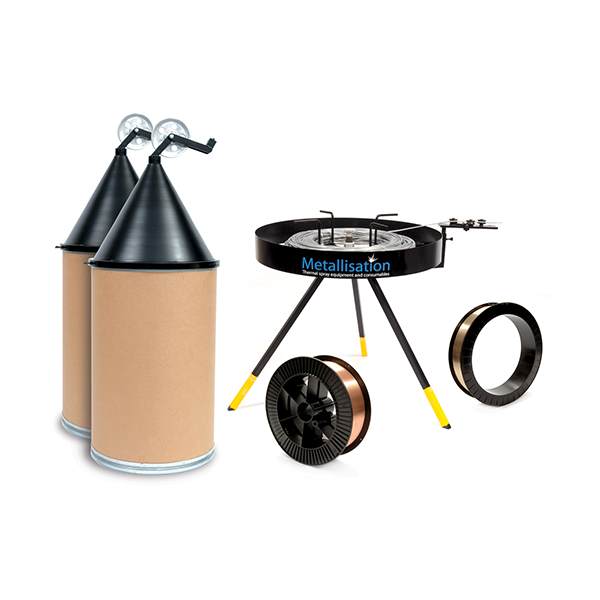
References
How experienced engineers select materials, processes, and coatings to maximise service life and ROI
Metallisation is not a finishing step. In industrial environments, it is a surface engineering decision that directly influences component performance, operational reliability, energy efficiency, and long-term costs. When metallisation wires or powders are selected without a full consideration of the operating environment and process constraints, coatings may perform adequately at first but fail to deliver durable resistance or predictable lifecycle behaviour.
This guide is written as a technical consultancy document for engineers, procurement specialists, and operational managers who already work with metallisation technologies and need a reliable framework for selection. It reflects how senior application engineers and materials specialists analyse real industrial cases across sectors such as automotive, aerospace, energy, and heavy manufacturing.
Rather than listing products, the guide explains how metallisation materials behave once deposited on a substrate, how different spray processes influence coating structures, and how these factors translate into measurable performance in service.
What actually determines metallisation performance in industrial service
In consultancy work, metallisation selection consistently revolves around a small number of decisive questions. These questions are derived from analysing failed coatings, underperforming surfaces, and unnecessary cost escalation across industries.
The first determinant is the dominant degradation mechanism. Components rarely fail for multiple reasons at once. In most cases, corrosion, wear resistance, thermal stress, or electrical functionality clearly dominates. Atmospheric corrosion behaves differently from chemical pitting. Abrasive wear demands different materials than sliding contact. High-temperature environments introduce oxidation and melting-related constraints that no metallic coating alone can resolve. Correct selection begins by identifying what truly limits component life.
The second determinant is the metallisation process that will actually be employed. Arc spraying, flame spraying, and powder-based thermal spray processes create coatings with different porosity, bonding behaviour, and microstructures. Tubular wires, for example, are widely employed in arc spraying because their internal powder form enables extremely hard structures that cannot be produced as solid wire. Powder thermal spray processes are required when ceramic or carbide materials are necessary to achieve insulation or extreme abrasion resistance.
The third determinant is economic. Experienced engineers evaluate metallisation based on total lifecycle costs, not consumable price. Coatings are judged by how they reduce downtime, extend maintenance intervals, and improve productivity over time. In many proven applications, higher-grade alloys or powders deliver lower overall costs once service life and operational stability are considered.
Choosing between metallisation wires and powders in real applications
Metallisation wires and powders are often discussed as alternatives, but in professional surface engineering they serve distinct and complementary roles.
Wires remain the most widely used consumables because they provide predictable deposition behaviour, strong bonding to metal substrates, and reliable performance across a broad range of applications.
- Solid wires are typically selected where machinability, dimensional control, and cost efficiency are required.
- Tubular wires are chosen when wear resistance must be pushed to its limit and when coatings are expected to perform effectively in the as-sprayed condition.
Powders enable solutions that wires cannot provide. Ceramic powders deliver thermal insulation, electrical insulation, and chemical stability at temperatures where metallic coatings lose functionality.
- Carbide powders are used when abrasion resistance must exceed what metallic alloys can offer.
- Metallic powders such as nickel aluminium are widely employed as bond coats because their melting behaviour and exothermic reactions improve adhesion and coating integrity.
In advanced surface engineering strategies, including hybrid repair approaches adjacent to additive manufacturing, wires and powders are increasingly combined to build multi-layer coating systems that balance performance, durability, and costs.
How metallisation processes influence coating structure and properties
The metallisation process is not a neutral delivery method; it directly shapes coating structures, porosity levels, and functional properties.
- Arc spraying is widely employed because it supports high deposition rates and accommodates a wide variety of metallisation wires and alloys. It is particularly effective for corrosion protection, wear resistance, bond coats, and large surface areas. Tubular wires are specifically designed for arc spraying and are proven in severe wear environments where maximum hardness and surface durability are required.
- Flame spraying remains relevant in many industrial contexts where portability, simplicity, or on-site repair capability is required. Although it does not support tubular wires, it is still widely employed for maintenance and refurbishment work where solid wire alloys provide sufficient performance.
- Thermal spray processes using powders are essential when ceramic materials, carbides, or specialised alloy systems are required. These processes enable precise control of coating thickness, surface functionality, and thermal behaviour, making them indispensable for thermal barrier coatings, electrical insulation layers, and extreme wear surfaces.
Decision framework used by metallisation specialists in practice
The following table reflects how experienced technical specialists align environment, material properties, and spray process when selecting metallisation consumables for industrial applications.
| Application driver | Operating environment | Wire solution | Process | Powder solution | Process |
| Corrosion protection | Oil & Gas, high temperature | Aluminium wires | Arc / Flame | Grey alumina powders | Thermal spray |
| Atmospheric, freshwater | Zinc wires | Arc / Flame | — | — | |
| Marine immersion | Al/Mg alloys | Arc / Flame | — | — | |
| Aggressive chemicals | Ni-based alloys | Arc / Flame | White alumina | Thermal spray | |
| Wear resistance | Extreme abrasion | Tubular alloy wires | Arc | Tungsten carbide | Thermal spray |
| Dense, grindable surfaces | Tubular iron alloys | Arc | NiCrBSi powders | Thermal spray | |
| Thermal performance | Heat insulation | — | — | Magnesium zirconia | Thermal spray |
| Bonding layers | Adhesion critical | Ni/Al wires | Arc | Nickel aluminium | Thermal spray |
Metallisation wires portfolio — application-driven reference
This table is designed to allow you to validate suitability at a glance, based on proven industrial use rather than generic descriptions.
| Code | Material | Typical industrial applications | Preferred process |
| 01E | Aluminium | Corrosion protection, electrical conductivity | Arc / Flame |
| 02E | Zinc | Structural steel, EMI shielding | Arc / Flame |
| 21E | Zn/Al alloys | Marine corrosion | Arc / Flame |
| 25E | Al/Mg alloys | Immersed marine structures | Arc / Flame |
| 35E | Carbon steel alloys | Wear resistance with machinability | Arc / Flame |
| 60E | Chrome steel alloys | Balanced wear and corrosion resistance | Arc / Flame |
| 73E | Ni-based alloys | Chemical processing environments | Arc / Flame |
| 75E | Ni/Al alloys | Bond coat applications | Arc |
| 100T | Tubular Ni alloys | Severe abrasion environments | Arc |
| 103T | Tubular Fe alloys | Maximum wear resistance | Arc |
Metallisation powders portfolio — functional performance reference
Powders are selected where specific surface functionalities are required beyond what metallic wires can deliver.
| Code | Powder material | Functional role in coatings | Process |
| 99205/32 | Grey alumina | Wear resistance, non-slip surfaces | Thermal spray |
| 99220/32 | Alumina titania | Tough ceramic tooling layers | Thermal spray |
| 99255/32 | White alumina | Electrical insulation coatings | Thermal spray |
| 99275/32 | Magnesium zirconia | Thermal barrier coatings | Thermal spray |
| 99745/32 | Tungsten carbide | Extreme abrasion resistance | Thermal spray |
| 99636/16 | Nickel aluminium | Bond coat functionality | Thermal spray |
Why experienced teams still validate metallisation selection with specialists
Even when materials and processes are widely proven, metallisation remains highly application-specific. Substrate condition, coating thickness, surface geometry, and thermal cycling all influence final performance. In many industrial cases, coatings fail not because the material was incorrect, but because the selection did not fully reflect the operating envelope.
Experienced metallisation consultants at Minex analyse these variables to ensure that the selected wires or powders not only meet specification requirements, but also perform reliably over the full service life of the component.
Making metallisation decisions that hold up in operation
Effective metallisation is the result of aligning materials, process capabilities, and application requirements. When this alignment is achieved, coatings deliver predictable resistance, stable performance, and measurable cost reductions across industries.
If you need to validate a metallisation wire or powder selection, confirm process compatibility, or optimise coating performance for a demanding application, our specialists are available to support you with application-driven technical consultancy, not generic recommendations.
Frequently Asked Questions
In practice, the choice between metallisation wires and powders is driven less by preference and more by functional necessity and process compatibility. Wires are widely employed for corrosion protection of structural steel and general industrial components because they are economical, easy to handle, and well suited to high-rate arc spraying and flame spraying. Materials such as zinc, aluminium, and their alloys are therefore most commonly applied in wire form for anti-corrosion coatings.
Powders become necessary when the required coating functionality cannot be achieved with metallic wire. Ceramics and carbides, for example, cannot be manufactured as continuous wire and must be applied as powder feedstock. As a result, applications requiring extreme wear resistance, thermal barriers, or electrical insulation typically rely on powder thermal spray processes. In real-world projects, this often leads to a clear division: metallic corrosion protection layers are applied from wire, while ceramic or carbide functional layers are applied from powder.
Field experience and international standards consistently show that coating performance is determined by the interaction between material selection, surface preparation, coating thickness, and process control. Research into thermal spray coatings demonstrates that porosity, oxide content, microstructure, and bond strength are governed by both the feedstock material and the spray parameters used during deposition.
For corrosion protection of steel structures, this relationship is formalised in standards such as ISO 2063-2, which defines minimum coating thicknesses, adhesion values, and quality control requirements to ensure coatings achieve their intended service life. In consultancy work, underperformance is rarely caused by a single variable; it usually results from a mismatch between material choice and execution conditions.
Thermal-sprayed zinc, aluminium, and zinc-aluminium alloys are the most widely specified materials for corrosion protection of steel, as reflected in ISO 2063-2. Zinc wire is typically selected for atmospheric and freshwater exposure, where sacrificial protection is the dominant requirement. Aluminium and zinc-aluminium alloys are preferred in marine environments and at elevated temperatures, where aluminium’s oxide stability provides additional protection.
When service conditions involve higher temperatures or chemically aggressive environments, standard zinc and aluminium systems may no longer be sufficient. In these cases, nickel-based alloys and other corrosion-resistant metals are applied by thermal spray to extend component life beyond the limits of conventional anti-corrosion coatings.
Carbide and ceramic powders are specified when metallic coatings cannot deliver the required resistance or functionality. Tungsten carbide-based coatings, typically applied by HVOF, are used where extreme abrasion or sliding wear is present, such as in rolls, shafts, and tooling in heavy industry. These coatings form very dense, very hard layers with high bond strength and are often selected as functional alternatives to hard chrome plating.
Ceramic powders such as alumina and alumina-titania are chosen when electrical insulation, wear resistance, or chemically inert surfaces are required. Zirconia-based ceramics are widely used in thermal barrier coatings, where their low thermal conductivity and stability at high temperatures protect underlying substrates from heat exposure.
The thermal spray process directly influences which materials can be applied and how they will perform in service. Wire arc spray offers high deposition rates, relatively low substrate heating, and strong adhesion, making it a common choice for zinc and aluminium corrosion protection coatings as well as many metallic wear-resistant alloys.
Flame spray systems are simpler and more portable, and are therefore frequently used for maintenance, repair, and on-site metallisation work where mobility is important. Powder-based processes such as plasma spray and HVOF are required when high-melting-point ceramics or carbides are specified, enabling the production of dense coatings with high bond strength for severe wear and thermal barrier applications.
For corrosion protection of steel using zinc, aluminium, and their alloys, ISO 2063-2:2017 (and its European adoption EN ISO 2063-2) is the primary reference. It defines requirements for material selection, coating execution, thickness, adhesion, and quality control. Additional ISO standards and sector-specific guidelines cover specialised applications, such as heat-resistant aluminium coatings for high-temperature service.
In practice, engineers combine these standards with supplier technical data and published material property information when defining specifications. This ensures that selected wires and powders fall within proven operating windows and are suitable for the intended service environment.
Before finalising a selection, experienced engineers evaluate the physical characteristics of the feedstock, as these directly influence spray behaviour and coating quality. For thermal spray powders, particle size, size distribution, shape, flowability, surface area, and density all affect melting behaviour, feed stability, and oxidation during spraying. Spherical or near-spherical powders generally offer more consistent feeding and more uniform heating, leading to denser and more reproducible coatings.
For metallisation wires, chemistry control and diameter consistency are critical. These parameters influence arc stability, deposition rate, and the resulting coating microstructure in twin-wire arc systems. Variations in wire quality can translate directly into variations in coating performance, which is why feedstock consistency is a key consideration in professional metallisation projects.