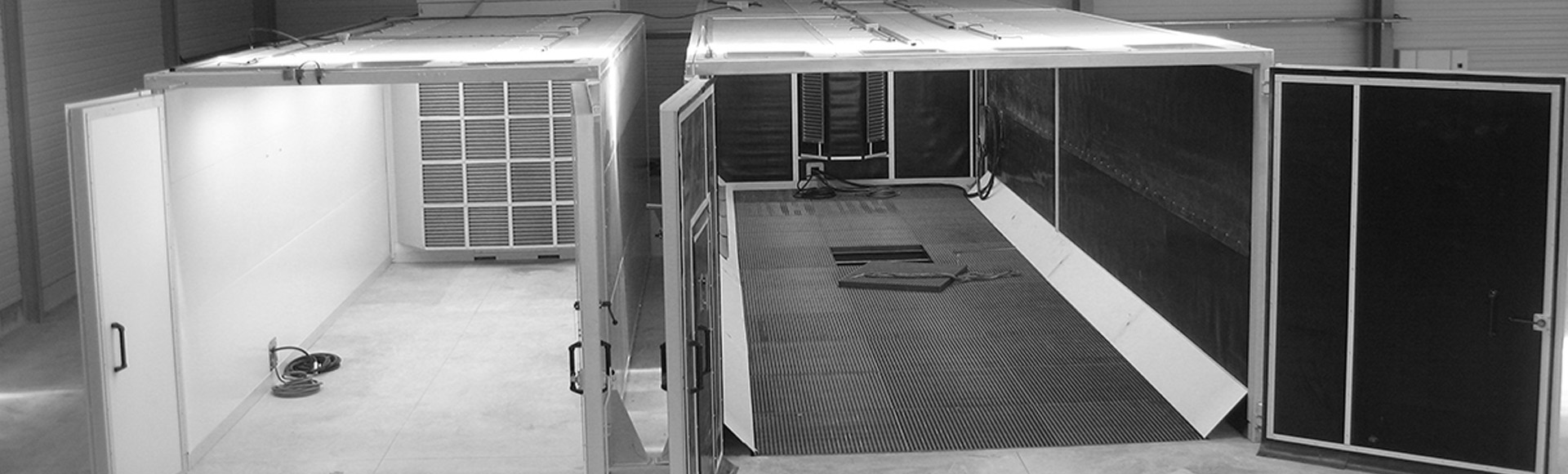
Metallisation Halls and Cabins
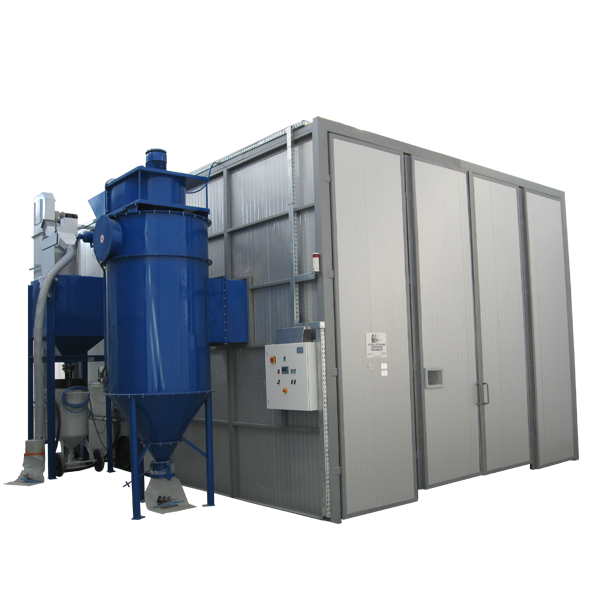
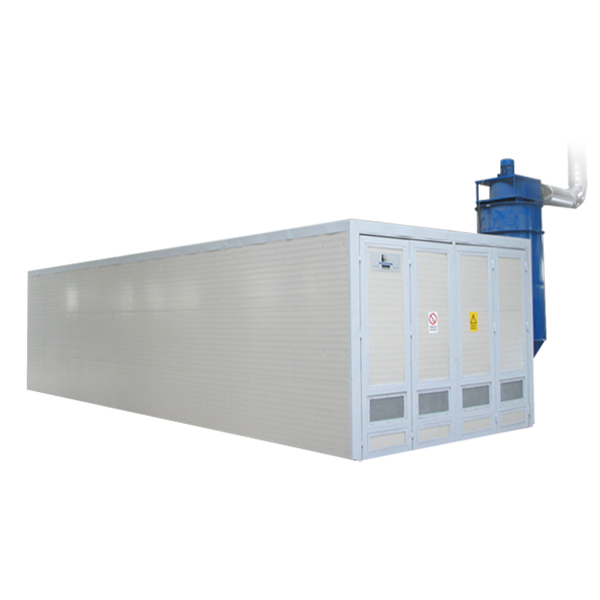
References
Choosing Between Metallisation Halls and Metallisation Cabins
In surface engineering, the environment in which metallisation takes place is never a neutral backdrop. It actively shapes how safely operators can work, how consistently coatings are applied, how efficiently production moves, and how easily regulatory requirements are met over time. The enclosure you choose becomes part of the process itself.
For most industrial organisations, the decision narrows to two purpose-built solutions: metallisation halls and metallisation cabins. Both are designed to support thermal metal spraying under controlled conditions and both are engineered to comply with European standards. However, they respond to very different production scenarios. One is conceived for scale, flow, and simultaneous operations; the other for precision, integration, and spatial efficiency.
This guide approaches the topic from a practical, engineering-led perspective. Rather than listing features, it focuses on the questions that matter in real facilities: the size and handling of your components, the way work moves through your plant, the number of operators involved, and the constraints imposed by space and infrastructure. The objective is simple—to help you select a metallisation solution that aligns not only with today’s requirements, but with how your operation needs to function in the years ahead.
Scale as the Governing Parameter in Metallisation System Design
At the heart of the decision between a metallisation hall and a metallisation cabin lies a single, defining factor: scale. More than any other variable, scale determines how the system is designed, how it operates, and how it integrates into your production environment.
A metallisation hall is conceived as a dedicated industrial workspace, not as an enlarged version of a cabin. It is engineered from the outset around the physical realities of large or complex workpieces—their dimensions, weight, and handling requirements. These enclosures are sized to provide adequate space for safe movement, positioning, and processing, particularly when components cannot be easily rotated, repositioned, or passed through standard production cells. In practice, this makes metallisation halls the natural choice for oversized structures and heavy industrial components.
A metallisation cabin follows a different logic. It is a compact, self-contained environment designed for controlled, precise operations. The underlying assumption is that parts can be transported into the enclosure, positioned efficiently, and processed in a stable, repeatable way. This approach supports consistent coating quality while maintaining a small footprint and straightforward integration into existing facilities.
Once this fundamental difference in scale and intent is clarified, the rest of the selection process becomes significantly more straightforward. Each subsequent consideration—layout, throughput, ventilation, and workflow—naturally aligns with one solution or the other.
Workpiece Size, Geometry, and Handling: Where the Decision Usually Starts
In practice, the first and most decisive question is always: What exactly are you coating—today and in the next five to ten years?
If your operation involves large infrastructure elements—such as wind tower sections, hydroelectric components, ship parts, large steel constructions, or oversized welded assemblies—a metallisation hall is not optional. Metallisation halls often include dedicated assembly areas for pre-assembly, storage, and packaging of these large components, supporting efficient processing and logistics. It is the only solution that can safely and efficiently accommodate such dimensions while maintaining environmental control.
Metallisation halls are engineered around the workpiece itself. The enclosure dimensions, access points, lifting systems, and ventilation volumes are all calculated based on real component geometry and handling needs. This makes them indispensable in energy, marine, and heavy industrial sectors.
Metallisation cabins, on the other hand, are ideal when your components are medium-sized, transportable, and repeatable. Typical examples include industrial machine parts, shafts, rollers, automotive components, or packaging equipment elements. The geometry may vary, but within a predictable size envelope that allows for ergonomic operator positioning and efficient extraction.
If your largest component already pushes the limits of internal handling, that is a clear signal that a hall—not a cabin—should be considered.
Facility Integration: Working With What You Already Have
Operational managers and procurement teams are often constrained not by technical ambition, but by existing factory realities.
Metallisation cabins are designed with this in mind. Their compact footprint and modular construction allow them to be installed inside existing production halls with minimal disruption. In many cases, they can be integrated without major structural changes, making them particularly attractive for facilities where floor space is limited or where metallisation is one process among many.
Metallisation halls, by contrast, require a strategic allocation of space. They are treated as dedicated industrial zones rather than equipment units. Metallisation halls can also be configured for on-site metallisation of large structures that cannot be transported to a factory, making them suitable for application directly at the site where the structure is located. This often includes planning for material transfer systems, crane access, staging areas, and operator movement within the enclosure.
From a consultancy perspective, neither approach is “better”—but one may be more realistic depending on your plant layout, expansion plans, and internal logistics.
Throughput, Operator Density, and Production Logic
Another frequent point of confusion is throughput. Decision-makers often ask which solution is “faster,” but this is the wrong framing.
The real question is: How many operators need to work simultaneously, and how continuous is the process?
Metallisation halls are designed for high-throughput, multi-operator scenarios. Their ventilation systems, spatial layouts, and safety calculations account for several operators working at the same time, often on large surfaces or multiple sections of the same structure. Both robotic and manual action are used during blasting and metallisation to ensure quality and precision throughout the process. This makes them well-suited for industrial environments where metallisation is a core, continuous operation.
Metallisation cabins focus instead on process stability and precision. They typically support one operator (or a tightly controlled workflow), ensuring consistent coating quality, efficient extraction, and controlled exposure. For many manufacturing environments, this level of control is not a limitation—it is exactly what guarantees repeatable results.
From an operational standpoint, cabins excel where quality consistency and ease of supervision matter more than parallel throughput.
Environmental Control, Ventilation, and Regulatory Compliance
From a regulatory and safety perspective, both metallisation halls and cabins are engineered to meet strict European norms. This includes ATEX-compliant lighting, industrial ventilation, and efficient dust extraction systems. Both halls and cabins are equipped with features that ensure operators and equipment are protected from hazardous dust and contaminants.
The difference lies not in compliance, but in engineering scale.
In metallisation halls, ventilation is calculated based on large volumes, multiple operators, and specific metallisation materials. Airflow, extraction rates, and filtration are dimensioned accordingly to maintain safe working conditions throughout the enclosure.
In metallisation cabins, environmental control is more concentrated. The smaller internal volume allows for highly efficient air management, rapid extraction of metal dust, and stable internal conditions—often with lower overall energy demand.
For procurement specialists, this distinction is important when evaluating operating costs, energy consumption, and maintenance requirements over time.
Surface Preparation: The Foundation of Metallisation Success
In any successful metallisation project, surface preparation is the critical first step that determines the long-term performance and durability of the metal coating. Before any zinc or zinc-aluminium layer is applied—whether by electric arc or thermal spraying—the surface must be meticulously cleaned and conditioned to ensure a strong, reliable bond.
The most widely used method for preparing metal surfaces is shot blasting. This process uses compressed air or turbines to propel abrasive media at high velocity, effectively removing rust, scale, old paint, and other contaminants. The result is a clean, roughened surface that promotes optimal adhesion of sprayed zinc or aluminium coatings. For projects requiring even greater precision, shot peening can be employed. By bombarding the surface with small steel or glass beads, shot peening not only creates a uniform texture but also relieves internal stresses, further enhancing the treated area’s resistance to fatigue and corrosion.
The choice of surface preparation technique depends on the type of substrate, the size and complexity of the product, and the specific requirements of the application. In some cases, additional methods such as grinding or sanding may be used to achieve the desired surface profile, especially for components with intricate geometries or sensitive areas.
A reliable ventilation system is essential throughout the surface preparation process. Effective ventilation and dust extraction are especially critical in metallization cabins, where advanced systems are designed to remove airborne particles and maintain a safe, clean environment for both operators and the surrounding facility. This not only ensures compliance with strict environmental and safety regulations but also prevents contamination that could compromise coating quality.
Adhering to established procedures—such as those outlined in ISO 2063—guarantees that every surface is properly prepared, maximizing the corrosion protection offered by zinc and zinc-aluminium coatings. When combined with a high-quality paint system, either as a single layer or as part of a duplex system, the result is a robust, long-lasting finish that stands up to even the harshest industrial environments.
At Minex Group, we understand that the foundation of every successful metallisation project lies in meticulous surface preparation. Our large, dedicated areas for blasting and metallisation are equipped with state-of-the-art shot blasting machines, thermal spraying guns, and electric arc equipment. Every project is treated with the utmost care by our expert team, who follow the latest industry techniques and maintain strict compliance with environmental and safety standards.
By investing in comprehensive surface preparation, our customers benefit from extended product lifespan, reduced maintenance costs, and enhanced project reputation. The possibility of integrating surface preparation and metallisation processes within a single, well-equipped facility streamlines production, shortens lead times, and ensures consistent, high-quality results.
When you choose Minex Group, you gain a partner committed to delivering reliable, compliant, and efficient solutions for all your surface treatment needs—backed by expert support and a proven track record in the industry.
Sector Alignment: Matching Technology to Industry Reality
While both solutions are technically versatile, real-world use shows clear patterns:
Industries dealing with large, structural, or infrastructural components—such as energy, marine, and heavy construction—naturally gravitate toward metallisation halls. The scale of their components and the continuity of their operations demand it.
Industries focused on machinery, equipment manufacturing, and general metalworking tend to prefer metallisation cabins. These environments value flexibility, compact integration, and precise process control over raw enclosure size.
Understanding where your operation sits within this spectrum helps avoid over-engineering—or under-engineering—your solution.
The Minex Metallisation Portfolio: At a Glance
To simplify the selection process, the Minex portfolio can be viewed as two engineered solution families, each optimised for specific operational realities.
| Minex Solution | Best Suited For | Key Benefits |
| Metallisation Halls | Large-scale infrastructure, energy components, marine and naval parts, oversized industrial structures | Accommodates very large workpieces; supports multiple operators; engineered ventilation for high volumes; fully customised layouts based on application and throughput requirements |
| Metallisation Cabins | Medium-sized components, machinery parts, automotive and industrial equipment, general metalworking | Compact footprint; easy integration into existing facilities; high precision and controlled environment; efficient ventilation and dust extraction within a contained volume |
Both solution types are custom-built by Minex and can be equipped with command and control panels, compressed air systems, optional dehumidification, and all necessary safety and environmental components. Minex also ensures a reliable supply of high-quality metal wire, essential for achieving durable and superior anti-corrosion protection in all metallisation projects.
Final Consultancy Perspective
When viewed correctly, the choice between a metallisation hall and a metallisation cabin is not a trade-off between “large” and “small,” or “expensive” and “affordable.” It is a matter of alignment.
A metallisation hall is the right decision when scale, throughput, and structural complexity dominate your operational reality. A metallisation cabin is the right decision when precision, integration, and controlled processing define success.
Making this decision with clarity ensures not only compliance and performance today, but operational resilience for years to come. Selecting the right metallisation environment also ensures that all necessary paint layers—such as sealer, intermediate, and finish layers—are applied correctly for maximum protection and quality.
Talk to Minex Experts
Every metallisation project has its own constraints—component geometry, production rhythm, space limitations, and regulatory context. If you need support translating these factors into a concrete technical solution, the Minex engineering team can assist with feasibility analysis, system configuration, and implementation planning.
Talk to our experts to ensure your metallisation environment is engineered exactly for your operational goals.
Frequently Asked Questions
From an EU engineering and regulatory perspective, the distinction is primarily structural and operational rather than regulatory. A metallisation hall is a dedicated industrial enclosure designed around oversized, heavy, or complex components. It typically accommodates lifting equipment, internal logistics, and multiple operators working simultaneously within a controlled environment.
A metallisation cabin, by contrast, is a compact, enclosed spray booth intended for medium-sized, transportable parts. It integrates the spray chamber with a ventilation and filtration system engineered for a smaller internal volume and more contained workflows.
In both cases, EU practice requires non-flammable construction materials, effective control of dust, fumes, and noise, and system design aligned with harmonised standards and national implementations of EU directives on worker protection and equipment safety. The regulatory framework is consistent; what changes is the scale and configuration required to comply with it in practice.
In professional practice, the starting point is always the maximum workpiece envelope—including dimensions, weight, and handling requirements—combined with the safety clearances needed for operators and internal equipment. EU design guidance for thermal spray and coating environments consistently emphasises that space around the component is not optional, but essential for safe operation, ventilation effectiveness, and process stability.
Oversizing an enclosure unnecessarily increases air volume, fan power, and filtration capacity, with direct implications for operating costs. Conversely, attempting to process large or difficult components in an undersized cabin quickly leads to safety, ventilation, and compliance issues. When components cannot be safely handled, ventilated, and supervised within a reasonably dimensioned closed cabin, EU suppliers typically recommend a custom metallisation hall, configured as a separate operational zone with its own logistics and safety systems.
EU occupational safety guidance treats thermal spraying in a similar manner to welding and other high-emission thermal processes. Ventilation systems must be designed to limit worker exposure to fumes, dusts, and aerosols generated during spraying.
In practice, this means a fully engineered air handling and filtration system, from air intake to exhaust, capable of capturing overspray, metal dust, and fumes at source and directing them to a safe discharge point. In EU facilities, such systems are dimensioned to support compliance with national occupational exposure limits and with directives covering hazardous substances, including carcinogens and mutagens—particularly relevant when spraying materials containing chromium VI or similar constituents.
The difference between halls and cabins lies in the volume and airflow calculations, not in the regulatory expectations.
For corrosion protection using zinc, aluminium, and their alloys, EN ISO 2063-2 (ISO 2063-2:2017) defines requirements for surface preparation, spraying procedures, inspection, and post-treatment. This standard is widely applied across EU infrastructure, energy, and industrial projects.
In addition, metallisation environments must comply with EU rules on potentially explosive atmospheres, notably Directive 2014/34/EU (ATEX) for equipment intended for use in hazardous areas. National implementations of worker protection directives further influence enclosure design, particularly with regard to fire risk, explosion prevention, noise, and mechanical hazards.
EU manufacturers typically apply additional harmonised and sector-specific standards—such as those aligned with UNI EN 16985 for coating booths—to ensure comprehensive risk control in both metallisation cabins and halls.
Surface preparation is not treated as a secondary step in EU practice—it is a core determinant of coating performance and durability. EN ISO 2063-2 explicitly requires defined surface cleanliness and roughness to achieve proper adhesion and long-term corrosion protection.
Abrasive blast cleaning is commonly specified using ISO 8501 visual cleanliness grades (Sa grades), together with related ISO standards governing surface profile and preparation quality. EU guidance for structural steel and industrial coatings consistently stresses the importance of controlling dust, moisture, and surface contamination between blasting and spraying.
From an operational standpoint, inadequate surface preparation cannot be compensated for during metallisation. It directly undermines coating performance, regardless of enclosure type or spray technology.